Family Tachinidae – Tachinid Flies
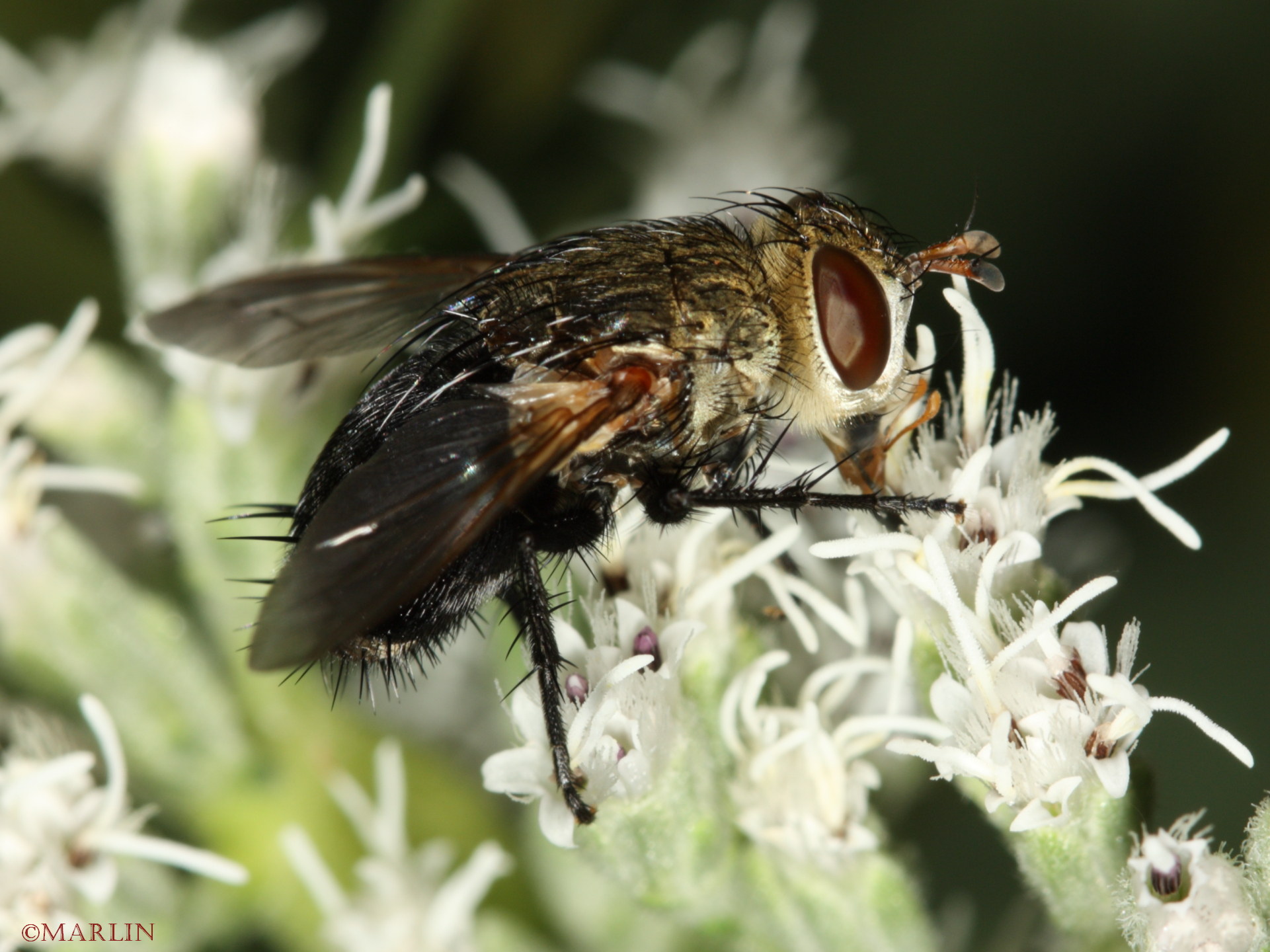
Family Tachinidae is the second largest amongst all the diverse families of Diptera (two-winged true flies). Recent science shows over 10,000 species worldwide. Adult tachinid flies are diverse in appearance, but they are generally known for their bristly facies.
Archytas exhibits prototypical tachinid features, including a large, metallic-colored abdomen covered with bristles. Many other tachinids, however, are sparsely bristled and exhibit very pale coloration. All Tachinids share the parasitoid habit, and almost all of them are endoparasites of other insects; in spite of their varied appearance all species of Tachinidae are alike in this characteristic.
Insects most commonly parasitized by the tachinids are the larvae of the Lepidoptera (butterflies and moths) and the adults and larval form of Coleoptera. Other tachinids attack bugs of the Hemiptera, larva of Hymenoptera (bees, wasps, ants, sawflies), or adults of Orthoptera (grasshoppers, katydids, crickets and their kin). Rarely do Tachinidae parasitize other Diptera. The leaf-footed bug below has a fly egg attached to its pronotum, quite likely T pennipes (above)
Most tachinids are primary, solitary, endoparasitoids, but some are gregarious parasitoids. They have a wide host range, with all major groups of insects serving as hosts.
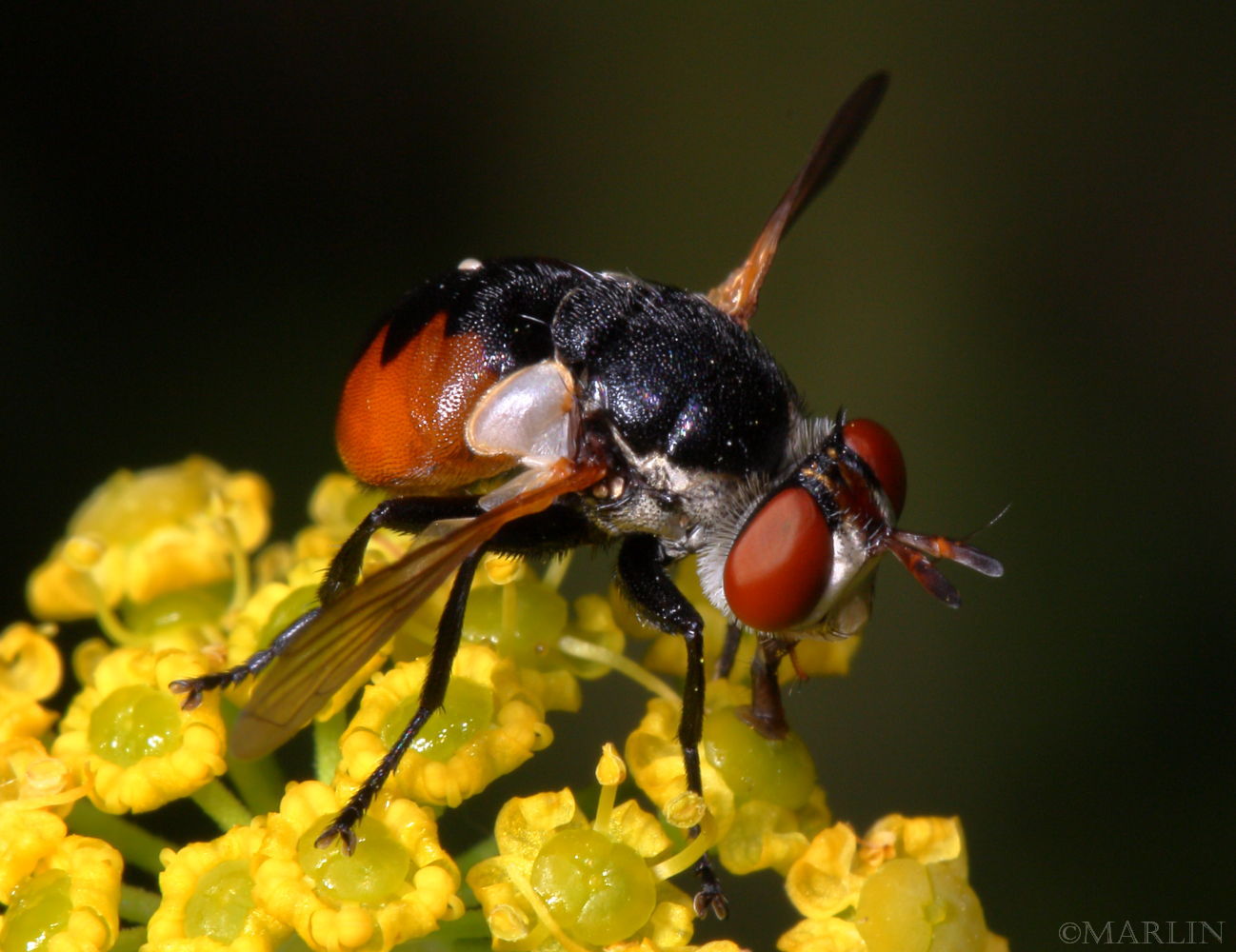
 Trichopoda pennipes, a flower-loving tachinid commonly called the fringe-legged fly
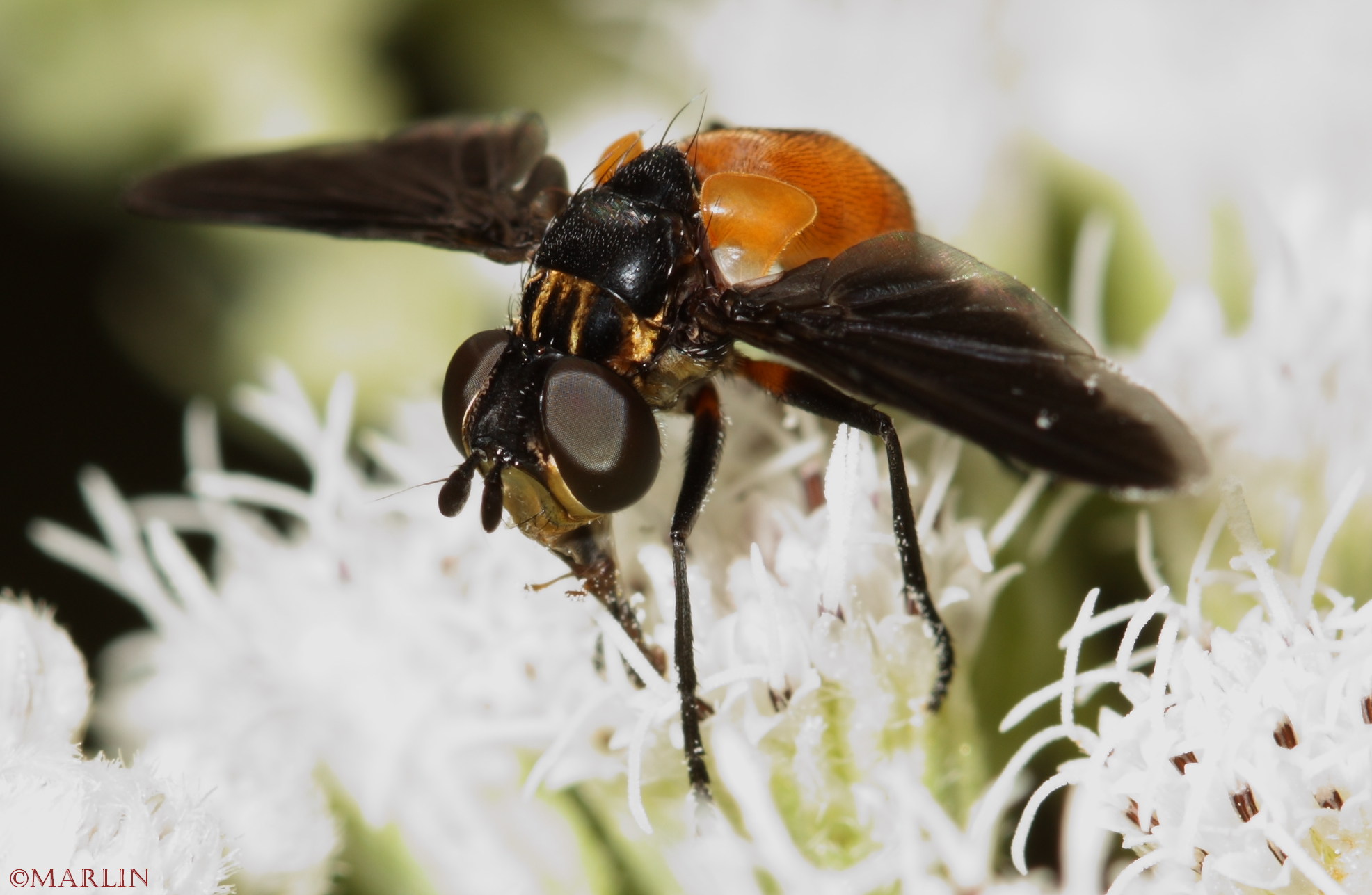
I almost always see tachinids feeding at flowers; no offal or carrion or dung for these connoisseurs, no! That’s why I’m always delighted to see one of these denizens of forest glades and weedy places. They love all sorts of flowers, and are frenetic nectar gathering machines, requiring hard work and persistence to get good photos of. Chasing the tachinid sort can provide hours of challenging fun on a nice sunny summer day.
Few tachinids are known to be host-specific, although some species of the genus Phasiinae are limited to a few Hemiptera hosts. Many tachinids will attack insect hosts in 2 or more different orders. Many tachinids parasitize major agricultural pests of food or timber crops, and have potential for use as biological control agents, but most attempts at using them in such wise have been dismal failures.
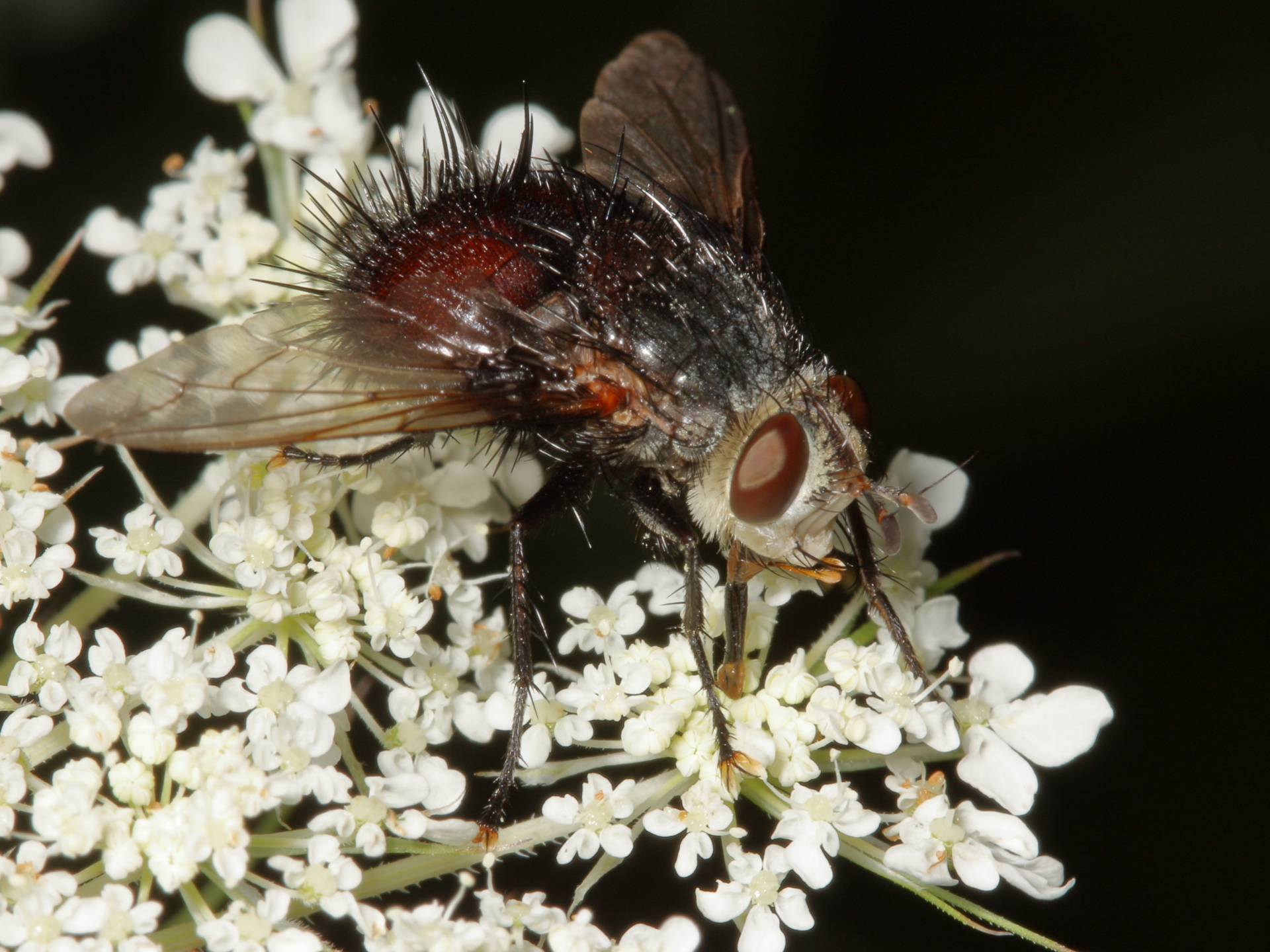 Another flower-lover – Juriniopsis
Among the methods tachinids use to infect their subjects are the oviparous species that place large, macrotype eggs directly on the body of the host, the micro-oviparous, which place tiny, microtype eggs on foliage or other foodstuffs being consumed by the host, or the larviparous, which retain their eggs until maturity; these eggs hatch immediately upon being laid on or near the target. Some female tachinidae that attack bugs or beetles have piercing ovipositors much like wasps in the Hymenoptera family Ichneumonidae.
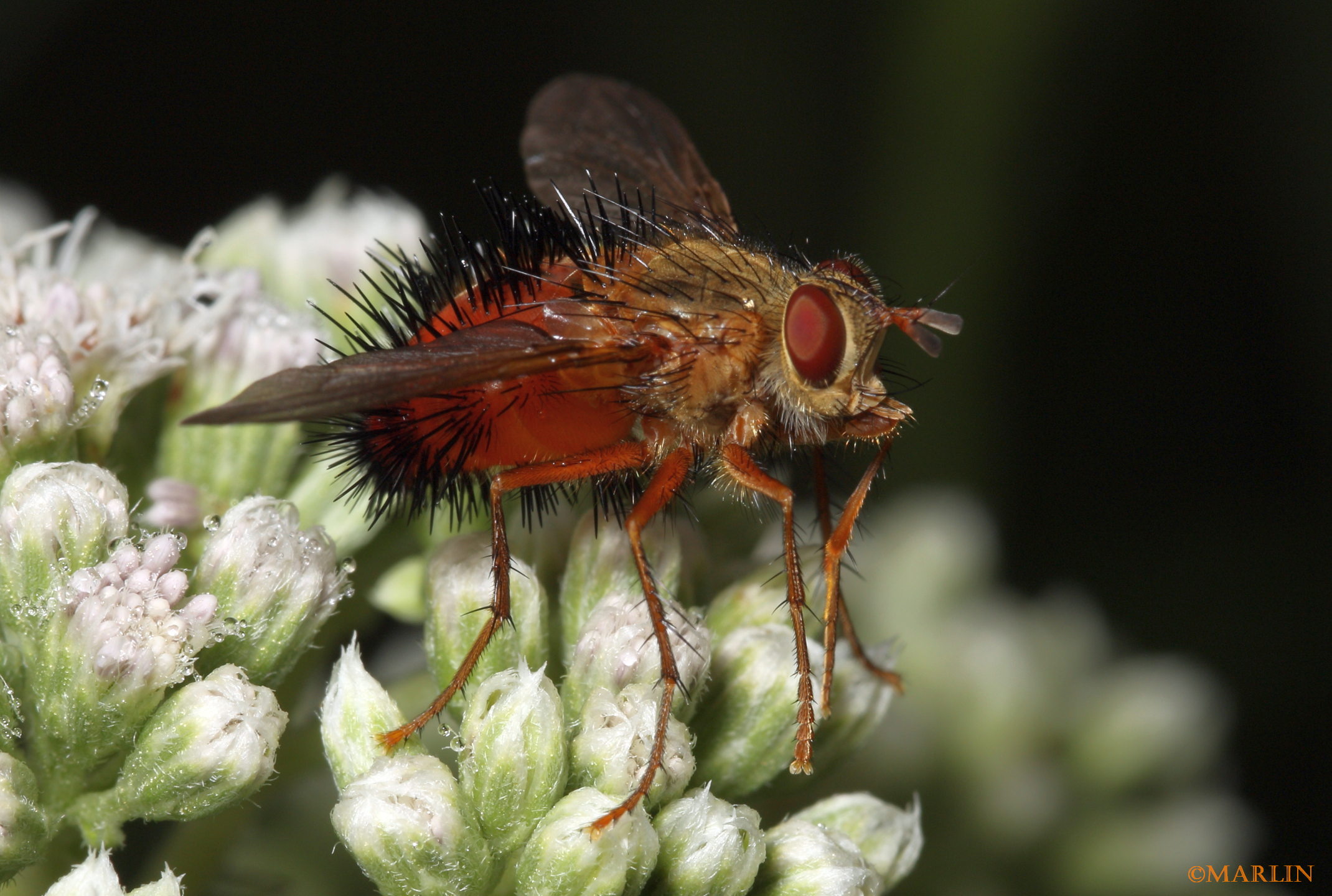 Yes I love flowers Hystricia abrupta
Adult tachinid flies are comparatively rare, in my experience. Perhaps that’s just the nature of my (lazy) hunting technique – I never beat foliage or sheet moths – I’d much rather find organisms as they are, doing what they are doing with as little disruption from me as I can manage. (Which quite naturally follows my efforts not to spook them – most insects are extremely wary of large, moving objects.
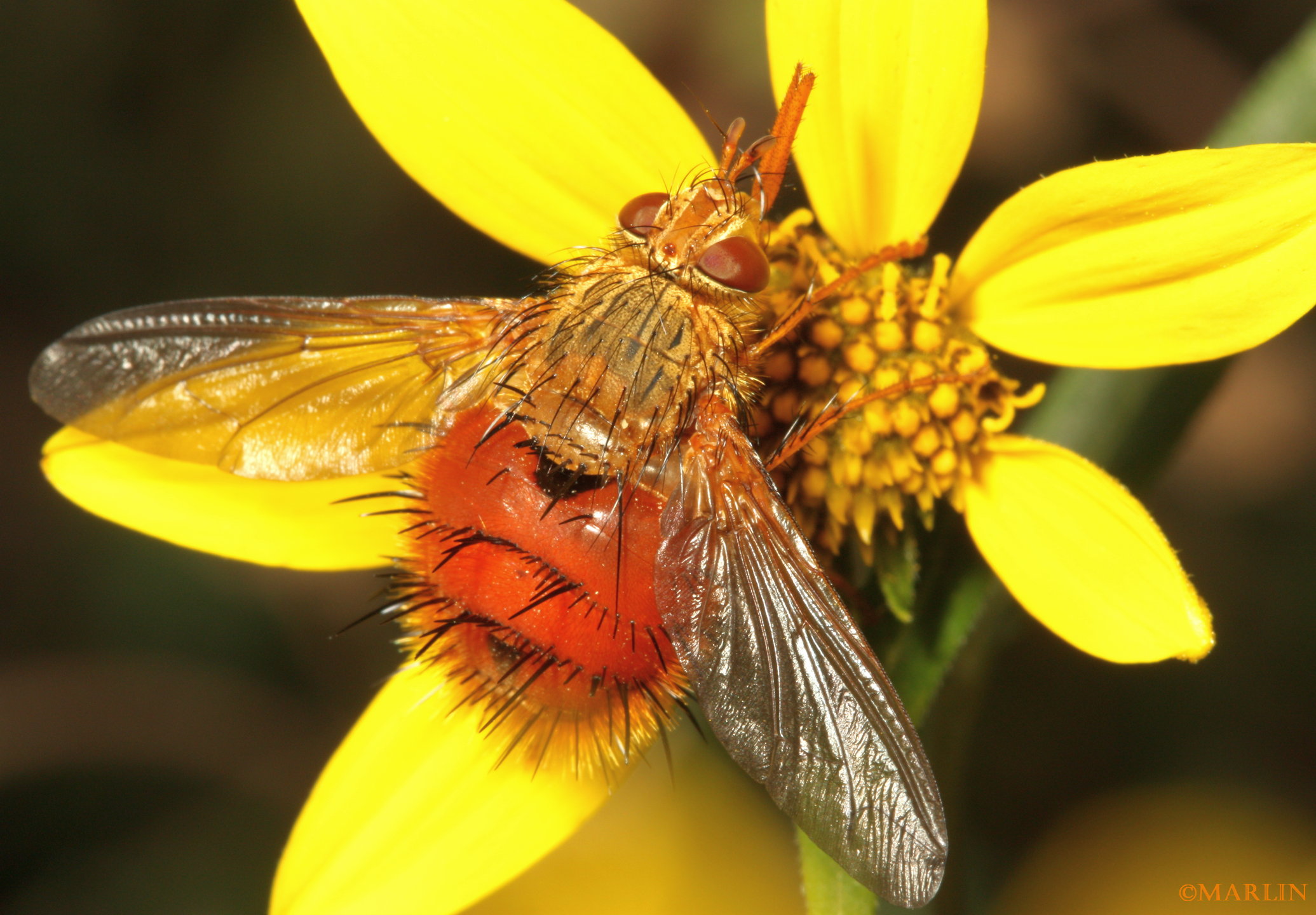
 Gymnocheta ruficornis
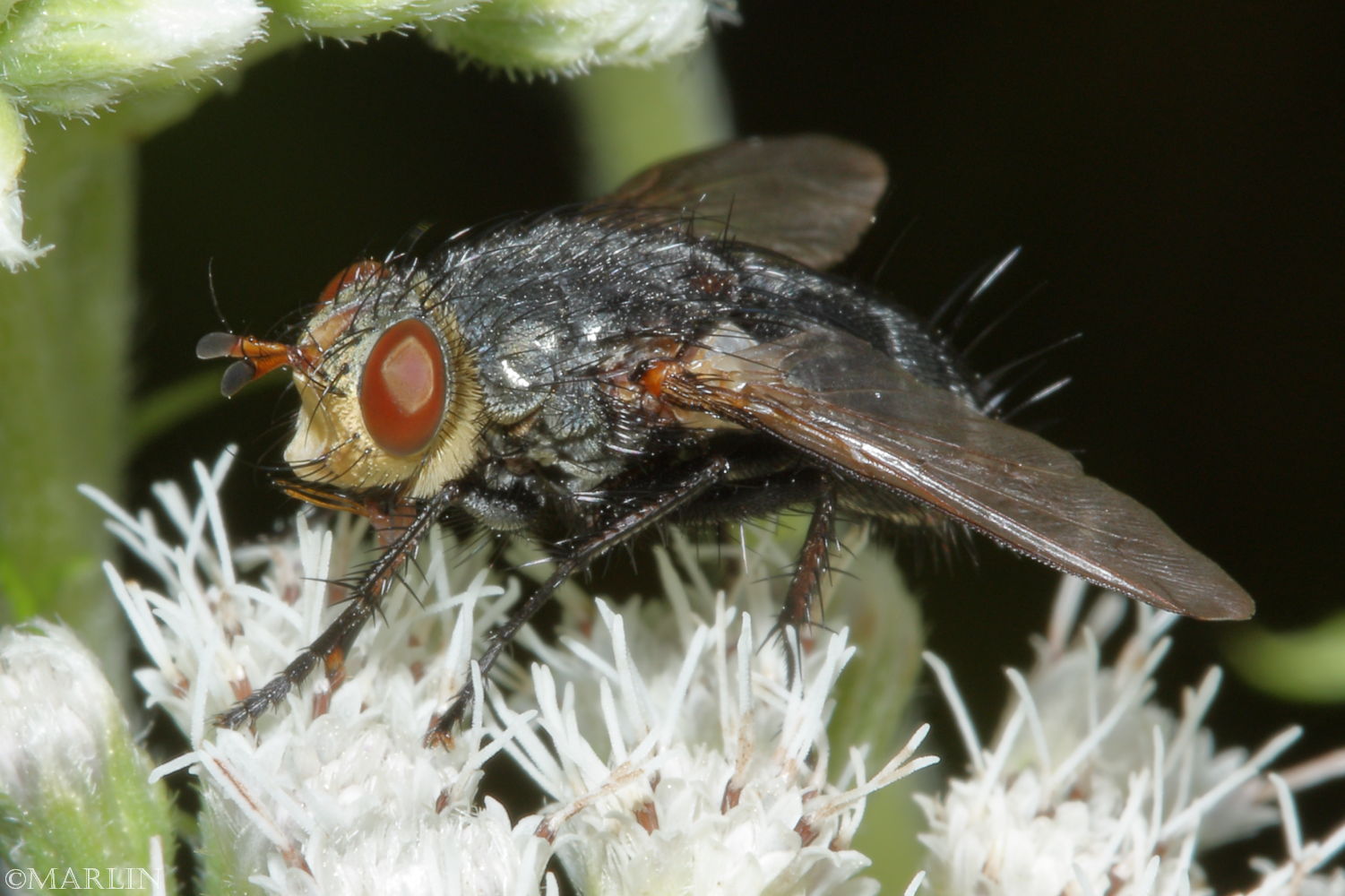
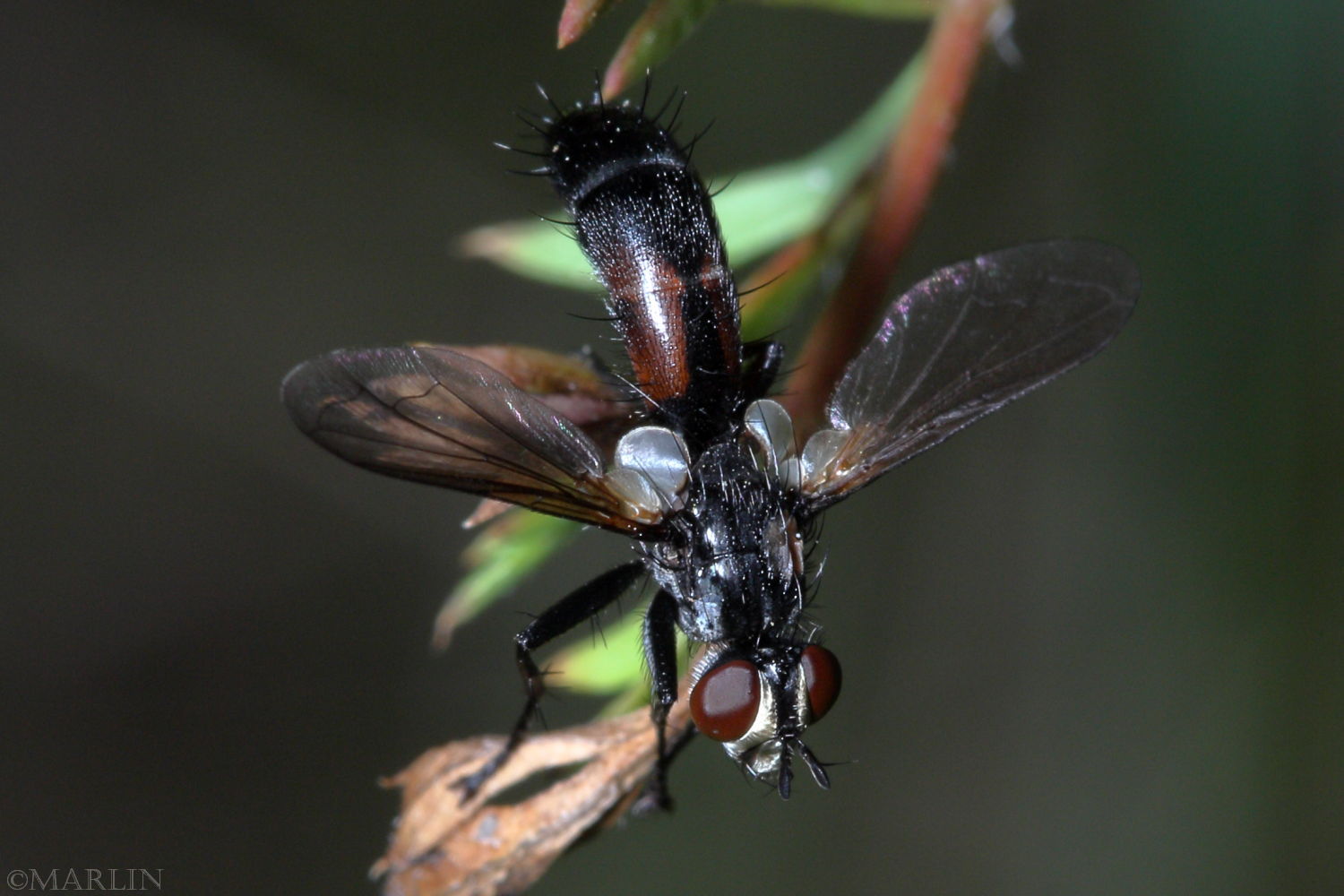
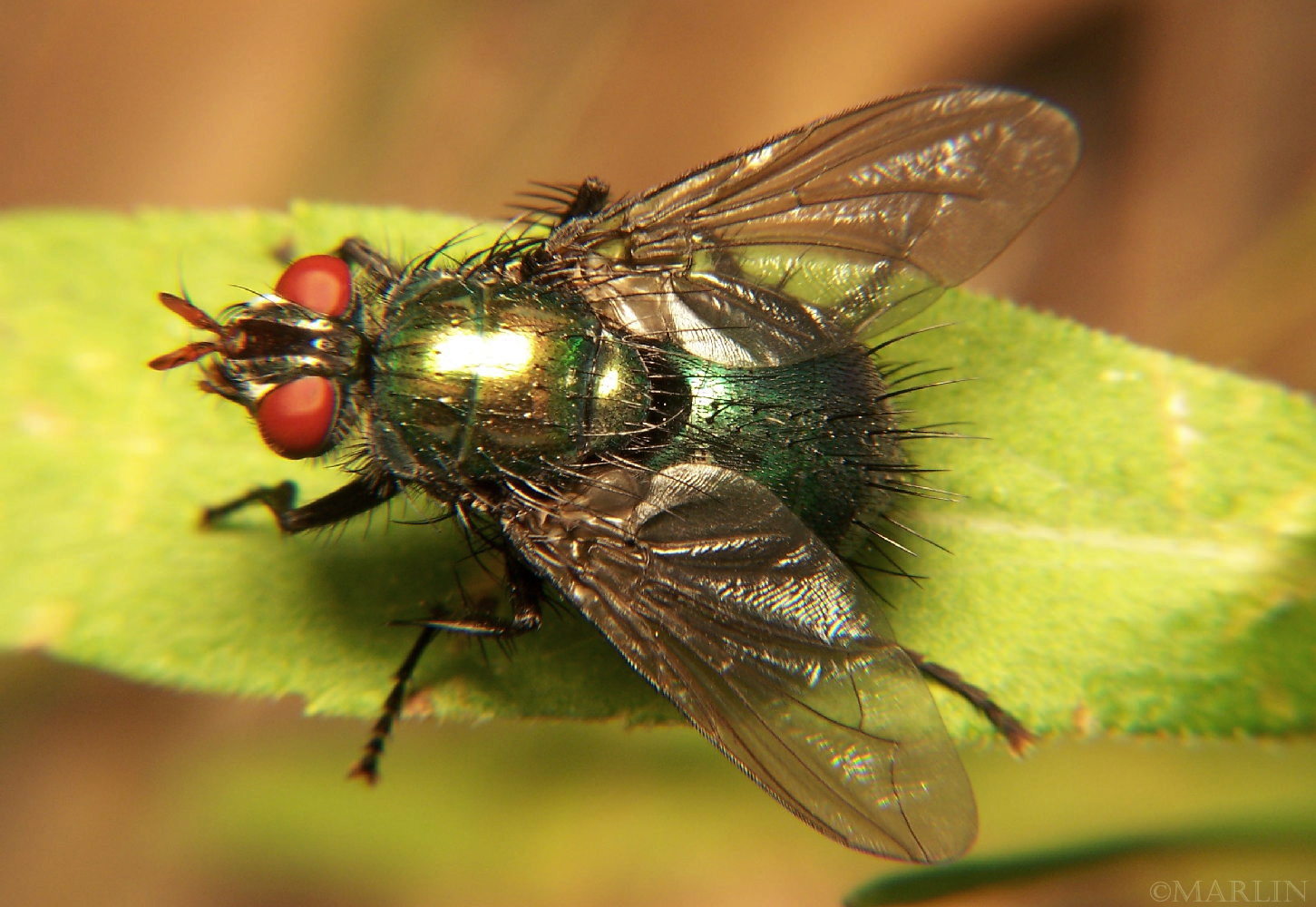
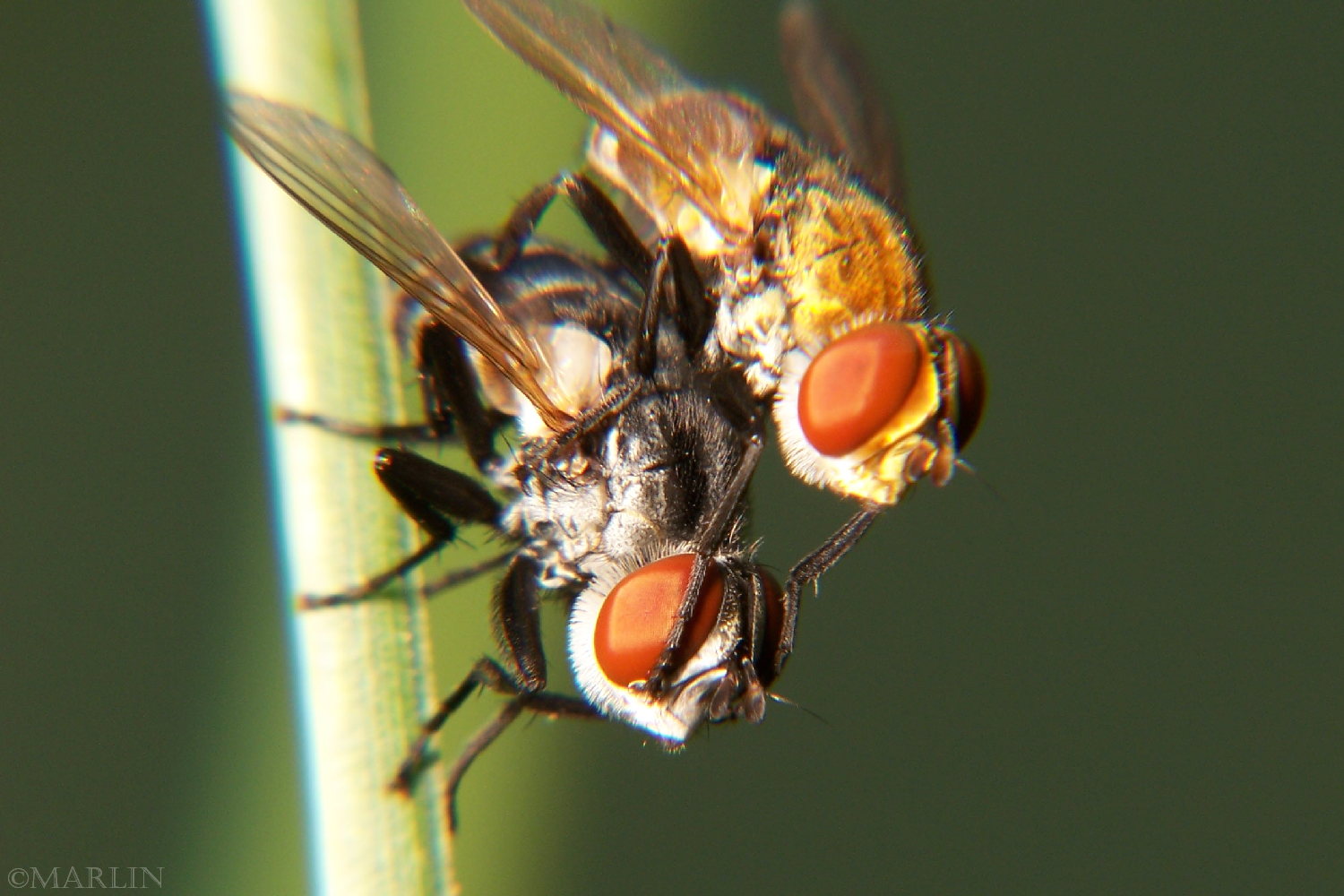 Gymnoclytia Species Mated Pair
Flies in subfamily Phasiinae most often parasitize true bugs in Hemiptera such as stink bugs, leaf-footed bugs, seed bugs and damsel bugs.
North American Insects & Spiders
Online since 2002