Family Syrphidae – Hover Flies, Flower Flies
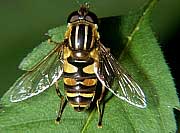
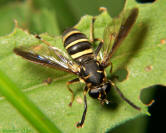
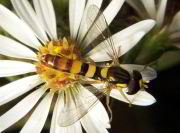
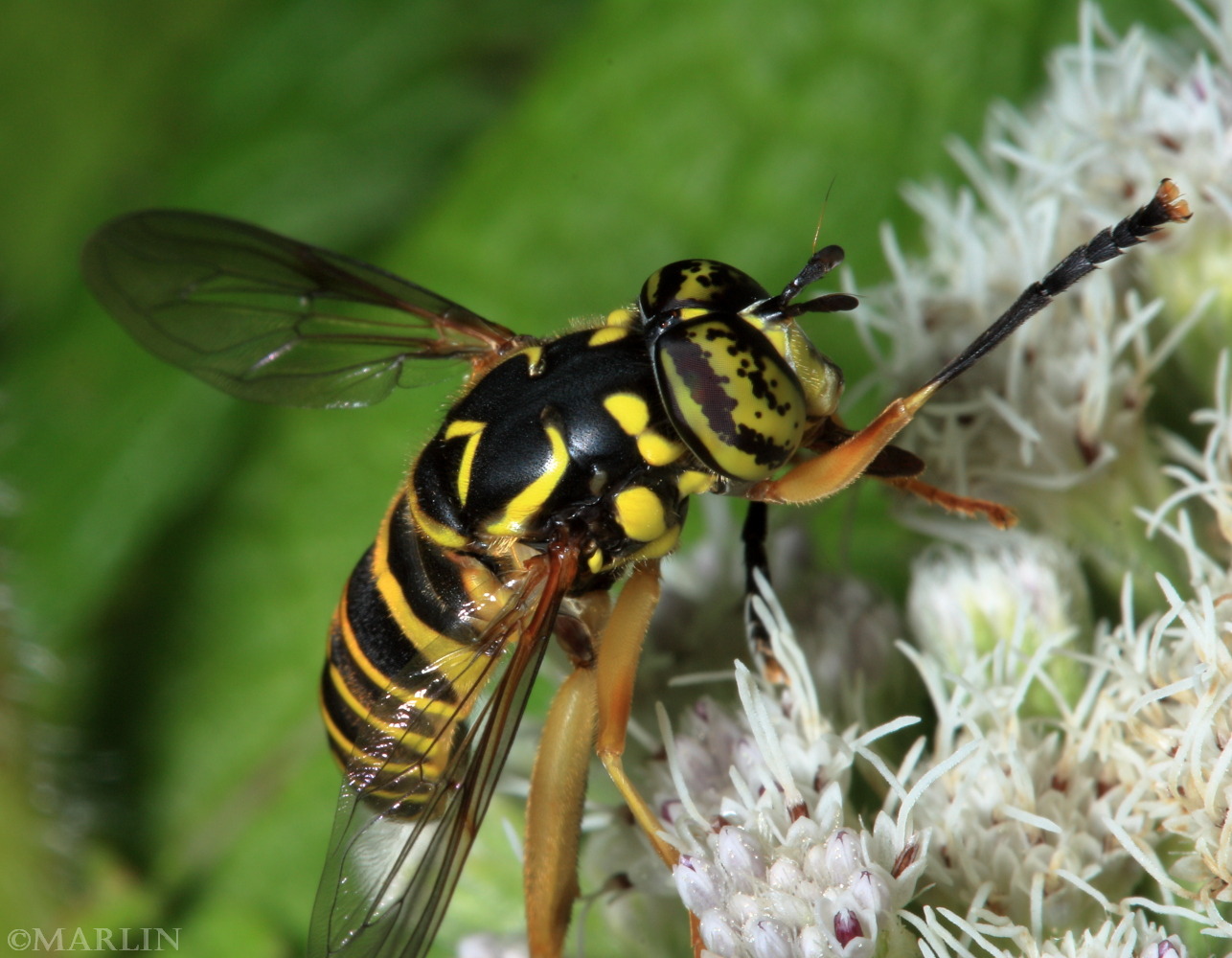 Syrphid Fly – Spilomyia longicornis is a yellowjacket mimic
Syrphid flies are a large group of superbly beneficial insects, being predators of aphids and other damaging insect pests and their larvae. The coloring and movements of most species mimic bees or wasps — they are either stout-bodied and covered with hair, resembling a bumble bee, or boldly patterned with yellow, orange and black, resembling aculeate (stinging) wasps. Some species even go so far as to wave their front legs in front of their face to mimic the jointed antennae of wasps. This phenomenon is called Batesian mimicry, indicating that inherently defenseless organisms resemble or mimic dangerous or unpalatable models.
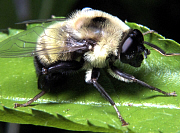
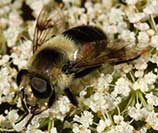
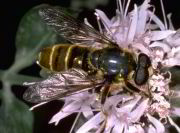
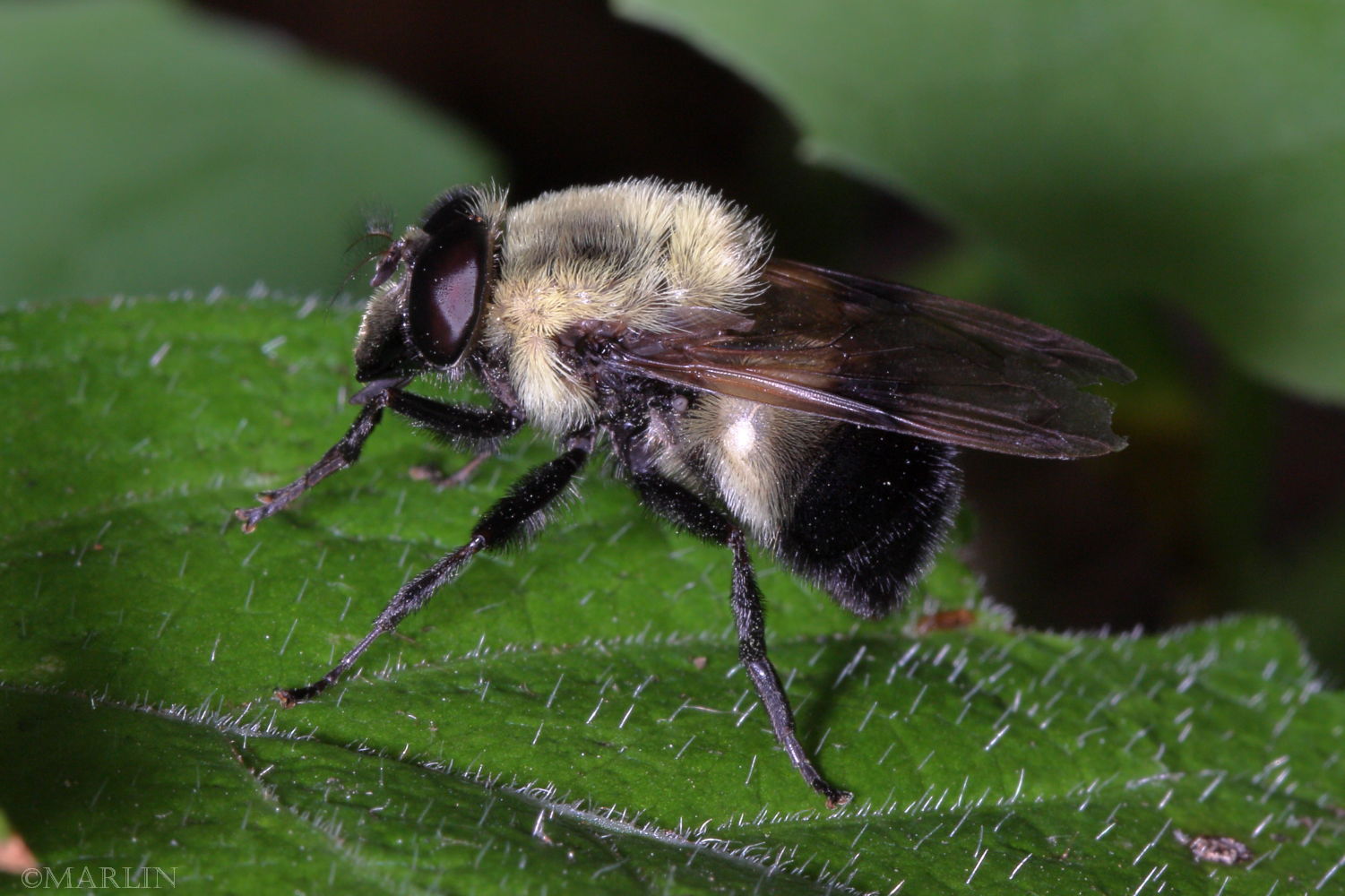 Syrphid fly Volucella bombylans is a really good bumble bee mimic
Adult hover flies require nectar or honeydew and pollen to ensure their reproduction (as well as to power their physical activities), and larvae generally require aphids for breakfast, lunch and dinner to complete their development. However, in the absence of aphids, larvae of some species can subsist and develop entirely on diets of pollen [1].
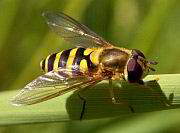
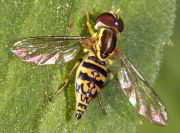
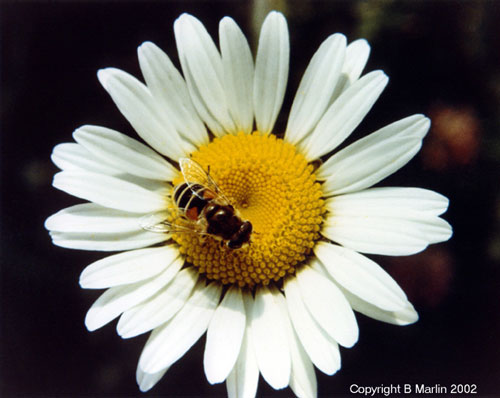
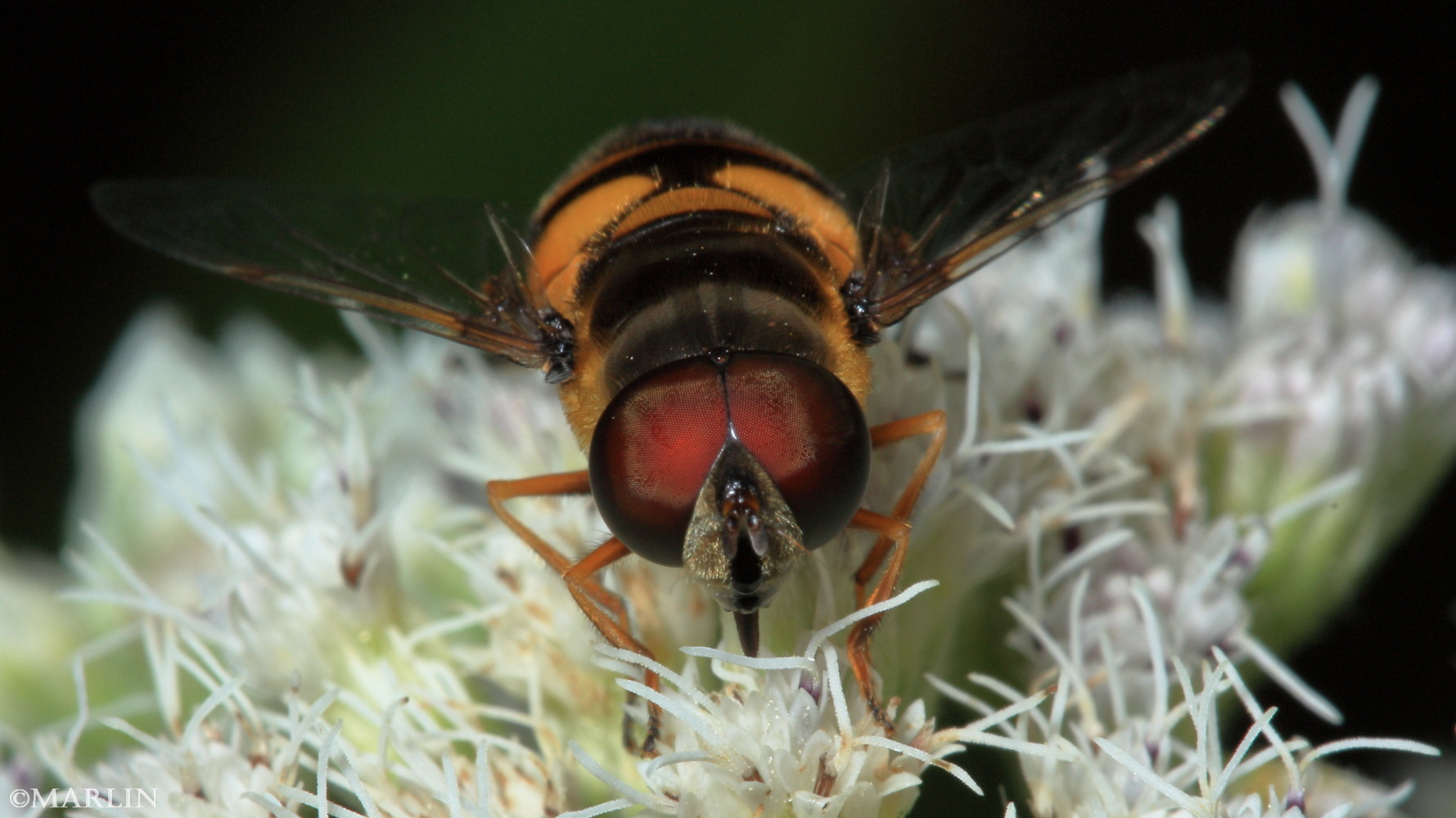 Transverse Flower Fly – Epistrophe grossulariae
A few flower fly species in the subfamily Syrphinae feed on aphids. Common aphidophagous flower flies in California vegetable crops include Toxomerus marginatus, Allograpta obliqua, Syrphus opinator among others.
Syrphid flies are routinely used as a biological control in the lettuce fields of California’s vegetable-producing regions, where the fly’s larvae are generally effective in controlling lettuce aphid (Nasonovia ribisnigri). It is primarily the Syrphidae that enable organic romaine growers on California’s central coast to produce harvestable crops. Syrphidae larvae are, in turn, parasitized by wasps in the Hymenoptera families Ichneumonidae and Pteromalidae [1].
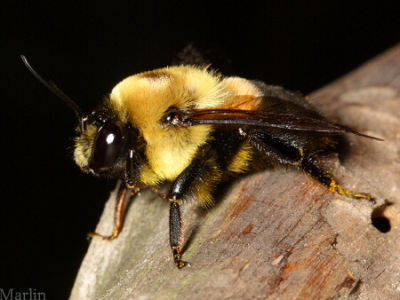 Brown-belted Bumble Bee – Bombus griseocollis |
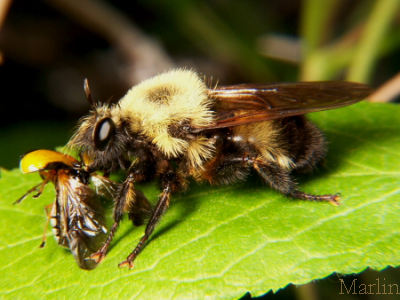 Female Robber Fly, Laphria grossa |
Bumble bees have a reputation. Would-be predators (and other insects in general) avoid insects with the bumble bee aposematic coloring. So effective is the reputation, there is a whole panoply of insects (chiefly flies) which mimic their appearance and behavior in an effort to instill “fear.” The flies, moths and other insects gain the benefits of having a stinger and venom delivery system, but without the high metabolic cost of constructing and maintaining such an apparatus.
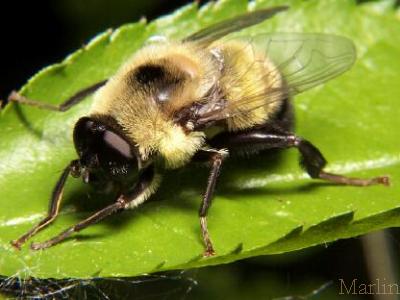 Mallota sp. |
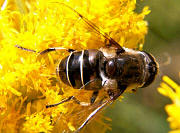
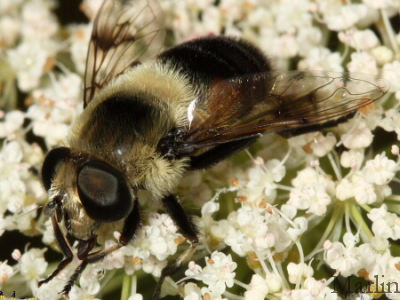 Eristalis anthophorina |
Most hover flies are between 5-20 mm long, brightly colored in yellow and black, and have large compound eyes that nearly cover the head. One rule of thumb for identifying hover fly gender is, if the eyes meet at the top of the head, it’s a male specimen. Each wing has a characteristic fold, or “false vein” which can be visible to the naked eye – it is located anterior to the first large vein that runs all the way to the outer margin of the wing.
Being true flies, Syrphids have only one pair of wings, plus the characteristic halteres, or bulb-like organs that evolved from the second pair of flying wings. In Syrphid flies, the halteres are fairly inconspicuous.
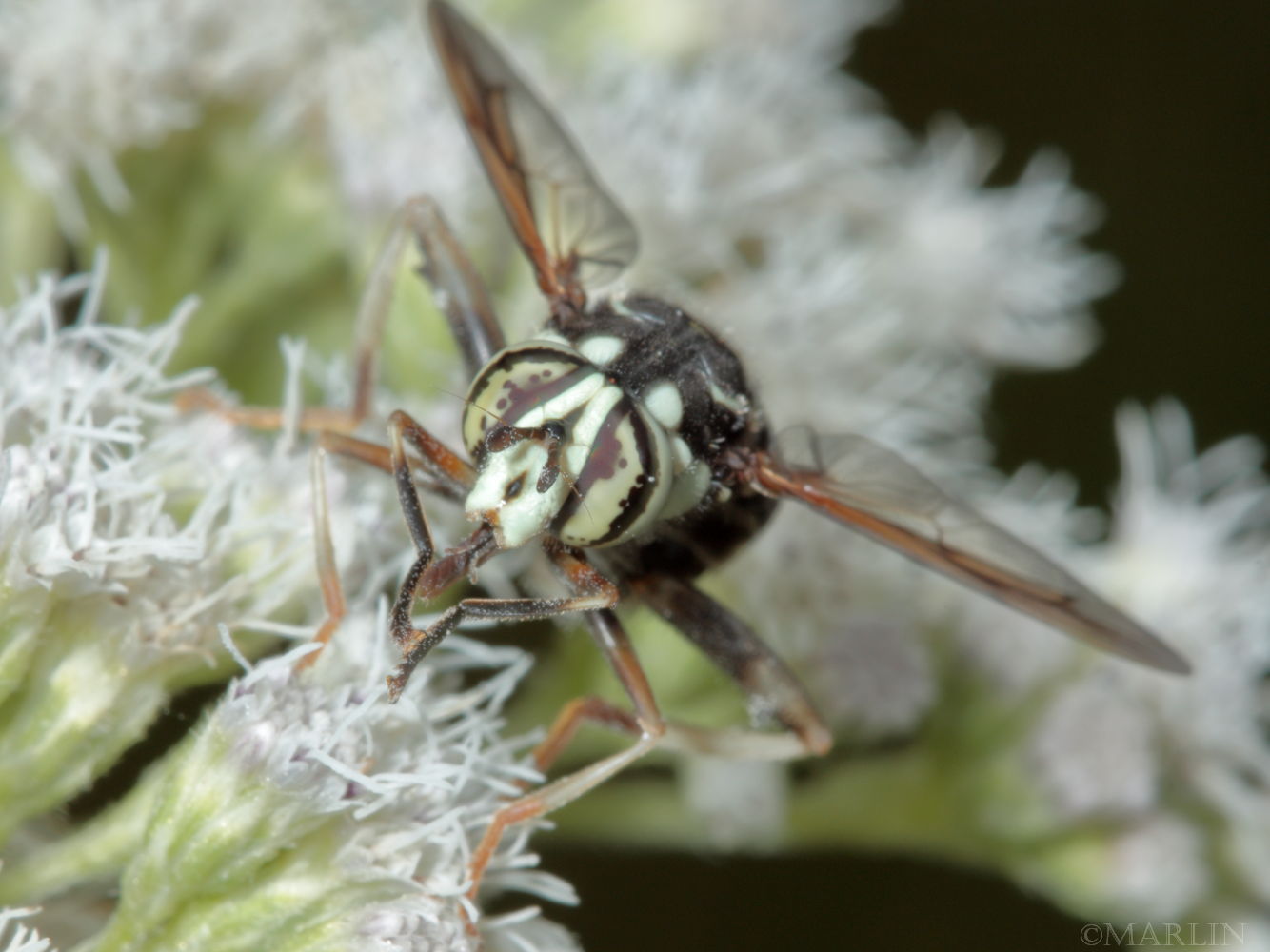
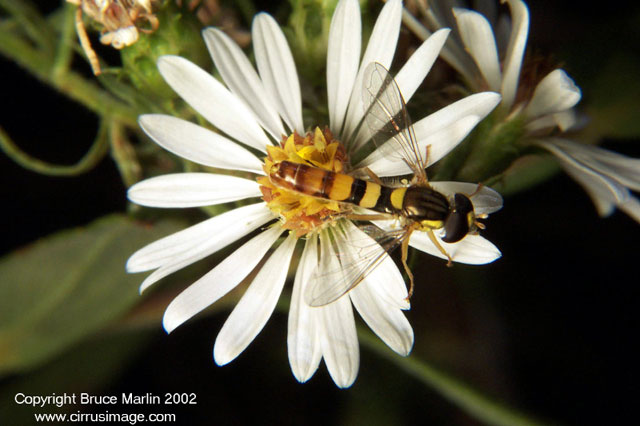
Another wild-eyed species – Spilomyia fusca – mimics the bald-faced hornet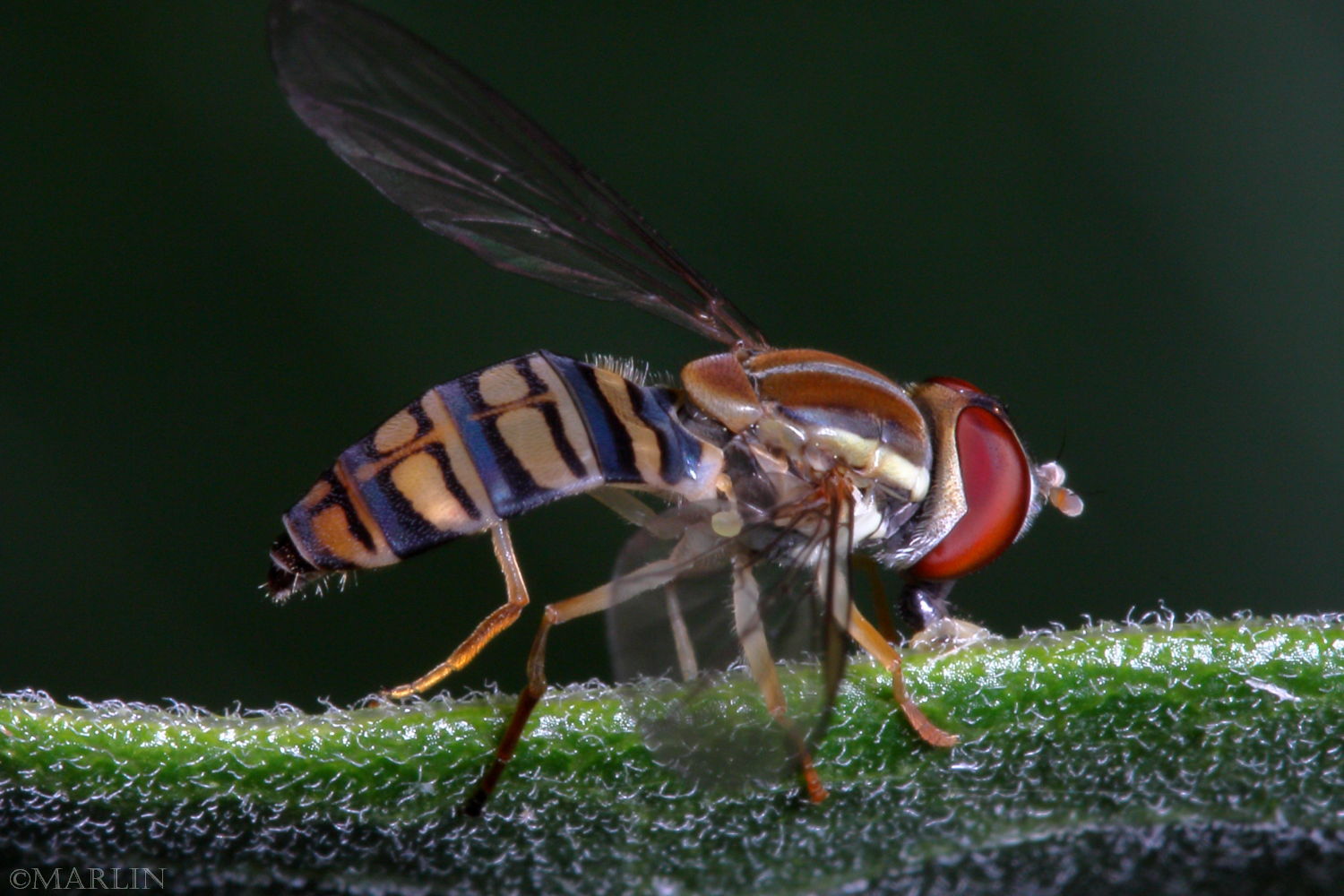 Toxomerus politus
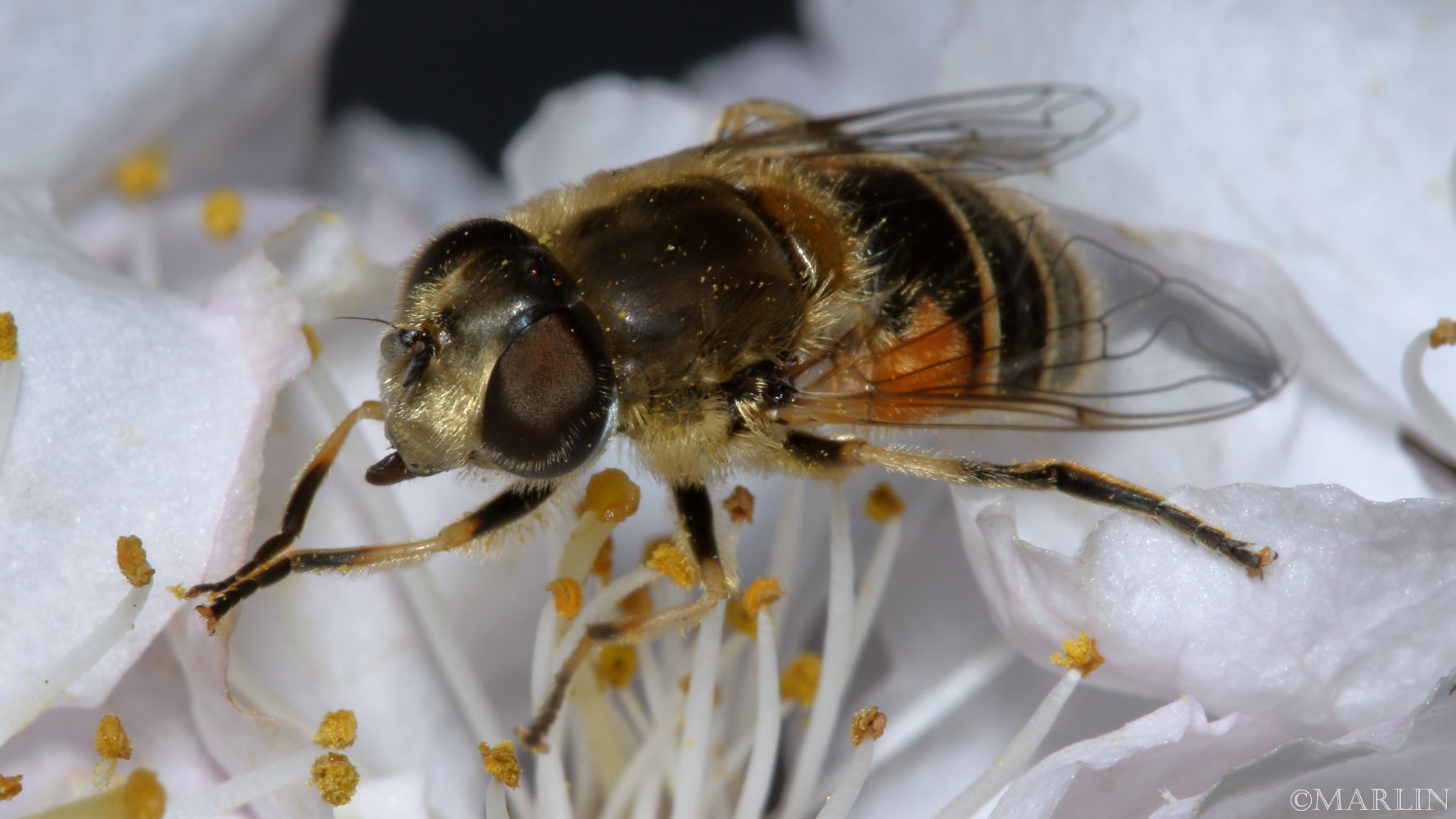 Eristalis arbustorum
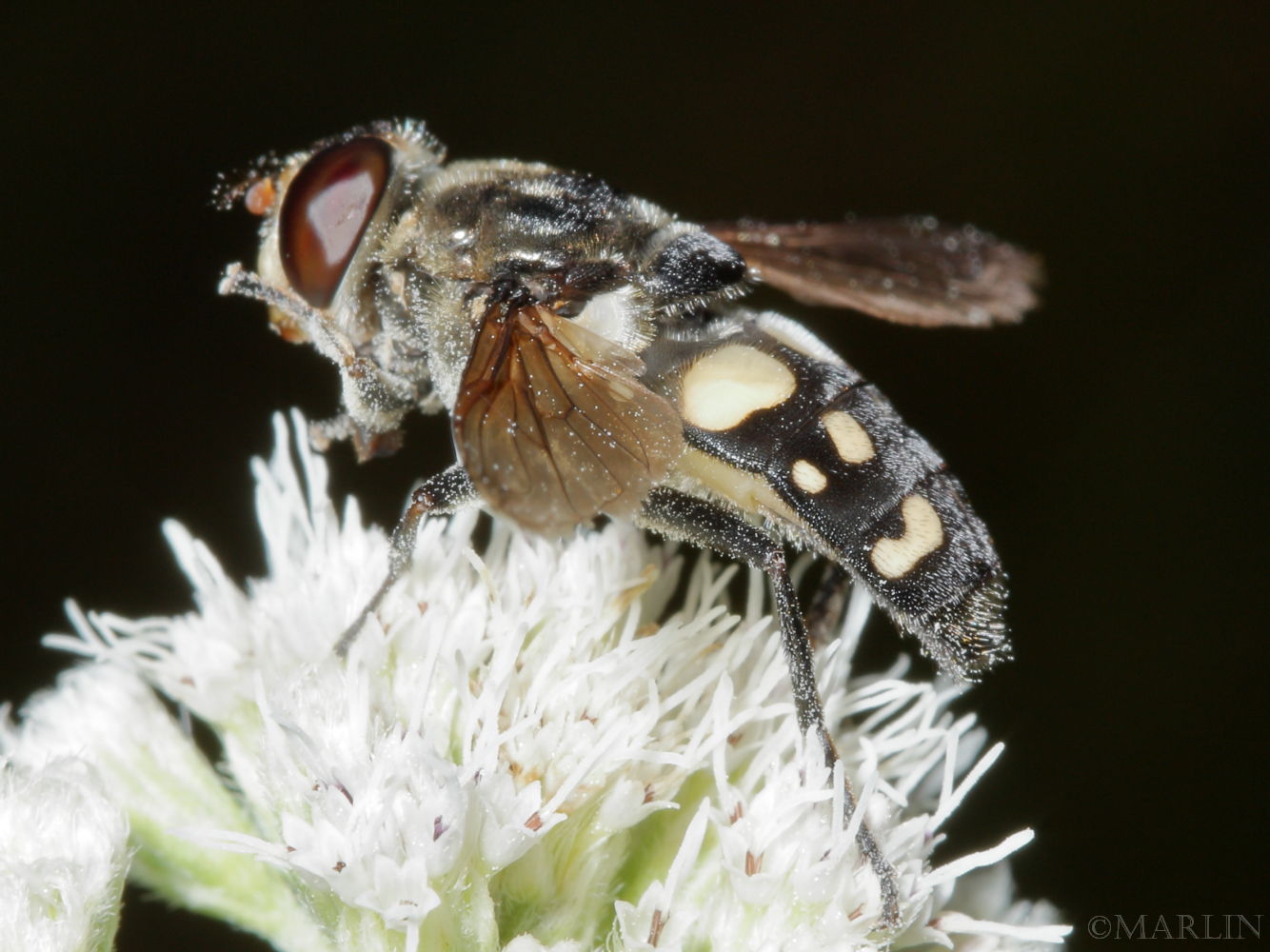 Sericomyia lata
North American Insects & Spiders
Online since 2002