Black Walnut - Juglans nigra
Black Walnut is among the most valuable wood grown commercially in the American Midwest. It has long been highly prized for its beautiful color, tensile strength, durability, machining qualities and dimensional stability. Black walnuts are fast-growing and long-lived, sometimes to over 200 years.
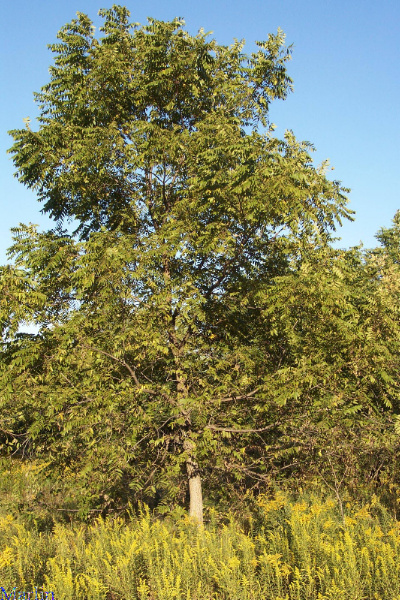
These black walnut trees were photographed on bottomlands along the west branch of the DuPage River, near Winfield IL.


Black Walnut Tree


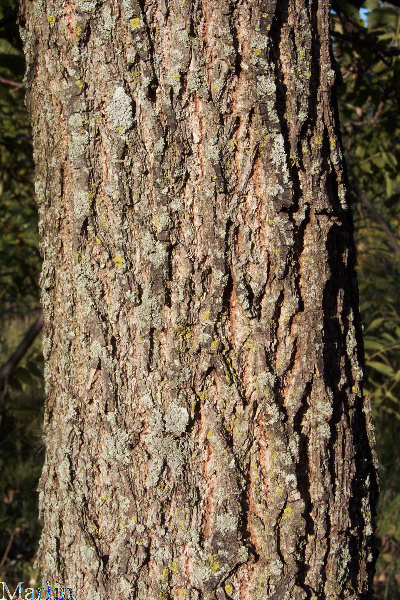
Black Walnut Bark

Black walnut poses some problems when used in urban landscapes. Although it is long-lived, grows quickly and provides a light, dappled shade, it is prone to wind breakage, and the nuts can be quite a nuisance. The roots of Black Walnut (Juglans nigra L.) and Butternut (Juglans cinerea L.) produce a substance known as juglone (5-hydroxy-alphanapthaquinone), that inhibits the growth of many adjacent plants, [3] including Scots Pine, Birch, Basswood, apple trees, grapes, and hydrangea. This herbicide is contained in the tree's roots, leaves and nut husks, and the residue remains in the soil for years even after the tree has been removed. However, there are plants admirably resistant to juglone, and they can be grown reliably even underneath this hardy tree.
Click here for a site from Ohio State University listing plants immune to the Black Walnut's toxin.

Walnut wood is used for veneer in paneling, doors, furniture and cabinets, and sawn into tool handles and gunstocks. Black walnut is one of six walnut species found in North America. There are 15 described species worldwide. Although black walnut grows throughout The United States and southern Canada, it is most common in the U.S. midwest and east. Black walnut is a pioneer species, and is often the first colonizer of disturbed sites and farm fields gone fallow. It grows best in deep, moist soil found in river bottomlands. The tree tolerates periodic flooding found in such locations, but is shade intolerant. In natural woodlands, it is most often found in small groupings or scattered specimens in forest openings.


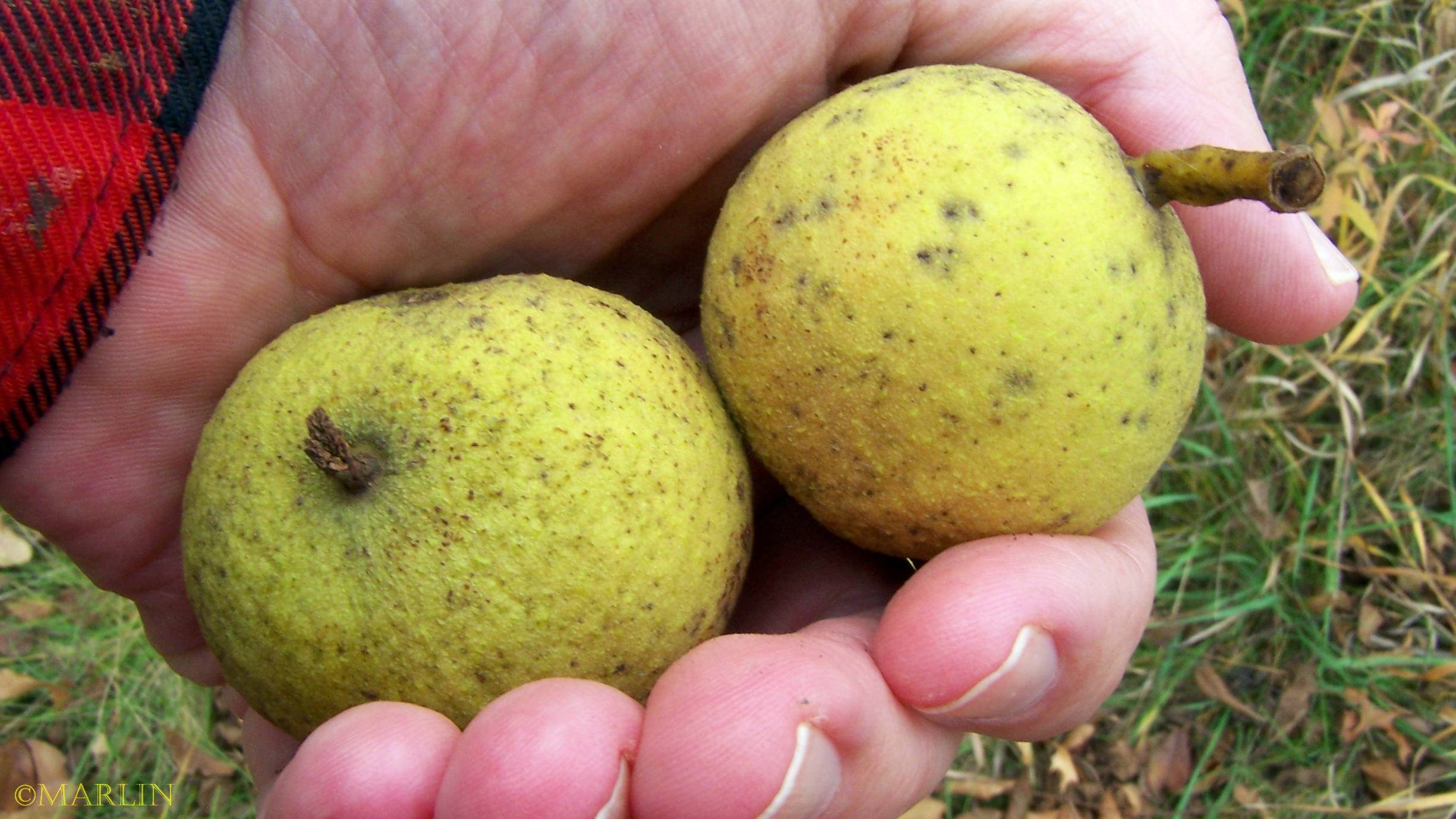
Black Walnut Foliage and Fruit

Do the squirrels love these trees? Boy, do they. You can hear them skinning the inedible portion of the fruit off to get at the nut - they sound like miniature buzzsaws going in the trees. Black walnut fruit is loaded with tannin and will stain your hands, clothing and concrete should you decide to crack nuts on the garage floor.

Black walnut trees start producing nuts at about 10 years, but don't really get going until they are 30 years old. There are no major insect infestations or diseases associated with black walnut, but extremely cold weather can kill trees growing in unprotected or windy locations. Some insect pests include: fall webworm, walnut caterpillar, walnut lace bug, aphids, husk fly, black walnut curculio, walnut shoot moth, pecan leaf casebearer, and plant hoppers. Gypsy moth rarely bothers this species. [1]

Black walnut wood is so valuable, poachers have been known to steal trees from public lands or private landowners. In one such case in Indiana in 2004, Purdue University scientists were able to use DNA analysis to match wood from illegally-felled tree stumps with logs confiscated at a sawmill 60 miles away. [2]

 
Windfall Black Walnuts
Nut meats of the black walnut are used in commercial baking, and in ice cream and candy. Shells are ground up and used as an abrasive for polishing, as an additive for well-drilling mud, and for many other uses. [1] Squirrels, white-tailed deer and many species of birds rely heavily on a good crop of nuts.

References:
1. Melvin J. Baughman and Carl Vogt Growing Black Walnut 2002 University of Minnesota Extension
2. Rick Callahan, Associated Press July 2004 DNA test catches tree poachers in Indiana
3. Richard C. Funt, Jane Martin, Ohio State University Extension Fact Sheet HYG-1148-93: Black Walnut Toxicity to Plants, Humans and Horses