 |
Wool Carder Bee – Anthidium manicatum Family Megachilidae These photos constitute the state record for Illinois, being the first recorded instance of this invasive. |

Custom Search
|
| Live adult male and female wool-carder bees photographed in the wild at Winfield, Illinois, June 6, 2004 |
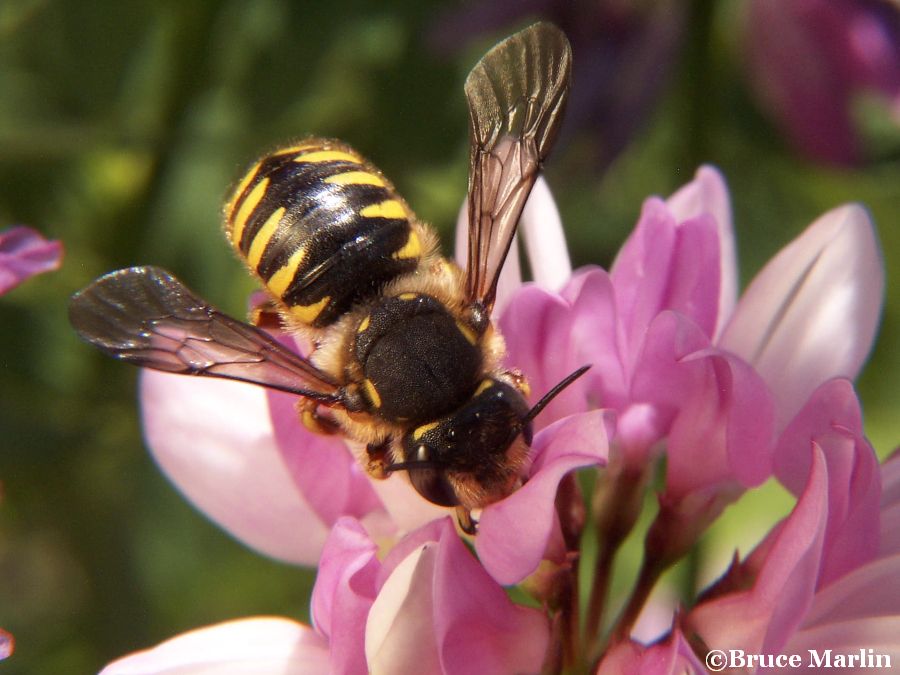 Female Wool-Carder Bee |
| These photos constitute the first recorded instance of this invasive species in Illinois.
This insect was introduced into the U.S. from Europe because of its high efficiency in pollinating certain crops, particularly alfalfa grown for seed. Both genders hover near flowers just like flies in the family Syrphidae. The male wool carder bee is significantly larger than its female counterpart, and aggressively patrols a territory, harassing females (repeatedly attempting to mate by grabbing onto them and holding them immobile as shown in the accompanying photos) and driving off any other insects seeking nectar. Nesting females use the hairs (or "wool") from plant such as lamb's ears to construct their nests. |
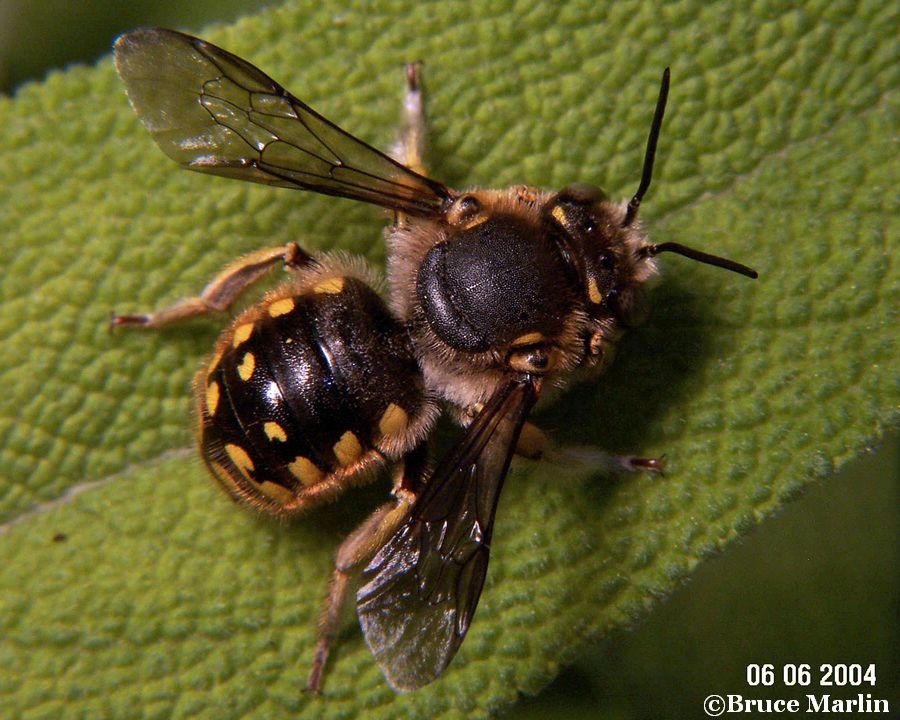 Male Wool-carder Bee |
| These bees are important pollinators, picking up slack from our slowly disappearing honeybee population. They use cut leaves to construct nests in cavities (mostly in rotting wood). They create multiple cells in the nest, each with a single larva and pollen stored for the larvae to eat. Leafcutting bees are important pollinators of wildflowers, fruits, vegetables and other crops. Leafcutting bees are used in commercial pollination of cash crops such as blueberries, onions, carrots and especially alfalfa. |
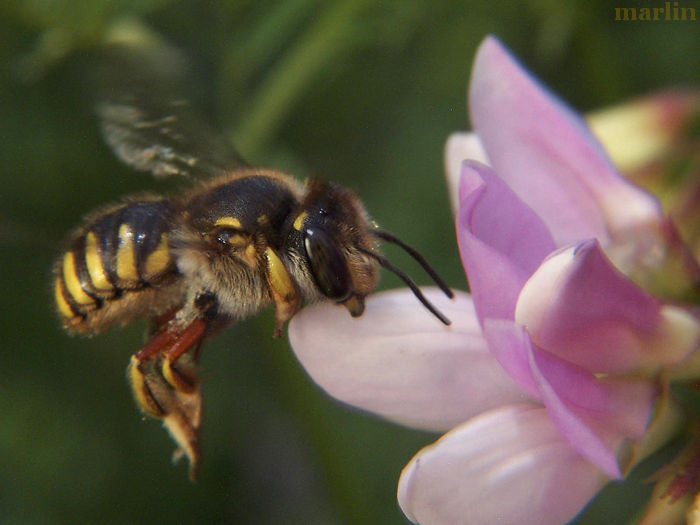 |
| In the wild, these bees are extremely aggressive, and harass any other insects vying for nectar. Both males and females are protective of their nectar sources. During the summer of 2005, these bees are abundant here near Chicago – many patches of flowers are overrun completely, and other pollinators driven off. |
| Tree Encyclopedia / North American Insects & Spiders is dedicated to providing scientific and educational resources for our users through use of large images and macro photographs of flora and fauna. |
|
Order Hymenoptera: Bees, Wasps, & Ants Hymenoptera (Latin for membrane wing) is a vast assemblage of insects second only to Coleoptera (beetles) in the number of described species. Hymenoptera number some 115,000 species – of which 18,000 live in North America. Hymenopterans inhabit a wide variety of habitats, and show an incredible diversity in size, behavior, structure and color. Insects & Spiders | Bees & Wasps Index | Bees & Wasps Main |