
Honey Bees – Apis mellifera
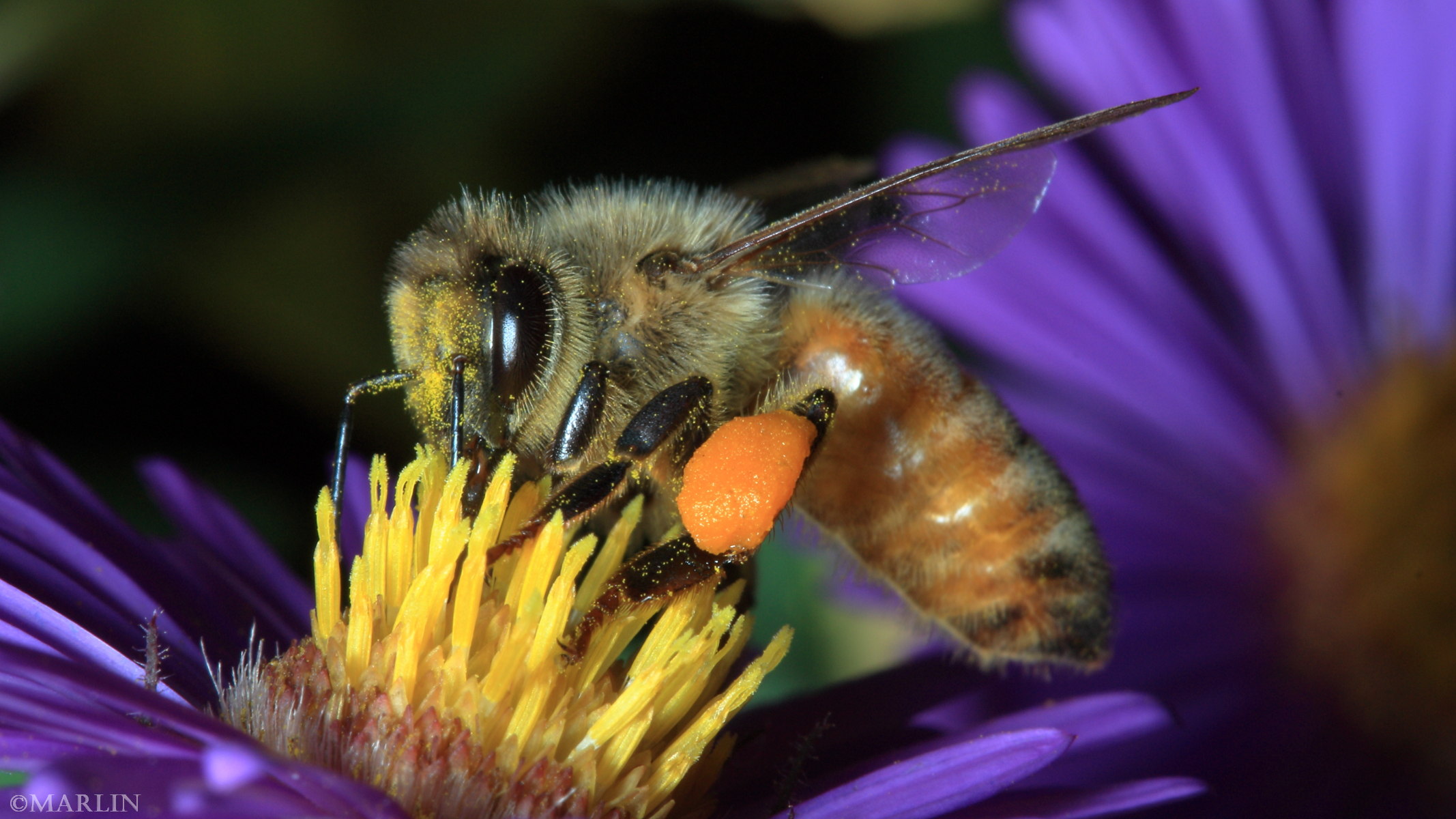
That orange lump is pollen gathered from hundreds of flowers
Honey bees probably originated in Tropical Africa and spread from South Africa to Northern Europe and East into India and China. The first bees appear in the fossil record in deposits dating about 40 million years ago during the Eocene period. At about 30 million years before present they appear to have developed social behavior and structurally are virtually identical with modern bees.
Apis mellifera, the most commonly domesticated species, is native to Europe, Asia and Africa. There are many sub-species that have adapted to the environment of their geographic and climatic area. Behavior, color and anatomy can be quite different from one sub-species to another. The sub-species Apis mellifera mellifera was brought to the Americas with the first colonists to Virginia in 1622, and numerous other occasions later. Many of the crops that depend on honey bees for pollination have also been imported since colonial times. Escaped swarms spread rapidly as far as the Great Plains, usually preceding the colonists. The Native Americans called the honey bee “the white man’s fly.” Honeybees did not naturally cross the Rockies; they were carried by ship to California in the early 1850s.
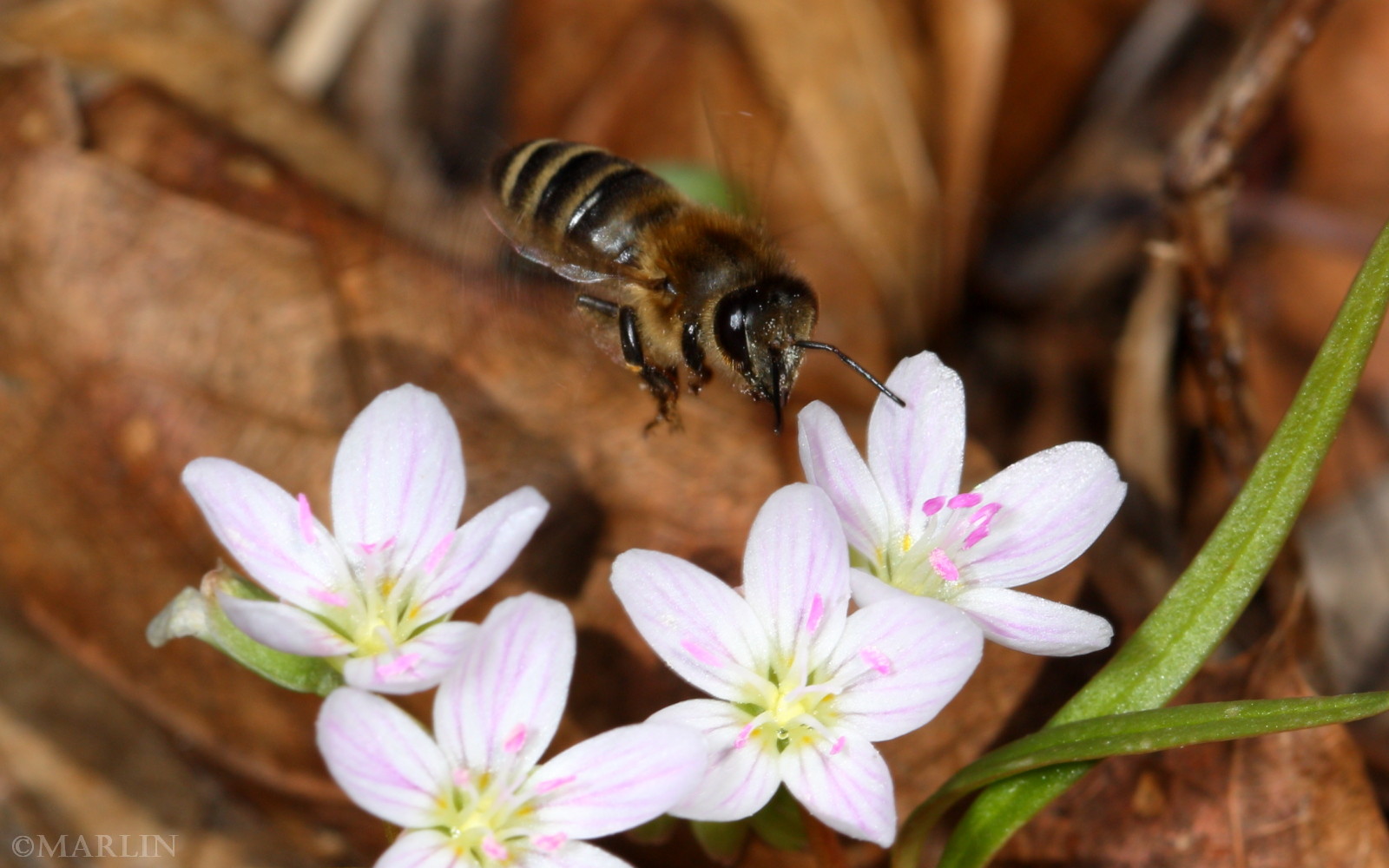
Wild bee approaches spring ephemeral flowers
Honey has been used by humans for thousands of years for its health benefits and as a sweetener and flavoring for many foods and beverages. Raw honey is honey that has not been pasteurized and comb honey is sections of the hexagonal-shaped beeswax cells of the honeycomb that contain raw honey that have been cut from the wooden frames of a beehive.
Beeswax is another gift from honey bees that has been used by humans since prehistoric times for a multitude of purposes and beeswax candles are one of the oldest sources of artificial light.
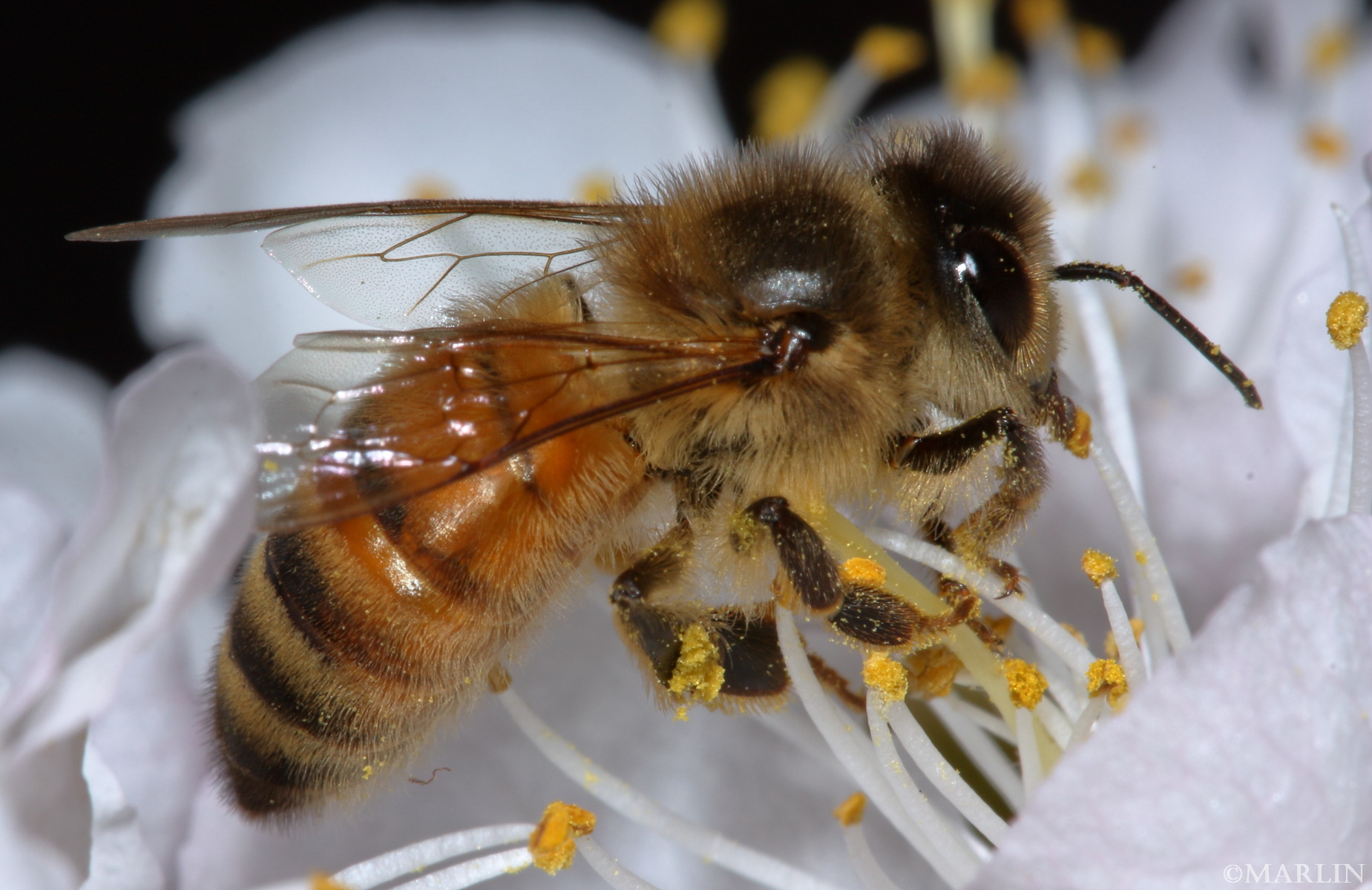
Domestic honey bee on wild plum blossoms
Parasitic Phorid Fly Emerging Threat to Honey Bees
As if the domestic honeybee does not have enough to worry about, a new study reveals the fly Apocephalus borealis (Diptera family Phoridae) attacks honeybees and lays eggs inside the unfortunate forager’s abdomen. The resulting larval infection induces “zombie-like” behavior in the adult bees, ultimately resulting in their abandoning the hive at night and dying in the field (the mysterious, final signature of colony collapse disorder). About a week later, up to 13 larvae emerge from the dead bee’s body, then pupate nearby. The scientists found these larvae to be the same species that has long been known to parasitize bumble bees (Bombus).
A detailed examination of bees from infected hives also often revealed the presence of two other known bee pathogens, deformed wing virus, and a single-celled parasite, Nosema ceranae, itself implicated in Nosema apis, a widespread disease of honeybees. Both adult and larval phorids also tested positive for the presence of these pathogens, implicating the fly as vector.
Scientists found 77% of sampled colonies in the San Francisco Bay Area to be infected by the fly, and there were additional surveys turning up the parasites in both South Dakota and California’s Central Valley. Read the study HERE.
Update – February 2014: So-called zombie bees have now been found in Washington, Oregon, South Dakota, and Vermont [3].
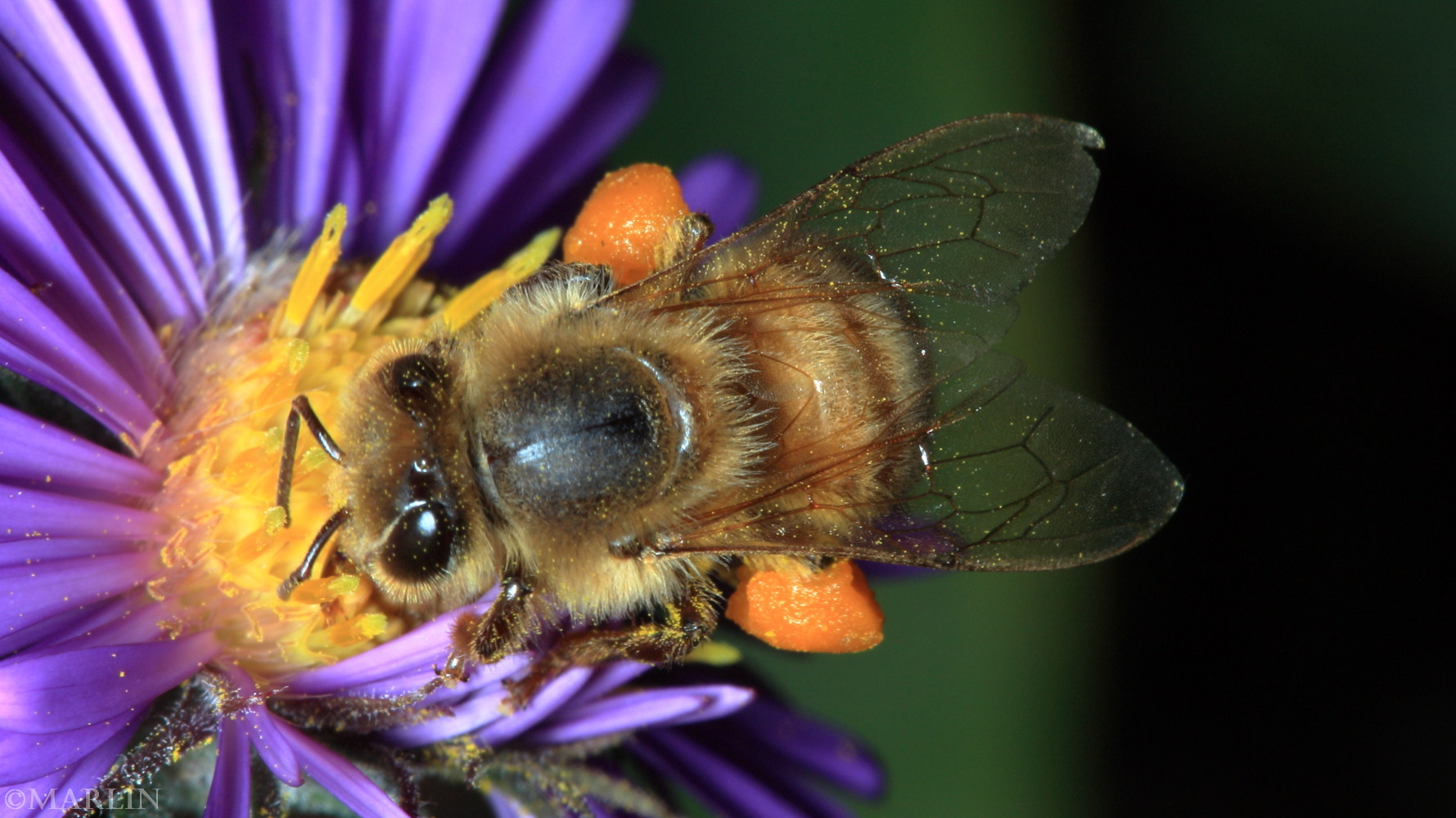
This newly-minted forager still has most of her wing intact. Older workers have severely shredded wing margins.
Life Cycle
For the first two or three days of their life, honeybees take care of regulating the temperature within the hive, and keeping it clear of debris. Temperature is maintained through a communal cooperation in heating (or cooling) and ventilation. The brood requires a fairly consistent range of 95-97 degrees Fahrenheit. Ventilation and cooling is accomplished by whirring the wings, and in extreme circumstances, water is fetched and poured over the combs. Large numbers of bees can raise the temperature inside the hive, if necessary, by decoupling their wings and vibrating their flight muscles; it is by this method the burning of carbohydrates derived from flowers is converted to heat.
The next three to six days are spent feeding pollen and honey to the larvae. Both of these foods are stored, separated, in different groups of cells throughout the hive. From about the seventh day, for about a week, the honeybee develops two large glands in its head which secrete royal jelly, a vital growth-promoting substance. This protein-laden fluid is exuded from the bee’s mouth and is fed to the queen and very young larvae. The queen is fed royal jelly continuously throughout her life; she ripens and deposits about 100 eggs every hour of the day and night. This astounding feat obviously requires vast amounts of metabolic fuel and building materials, and the royal jelly packs an enormous amount of energy.
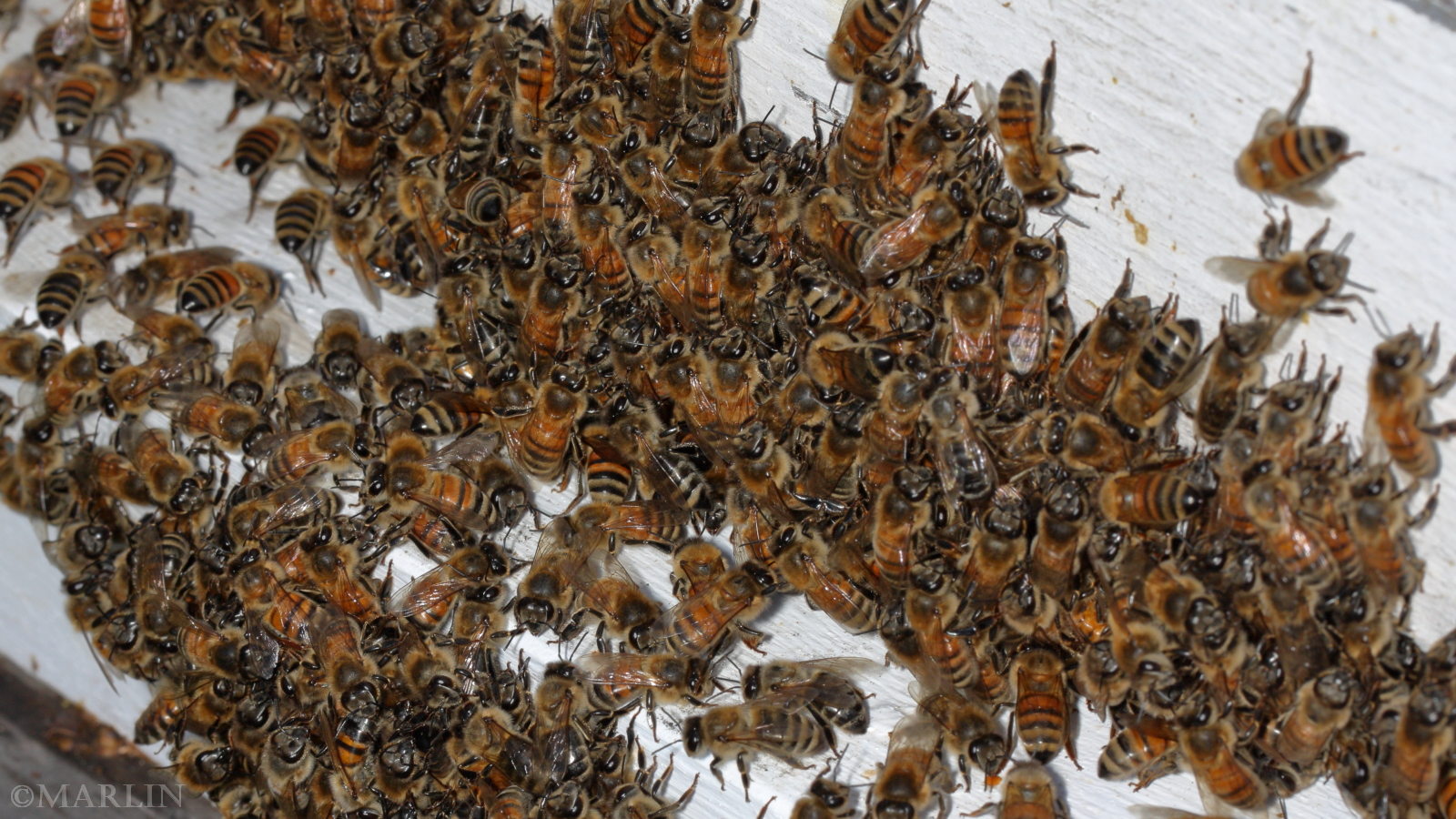
The bees in a normal colony have perhaps 10,000 larvae to feed at any one time, and each of these may require several thousand feeding visits in the six days they take to mature. A healthy colony may contain 50 to 80 thousand individuals, including 2 or 3 thousand male bees (drones). They, too, are fed with royal jelly until they are either expelled from the nest during a swarm, or are killed by stinging and thrown out . Between the 12th and 18th day of their existence, the bee’s wax glands begin to produce the substance from which the combs are constructed. They are then occupied with receiving pollen and honey from the foragers, building storage and brood cells, and standing sentry duty at the hive entrance.
The third and final phase of a honeybee’s life is spent in the field, gathering pollen and honey and returning it to the hive. During this period the bee also passes information to her sister foragers regarding the location of food sources, including the direction and distance from the hive. These data are communicated through a complex series of “dance” movements performed on the honeycomb. The spatial orientation of the dance is related to the sun’s position, and the number of “wiggles” the bee incorporates gives the distance to and abundance of the food source. An adult honeybee survives about 10 days of foraging, for a total lifespan of about 35 days.
References
- Core A, Runckel C, Ivers J, Quock C, Siapno T, et al. (2012) A New Threat to Honey Bees, the Parasitic Phorid Fly Apocephalus borealis. PLoS ONE 7(1): e29639. doi:10.1371/journal.pone.0029639.
- Waugsberg, “Two drone pupae of the Western honey bee with varroa mites“
Insects & Spiders | Bees & Wasps Index | Bees & Wasps Main | Beetles Index