Longhorned Beetle – Batyle suturalis
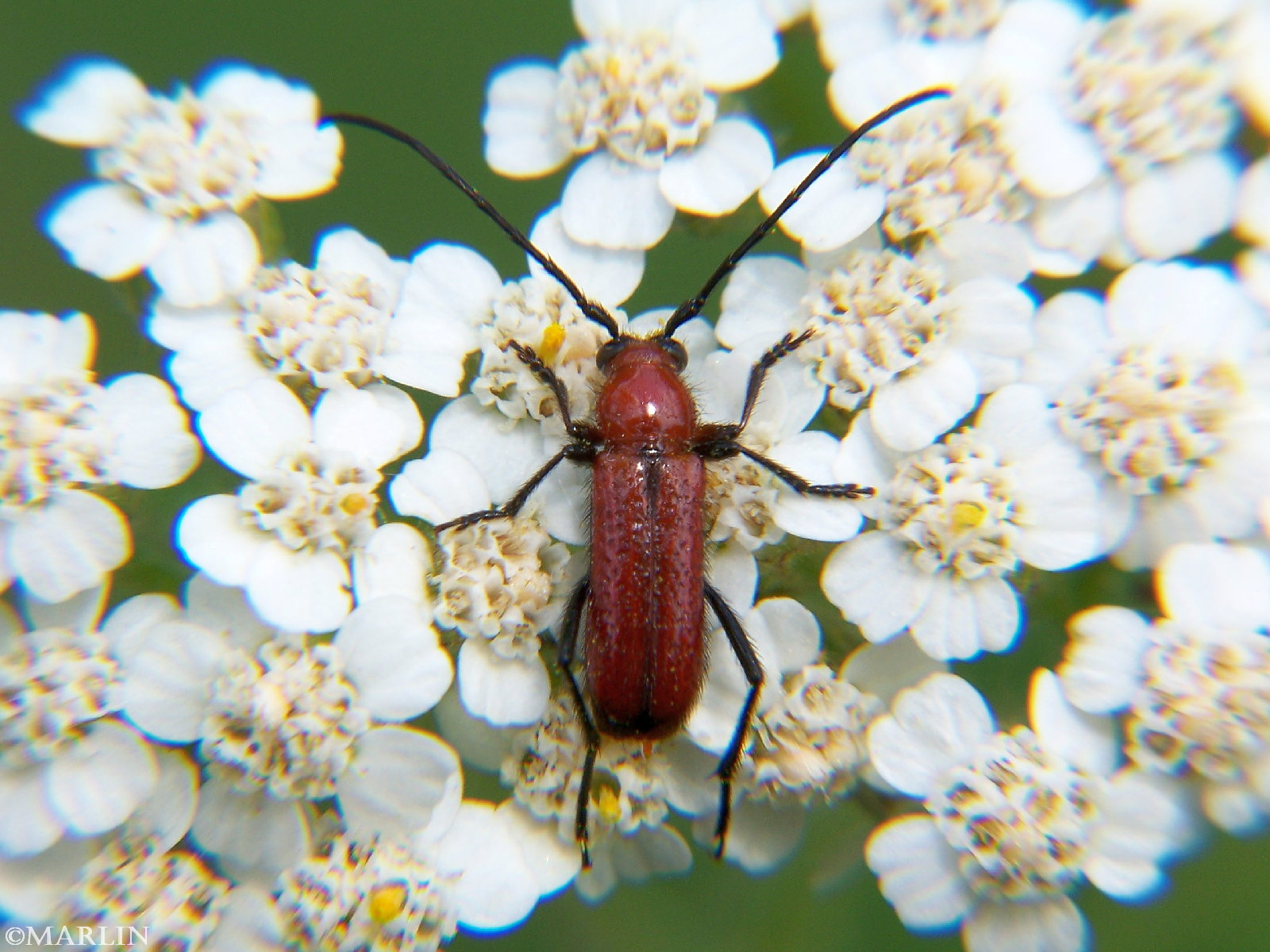
Family Cerambycidae – Longhorned Beetles
Live adult beetles photographed at Oxford, Wisconsin. Size: 10mm
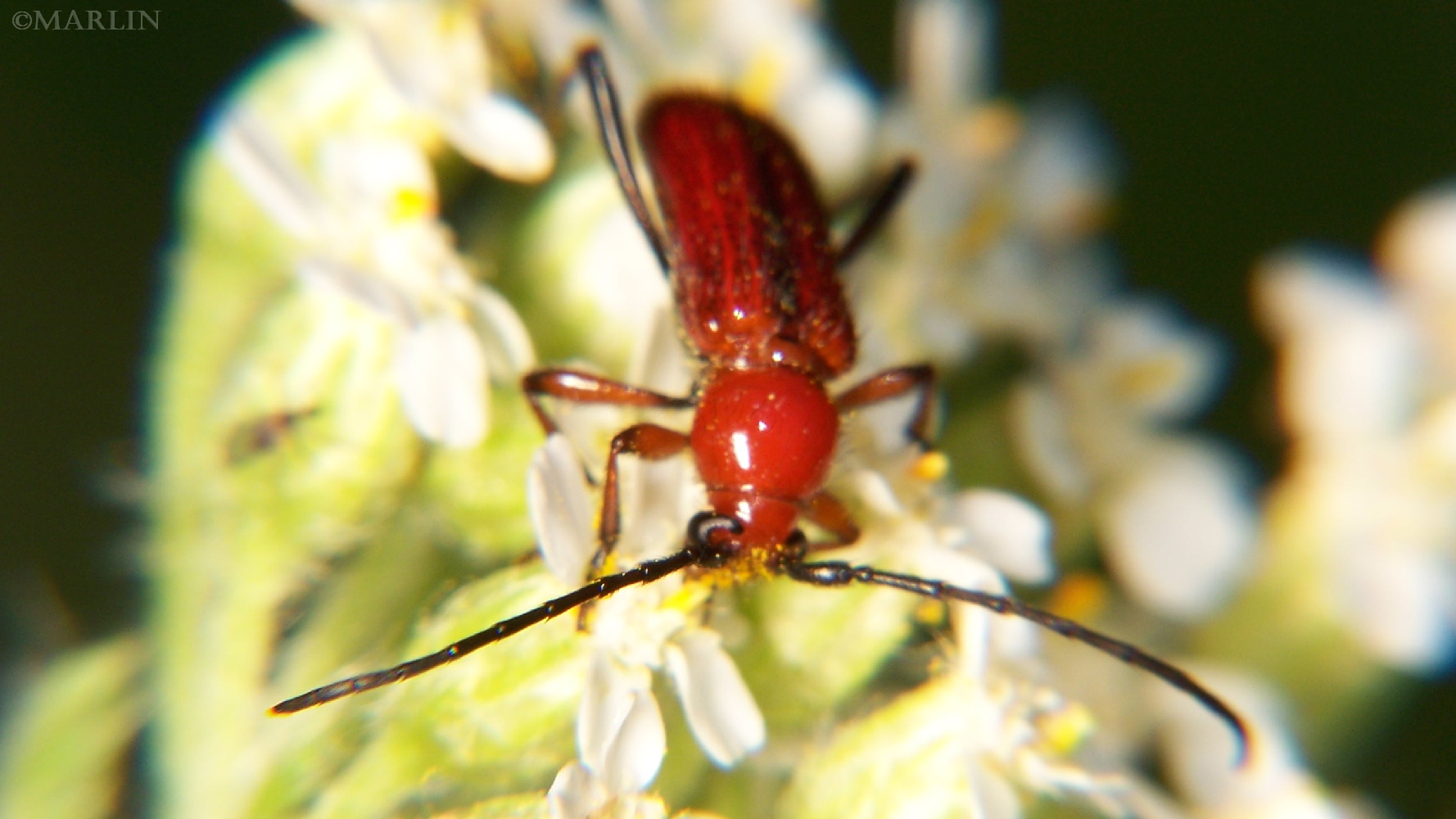
Cerambycidae is a cosmopolitan family of beetles characterized by their extremely long antennae, which are sometimes up to 2.5 x longer than the beetle’s body. Many longhorns are serious agricultural pests, as their larvae have the unfortunate habit of boring wood. The Asian Longhorn beetle, for instance has been responsible for the preventive destruction of thousands of trees in Northern Illinois and other locations in the United States. Hear ‘Cerambycidae’ pronounced.
Most Cerambycidae larvae feed within dead, dying or even decaying wood, but some taxa are able to use living plant tissue. Girdlers (adults of the Onciderini, larvae of genera in the tribes Methiini, Hesperophanini and Elaphidiini) sever living branches or twigs, with the larvae developing within the nutrient-rich distal portion. The larvae of a few species move freely through the soil, feeding externally upon roots or tunneling up under the root crown. [3]
Most adult cerambycids feed on flowers and pollen, and can be important pollinators of flowering plants. Other species consume sap, leaves, blossoms, fruit, bark or fungi. [3]
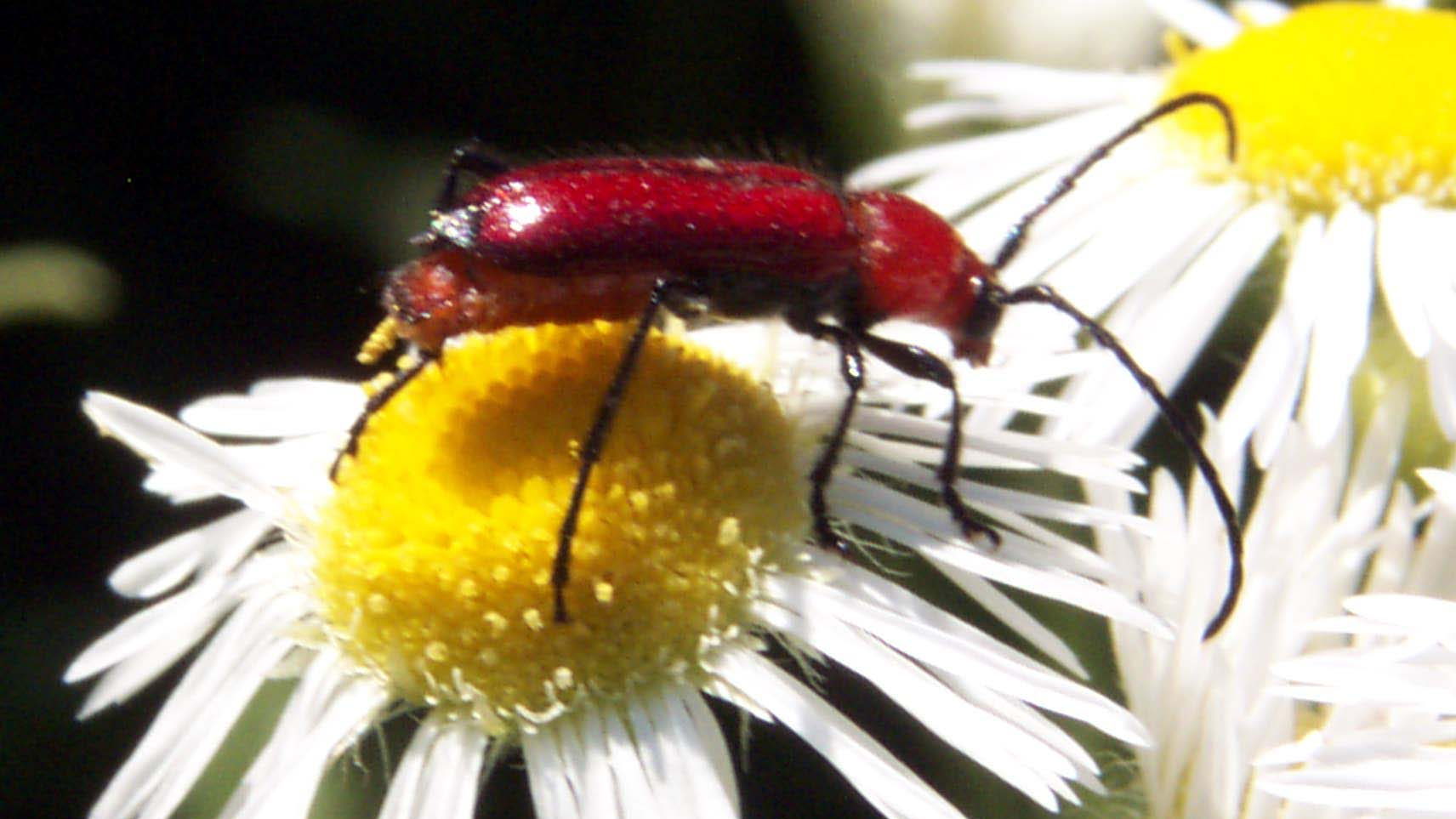
Pollen-colored poop? How cool is that?
The eyes are notched or actually wrap around the base of the antennae (fig.1), and in at least one species, the red milkweed beetle, the eye is split in two with the antennae inserted between the sections.
There are over 20,000 species described, with over 250 genera and 1100 species in North America. Many longhorns are serious agricultural pests, as their larvae have the unfortunate habit of boring wood. The Asian Longhorn beetle, for instance, has been responsible for the preventive destruction of thousands of trees in Illinois and other locations in the United States.
References
- Douglas Yanega, Field Guide to Northeastern Longhorned Beetles (Illinois Natural History Survey, 1996).
- Josef Nissley Knull, The long-horned beetles of Ohio: (Coleoptera: Cerambycidae)
- Bugguide.net, Family Cerambycidae, Batyle suturalis
Beetles Main | Beetles Index | Longhorns | Leaf Beetles | Soldier | Blister | Lady | Scarab
Tree Encyclopedia / North American Insects & Spiders is dedicated to providing family-friendly educational
resources for our friends around the world through large images and macro photographs of flora and fauna.
Online since 2002