
Dung Beetle – Copris fricator
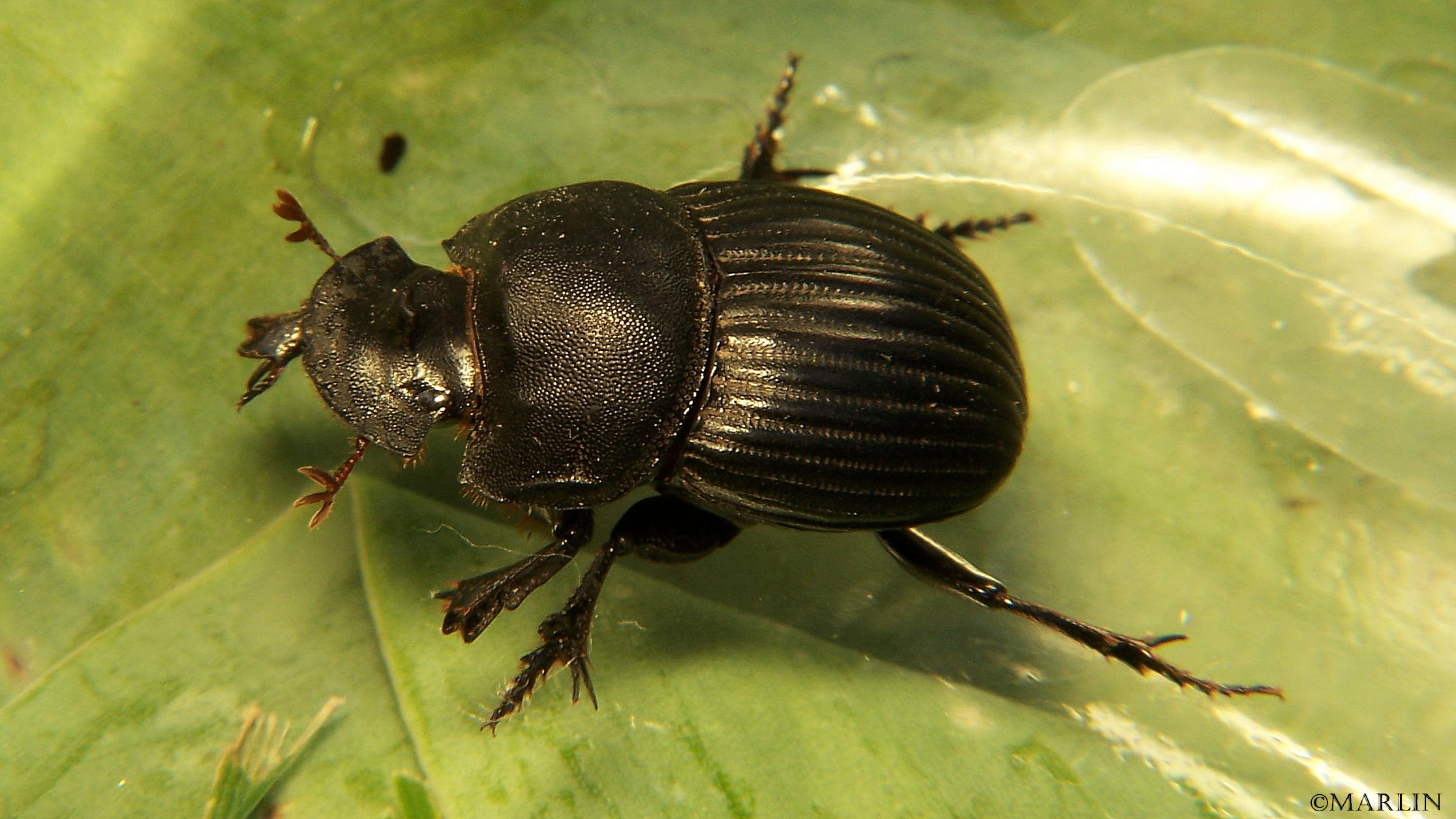
Dung beetles are those which feed partly or exclusively on feces. Most of these species belong to the subfamilies Scarabaeinae and Aphodiinae of the family Scarabaeidae. As most species of Scarabaeinae feed exclusively on dung, that subfamily is often dubbed true dung beetles. There are dung-feeding beetles which belong to other families, such as the Geotrupidae (the earth-boring dung beetle). The Scarabaeinae alone comprises more than 5,050 species. Many dung beetles, known as rollers, are noted for rolling dung into spherical balls, which are used as a food source or brooding chambers. Other dung beetles, known as tunnellers, bury the dung wherever they find it. A third group, the dwellers, neither roll nor burrow; they simply live in manure.
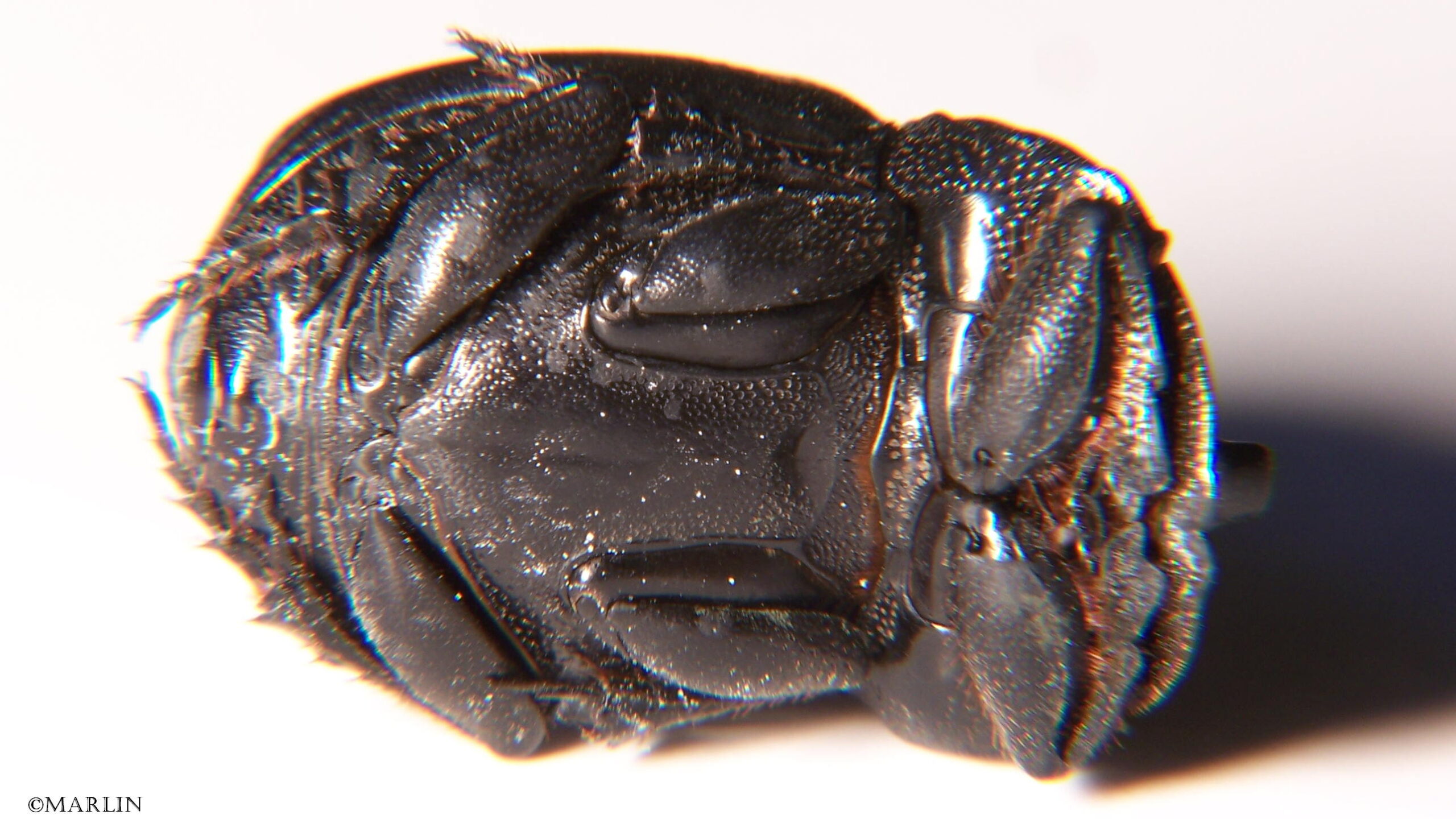
Ventral view: note how legs fit into recesses for protection
Although the morphology of many species is poorly known, dung beetles have been subject to much study. They are highly beneficial as scavengers, and a few species have been introduced intentionally from Africa to Australia and the U.S. In addition to dung removal, their activities enrich the soil and reduce numbers of dung-feeding flies.
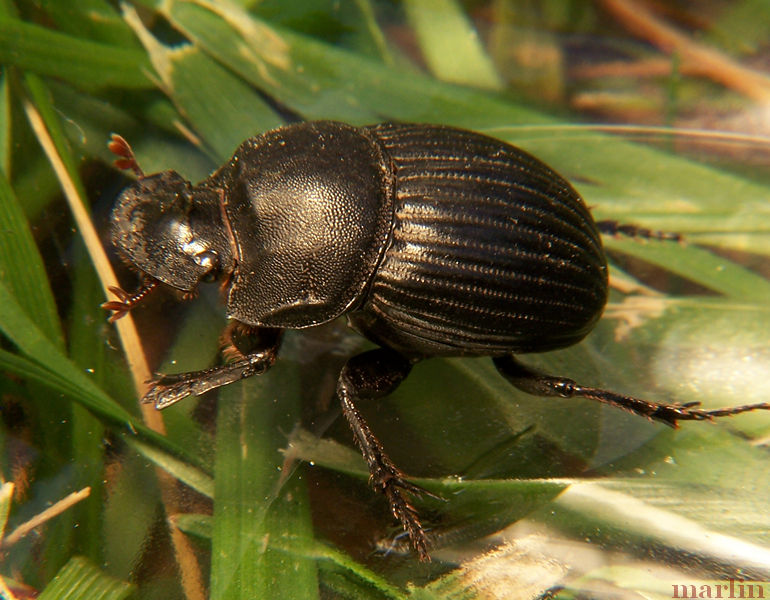
Beetles can easily be recognized by the armor-like forewings, called elytra, that cover the membranous hindwings used for flying. The name coleoptera means “sheath wings.” Most beetles have large prominent compound eyes, and there are many different types of beetle antennae: threadlike, clubbed, antennae with leaf-like structures at the tip, so-called longhorn beetles with antennae up to 2 1/2 times their body length. The elytra are often brightly colored and patterned, attributes that earn some beetles the sobriquet “living jewels.”
Beetles Main | Beetles Index | Longhorns | Leaf Beetles | Soldier | Blister | Lady | Scarab