
Brown Fruit Chafer – Euphoria inda
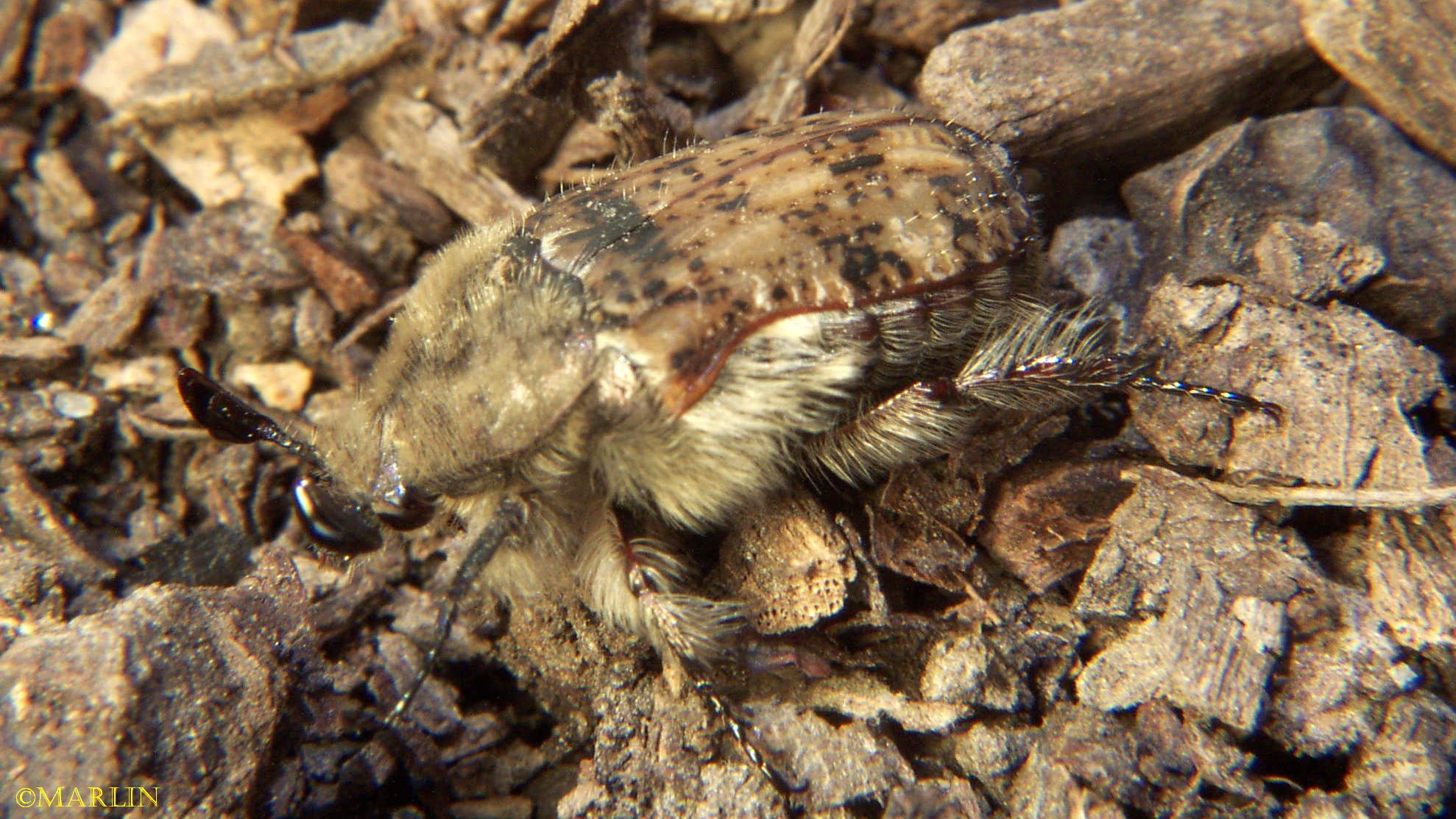
I found this adult chafer on a bark-mulched path in the woods, which seems this beetle’s natural habitat, given the incredible camouflage, and the readily-burrowed surface. It was all I could do to snap one shot before this plucky creature had buried himself once again.
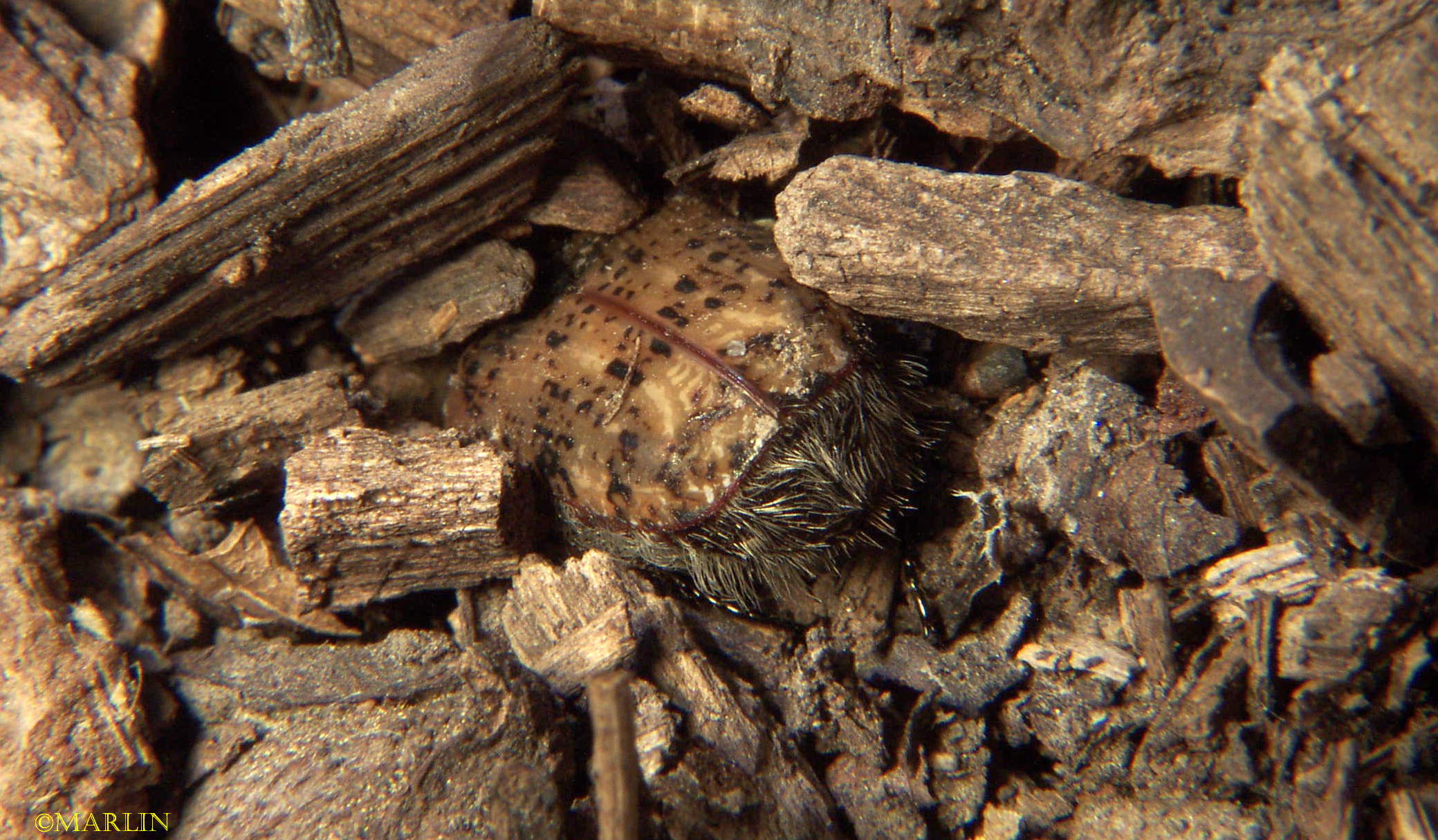
Bye-bye beetle. It took about 5 seconds for this energetic creature to make itself invisible
Adult chafers eat the leaves and flowers of many deciduous trees, shrubs and other plants, but rarely cause any serious damage. However, their fat, white grubs (reaching 40-45 mm long when full grown) live in the soil and feed on plant roots, especially those of grasses and cereals, and are occasional pests in pastures, nurseries, gardens, and in grassy amenity areas like golf-courses. The injury to grassland and lawns results in poorly growing patches that quickly turn brown in dry weather; the grubs can be found immediately below the surface, usually lying in a characteristic comma-like position [2].
Beetles Index | Longhorns | Leaf Beetles | Soldier | Blister | Lady | Scarab
