
Family Cleridae – Checkered Beetles
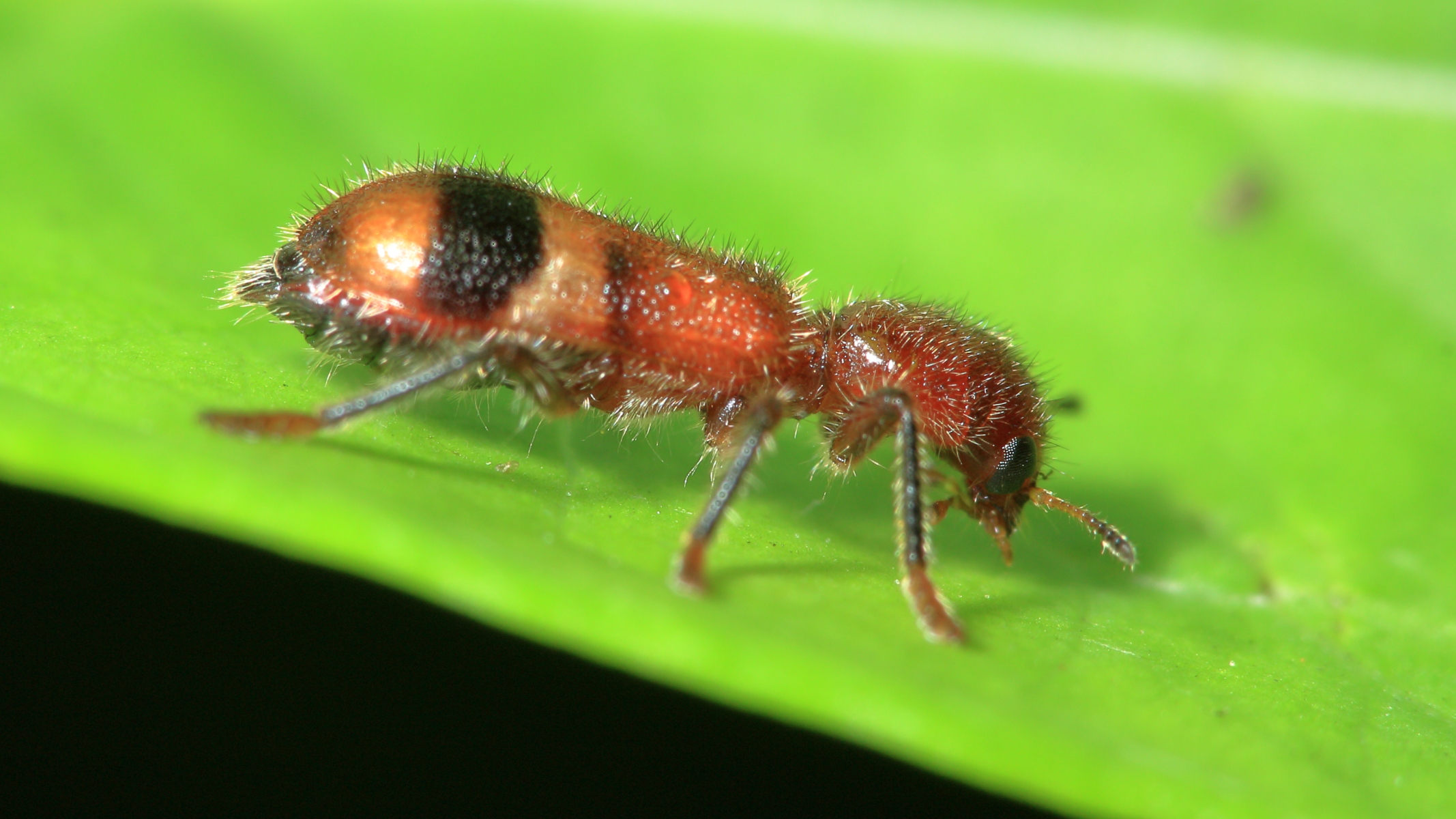
Enoclerus rosmarus Size= 8mm
The checkered beetles (Family Cleridae), are small insects found primarily in woodlands. The name “checkered beetle” refers to the conspicuous colorful bands across the back of the adults. Their rounded bodies are often covered with dense, short hairs (pubescence). Common species are between 10-15mm. There are about 250 described species in the U.S. and 2500 worldwide. The adults are fairly long-lived and can be seen for several months during the summer.
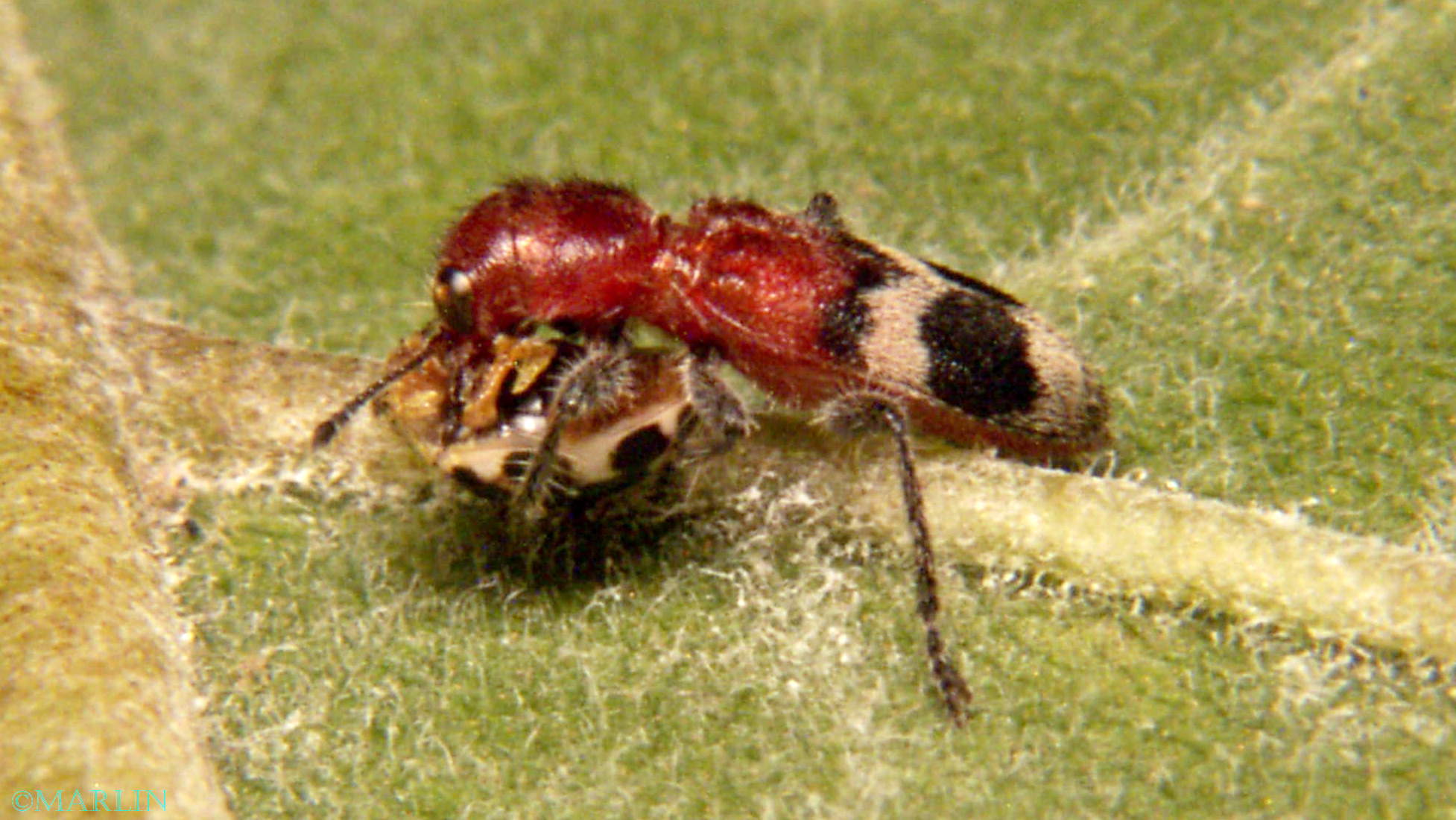
Enoclerus quadriguttatus attacks lady beetle
The majority of clerid beetles are predaceous on wood-boring beetles, especially bark beetles, and are very important natural controls of these forest pests. Adult clerid beetles feed on the adult wood-borers, while the larvae prey on the immature stages, including the eggs. Other species feed on grasshopper egg pods, a few have been reported as predators of gall insects, and one genus, Necrobia, has departed from the typical food habit of the family and are primarily scavengers.
Beetles Index | Longhorns | Leaf Beetles | Soldier | Blister | Lady | Scarab

