
Click Beetles – Family Elateridae
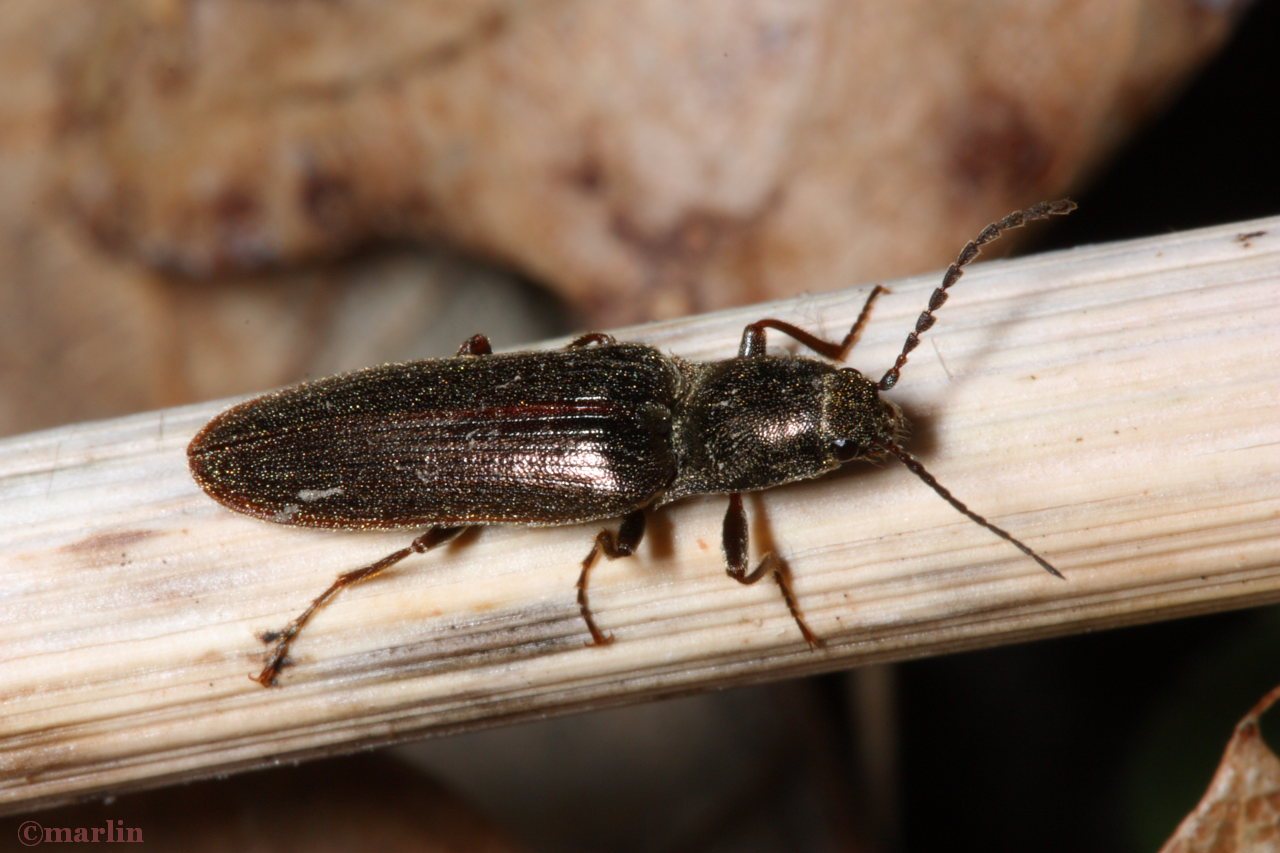
Ctenicera cylindriformis
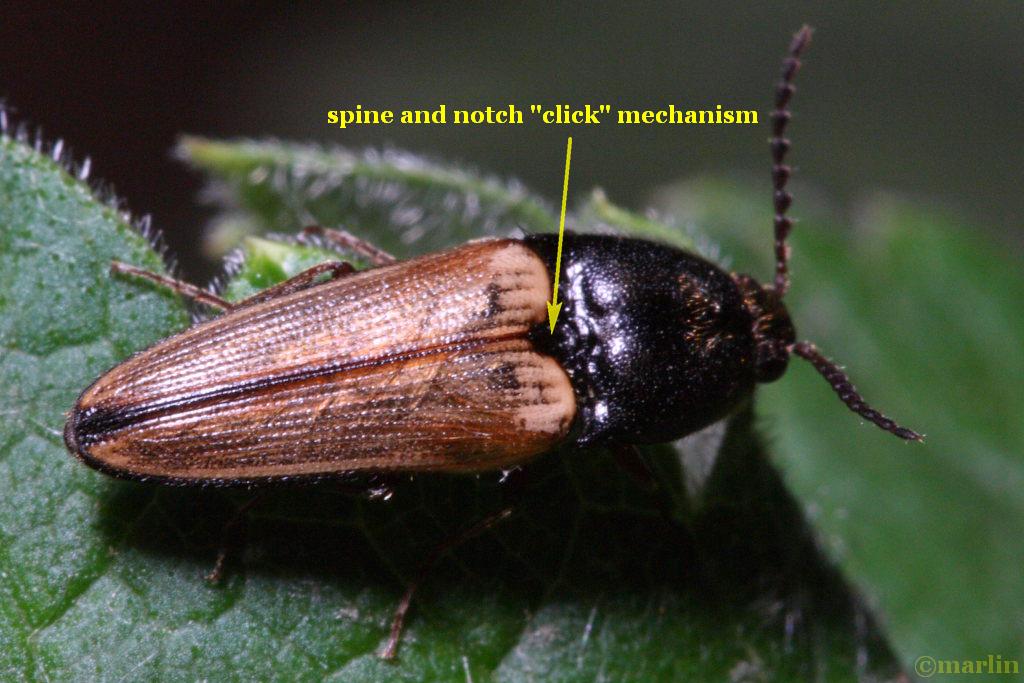
Beetles in the family Elateridae are commonly called click beetles, elaters, skipjack, snapping, or spring beetles. They possess a mechanism by which they can violently launch themselves several inches into the air, a method they use to avoid predators and right themselves if they happen to fall on their backs.
There are about 7000 known species.
The larvae of a few species, called wireworms, can be serious agricultural pests of corn and other cereal grains.
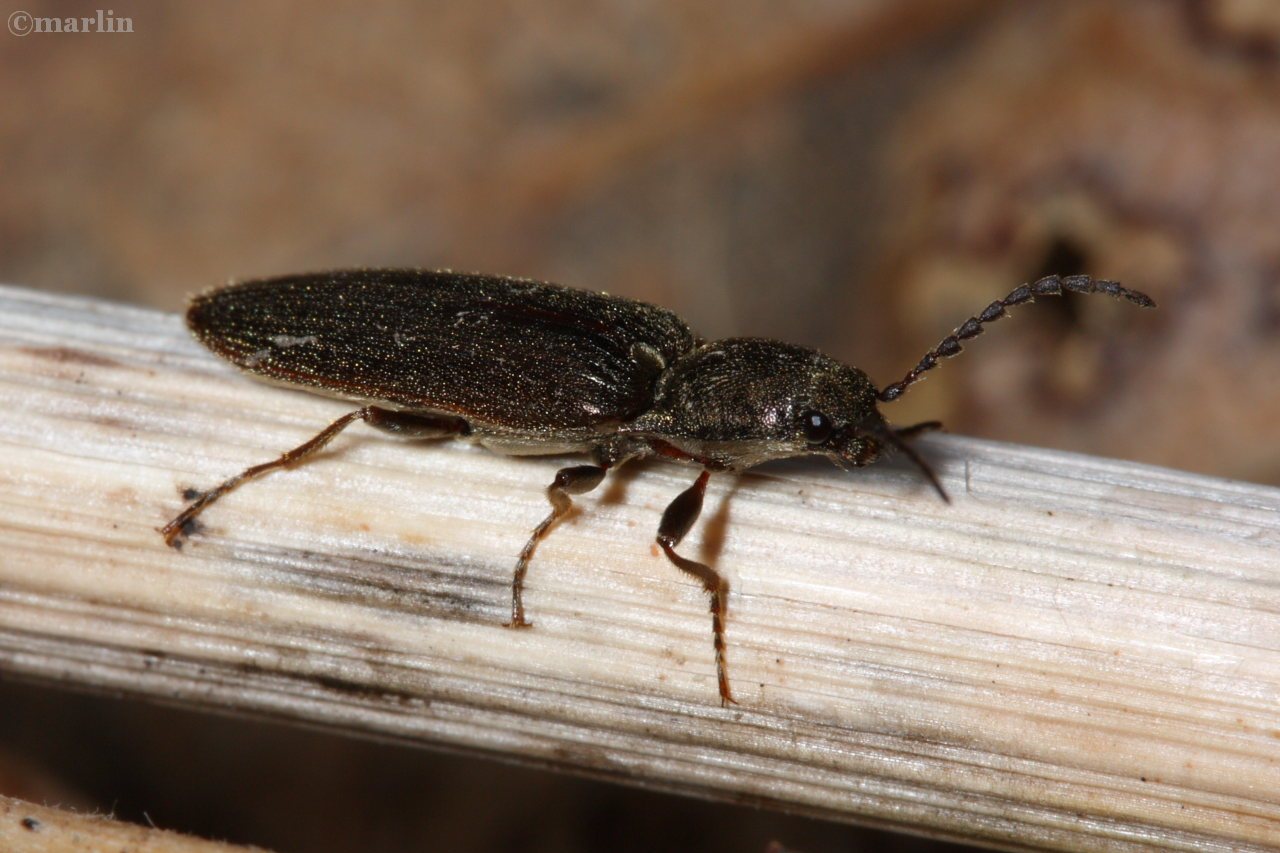
Click beetles undergo complete metamorphosis: Egg – larvae (beetle larvae are called “grubs”) – pupa – adult. Some species of click beetle have larvae that have a hard shell, commonly called “wireworms.”
These grubs can be serious agricultural pests, feeding as the do on the roots of plants (corn and other cereal grains are often attacked) during their 1-3 year portion of the life cycle.
Wireworms usually take three to four years to develop from the egg to an adult beetle. Generations overlap, so larvae of all ages may be in the soil at the same time.
When soil temperatures reach 50 to 55 degrees Fahrenheit during the spring, larvae and adults move nearer the soil surface.
Adult females emerge from the soil, attract males to mate, then burrow back into the soil to lay eggs. Females can re-emerge and move to other sites where they burrow and lay more eggs. This behavior results in spotty infestations throughout a field.
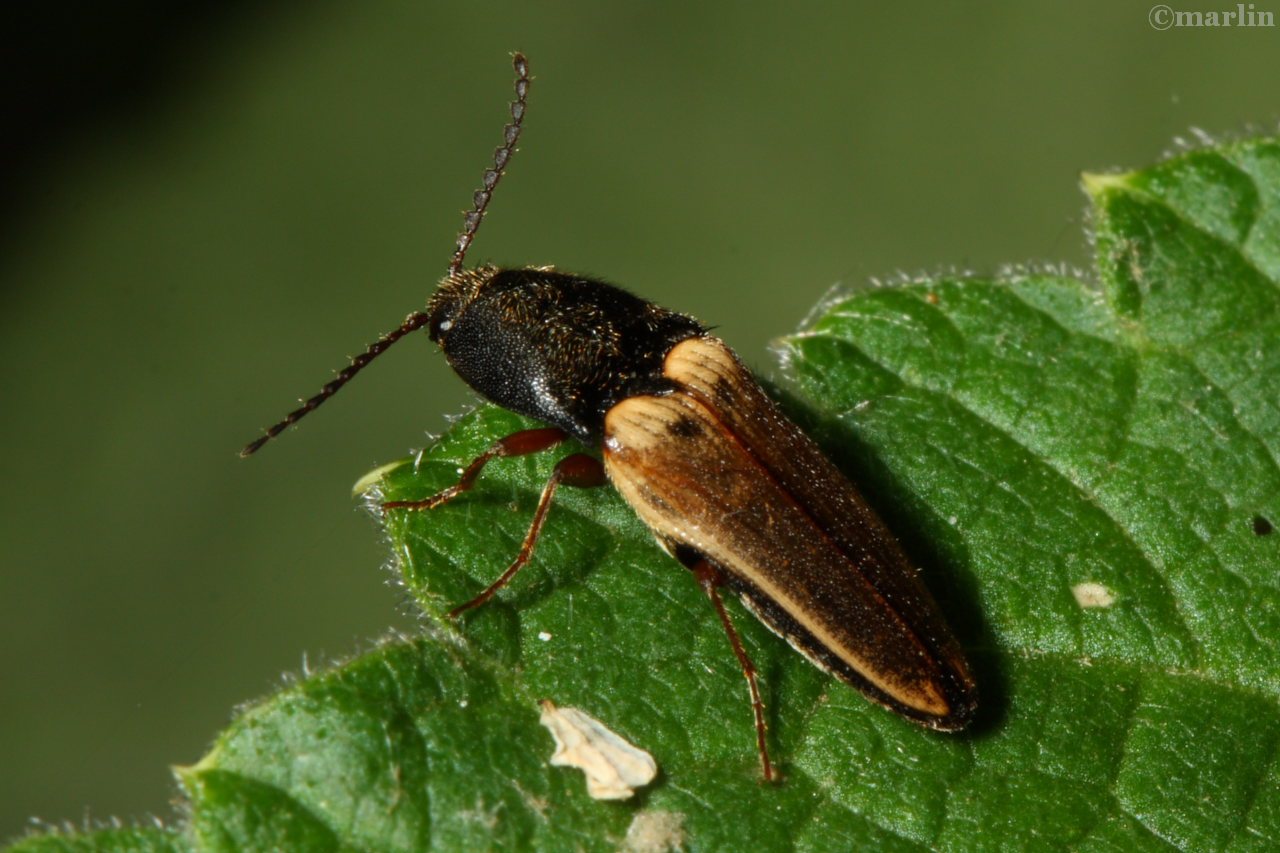
Ampedus species
Larvae move up and down in the soil profile in response to temperature and moisture. After soil temperatures warm to 50 F, larvae feed within 6 inches of the soil surface. When soil temperatures become too hot (>80 F) or dry, larvae will move deeper into the soil to seek more favorable conditions.
Wireworms inflict most of their damage in the early spring when they are near the soil surface. During the summer months the larvae move deeper into the soil. Later as soils cool, larvae may resume feeding nearer the surface, but the amount of injury varies with the crop.
Crops susceptible to injury include small grains, corn, potatoes, sugar beets and vegetables. Legumes are less likely to be injured.
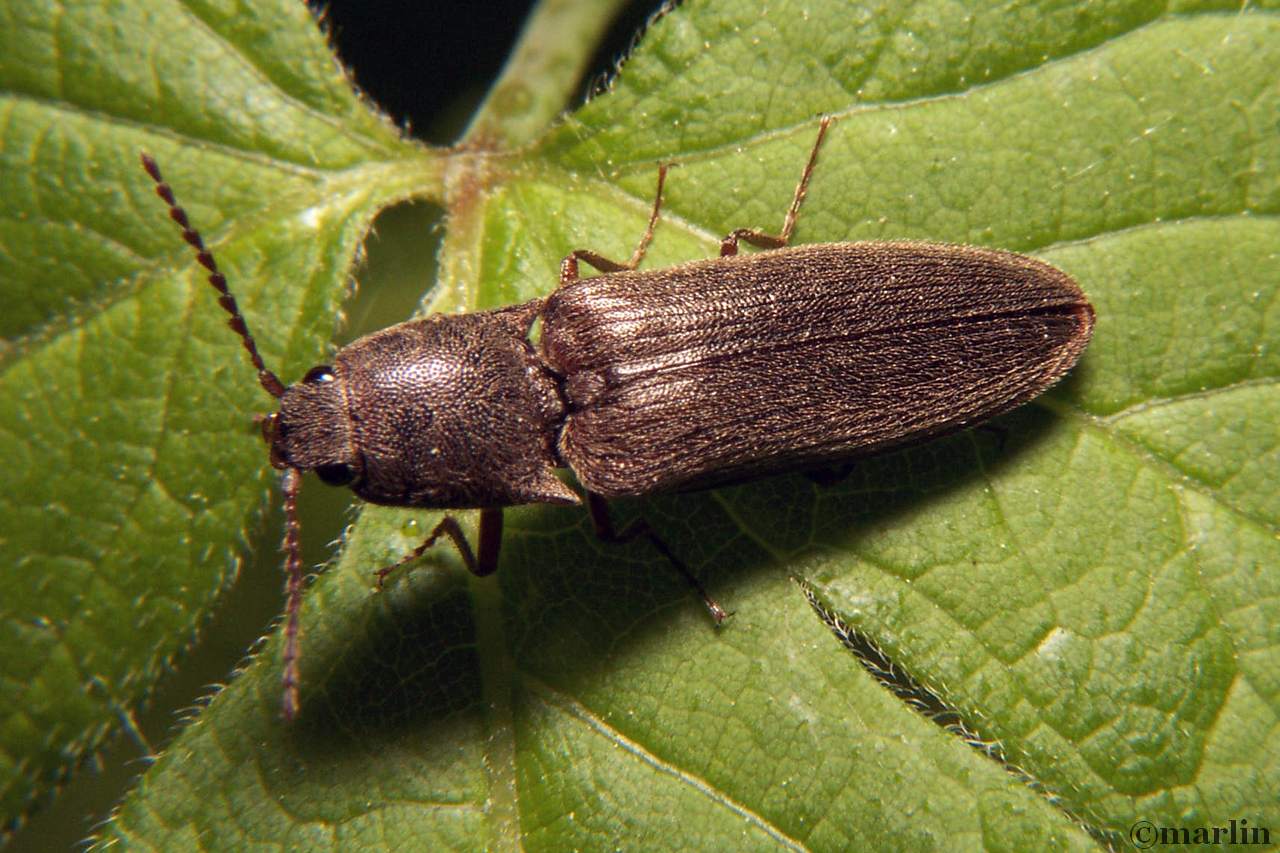
Dalopius species
Order Coleoptera: Beetles are the dominant form of life on earth: one of every five living species is a beetle. Coleoptera is the largest order in the animal kingdom, containing a third of all insect species.
Tree Encyclopedia / North American Insects & Spiders
Online since 2002