
Milkweed Leaf Beetle – Labidomera clivicollis
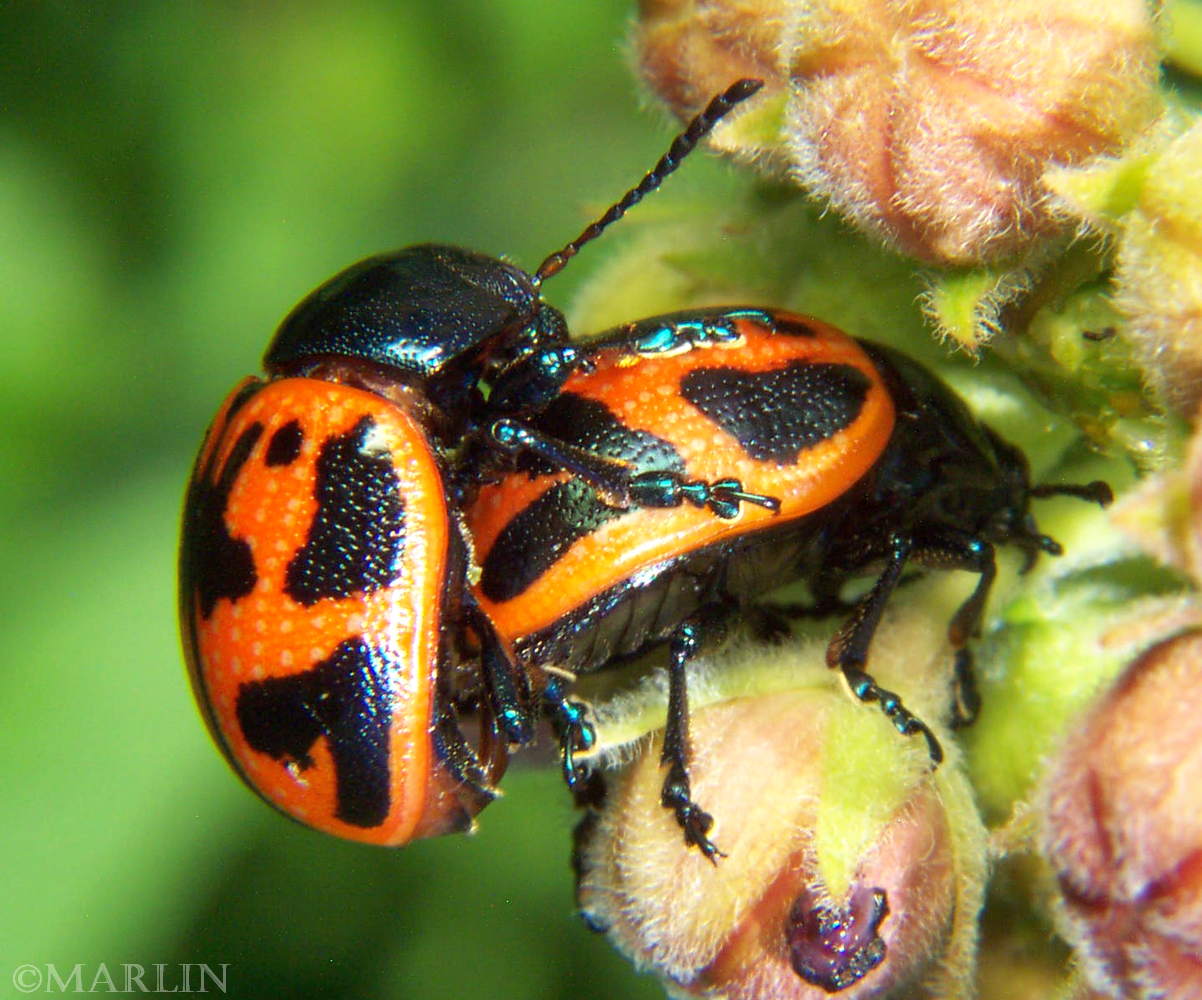
Milkweed leaf beetles are distinctively marked, large orange and black, and are commonly called “swamp” milkweed beetles, after their preference for the swamp milkweed, Asclepias incarnata. They also feed on common milkweed, Asclepias syriaca, and whorled, or horsetail milkweed, Asclepias verticillata, and probably others.
All leaf beetles feed strictly on plant materials. The adults usually consume leaves, stems, flowers, and pollen. Most larvae are underground in habit, feeding on roots and rootlets, but others will consume foliage as well. Many chrysomelids are very specific to particular host plants, but most are able to live on a variety of plants; i.e. the so-called dogbane leaf beetle, Chrysochus auratus, which feeds on prairie plants such as milkweed (Asclepias sp.) and plants in the dogbane genus Apocynum. [2]
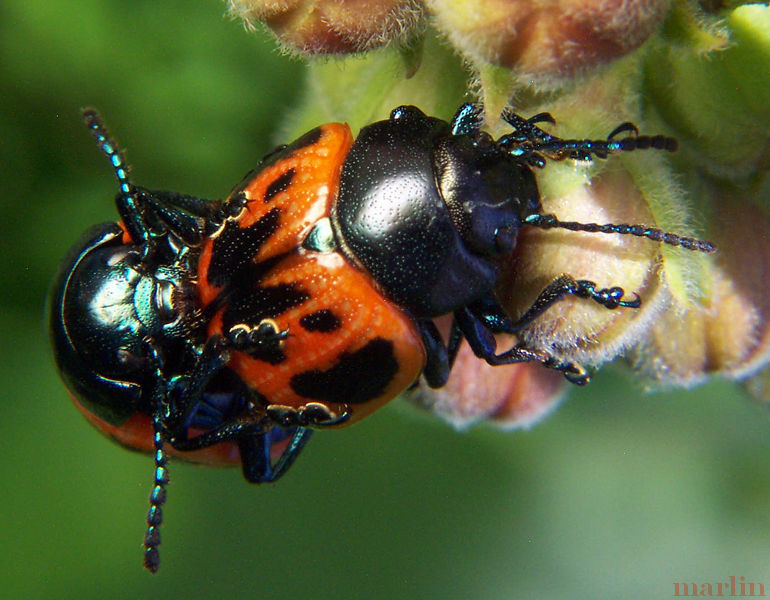
Chrysomelids are second in number of species only to the weevil family, Curculionidae. There are as many as 35,000 described species and perhaps up to 60,000 total species. Presently, the Chrysomelidae are classified in 195 genera and approximately 1,720 valid species and subspecies (plus 149 Bruchinae species) accepted as occurring in North America north of Mexico. [1]
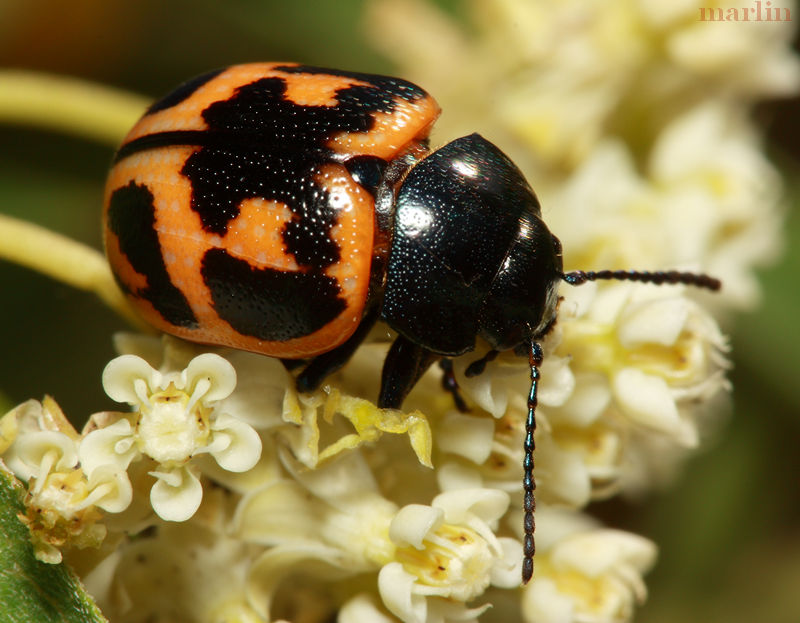
This beetle was a voracious feeder on whorled milkweed flowers, Asclepias verticillata, commonly called horsetail milkweed.
“Caterpillar and adult monarch butterflies store cardiac glycosides from milkweed, making these organisms distasteful. After eating a monarch caterpillar or butterfly, its bird predator will vomit and will avoid eating similar individuals in the future (Huheey 1984). Species that feed on milkweeds are usually aposematically colored. Aposematic species are those that advertise their distastefulness by being brightly colored (see Guilford 1990). Two different species of milkweed bug in the family Hemiptera, Lygaeus kalmii and Oncopeltus fasciatus, are thus colored, with bright orange and black markings.” – From Wikipedia “Herbivore adaptations to plant defense.”
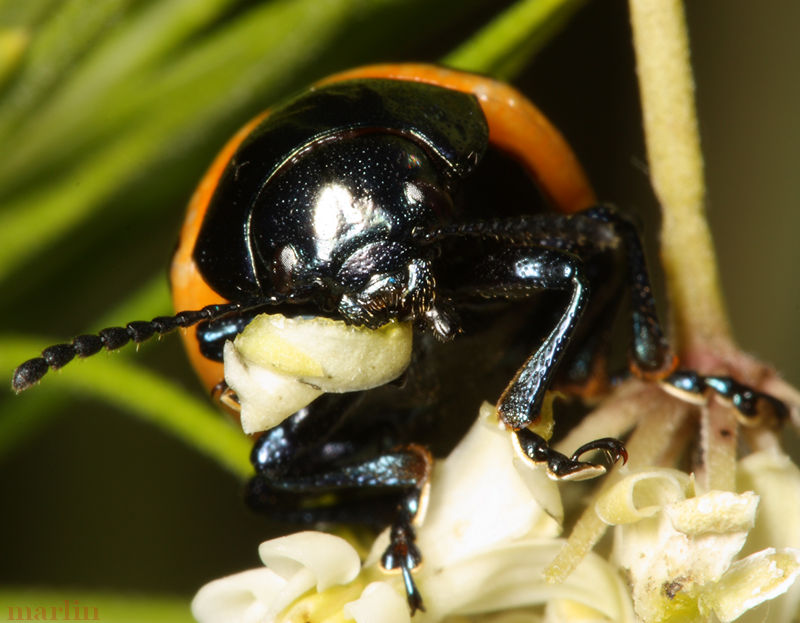 Take a look at the claws and pads on those feet. The beetle bites off pieces of flower, often holding them with its front feet
References
- JR, Ross H. Arnett et al., American Beetles, Volume II: Polyphaga: Scarabaeoidea through Curculionoidea
- Jurgen Gross, On the Evolution of Host Plant Specialization in Leaf Beetles (Logos, 2001)
-
Line, Les. The Audubon Society Book of Insects. Harry N Abrams, 1983.
Beetles Main | Beetles Index | Longhorns | Leaf Beetles | Soldier | Blister | Lady | Scarab
Tree Encyclopedia / North American Insects & Spiders is dedicated to providing family-friendly educational
resources for our friends around the world through large images and macro photographs of flora and fauna.
Online since 2002