
Soldier Beetles – Family Cantharidae
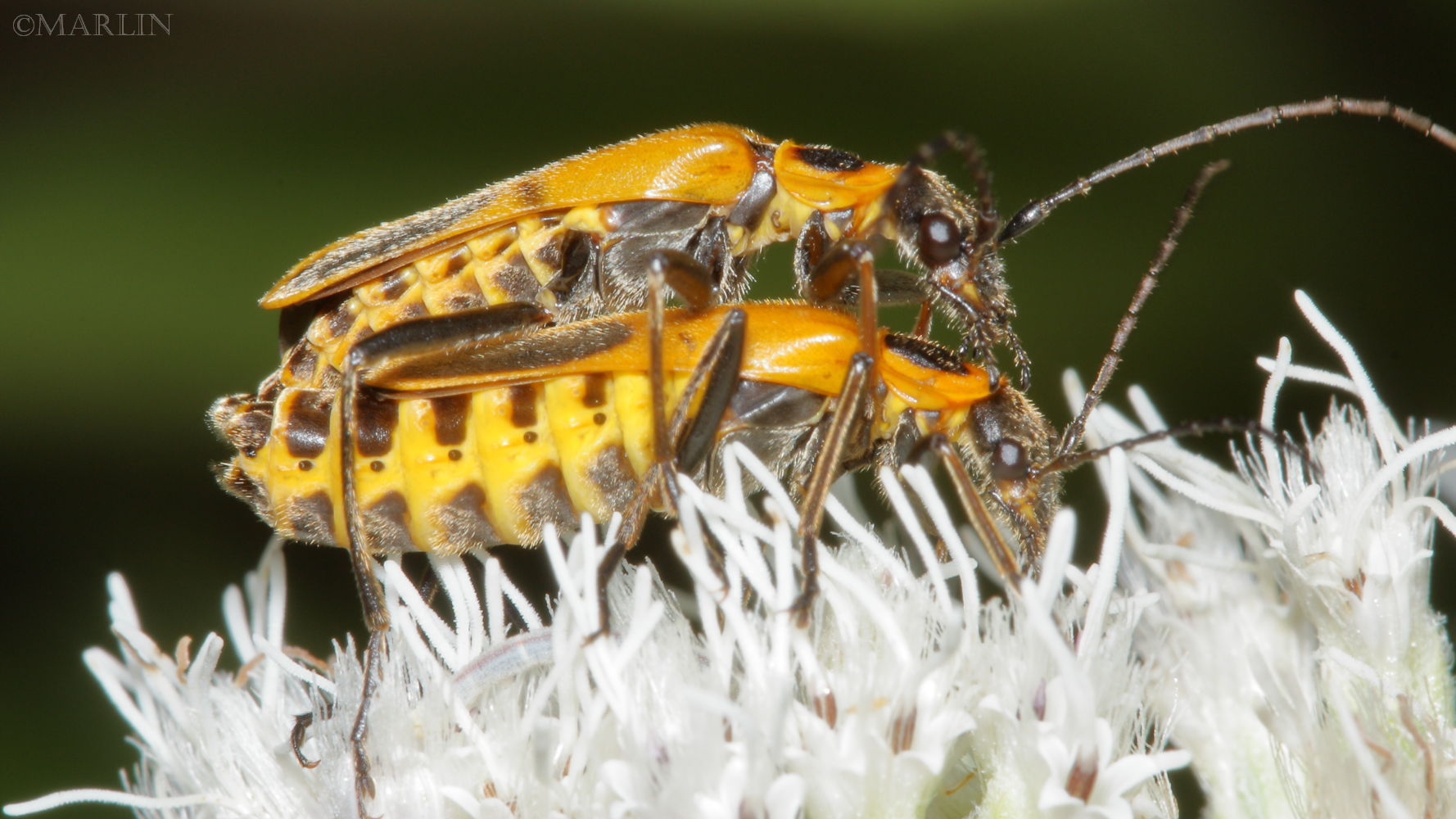
Cantharidae is a family of beetles commonly known as soldier beetles or blister beetles. The family contains over 7,000 species and is found worldwide, with the highest diversity in the tropics.
Soldier beetles are typically elongated and soft-bodied, with prominent antennae and bright colors such as yellow, orange, or red. They are active during the day and can often be seen flying or crawling on flowers and foliage, where they feed on nectar, pollen, and small insects.
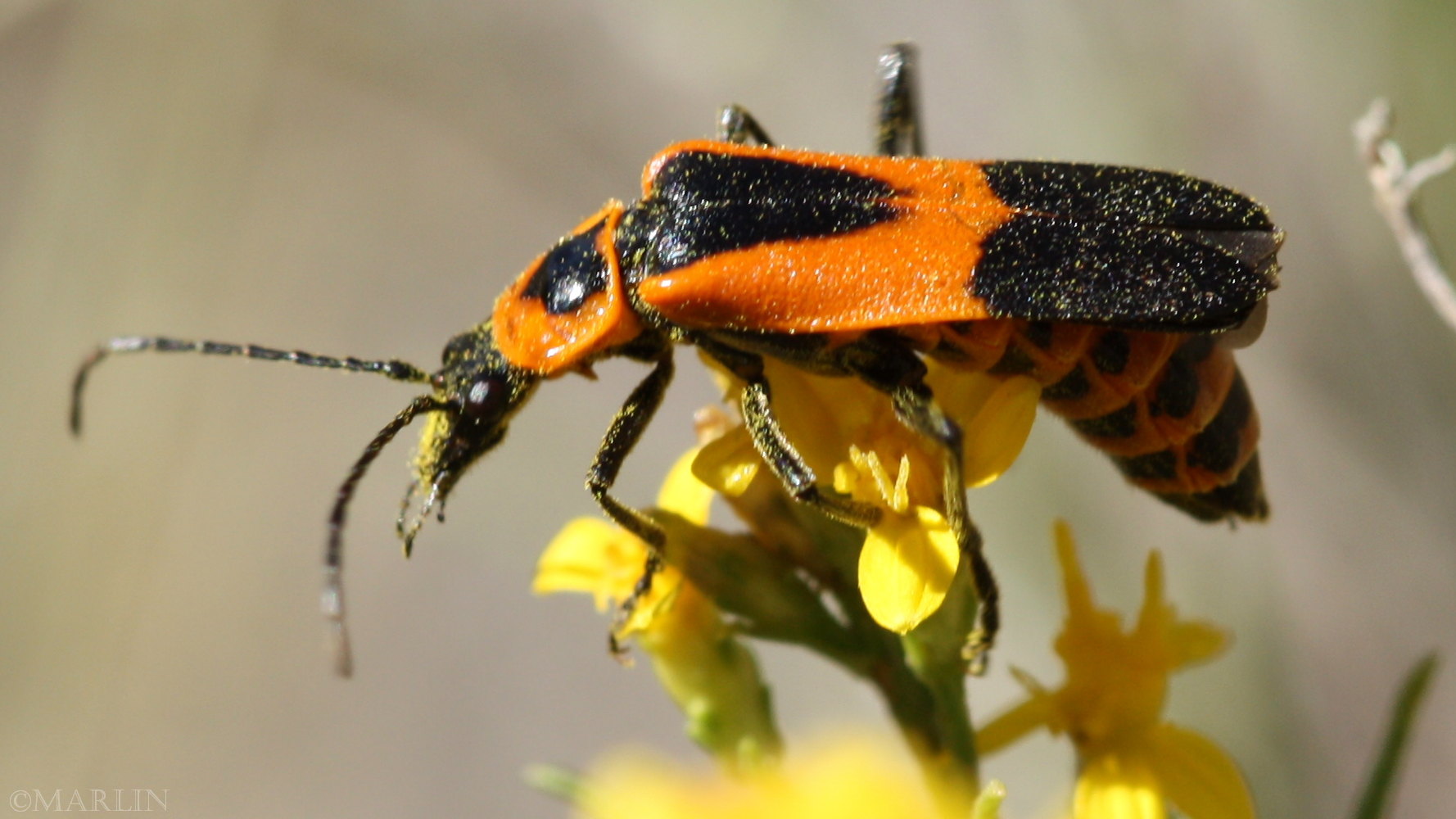
Colorado soldier beetle Chauliognathus basilis
One distinctive feature of some soldier beetles is their ability to produce a toxic compound called cantharidin. Cantharidin is a blistering agent that can cause skin and mucous membrane irritation, and it is used by the beetles as a defensive mechanism against predators. Not all soldier beetles produce this toxin.
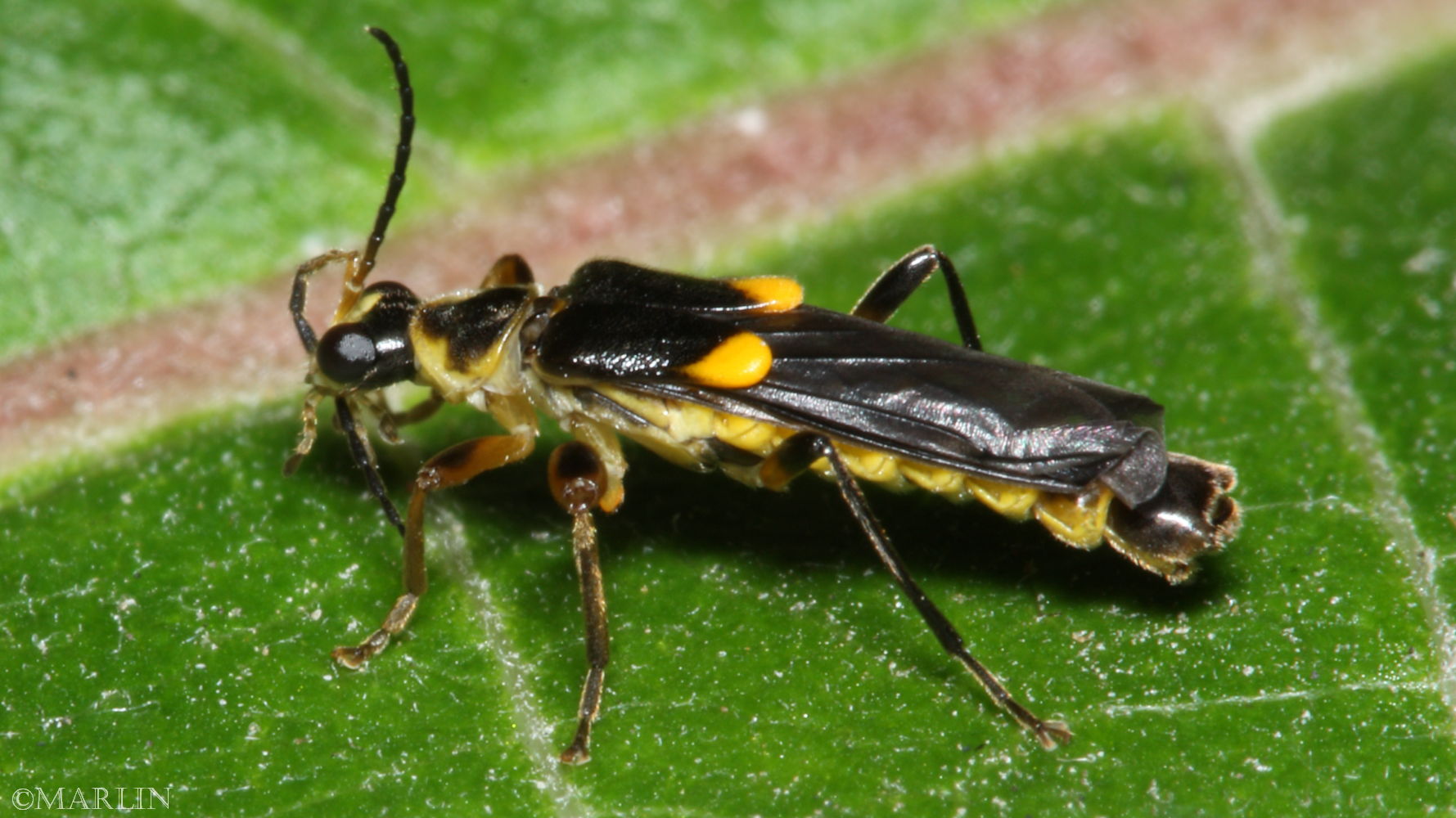
Soldier beetles do not bite or sting, and are considered harmless to humans or their pets.
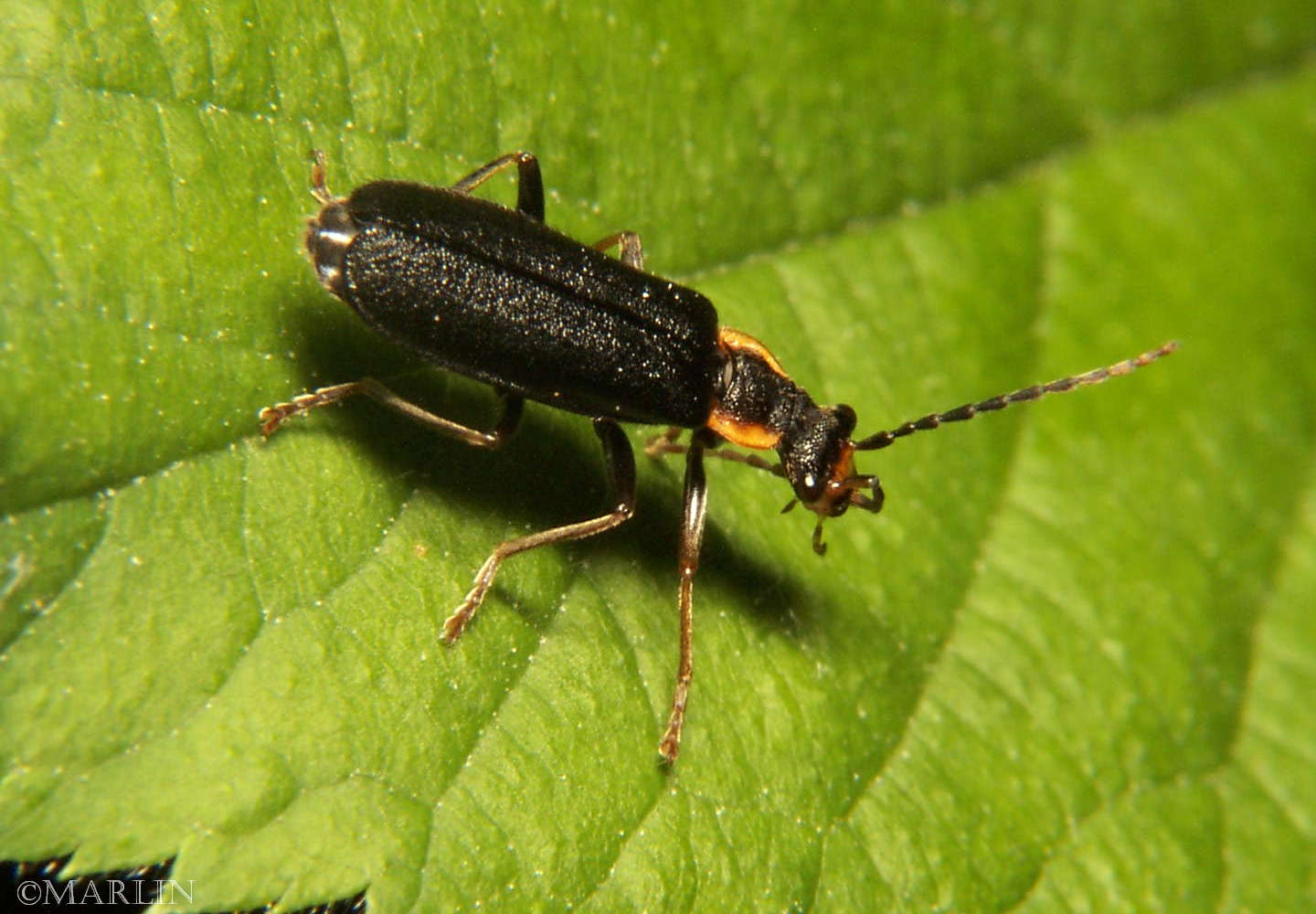
soldier beetle Podabrus rugosulus
Soldier beetles get their name from the military uniform-like markings on some species. A common and easily-spotted species is the Pennsylvania leatherwing, which is yellow with one large black spot on each wing.
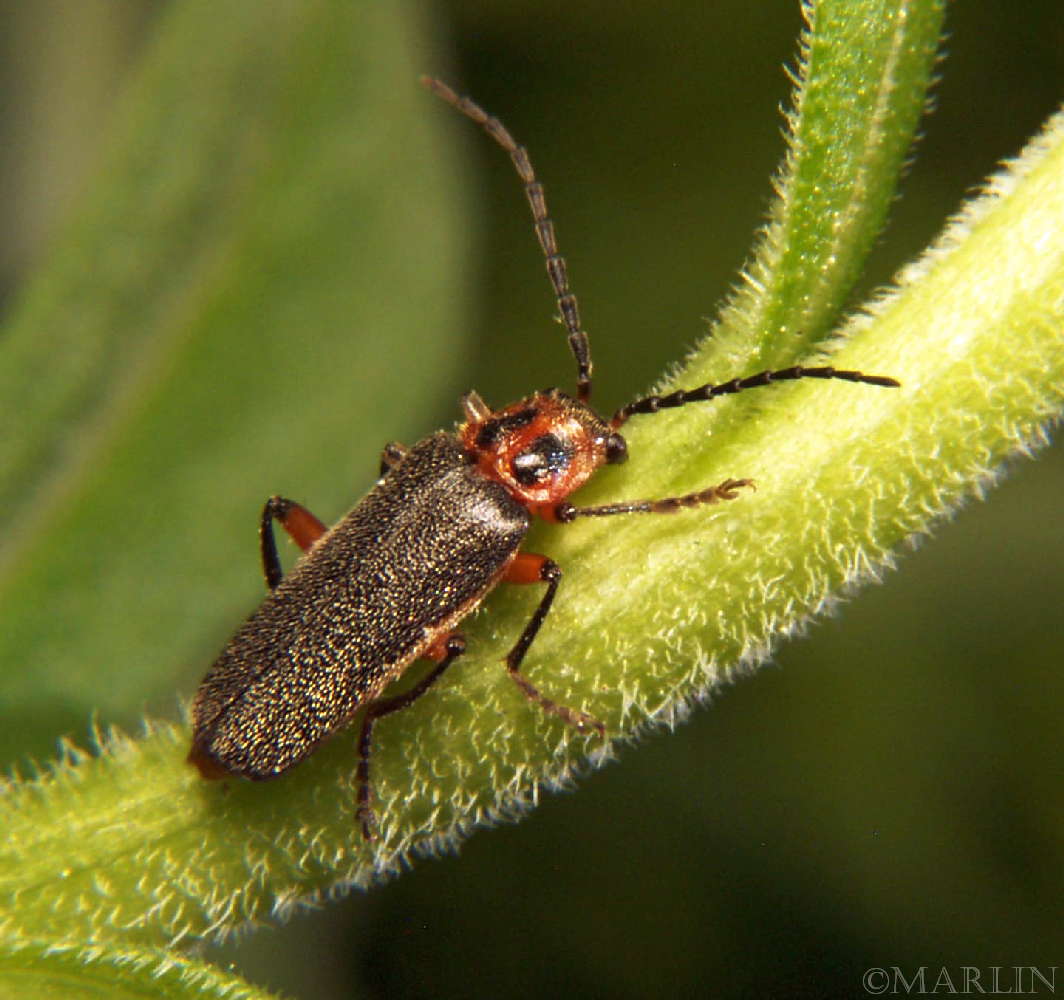
Atalantycha bilineata
Adult females lay their eggs in clusters in the soil. The larvae are velvety, covered with dense bristles, and have antenna-like projections on their head. Most larvae are carnivorous, feeding on insects in the soil. Larvae overwinter in damp soil mast, leaf litter and loose bark.
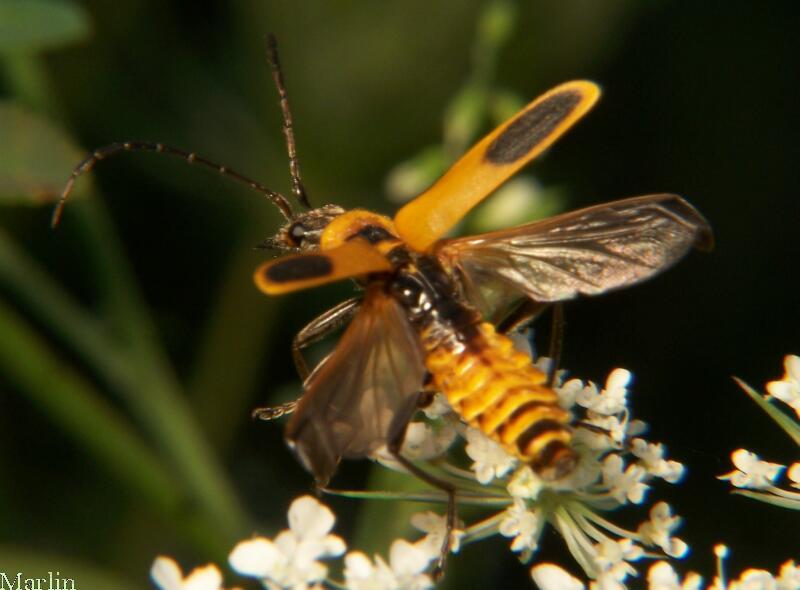 This soldier beetle’s elytra (hardened wing-covers) are held outwards to allow the soft flying wings to function
Tree Encyclopedia / North American Insects & Spiders
Online since 2002