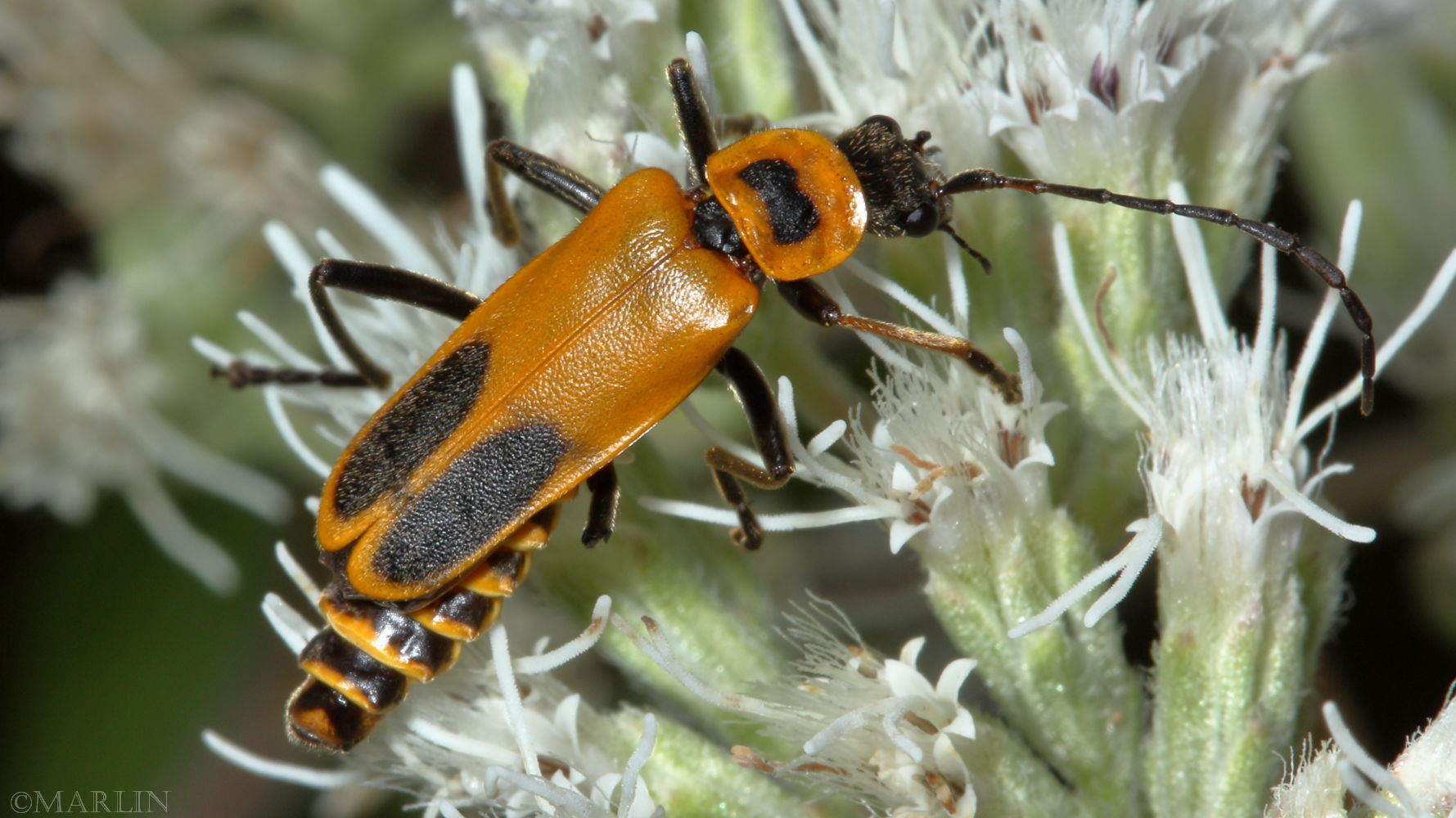
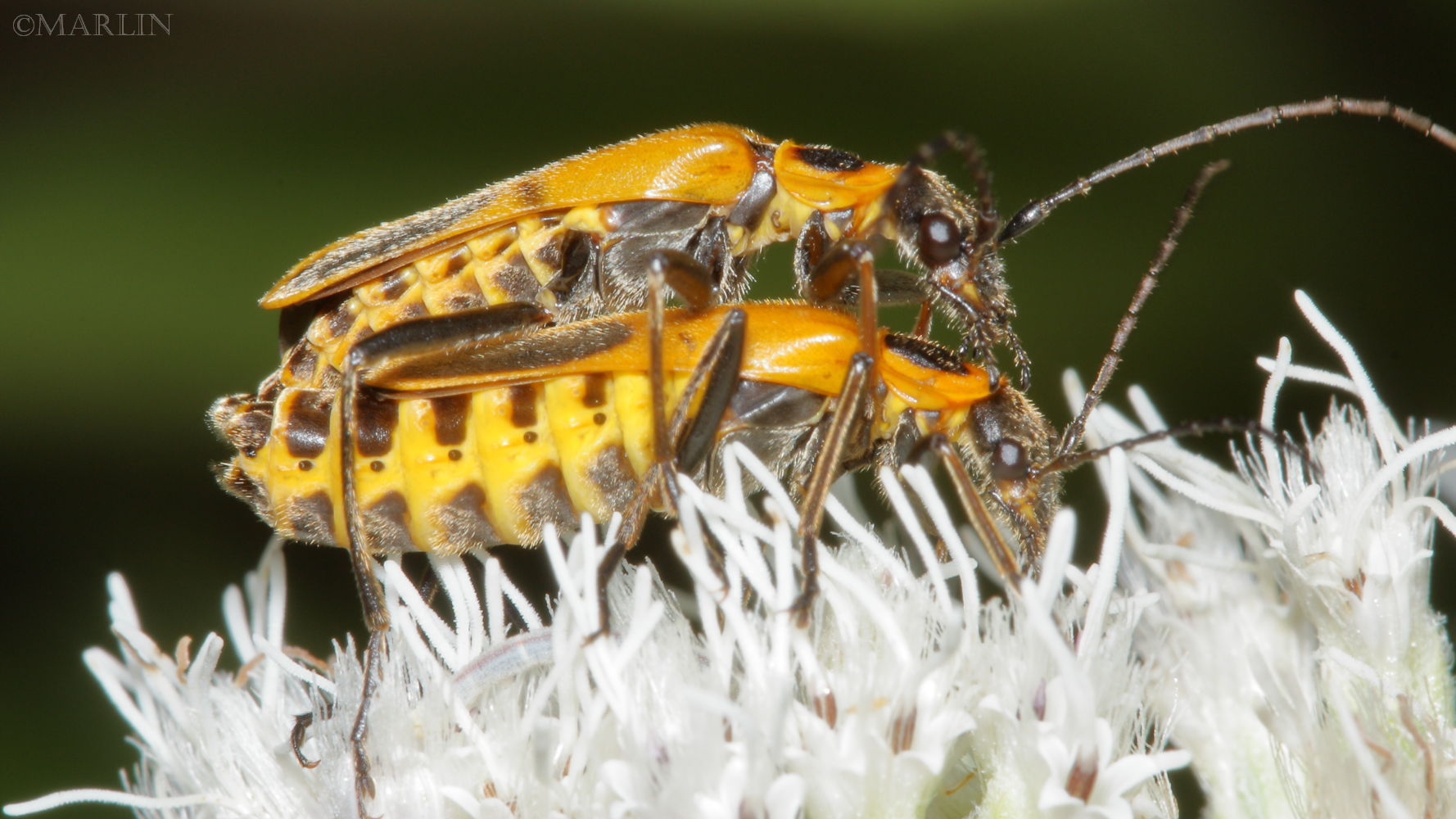
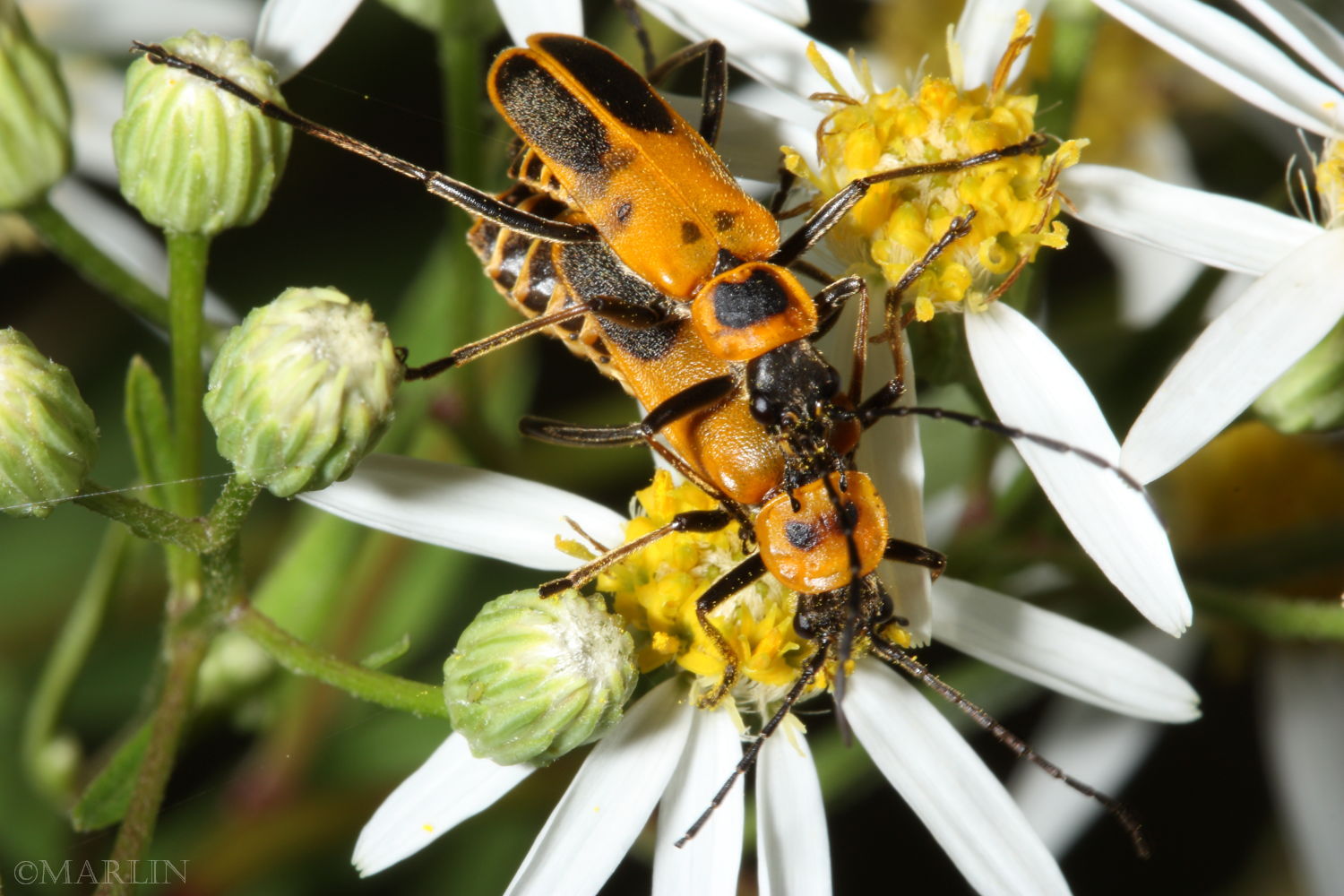
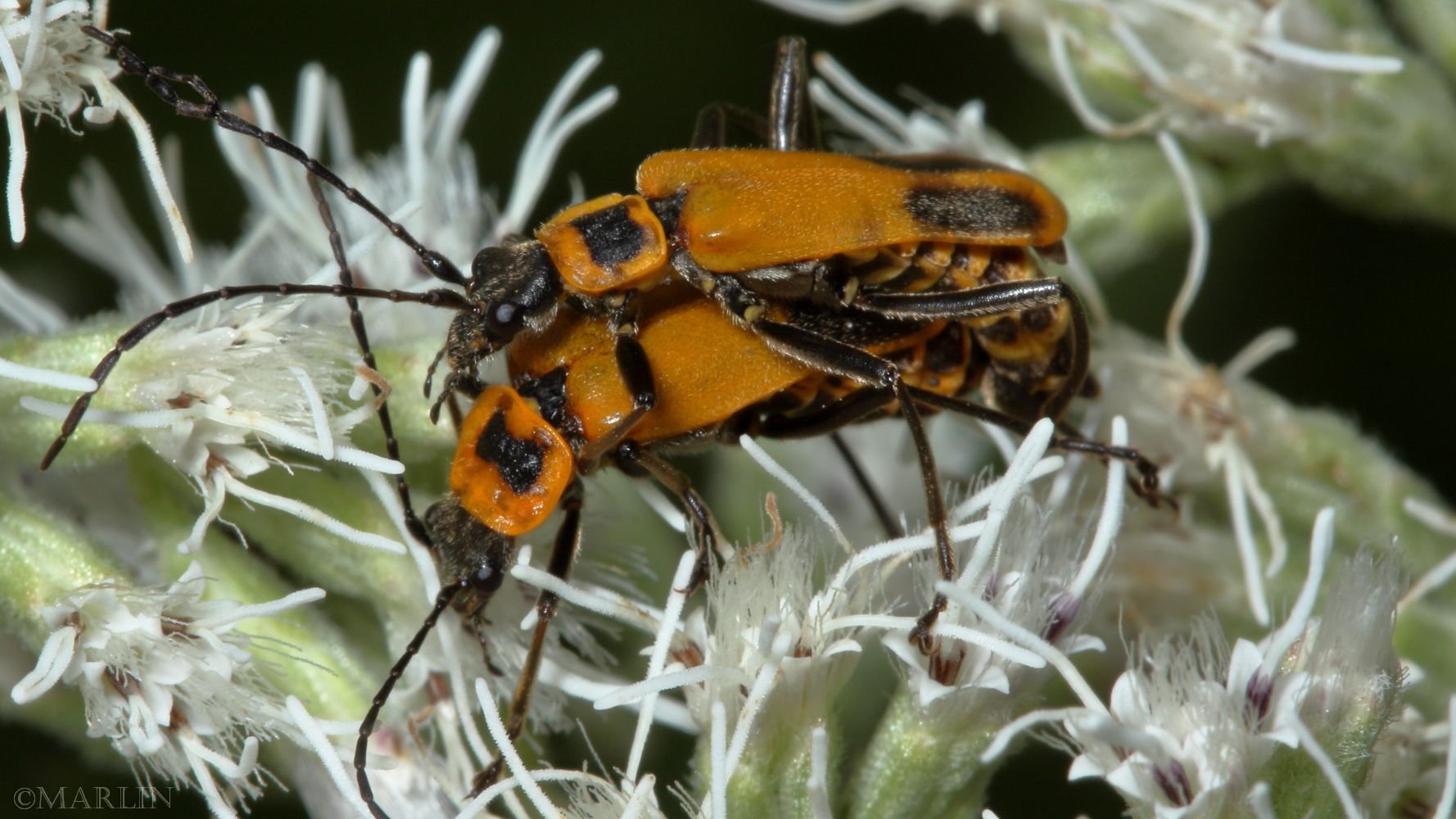
Soldier Beetle - Chauliognathus pennsylvanicus
Coleoptera family: Cantharidae - Common name: Pennsylvania Leather-Wing
There are 16 genera and 455 species of soldier beetles in North America. Adults are abundant on flowers and foliage where they feed on nectar, pollen, or other insects. Larvae of most species are carnivorous, adults feed on plants.


Soldier Beetle

The Cantharidae, commonly called soldier beetles or leatherwings, are soft-bodied, often brightly colored insects known for their aggregating on flowers. They are distributed worldwide, with some 5,000 species in 135 genera. They are slow, lumbering fliers and easily caught; not surprisingly, they have chemical defenses which make up for these apparent evolutionary shortcomings.

Unlike many other beetles, which have a pair of defensive glands at the tip of their abdomen, the soldier beetles have paired glands in the prothorax and on each of their first eight abdominal segments. When molested, the beetle emits droplets of white viscous fluid from pores along their sides. Studies have shown two species of soldiers, Chauliognathus pennsylvanicus and Chauliognathus lecontei, are consistently rejected as prey by birds, mice, other beetles, ants, and jumping spiders. Mantids, assassin bugs, centipedes, and solpugids also avoid them. Chemical analysis has shown the secretion in both beetles to contain (Z)-dihydromatricaria acid, an acetylenic compound. [1]

Soldier Beetle

A simple bioassay showed the acid an effective deterrent to jumping spiders (Salticidae) in particular. An experiment carried out by offering to spiders fruit flies tainted with dilute (less than 2% of the beetles' full-strength) secretions. As little as 1 microgram proved effective. [1]

Acetlyenic compounds are also known from fungi and plants, including numerous species of aster (Asteraceae), upon which soldier beetles often congregate. It is unknown whether the beetles acquire their defensive chemicals from eating such plants, or they manufacture them independently. It has been hypothesized the insects at some time in the distant past evolved the capacity to produce the chemicals, and this adaptation provided them with immunity to such chemicals in plants. [1]

These beetles are one of the more abundant large insects in the American Midwest in late summer. They can be seen feeding on nectar and pollen on just about any flowering plant, but goldenrod (Solidago), Queen Anne's Lace (Daucus carota), Water Hemlock, and Ox-eye daisies appear to be among the beetle's favorites. Many contemporary accounts list the adults of this insect as "important predators" of other insects, but I have never seen an adult soldier beetle eating anything other than plant material.


Soldier Beetle
The orange elytra are retracted when the soft flying wings are in use
 
Soldier Beetle
Unfurling the flying wings takes time
 

Beetles are known for their elytra, the hard outer wings used to cover and protect the flexible, membranous flying wings underneath. The elytra are held up at an angle when the flying wings are in use; it has been posited the elytra act as airfoils, but I'm not convinced this is correct. In any event, the process of uncovering and unfurling the flying wings takes time, and this interval sometimes proves fatal for beetles bent on escape. It is thought the chemical defenses help ameliorate this disadvantage.

References

  1. Thomas Eisner, Maria Eisner, and Melody Siegler, Secret Weapons: Defenses of Insects, Spiders, Scorpions, and Other Many-Legged Creatures (Belknap Press, 2005).


       web       www.cirrusimage.com