Stink Bugs - Family Pentatomidae
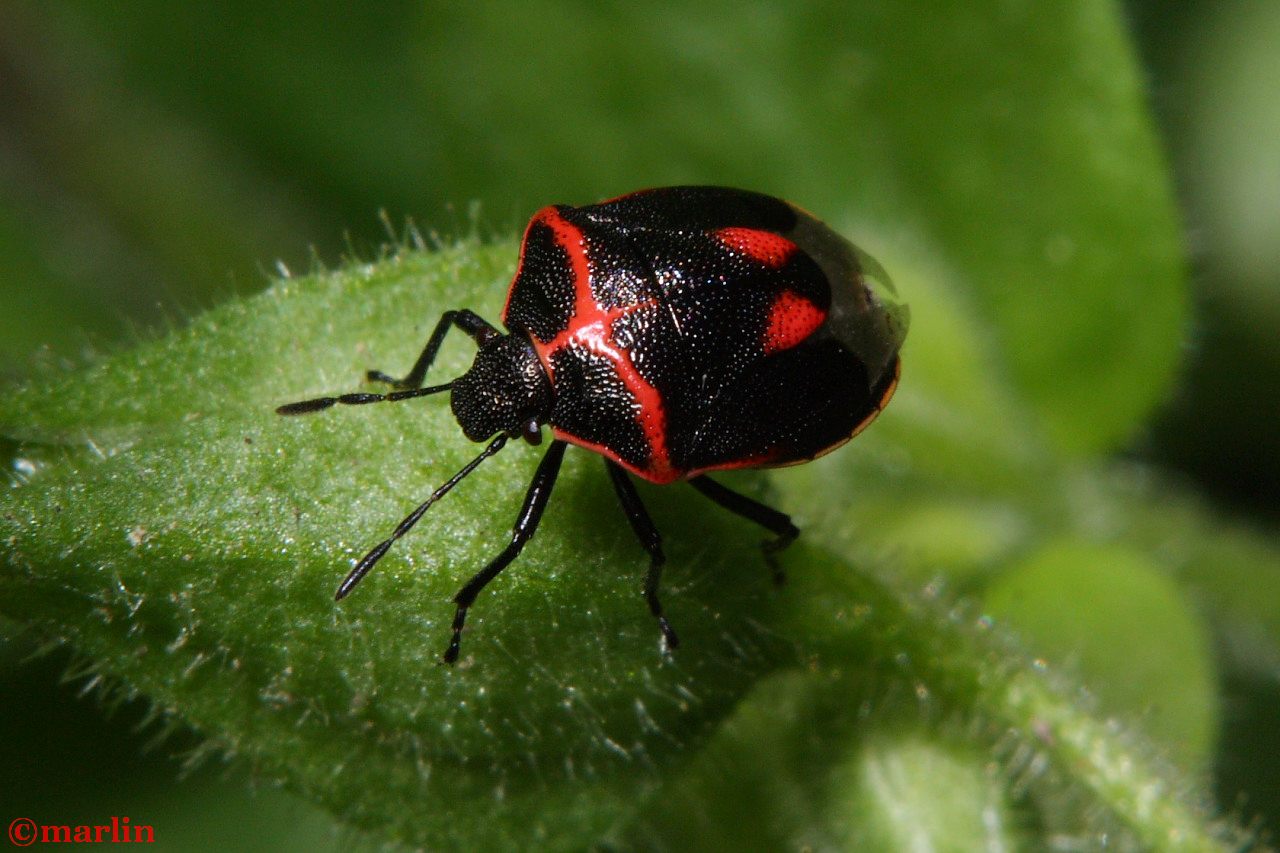
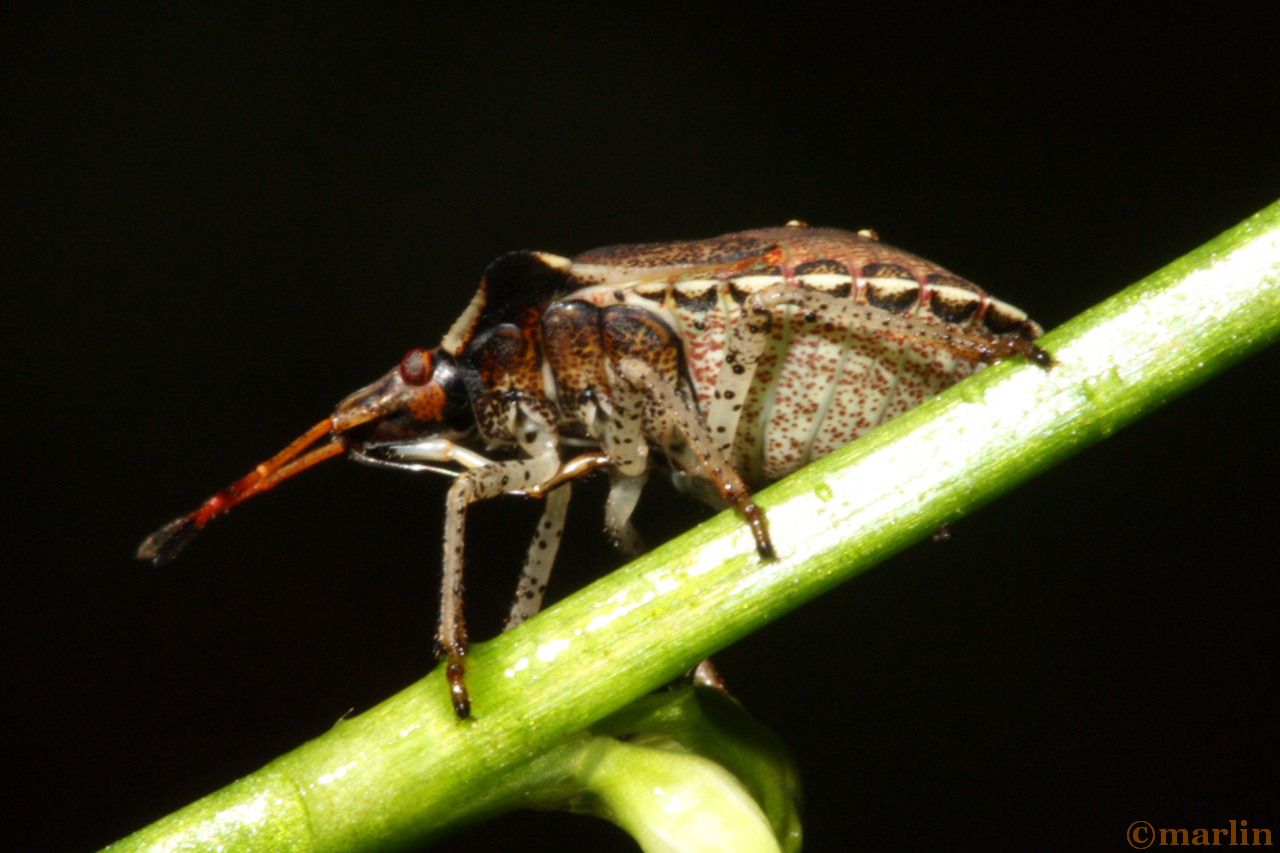
Stink bugs get their common name from the foul-smelling fluids they exude when disturbed. Both adults and nymphs have large glands that discharge underneath the body.
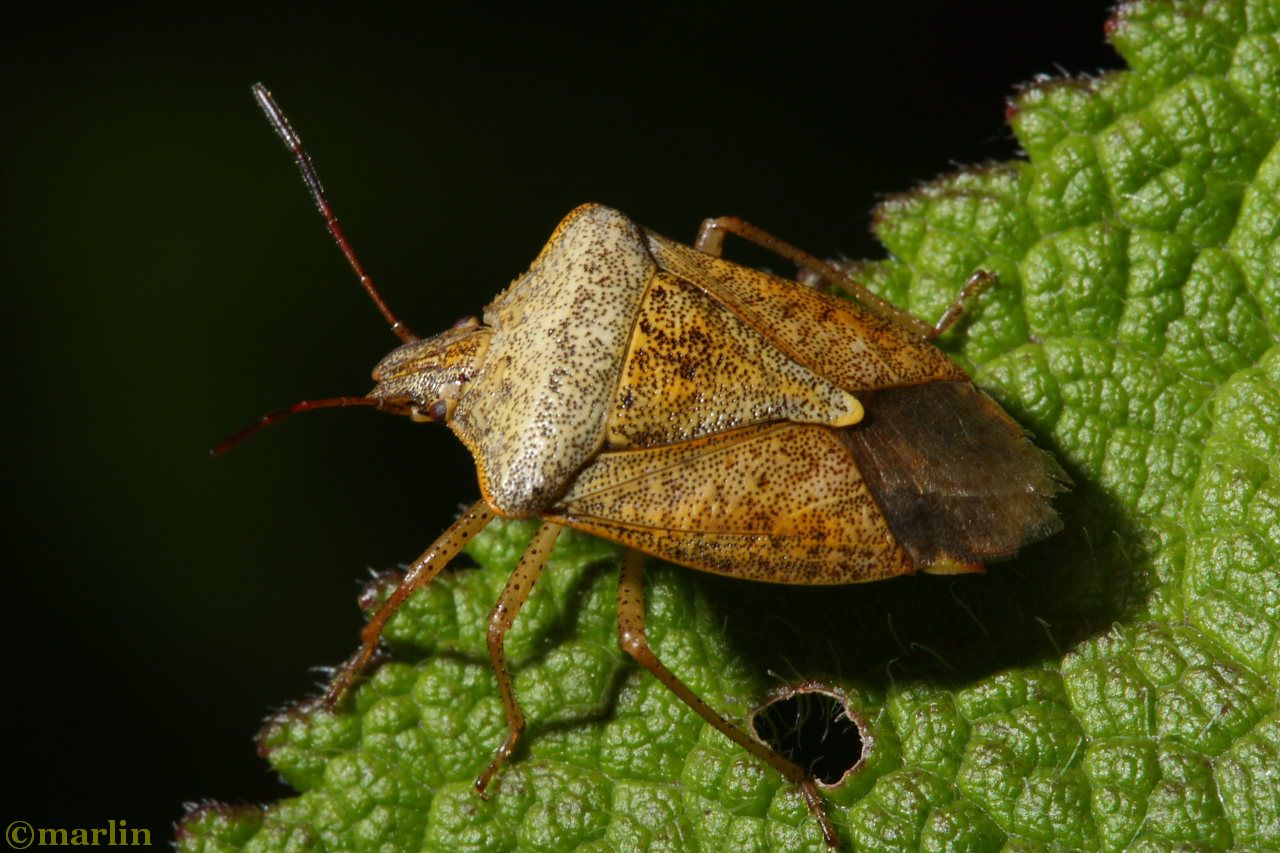
Stinkbugs are shy, I can tell you - they are adept and relentless at hiding, and they will fly off very quickly if they realize you are persuing or perusing them.


Stink Bug - Loxa flavicollis
Payne's Prairie SP, Alachua County, Florida, USA. Size: 2cm
Photo: © Sean McCann

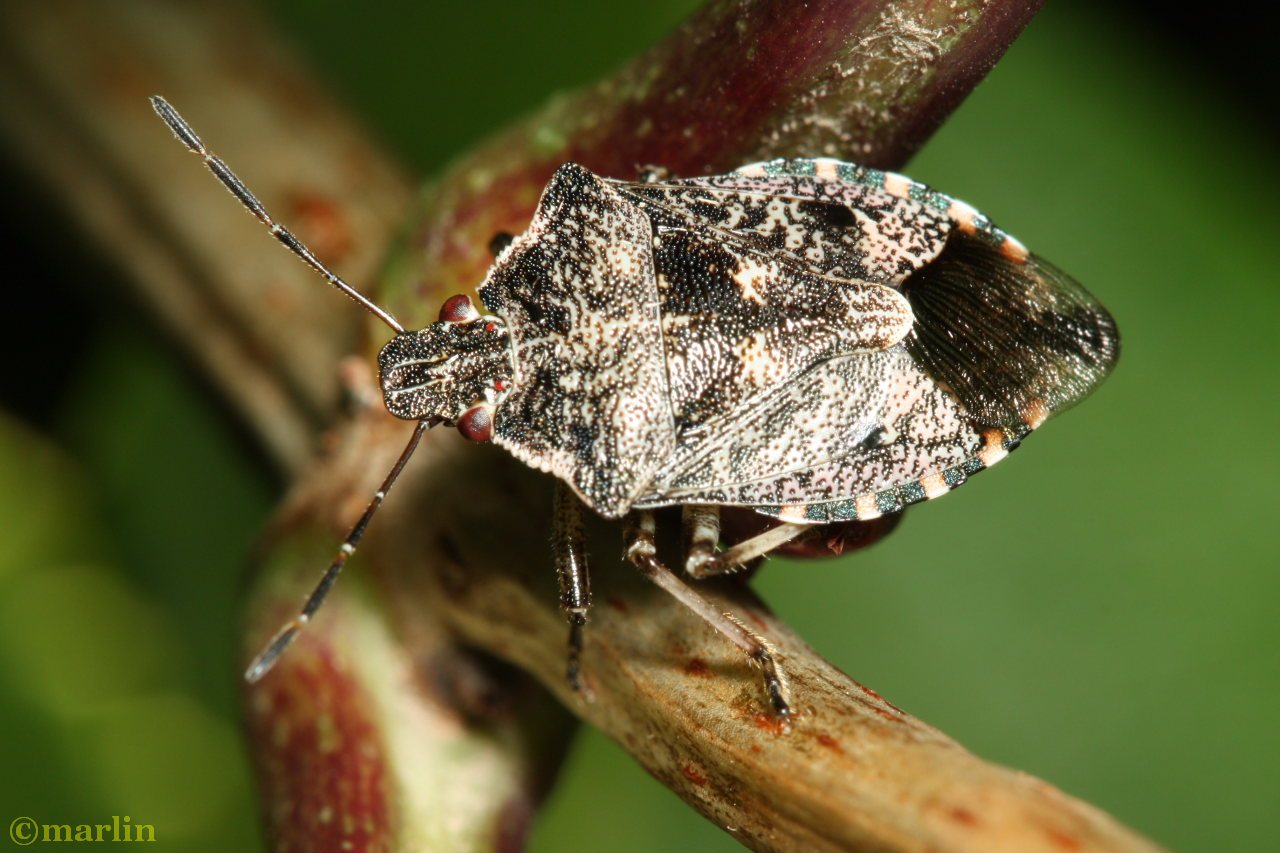
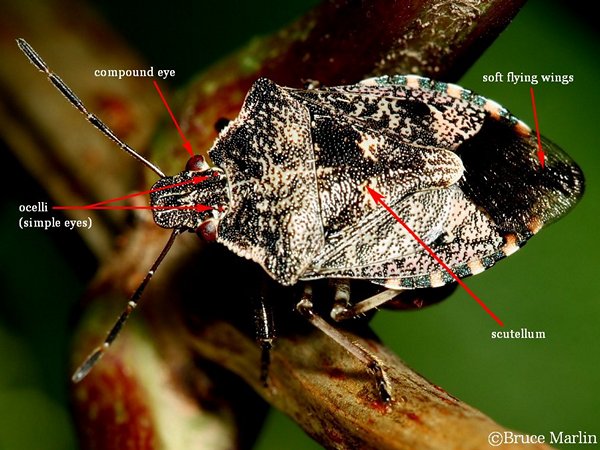
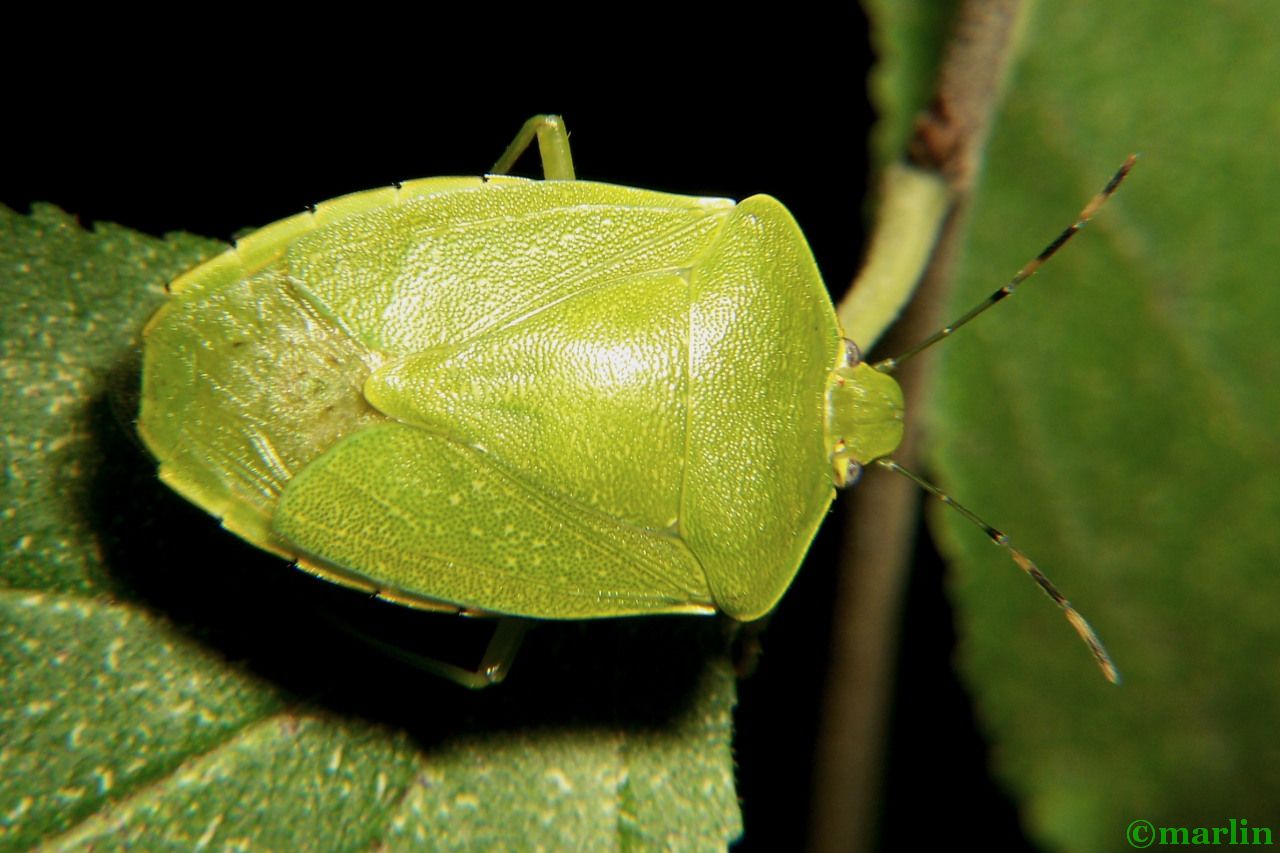
Stink Bugs are generally broad, shield-shaped bugs with 5-segmented antennae; large, triangular scutellum; head relatively small and often "tucked into" a concavity in anterior margin of pronotum; ocelli present. Body (as viewed from above) apparently divided into 5 sections: a pronotum, a scutellum, two basal leathery portions of hemelytra [one on each side of the scutellum], and two apical membranous portions of hemelytra that completely overlap and seem like a single section. (1)

Several species of insects that feed on peaches and other fruits early in the growing season cause a gnarling and distortion of the fruits called catfacing. Plant bugs and stink bugs, called catfacing insects are largely responsible for this type of injury. They suck the sap from the fruit. If the peaches do not fall as a result of this attack, fruit development is inhibited in the area of the punctures. The surrounding healthy tissue continues to grow thereby causing a defect resembling a cat's face. The green stink bug, Acrosternum hilare, and brown stink bug, Euschistus servus are the two culprits most frequently cited from the Pentatomidae family.

Stink bugs have 5-segmented antannae and a 4-segmented beak (for sucking plant fluids), and 3-segmented tarsi.

Classification: Kingdom Animalia (Animals) / Phylum Arthropoda (Arthropods) / Superclass Hexapoda (Hexapods)
Class Insecta (Insects) / Subclass Pterygota (Winged Insects) / Order Hemiptera (True Bugs, Cicadas, Hoppers, Aphids and Allies)
Suborder Heteroptera (True Bugs) / Family Pentatomidae (Stink Bugs)


Stink Bug Nymph, Acrosternum hilare


Adult Acrosternum hilare


Stink bugs feed on developing seed of many hosts including trees, shrubs, vines, weeds and many cultivated crops. They may also feed on the stems and foliage when seed are not present. Both nymph and adult stink bugs pierce plants with their needlelike mouthparts and suck sap from pods, buds, blossoms and seeds. The degree of damage depends on the developmental stage of the plant when it is attacked. Immature fruit and pods become deformed as they develop. Seeds are often flattened and shriveled. Germination can be reduced, or the seeds may fail to germinate at all.

The family name, Pentatomidae, comes from the Greek "pente" (five) + "tomos" (a section); perhaps a reference to the 5-segmented antennae, or perhaps a reference to the body, which, when viewed from above, appears to be divided into 5 large sections. The scutellum is the largest section.


Green Stink Bug


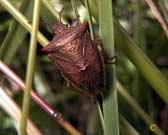
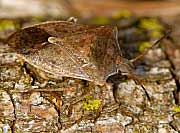
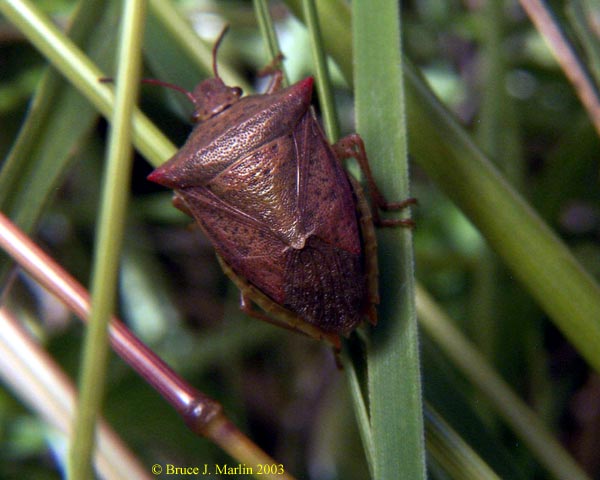
Brown Stink Bug

Brown Stink Bug

Euschistus servus


Brown Stinkbug Nymph
Euschistus servus


Shield Bug


Green Stinkbug Nymph
Acrosternum hilare


Green Stink Bug


Cosmopepla bimaculata


Amaurochrous brevitylus


Stink Bug, Menecles insertus

Stink bugs feed on over 52 plants, including native and ornamental trees, shrubs, vines, weeds, and many cultivated crops. The preferred hosts are nearly all wild plants. Stink bugs build up on these hosts and move to soybeans late in the season as their preferred foods mature.

Damage - Stink bugs inflict mechanical injury to the seed as well as transmit the yeast-spot disease organism. The degree of damage caused by this pest depends to some extent on the developmental stage of the seed when it is pierced by the stink bug's needlelike mouthparts. The younger the seed when damaged, the greater the yield reduction. Although late season infestations may not affect yield, bean oil content and germination will be reduced. (2)
 

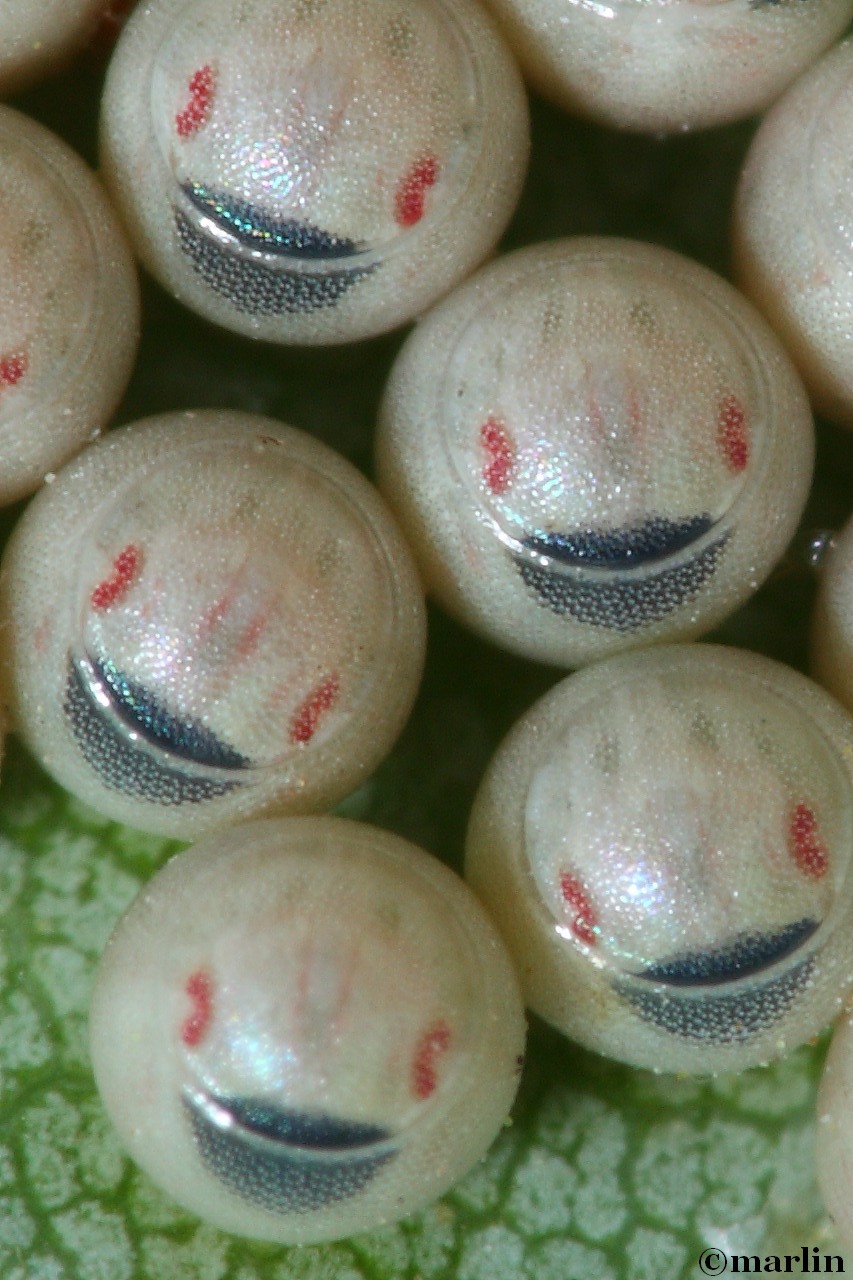
Stink bug nymphs and eggs. Photo: © Sean McCann
Stink bugs characteristically deposit their eggs on the underside of leaves in clusters with tight rows of individual barrel-shaped eggs. After overwintering, adult females seek out suitable hosts in early spring and typically deposit their eggs on wild host plants. Often these overwintering populations are found along field borders, particularly along tree lines near their overwintering sites. Later-developing cultivated plants become more attractive when these initial wild hosts dry down, and their proximity allows easy access for stink bug colonization in crops. Shortly after egg deposition and hatching, emerging nymphs are gregarious in habit and remain on or near the egg mass. As they develop, they begin to feed and disperse. The life cycle is repeated when reproductively mature adult stink bugs locate mates and deposit new egg masses. (1)

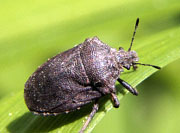
Mormidia lugens (3)

Mormidia lugens - 5mm

References:
1. Bugguide.net Family Pentatomidae Troy Bartlett, et al
2. North Carolina State University Cooperative Extension Stink Bugs
3. Bugguide.net Mormidia lugens