Butterflies of the World
These specimens were photographed at the Peggy Notebaert Nature Museum in Chicago
Estos especémenes con mariposas fueron macro fotografiados en el Peggy Notebaert Nature Museum en Chicago.
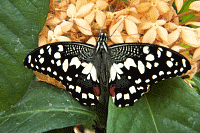 Checkered Swallowtail |
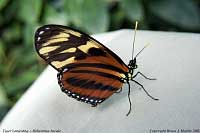 Tiger Longwing |
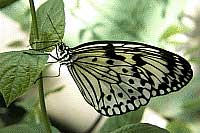 Paper Kite aka Tree Nymph |
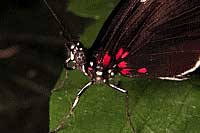 Sara Longwing |
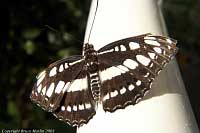 Common Sailor Butterfly |
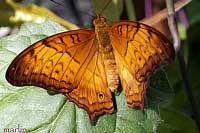 Cruiser Butterfly |
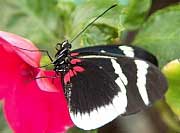 Eleuchia Longwing |
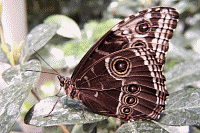 Common Morpho |
Butterflies have been revered by mankind since before the dawn of recorded history. They are among the most fascinating and beautiful animals; even people who care not for insects in general usually have an affection for these winged wonders. They live nearly everywhere — from gardens and forests and mountains to acid bogs and frozen arctic tundra. Almost 700 of the world’s 10 – 20,000 species live in North America north of Mexico. The butterflies pictured here are captive, live butterflies. Live butterfly exhibits have become very popular in the United States, for obvious reasons. Children love butterflies, adults love butterflies and museums find them easy to raise and maintain – everybody wins. This happy circumstance is also good for the wild butterflies – people who used to go into the rain forest and capture live butterflies, or plunder their eggs and chrysalises now can be set to work on butterfly farms, thereby sparing our wild populations, and providing much needed jobs for many impoverished regions.
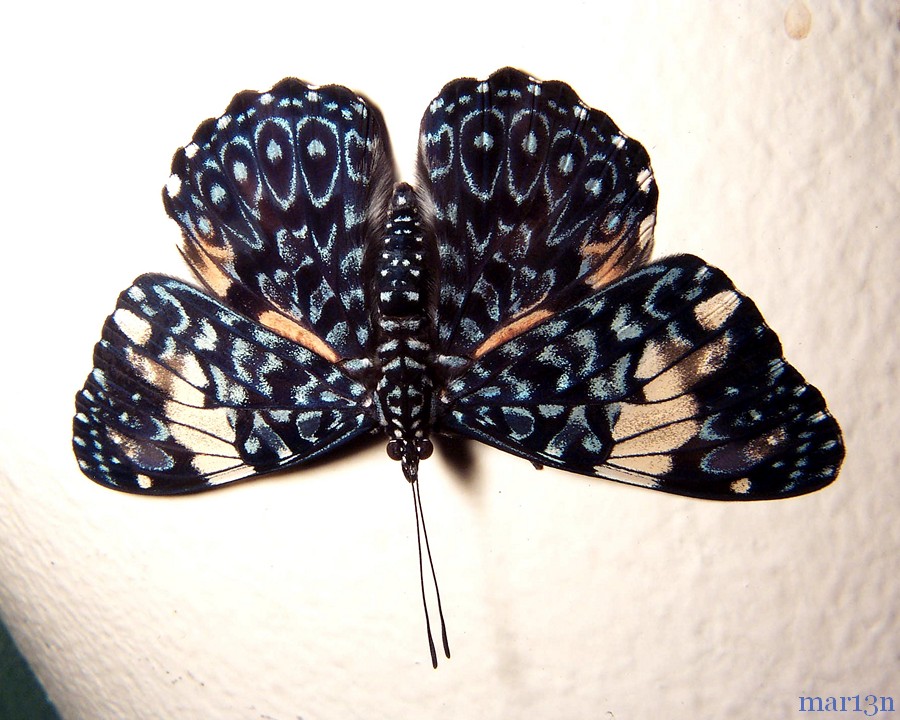
Red Cracker Butterfly
Within the butterfly habitat at the Notebaert Nature Museum resides a family of butterflies called Longwings (Heliconius). During the day, these active butterflies entertain guests as they fly from flower to flower but little do guests know that each evening, the Longwings participate in another fascinating behavior known as communal roosting.
Circadian communal roosting in butterflies occurs when a number of butterflies gather to rest for the night, typically on a single branch. These communal roosters can be quite numerous and can consist of single specie or a variety of species. Each evening, the air around the roosting site fills with butterflies as they fly back and forth and work to find an open spot on the roost. The whole process takes about an hour to complete because the new arrivals tend to agitate the butterflies that perched earlier. Unless the roosting site is disturbed, the same butterflies will visit that spot night after night. Strength in numbers is one of the benefits of communal roosting for Longwings. Predators dislike the taste of Longwing butterflies, so if a predator eats from the roost it will quickly learn not to do it again, saving the group.
 Postman Butterfly |
 Owl Butterfly |
 Great Orangetip |
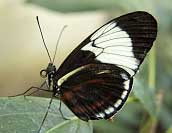 Cydno Longwing |
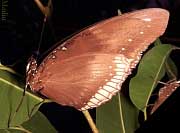 Great Eggfly |
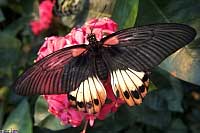 Great Mormon Swallowtail |
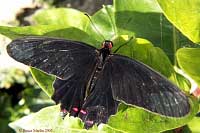 Common Rose Butterfly |
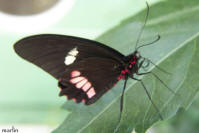 Shoemaker Butterfly |
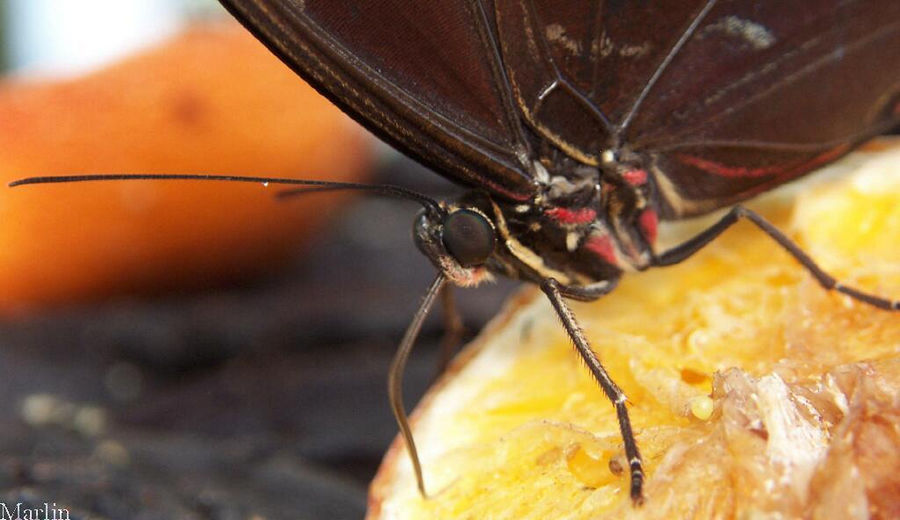
Morpho Butterfly Sipping Orange Juice
The longwing butterflies are also known as Heliconians. They are brightly colored butterflies with long forewings. Once placed in their own family, they are now considered closely related to the fritillaries. Larvae of most longwings feed on passion vines, and this host plant imparts noxious chemicals to the larvae which are carried over to the adult butterflies. This relationship is identical to the monarch butterflies’ reliance on its host plant, milkweed, for defense. Predators find these chemicals distasteful and avoid eating the butterflies.
Butterfly Index | Moth Pictures | Moths Index | Skipper Butterflies