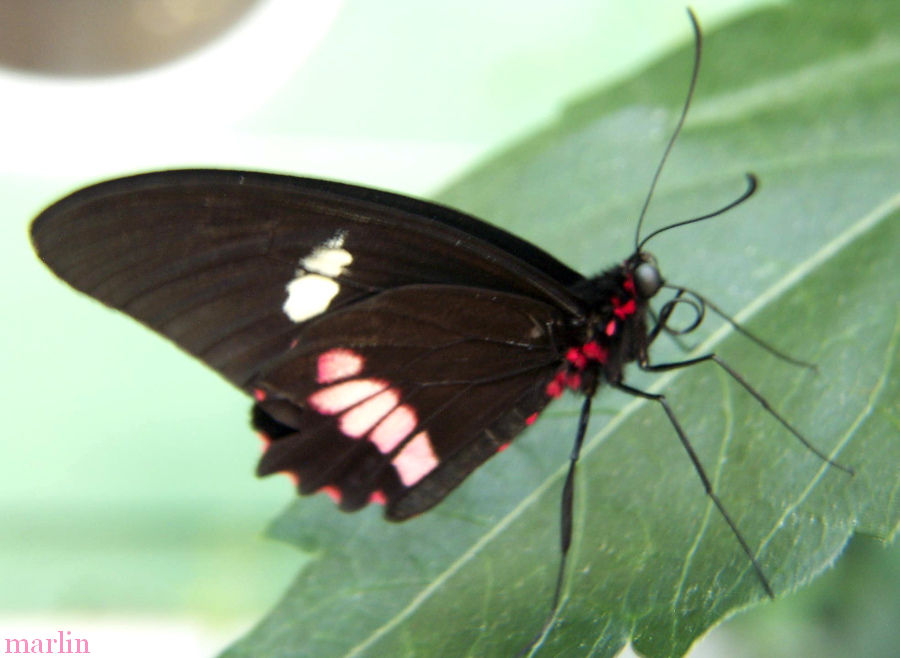
Shoemaker Butterfly - Catonephele antinoe
Family Lycaenidae
Range: Southeast Asia / Captive live butterfly photographed at the Peggy Notebaert Nature Museum, Chicago, Illinois, USA.
We realize these photos may not be good for anything save accurate markings - they were identified by Doug Taron, chief curator at the Notebaert.
 

The Lycaenidae are members of the Superfamily Papilionoidea, the true butterflies. Worldwide in distribution, this family has approximately 4,700 species that are unevenly distributed. Coppers are especially dominant in north temperate regions, blues are richest in the Old World tropics and north temperate zones, and hairstreaks are particularly abundant in New World tropics. The adults are typically small to tiny and often brilliantly colored--iridescent blues, bright reds, and oranges.
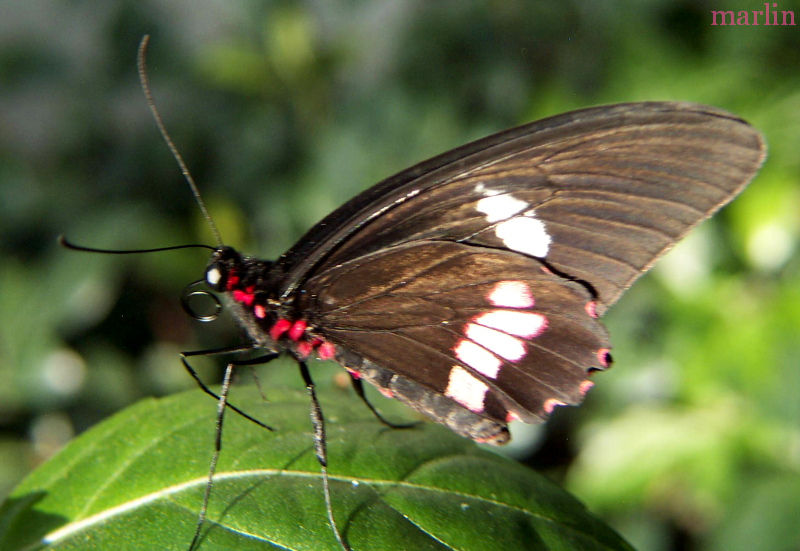
Adults of both sexes have three pairs of walking legs, though most males have fused segments in their front legs. Most adults visit flowers for nectar, but some harvesters feed on wooly aphid honeydew and some hairstreaks feed on aphid honeydew or bird droppings. Females lay single, sea urchin shaped eggs on host leaves or flower buds; the resulting caterpillars are typically slug-shaped. In many species, caterpillars depend on ants for protection, so caterpillars produce sugary secretions that are collected by the ants. Most species overwinter in either the egg or pupal stage.
Butterflies have been revered by mankind since before the dawn of recorded history. They are among the most fascinating and beautiful animals; even people who care not for insects in general usually have an affection for these winged wonders. They live nearly everywhere -- from gardens and forests and mountains to acid bogs and frozen arctic tundra. Almost 700 of the world's 10 - 20,000 species live in North America north of Mexico. The butterflies pictured here are captive, live butterflies. Live butterfly exhibits have become very popular in the United States, for obvious reasons. Children love butterflies, adults love butterflies and museums find them easy to raise and maintain - everybody wins. This happy circumstance is also good for the wild butterflies - people who used to go into the rain forest and capture live butterflies, or plunder their eggs and chrysalises now can be set to work on butterfly farms, thereby sparing our wild populations, and providing much needed jobs for many impoverished regions.
               
 
       web       www.cirrusimage.com

© Red Planet Inc.