
 |
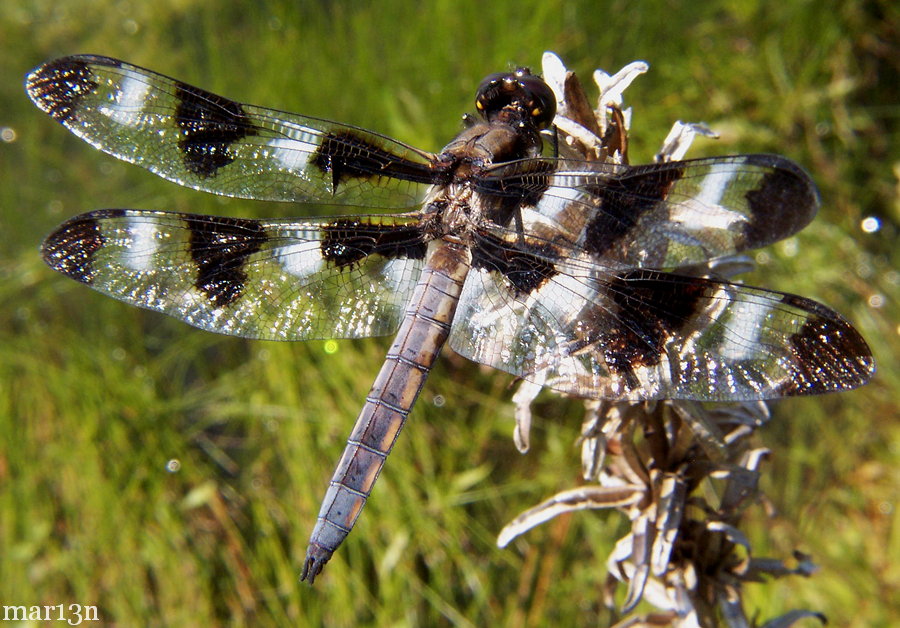
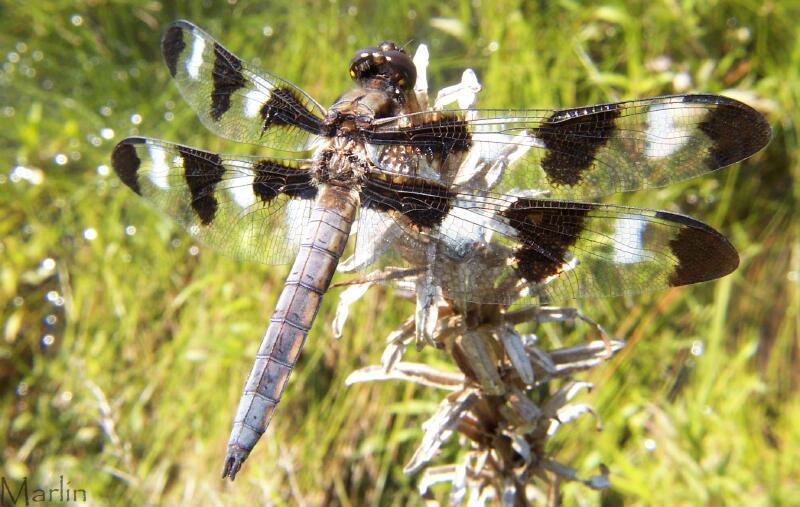
Twelve Spotted Skimmer – Libellula pulchella Insect order Odonata / Suborder Anisoptera Insects | Odonata Index | Dragonflies | Damselflies | Odonata Main | Spiders Live adult dragonflies photographed in the wild at Winfield, Illinois, USA. |
|
Much larger dragonfly species existed in the distant past. The largest fossil is an extinct Protodonata Meganeura monyi from the Permian period, with a wingspan of 70-75 cm (27.5-29.5 in). This compares to 19 cm (7.5 in) for the largest modern odonates, the Hawaiian endemic dragonfly Anax strenuus. The smallest modern species recorded is the libellulid dragonfly, Nannophya pygmaea from east Asia with a wingspan of only 20 mm, or about ¾ of an inch. Dragonflies are the world's fastest insects and, although estimates of their speed vary wildly, most credible authorities say they are capable of reaching speeds of between 30 and 60 km/h (19 to 38 mph). A study showed that dragonflies can travel as much as 85 miles in one day. |
|
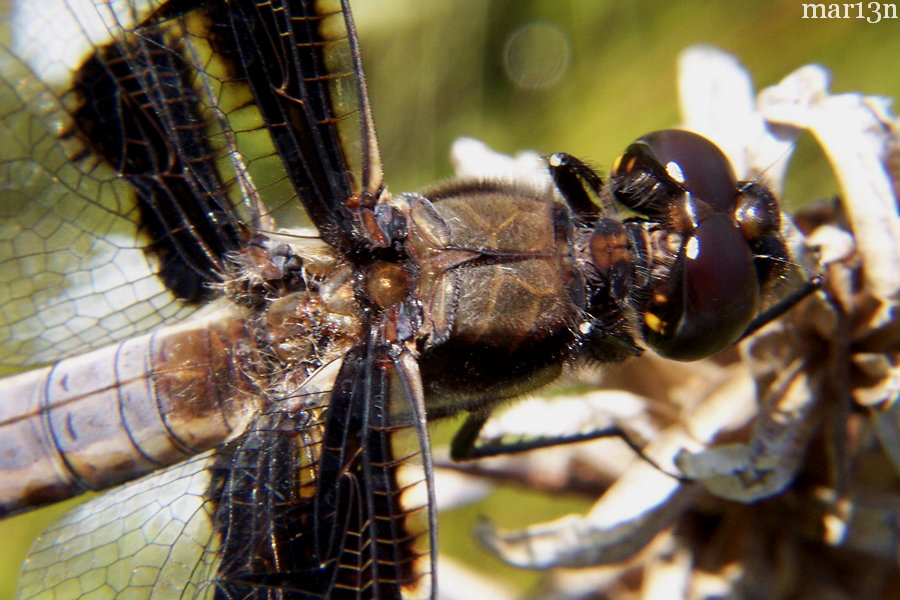
Dragonflies have excellent eyesight. Their compound eyes have up to 30,000 facets, each of which is a separate light-sensing organ or ommatidium, arranged to give nearly a 360° field of vision, important for taking prey on the wing, as has done the female shown above. Odonates are completely harmless – they do not sting or bite. Indeed, they are beneficial in the same respect spiders and other predators are beneficial – they keep the burgeoning insect population in check. Many of these species prey on each other; I often see dragonflies with damsels in their clutches. |
|
Order Odonata: dragonflies and damselflies date back 300 million years, to the Carboniferous Period of the Paleozoic Era. These colorful, enchanting insects are revered second only to the butterflies in the popular psyche. Explore detailed close-up photographs of live, adult dragonflies and damselflies photographed in the wild. Insects | Odonata Index | Dragonflies | Damselflies | Bugs Index | Spiders |
