
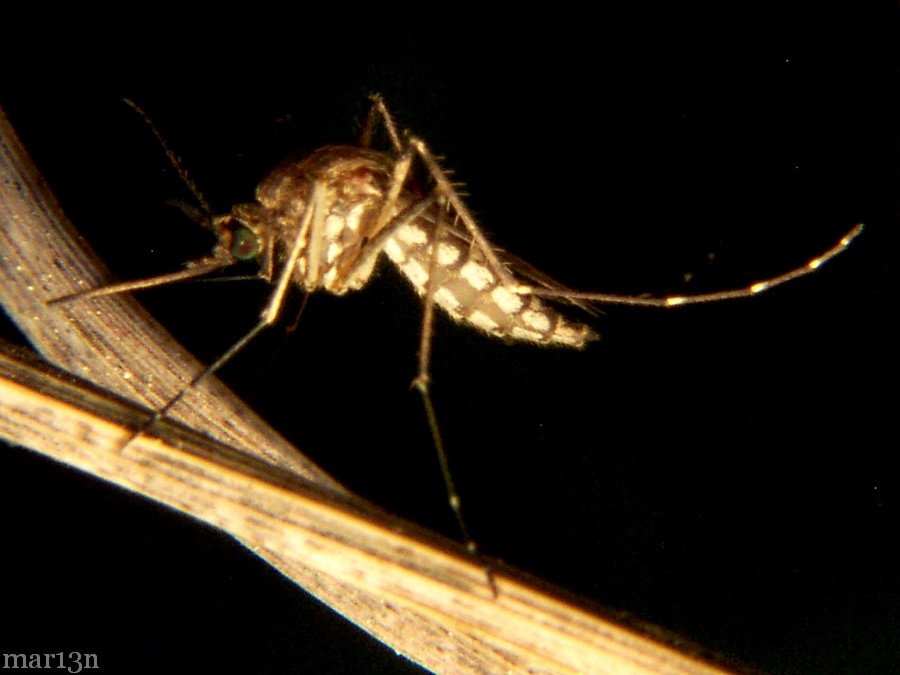
Inland Floodwater Mosquito – Aedes vexans
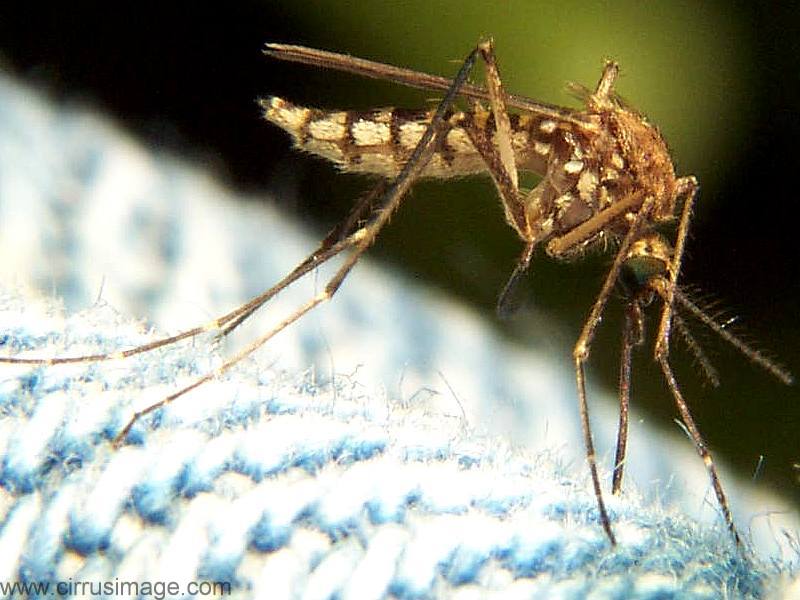
Order Diptera / Suborder Nematocera / Infraorder Culicomorpha / Family Culicidae
Live adult mosquitoes photographed at Winfield, Illinois, USA.
In much of the world, mosquitoes are a major public health problem; they are estimated to transmit disease to more than 69 million people annually. In the United States, Australia, New Zealand, the UK, Scandinavia, and other temperate countries, mosquito bites are mostly just a nuisance. However, global warming is increasing the range of mosquitos worldwide, resulting in increased frequency of dengue fever, Ross River fever, malaria and other mosquito borne diseases.
The mosquito genus Anopheles carries the malaria parasite, Plasmodium. Worldwide, malaria is a leading cause of premature mortality, particularly in children under the age of five, with around 5.3 million deaths annually, according to Center for Disease Control. Most species of mosquito can carry the filariasis worm, a parasite that causes a disfiguring condition (often referred to as elephantiasis) characterized by a great swelling of several parts of the body; worldwide, around 40 million people are living with a filariasis disability. Most species of mosquito can carry the viral diseases yellow fever, dengue fever, epidemic polyarthritis, Rift Valley fever, Ross River Fever, and West Nile virus. Mosquitoes do not transmit HIV. Viruses carried by arthropods such as mosquitoes or ticks are known collectively as arboviruses. West Nile virus was accidentally introduced into the United States in 1999 and by 2003 had spread to almost every state.
Flies Main | Flies Index | Tachinidae | Syrphidae | Bee Flies | Blow Flies | Flesh Flies
Tree Encyclopedia / North American Insects & Spiders is dedicated to providing free, family-friendly
educational resources for our users through large images and macro photographs of flora and fauna.
Online since 2002