Tachinid Fly – Adejeania vexatrix
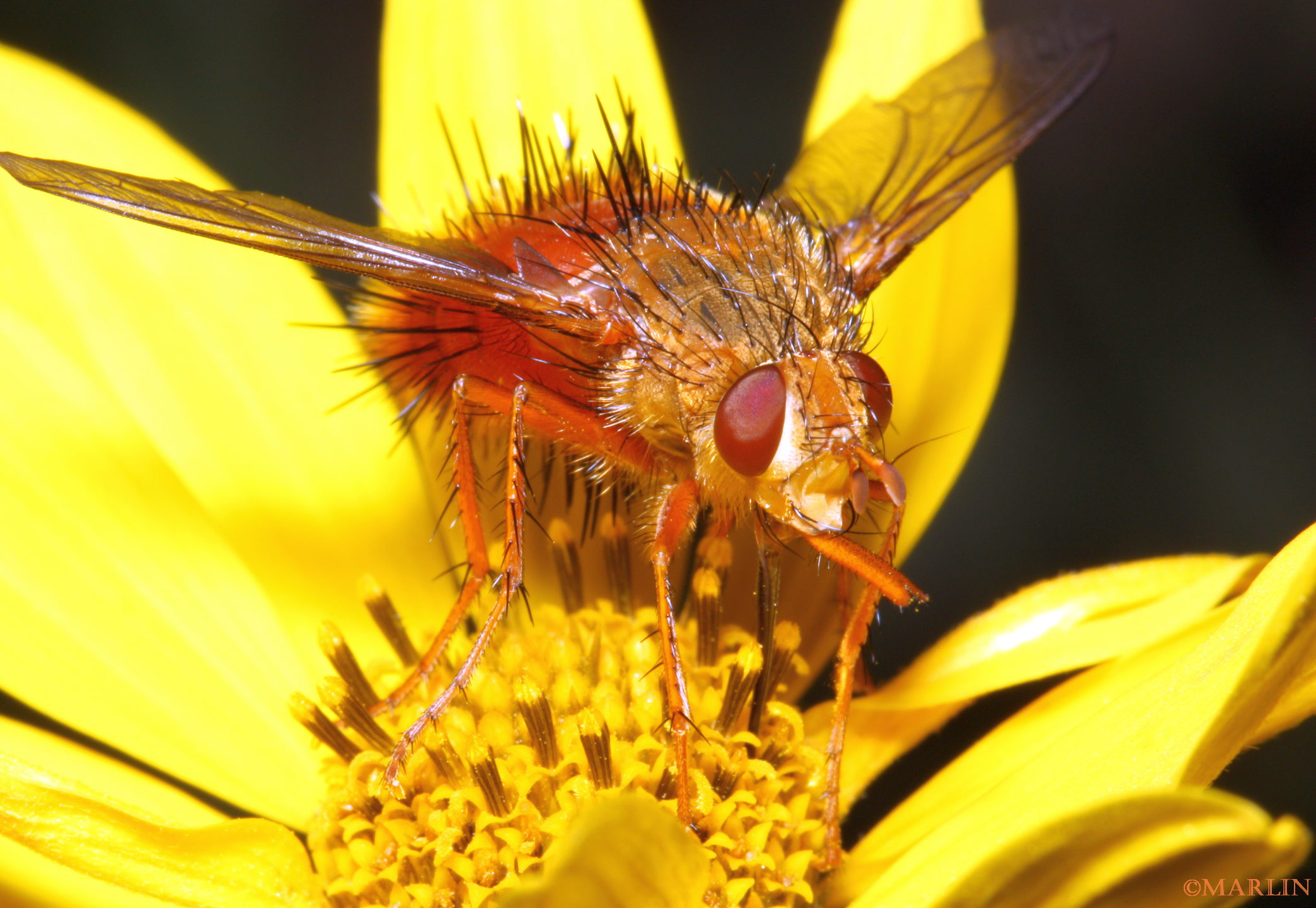
If you like flies, this is one to keep an eye out for! Look at those palps sticking out in front, and the stiff black setae on that orange abdomen. I found this guy wandering around at Spring Cave, White River National Forest, Colorado. Elevation: 7590 ft. This is a big fly, at ~15mm, wingspan 20mm.
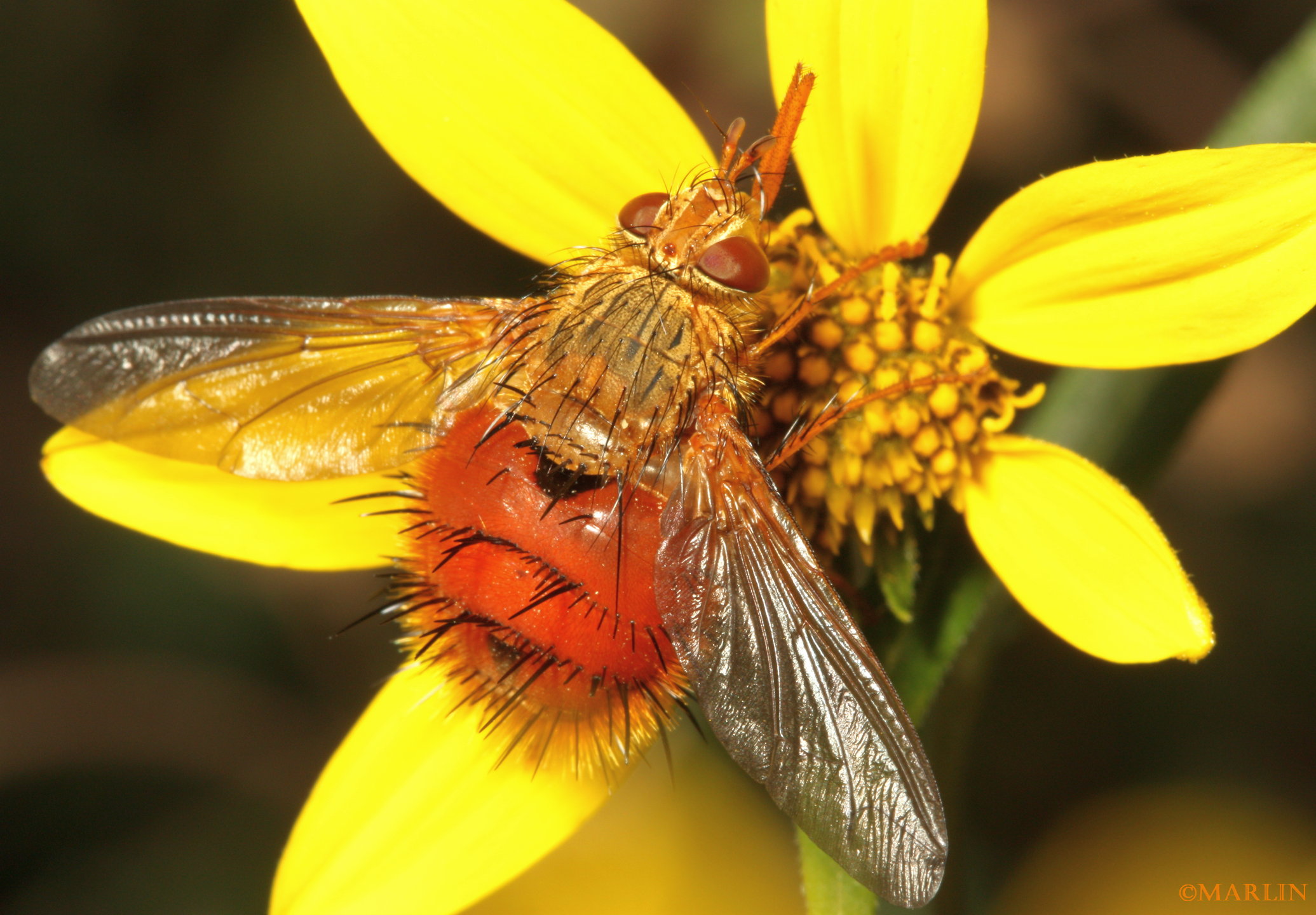
The family Tachinidae is considered the second-largest amongst all the diverse families of Diptera (two-winged true flies). Recent science shows over 10,000 species worldwide. Adult tachinid flies are diverse in appearance, but they are generally known for their bristly facies. Archytas exhibits prototypical tachinid features, including a large, metallic-colored abdomen covered with bristles. Many other tachinids, however, are sparsely bristled and exhibit very pale coloration. All Tachinids share the parasitoid habit, and almost all of them are endoparasites of of other insects; in spite of their varied appearance all species of Tachinidae are alike in this characteristic.
Insects most commonly parasitized by the tachinids are the larvae of the Lepidoptera (butterflies and moths) and the adults and larval form of the beetles, or Coleoptera. Other tachinids attack true bugs of the Hemiptera (Heteroptera), larva of Hymenoptera (bees, wasps, ants, sawflies), or adults of Orthoptera (grasshoppers, katydids, crickets and their kin). Rarely do Tachinidae parasitize other Diptera or any other groups of arthropods, however, some of these flies are known to attack woodlice (Isopoda).
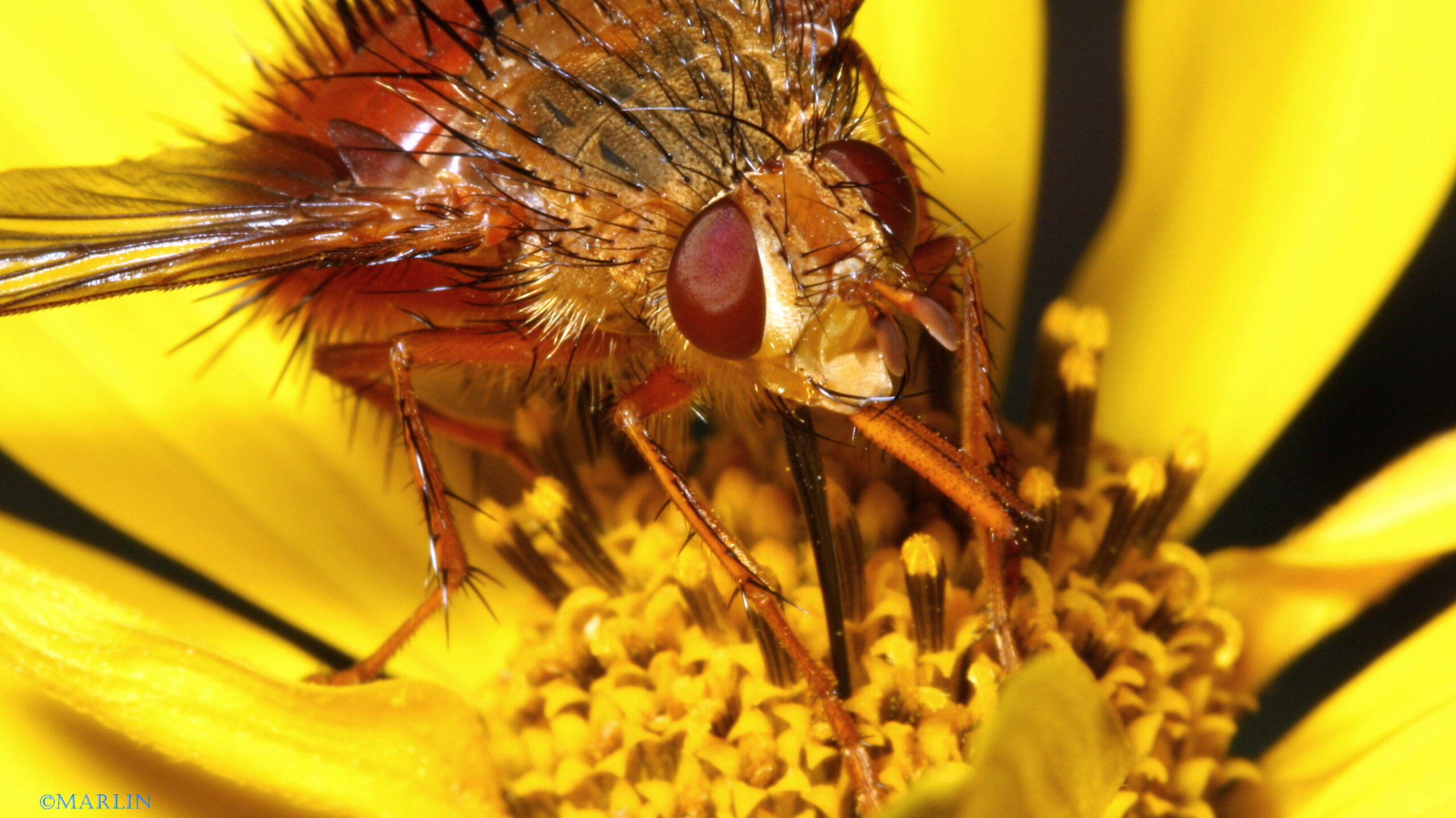
Adult flies can be found almost anywhere. I usually see them feeding at flowers or amongst low vegetation. Females frequently fly in search of host candidates.
North American Insects & Spiders
Online since 2002