Tachinid Fly – Cylindromyia Species
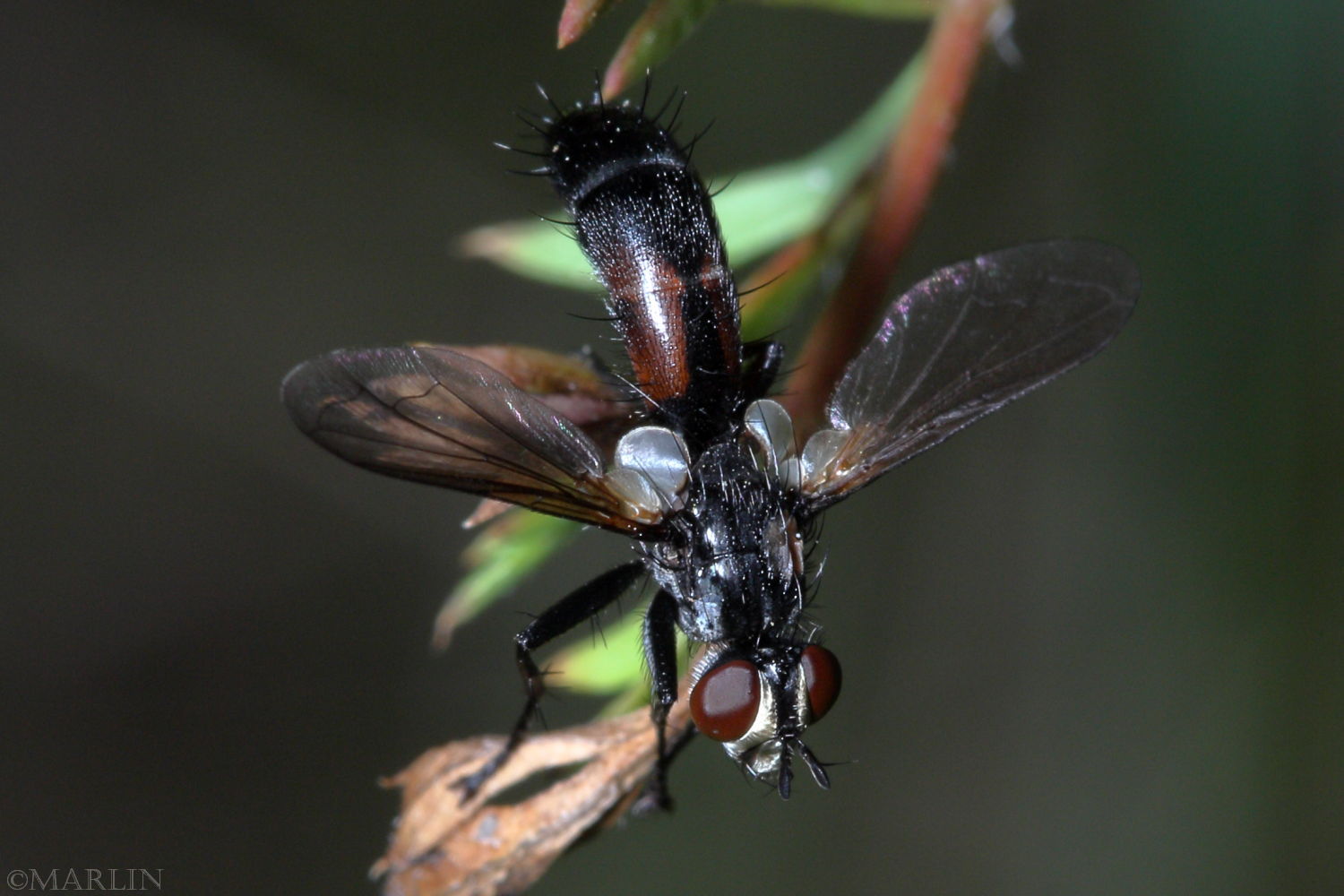
This fly’s larval hosts include stink bugs, noctuid moths and some grasshoppers (Acrididae) [3]. Adult Tachinids feed on nectar and flower pollen. Over 1,300 species have been recorded in North America, and more than 10,000 species worldwide, making tachinids the second largest family of Diptera, after Tipulidae (crane flies).
Tachinids parasitize at least eight orders of insects as hosts; Lepidoptera larvae probably support the largest number of species, esp. in the large subfamilies Tachininae and Goniinae. Flies in subfamily Phasiinae most often parasitize true bugs in Hemiptera such as stink bugs, leaf-footed bugs (below), seed bugs and damsel bugs [1].
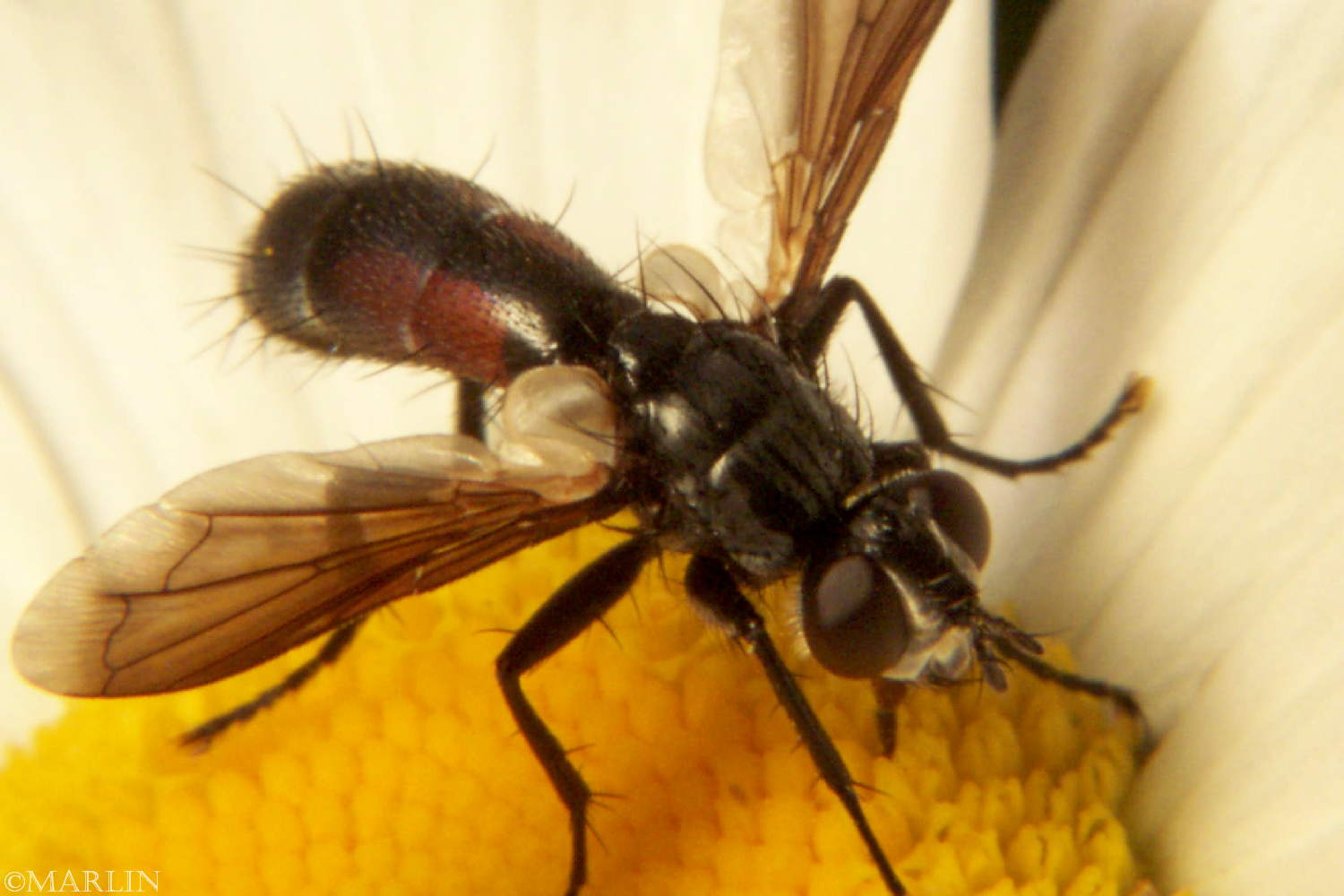
This picture was taken in 2004 with one of my earliest digital cameras – a Kodak DC3800. Kodak offered add-on magnifying lenses, and I used them!
Beetles are not immune to Tachinid depredation. Both adults and larvae of Scarabidae (scarab beetles), Cerambycidae (longhorned beetles), Elateridae (click beetles; larvae are called wireworms), Carabidae (ground beetles), Chrysomelidae (leaf beetles) are all victimized by fly larvae that have developed an impressive array of armaments for penetrating the tough, chitinous exoskeleton of the Coleoptera. Even some weevils are attacked, their larvae are vulnerable while burrowing. Insects in Orthoptera, Mantidae, Dermaptera, as well as Diptera larvae of Tipulidae and Tabanidae all serve as hosts. Hymenoptera alone among the large orders appears to have escaped the tachinids’ attention.
References
- T.K. Narayanaswamy and R. Govindan, Integrated Pest Management Reviews, “Mulberry Silkworm Ujifly, Exorista Bombycis (Louis) (Diptera: Tachinidae)” Springer, Dec 1, 2000
- Frique Lavoipierre, Pacific Horticulture, “Garden Allies: Tachinid Flies”
- Paul Henri Arnaud, U.S. Science and Education Administration, California Academy of Sciences, “A host-parasite catalog of North American Tachinidae (Diptera)”
North American Insects & Spiders
Online since 2002