Bee Flies – Family Bombyliidae
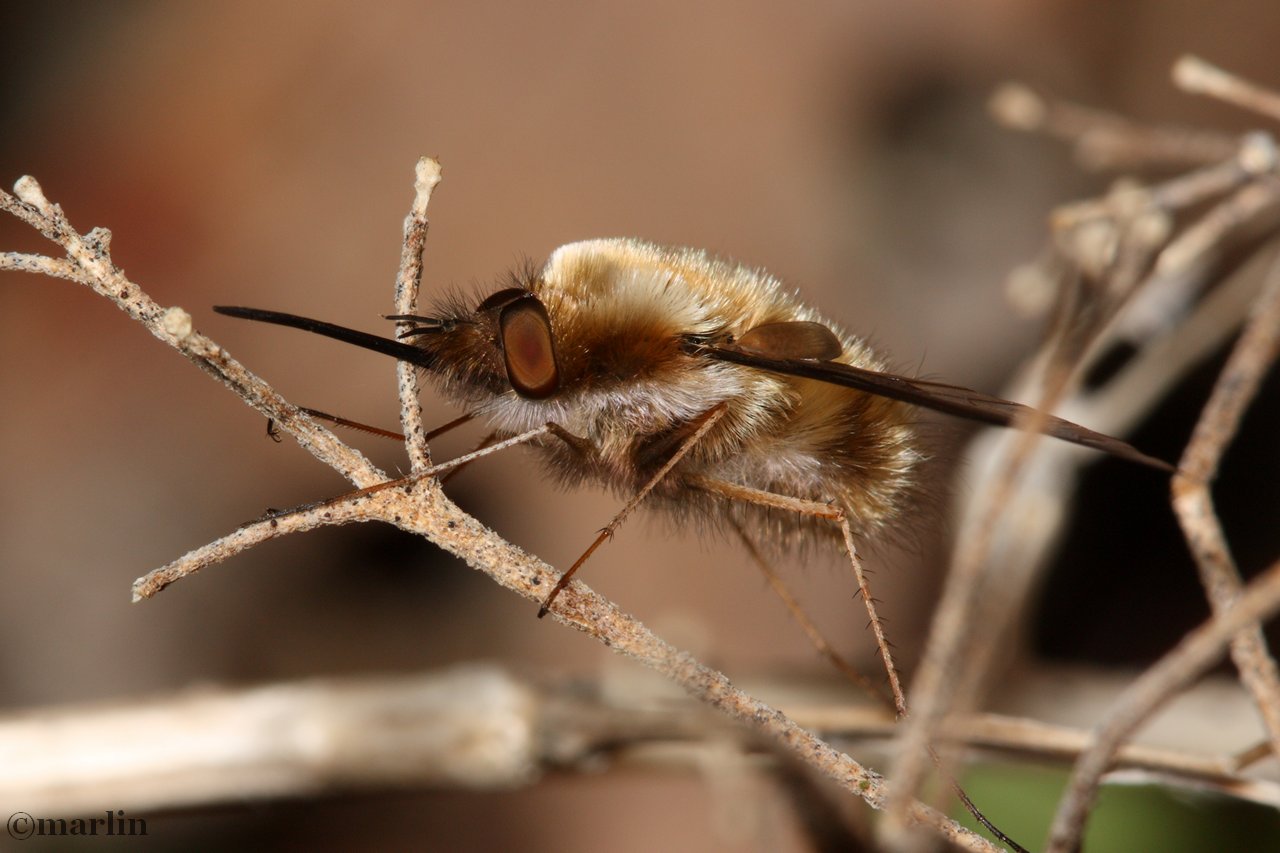 Bee fly – Bombylius major Bombylius species are by far the most numerous here in the American midwest. They are some of the earliest insects active in springtime – dandelions are some of their favorite flowers. Look for them along forest paths or disturbed areas with lots of flowers. They are very wary and demand a very low-angle, patient approach. If you blot out the sky, they will not hang around long since you look like a predator.
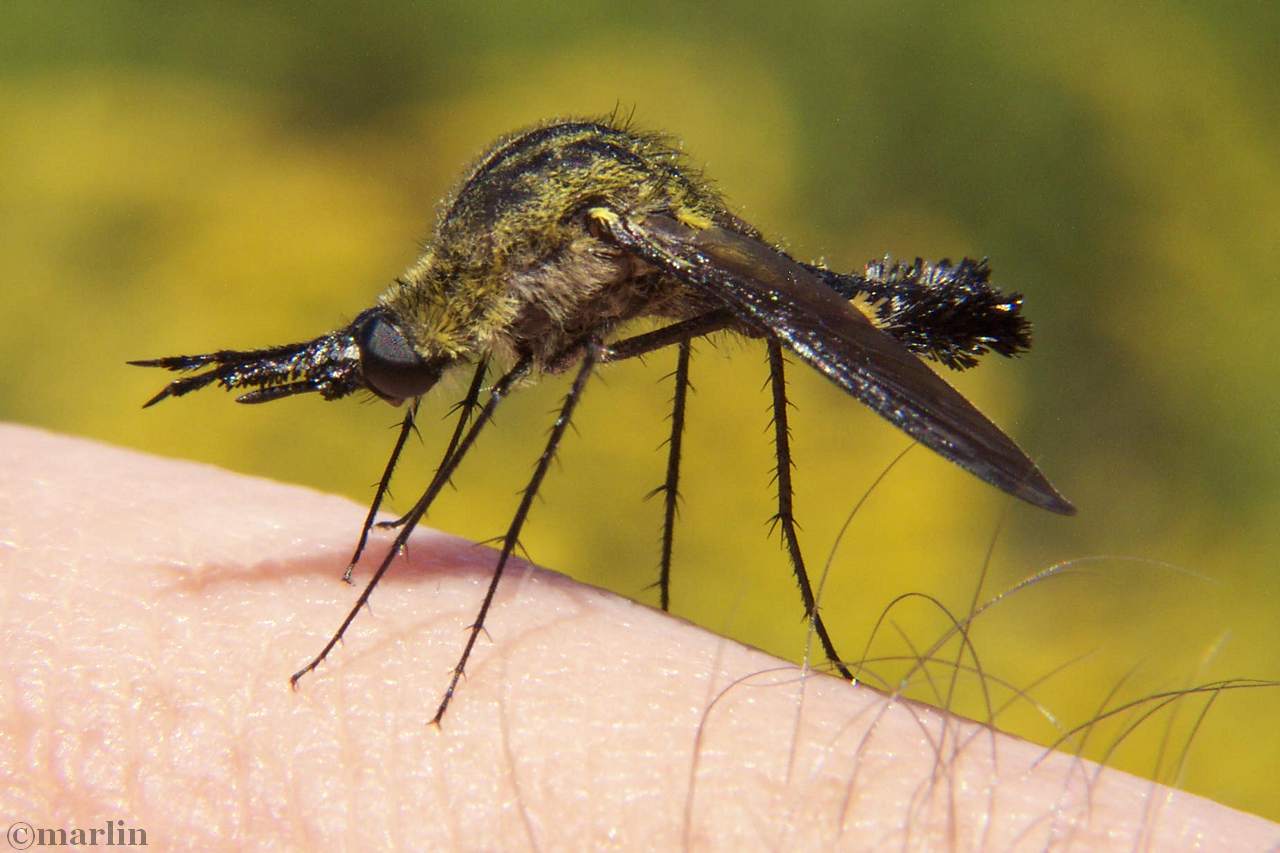 Scaly Bee Fly – Lepidophora lepidocera I LOVE this fly. I’ve only seen it a few times. Now I’m out in the field photographing blister beetles, and along comes this Lepidophora, and decides he/she wants to bask in the sun on my shirt. Or my pants. Or my fingers or arms, you name it. Amazing fun for nerds like me.
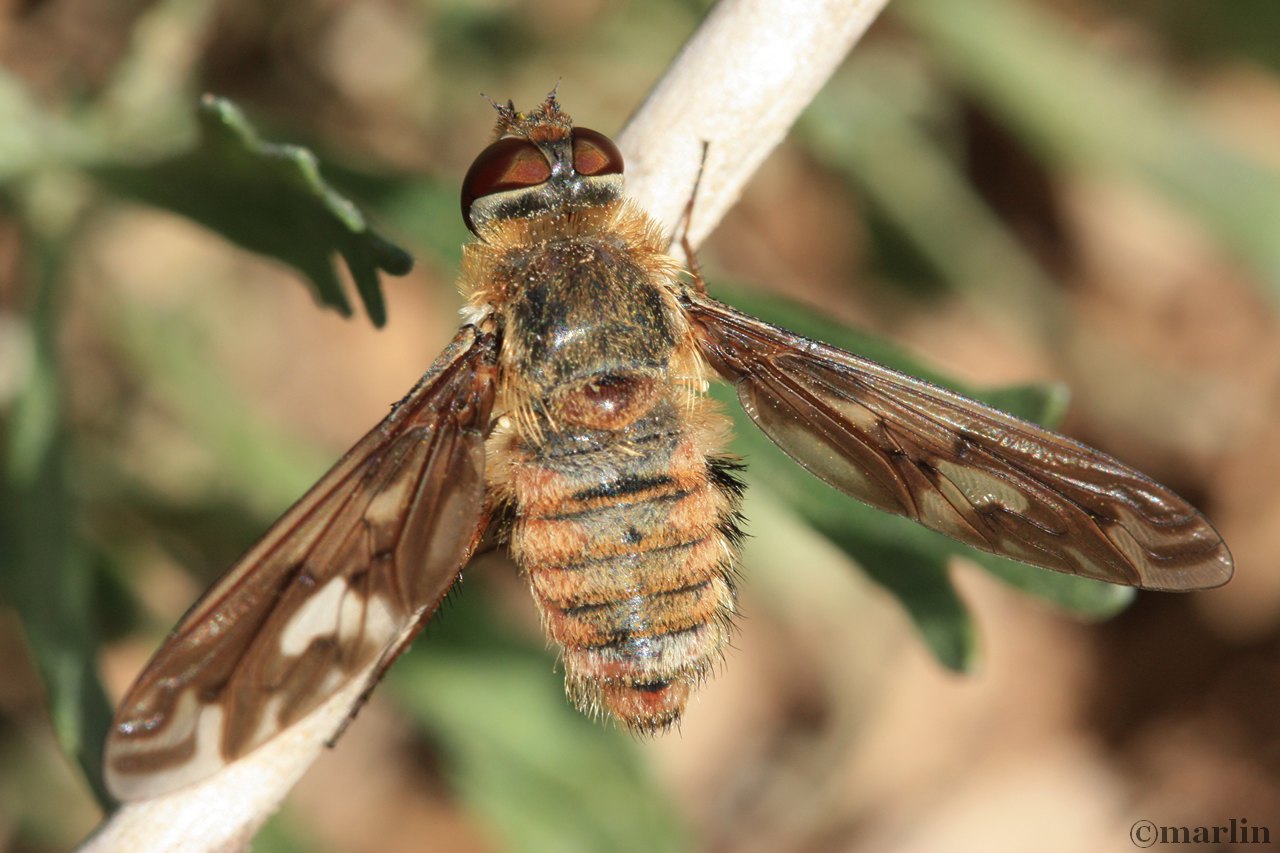 Poecilanthrax willistonii I found this lovely bee fly meandering about near newspaper rock at Canyonlands National Park in Utah. Chasing these critters is hard work, especially under a hot sun. Indeed, a day of hard core photographing bugs is a great workout incorporating weight lifting, tai chi, patience, and maintaining awkward body postures for long minutes at a time.
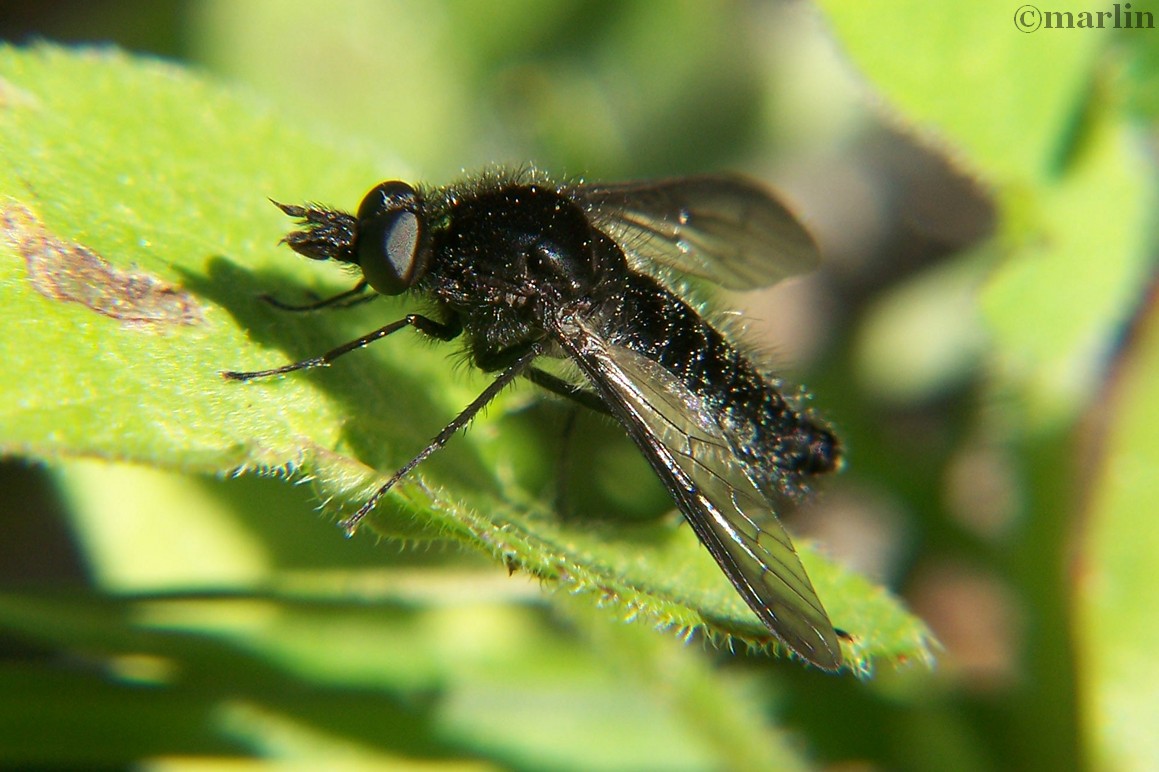 This lovely, black-bodied Aldrichia species bee fly was found in deciduous forest outside Chicago. Bee flies are stout-bodied flying insects said to resemble bees, but there are syrphid flies and robber flies that do a much better job. Many bee flies have elongated mouthparts that form a conspicuous beak, used for sucking nectar long-distance while hovering over flowers.
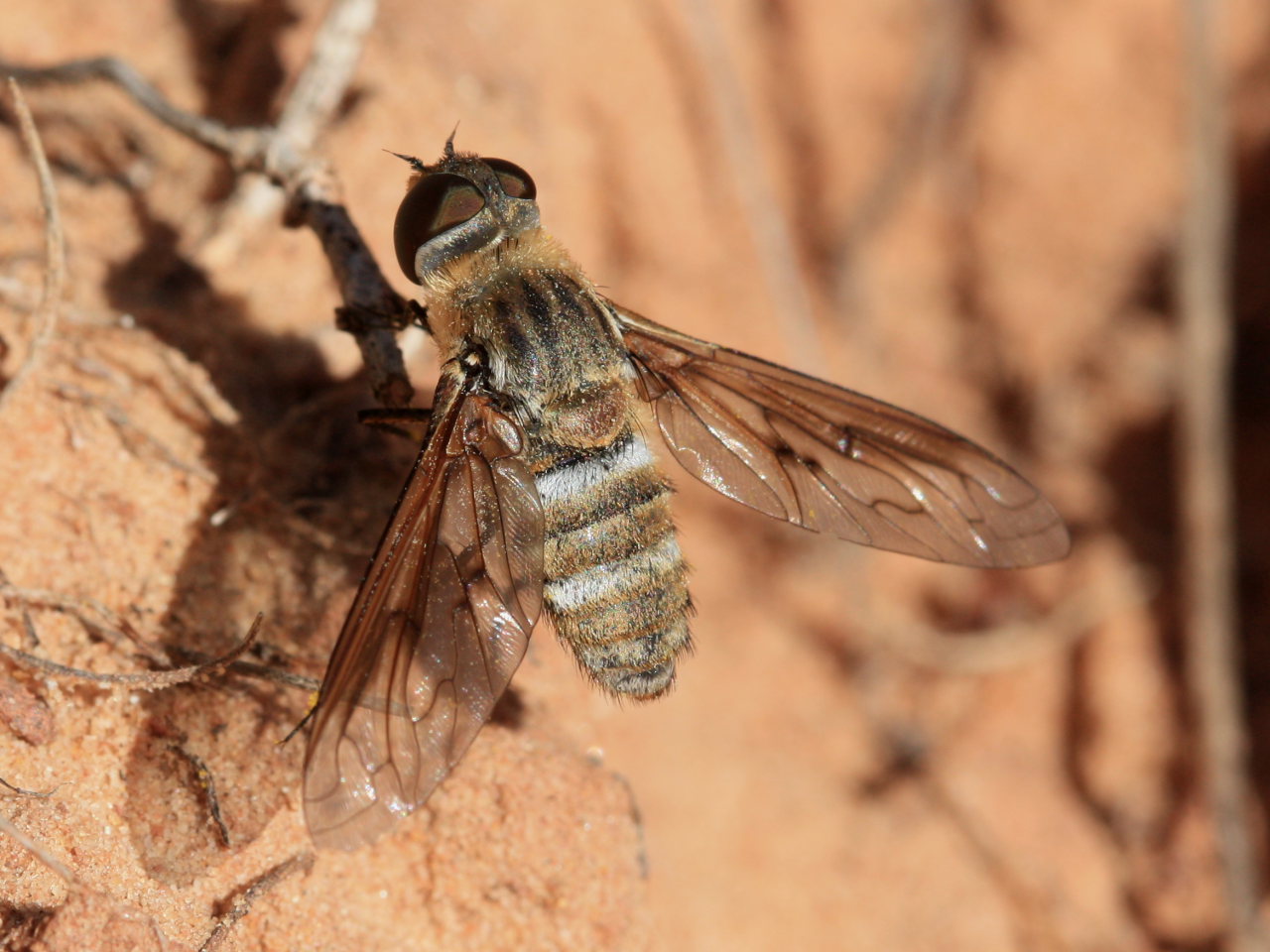 Bee Fly Paravilla californica found at newspaper rock in Canyonlands National Park in Utah. These creatures have been around for about 140 million years.
 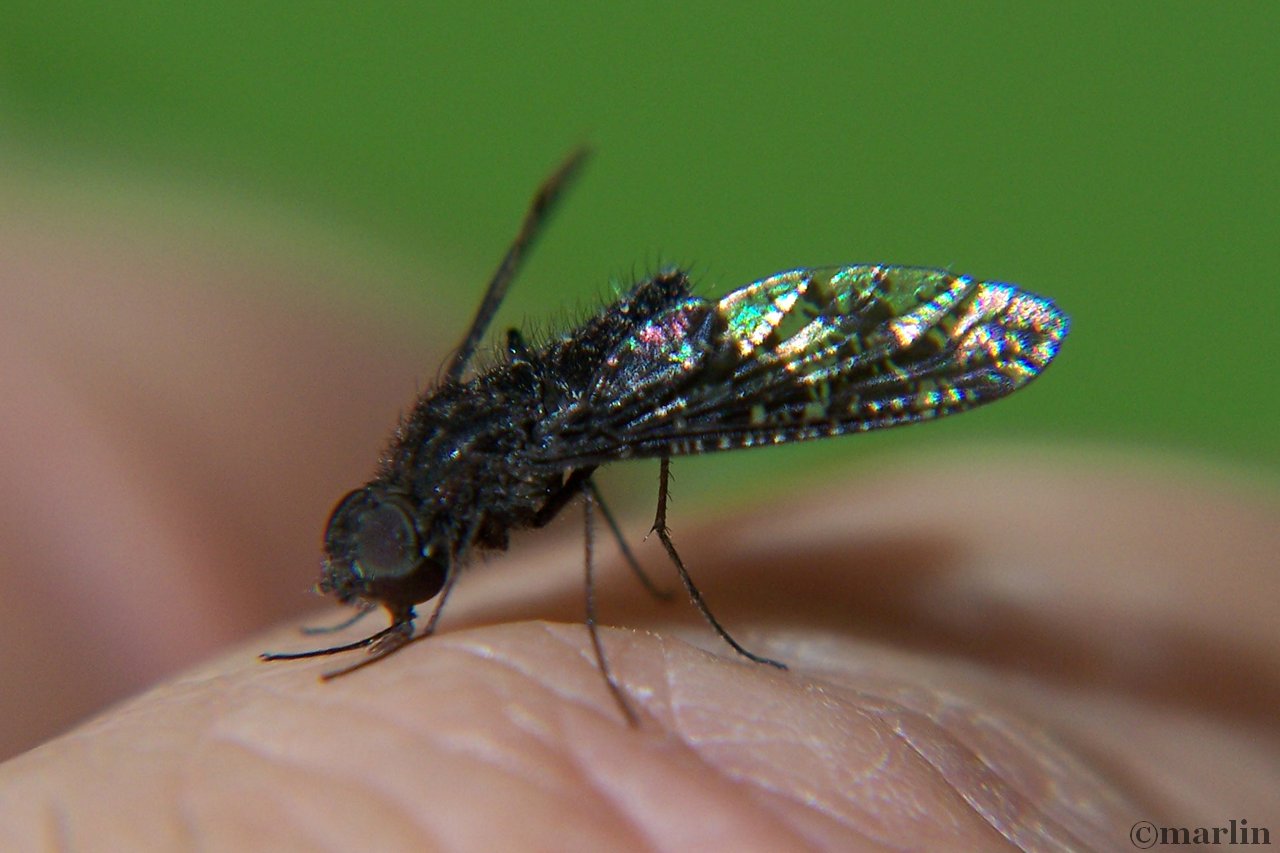 Bee Fly, Anthrax complex – This tiny bee fly was intent of vacuuming up salt from my skin. It is about only 4mm long. This species has some of the most elaborate wing markings in the family, and is quite rare around Chicago. “Rare” is this instance meaning “will hold still long enough to snap a picture.”
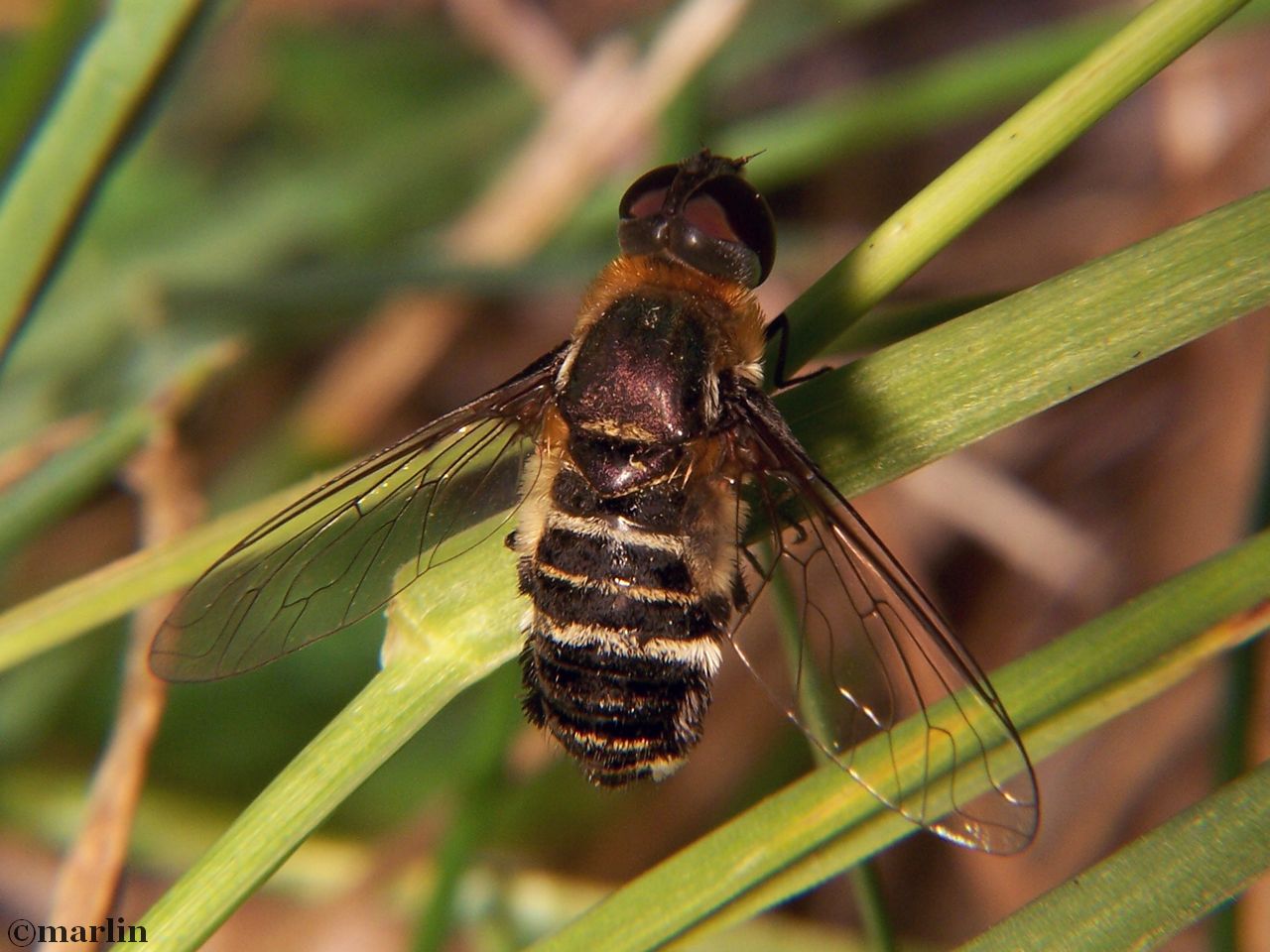 Bee fly, Villa species – I most often see bee flies hovering around flowers, or if resting on the ground, on bare soil. They are extremely wary and difficult to approach. No doubt their large compound eyes give them good vision, plus they have that air-motion sensing mechanism that helps the ordinary house fly avoid the swatter. Adult bee flies drink nectar, but the larvae are parasites of beetle larvae as well as the brood of solitary wasps and bees, the hole or burrow-nesting insects.
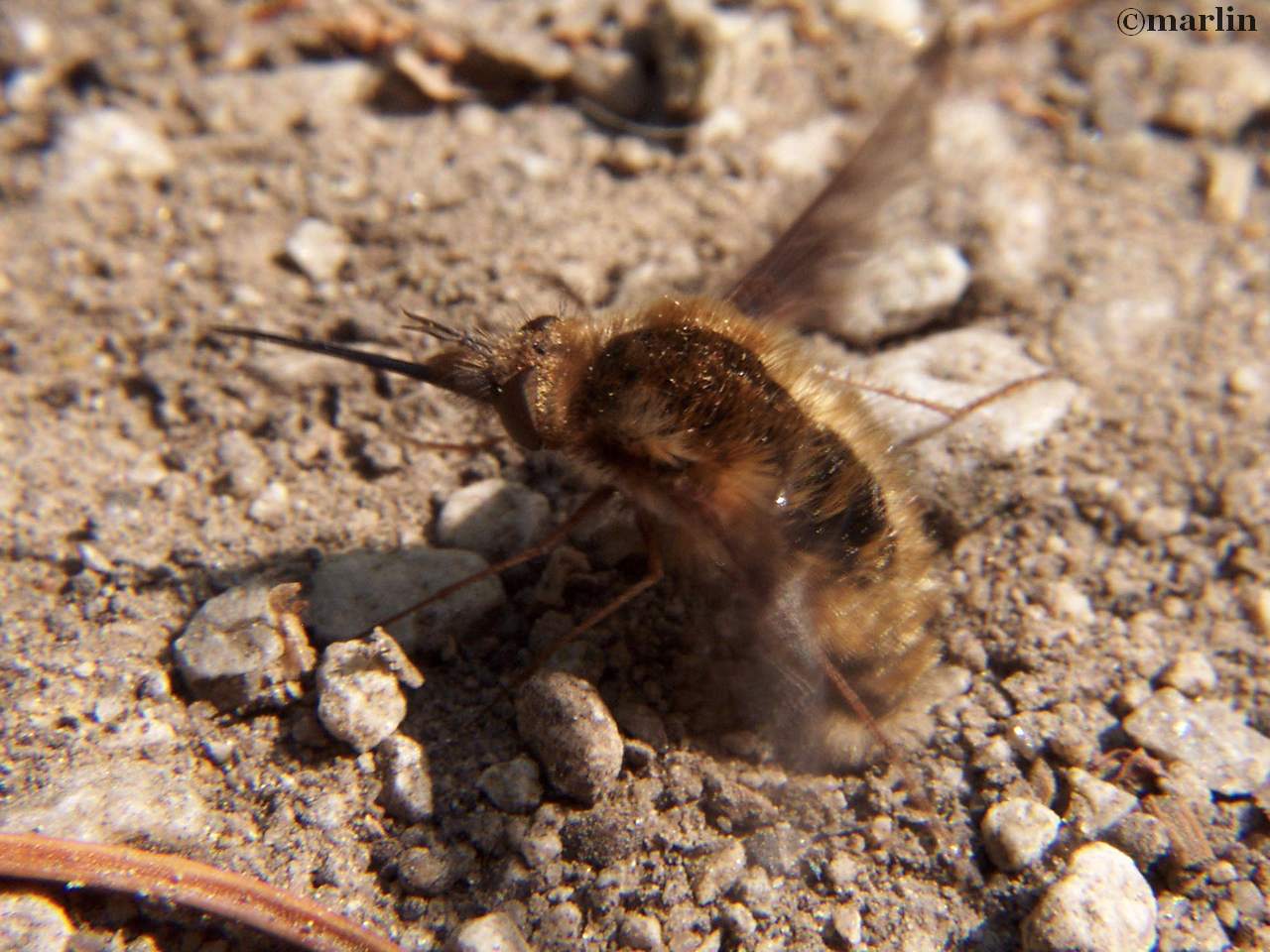 Bombylius coating eggs via butt-tornado – I’ve seen female Bombylius sitting in very loose soil, vibrating their butts like mad, so that the dirt is actually thrown outwards. They are coating their eggs with dust and soil particles.
Flies Main | Tachinidae | Syrphidae | Bee Flies | Blow Flies | Flesh Flies