Crane Flies – Infraorder Tipulomorpha
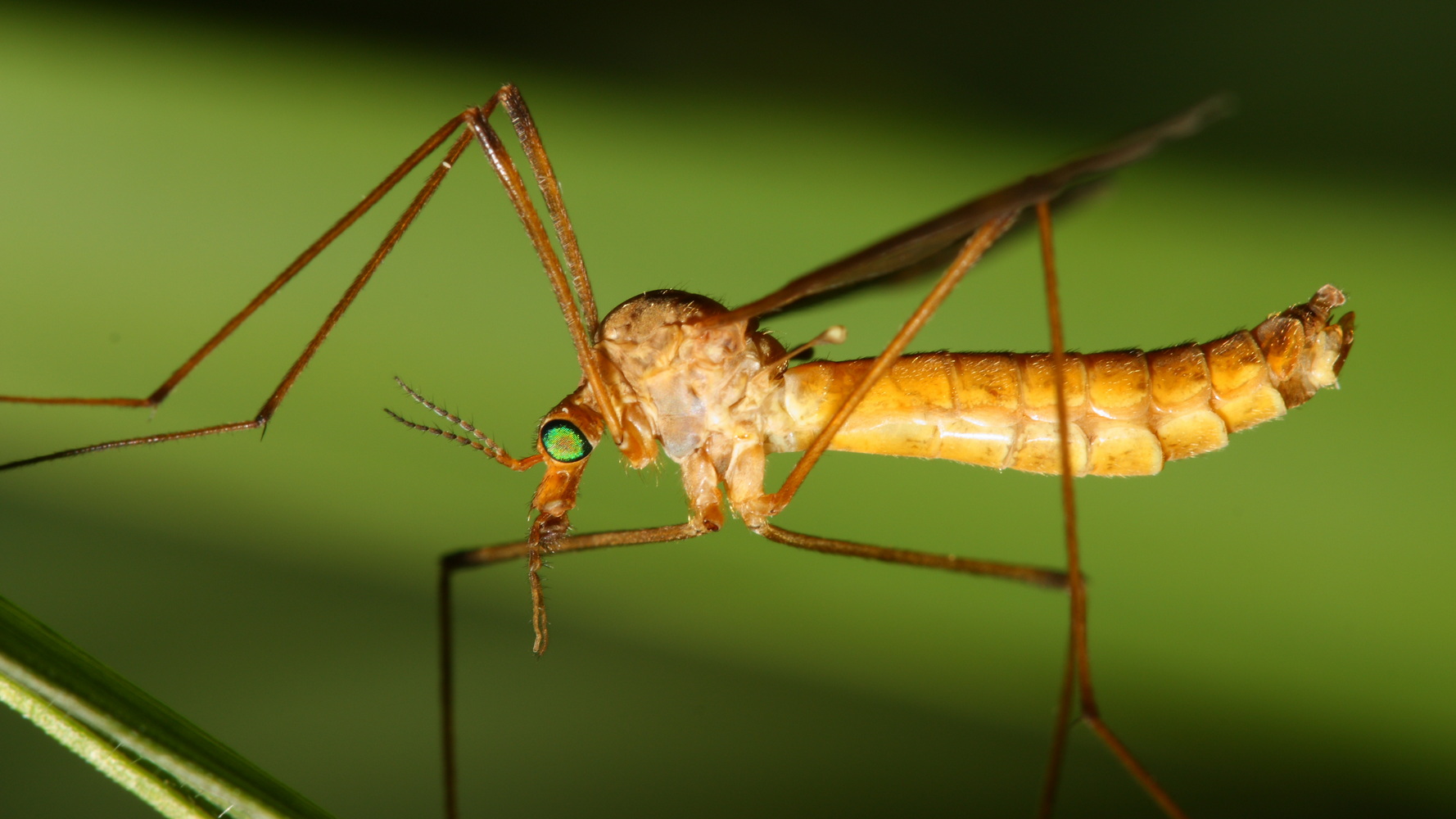
Crane Fly Tipula bicornis
The genus epithet from Latin tipula “water spider.” If you’ve ever seen one, you’ll know why the people of Scandinavia and Great Britain call them daddy long legs. Common name refers to the resemblance to long-legged wading birds in the family Gruidae. They are most often found in moist woodlands and around water, where their larvae often spend their developmental stage.
Adults have a relatively short lifespan of 10-15 days, although the entire brood may last a month or more. The larvae are found in a wide variety of habitats, varying from strictly aquatic to terrestrial [1].
Most species pictured here are members of Family Tipulidae, often referred to as “large” crane flies, with 4,269 recognized species. Live adult flies photographed in the wild at North American locations.
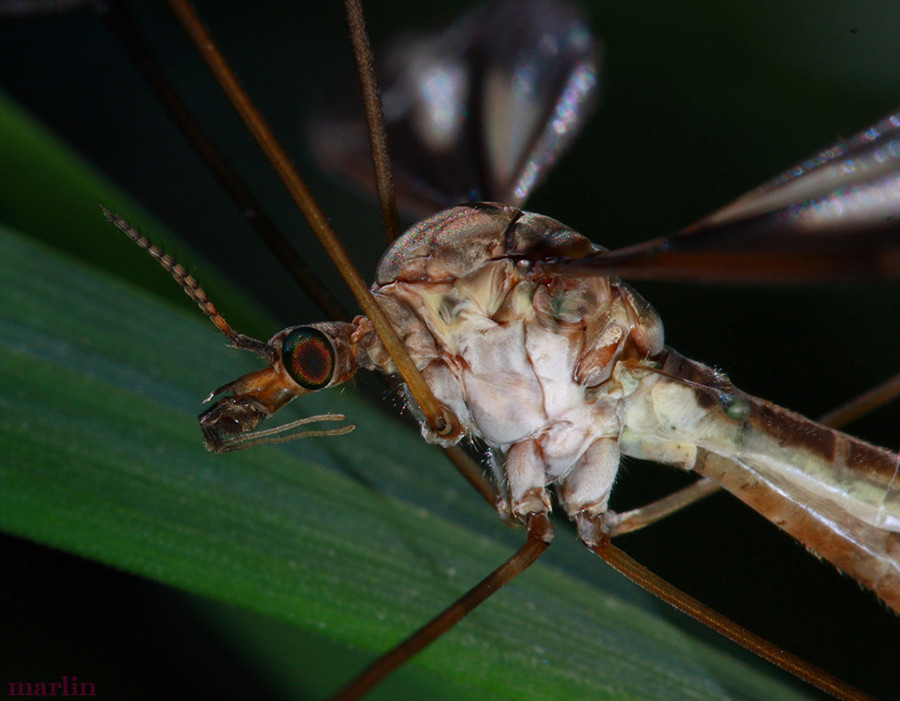
There are ~1500 species of crane fly in North America, and over 15,000 worldwide. Most noted for their long, spindly legs and sometimes huge flying wigs, some are nevertheless poor fliers. However, a few species are capable of such rapid, reciprocation flight they are able to become nearly invisible, much like vibrating spiders do.
Most species pictured here are members of Family Tipulidae, often referred to as “large” crane flies, with 4,269 recognized species [2].
*Thanks to Dr. Chen Young of Carnegie Museum of Natural History for identification of many of these specimens.
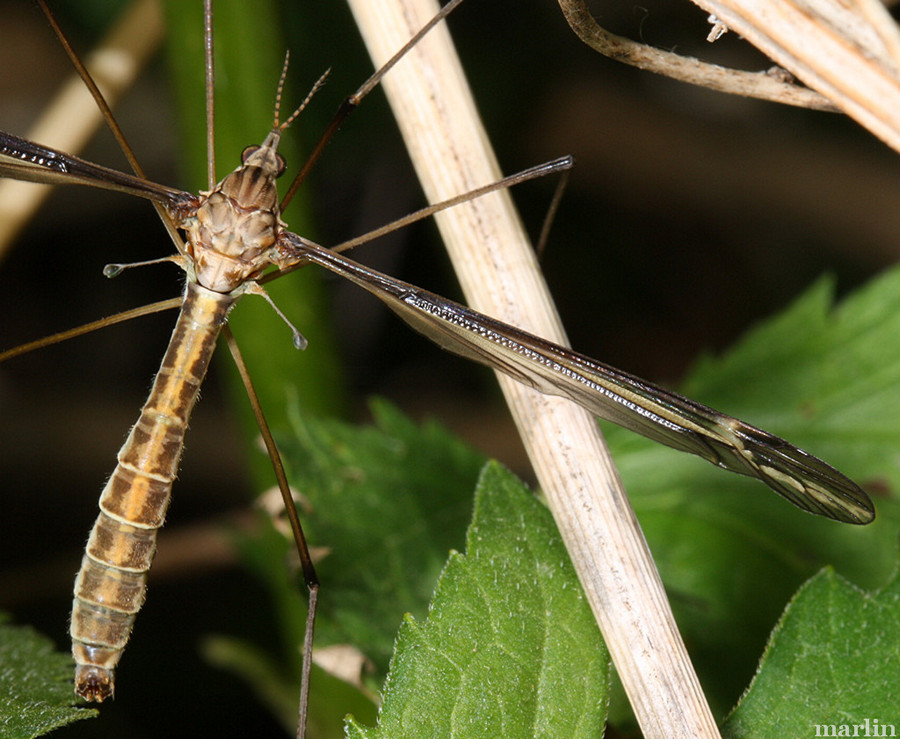
Tipula Vittata
Swarms of mating crane fly males dance above vegetation waiting to seize females. Around the pond where I took these pictures, there are thousands of these flies – they look like huge mosquitoes on steroids, but they cannot sting or bite. They are very clumsy fliers, their legs being twice as long as their bodies. One would think them willing photographic subjects, but they are very alert and do not sit still for very long unless caught “in the act.”
Habitat: Humid areas near ponds, streams, marshes. Range: Worldwide. Food: Most adults do not feed. Those that do take flower nectar. Larvae feed on decaying vegetation, fungi and roots.
Life Cycle: Slender eggs are laid on moist soil or mud near open water. Fully grown larvae pupate overwinter in the soil
 T. submaculata |
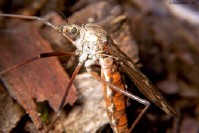 Tipula dorsimacula |
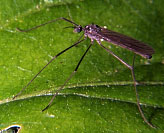 Gnophomyia tristissima |
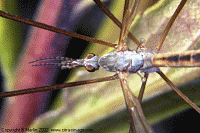 Tipula paterifera |
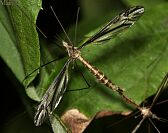 Tipula furca |
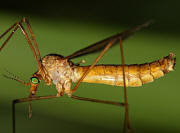 Tipula bicornis |
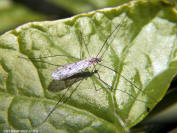 Erioptera cana |
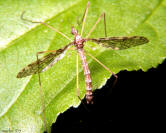 Epiphragma fasciapenne |
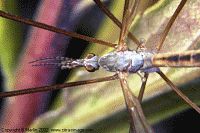 Tipula sp. |
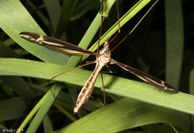 Tipula caloptera |
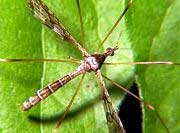 Epiphragma solatrix |
References
- Chen Young, Carnegie Museum of Natural History, “Crane Flies of Pennsylvania“
Flies Main | Flies Index | Tachinidae | Syrphidae | Bee Flies | Blow Flies | Flesh Flies