
Golden Syrphid Fly – Caliprobola pulchra
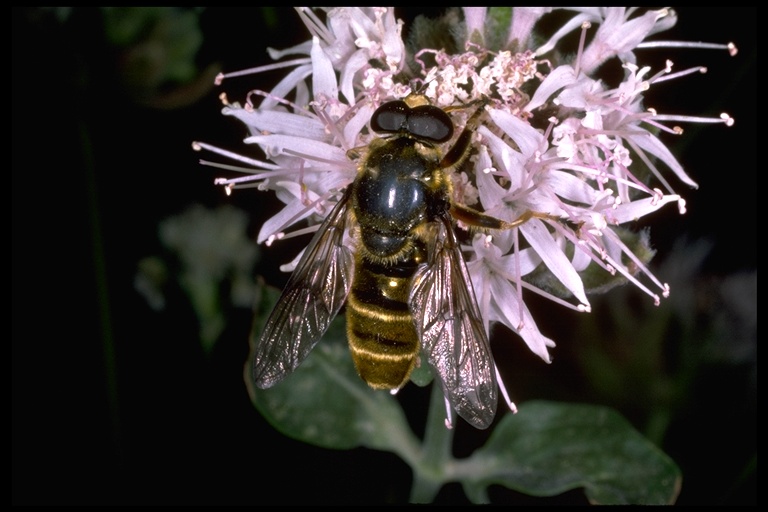 Photo: T. W. Davies California Academy of Sciences
The hover flies are a large group of generally beneficial insects. Their coloring and movements of most species mimic bees or wasps — boldly patterned with yellow, orange and black. Some species even go so far as to wave their front legs in front of their face to mimic the jointed antennae of the potter wasps.
Adult hover flies can generally be found hovering in midair or feeding at flower blossoms. They eat only nectar and pollen. However, their larvae can be rapacious predators of aphids, thrips, and mites, or parasitic in the nests of ants or solitary bees. Still other larvae scavenge in soil or decaying plant material or eat living plants. Some are aquatic.
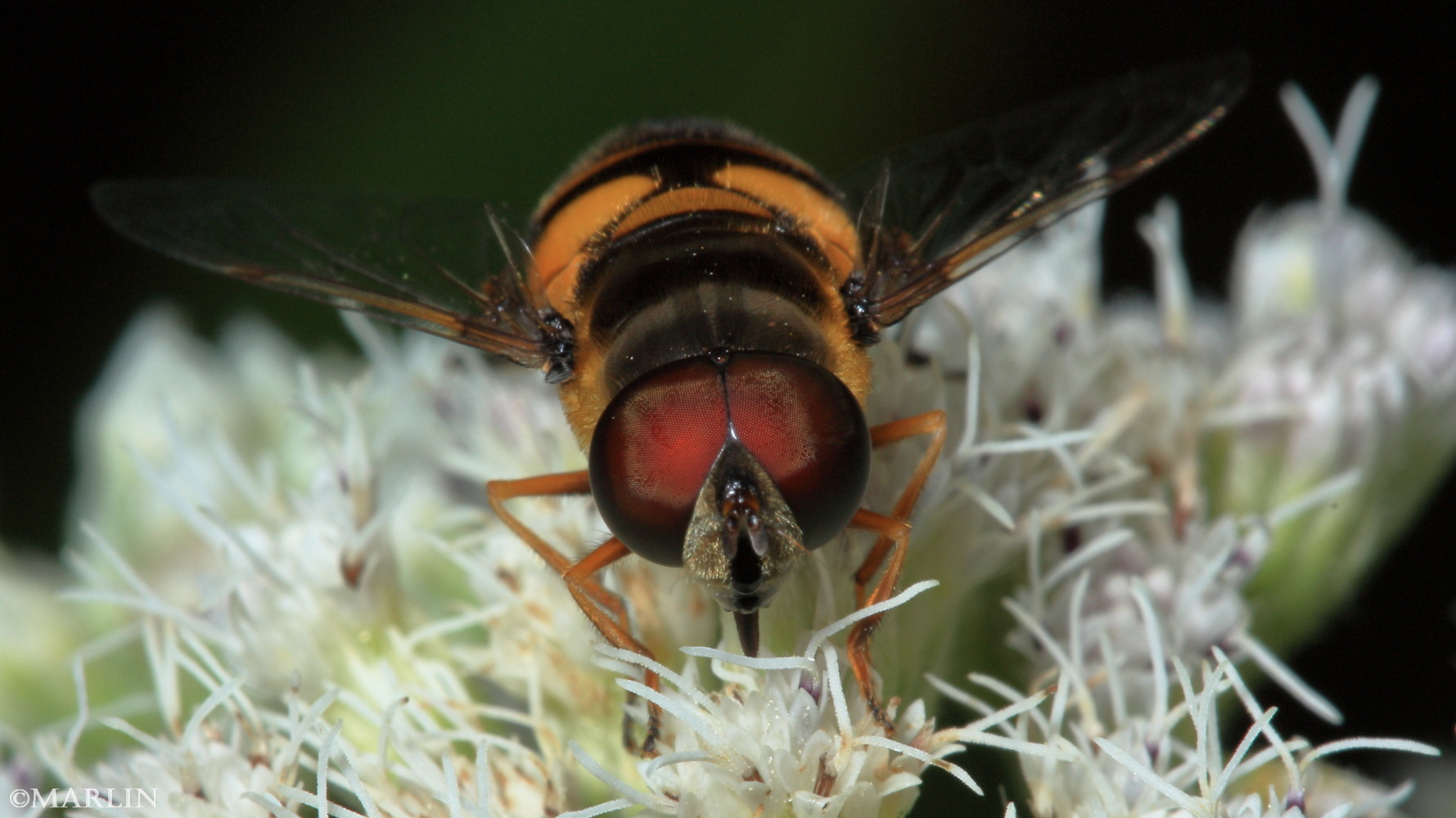
Here’s another syrphid fly you might like: Transverse Flower Fly
Flies of North America – Order Diptera. Flies are prevalent in virtually all habitats, with over 16,000 species in North America. Flies can be distinguished from all other insects in that they only have one pair of normal wings. Most flies have compound eyes and mouthparts adapted for piercing, lapping or sucking fluids.
Syrphidae | Flies Index | Tachinidae | Bee Flies | Robber Flies