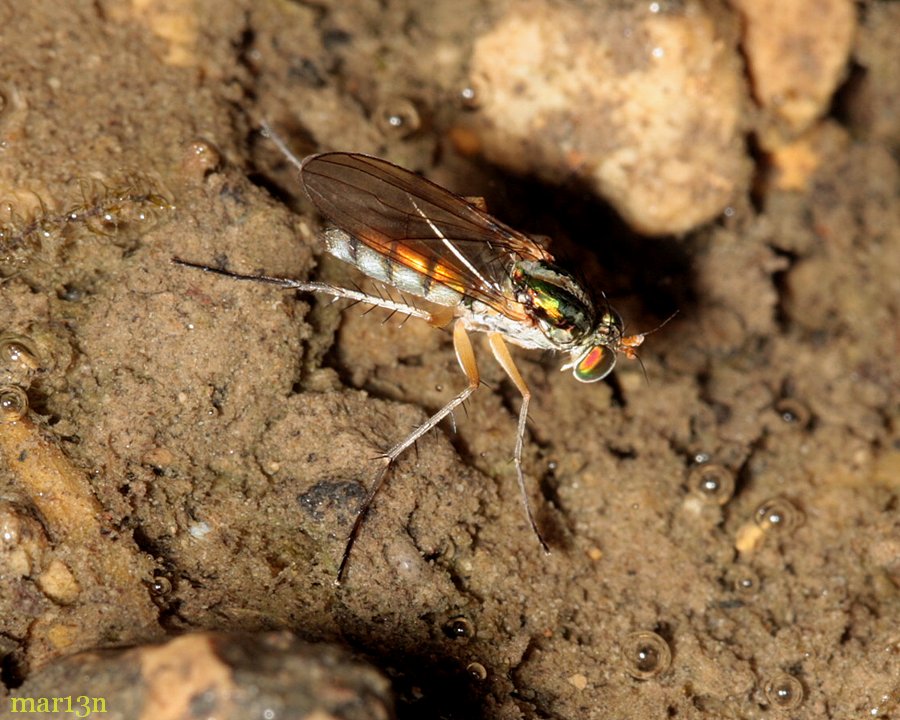
Long-legged Fly – Condylostylus species
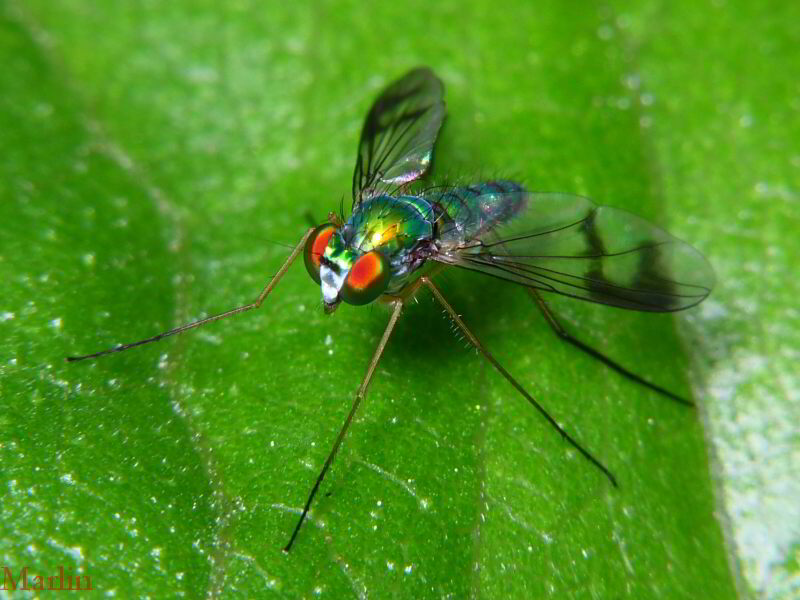
Family Dolichopodidae / Subfamily Sciapodinae
Adult long-legged flies feed primarily on small, soft-bodied arthropods and annelids
Some of these flies are teensy – about 1/8″ long – some of the big ones get up to about 1/4″ (6mm). They will catch your eye with their bright metallic green colors. They are some of the most abundant flies in wild areas and old farm fields.
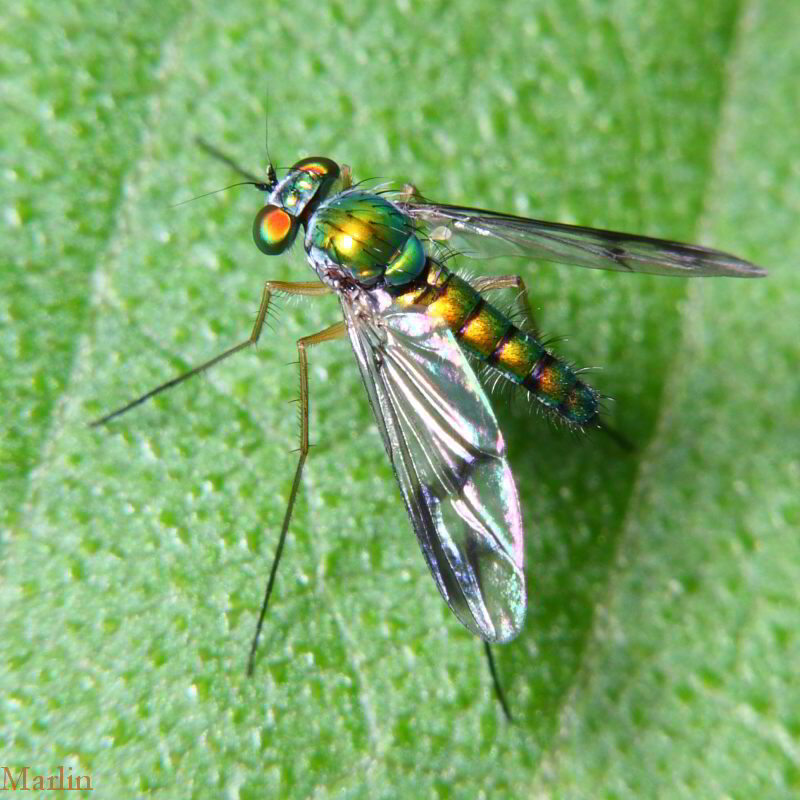
“Adult dolichopodidae range in size from about 1-9 mm in length and can be recognized by their elongate legs, reduced wing venation, aristate antennae, and relatively slender build. Most species are metallic greenish-blue to greenish-bronze, while some others are non-metallic yellowish, or brown to black. Males are known for their wide array of secondary sexual characteristics which have been invaluable features for recognizing species. Male secondary sexual characteristics often include modifications of the antennae, palps, wings and, typically, the legs . Larvae are whitish, cylindrical and relatively slender with distinct creeping welts on segments 4 to 11.
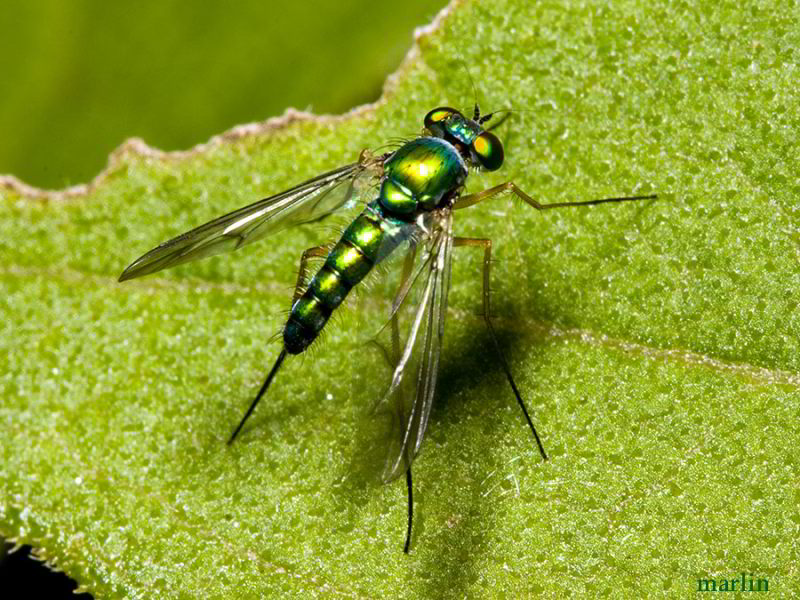
Adult longlegged flies are predaceous, feeding primarily on small, soft-bodied arthropods and annelids, and are important natural enemies of pests in a variety of habitats including agroecosystems. Adult and larval forms of Diptera are their most favored prey, especially Chironomidae and Culicidae, followed by Homoptera, Collembola, mites and Thysanoptera.
Although the adults of some dolichopodids are known to use their forelegs to hold and manipulate their prey, most grab and masticate prey with their epipharynx and labellum, suck up the liquids and discard the remains. In addition to feeding on live prey, many dolichopodids have also been observed taking up honeydew, and it is thought that most species do so in order to obtain carbohydrates. Adults of some Dolichopodinae have elongate mouthparts and are known to be anthophilous and feed on nectar.” —North American Dipterist Society, Empidoid Resources
 You may also like: Long-Legged Fly – Dolichopus species
“Like a long-legged fly upon the stream
His mind moves upon silence.”
– William Butler Yeats
Insects & Spiders | Flies Index | Tachinidae | Dung Flies | Bee Flies | Robber Flies
Tree Encyclopedia / North American Insects & Spiders is dedicated to providing family-friendly educational
resources for our friends around the world through large images and macro photographs of flora and fauna.
Online since 2002