Root Maggot Fly – Family Anthomyiidae
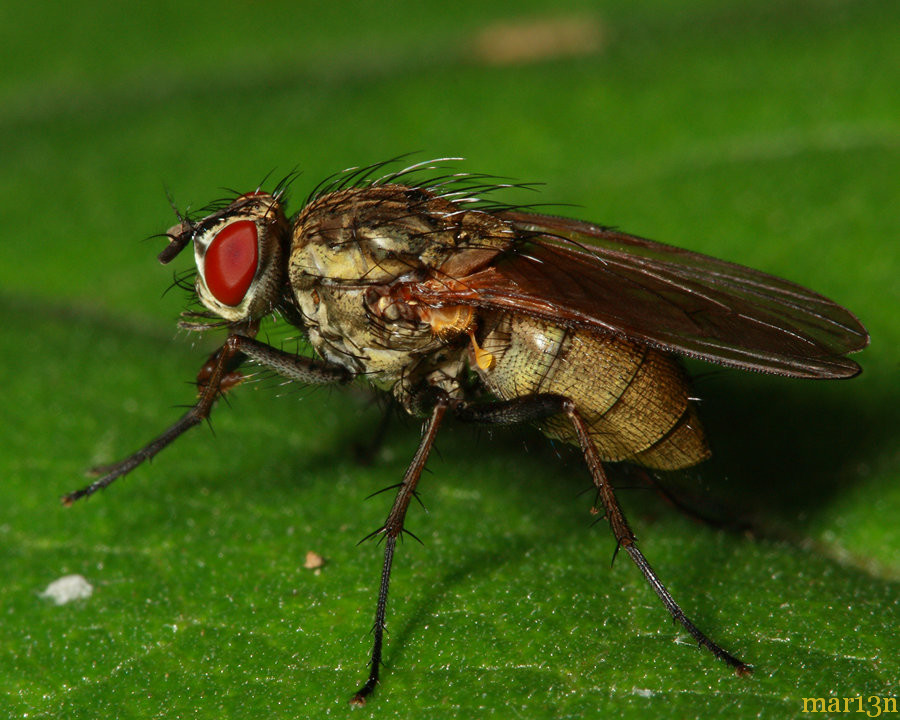 The family name comes from the Greek “anthos” (flower) + “myia” (fly). Adult flies in this family feed on nectar and pollen, and larvae (maggots) feed on flower roots, or decaying organic matter.
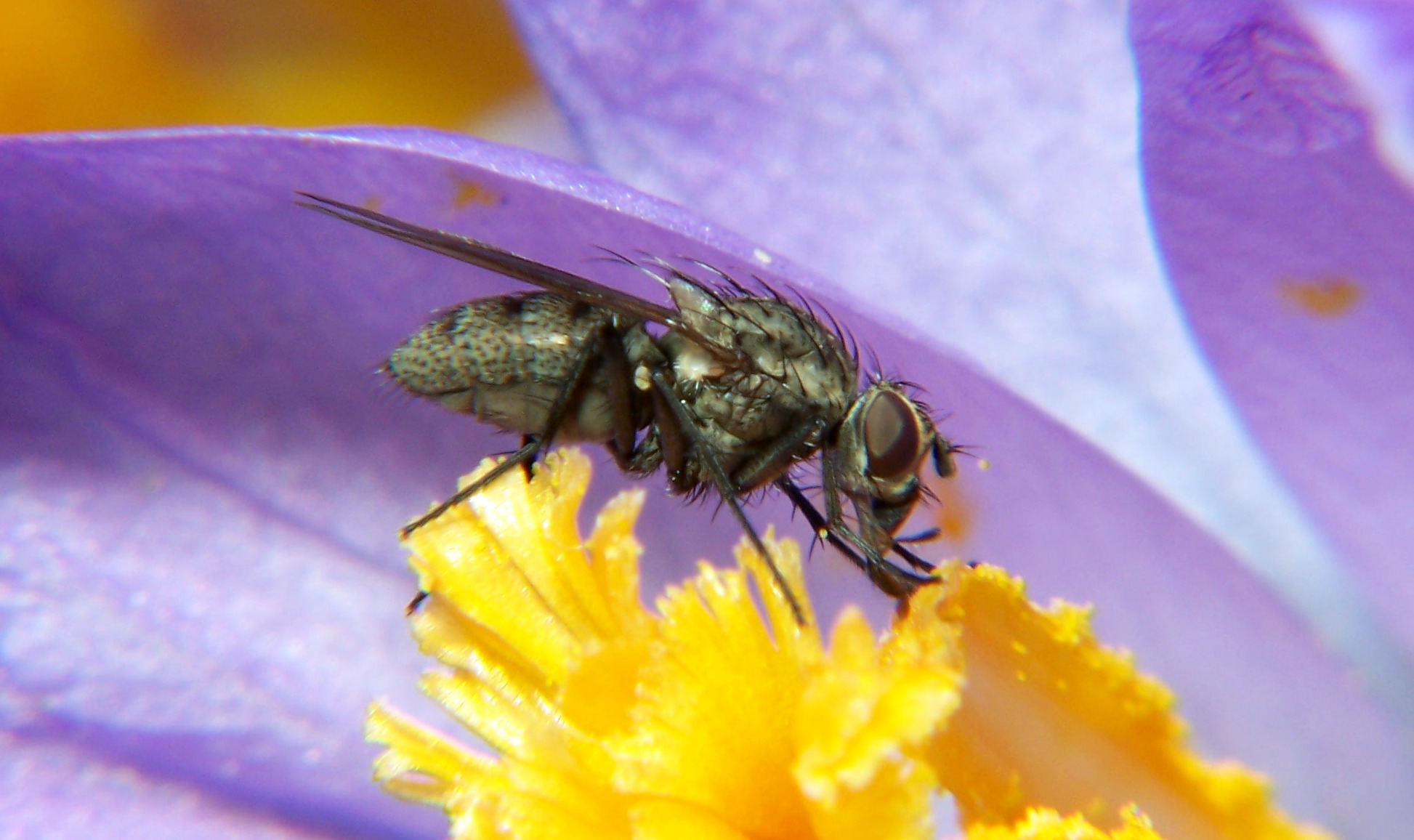
The Anthomyiidae (412 North American species) are medium-sized nondescript flies that are taken in large numbers in Old Field sweeps.
 Adult root maggot flies are important flower pollinators
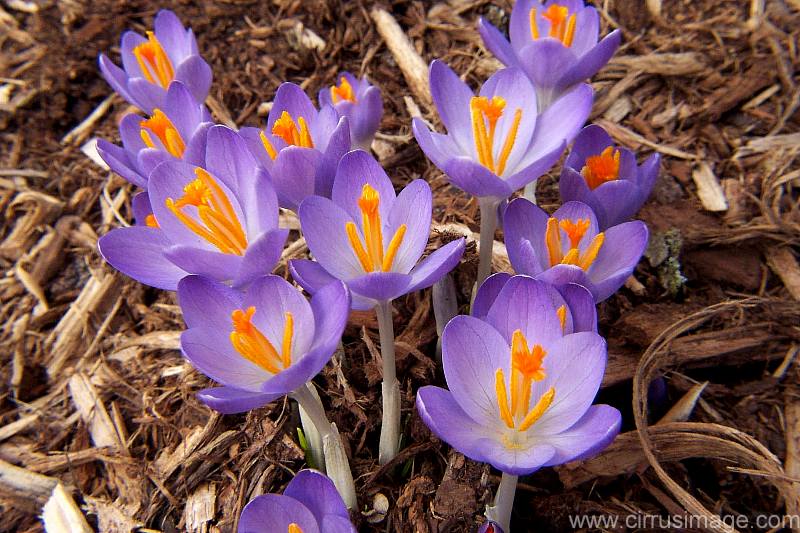 Crocus is the generic name of hardy, corm-forming herbs belonging to the iris family, Iridaceae.
The genus comprises about 80 species originally native to the Mediterranean region and to Southwest Asia.
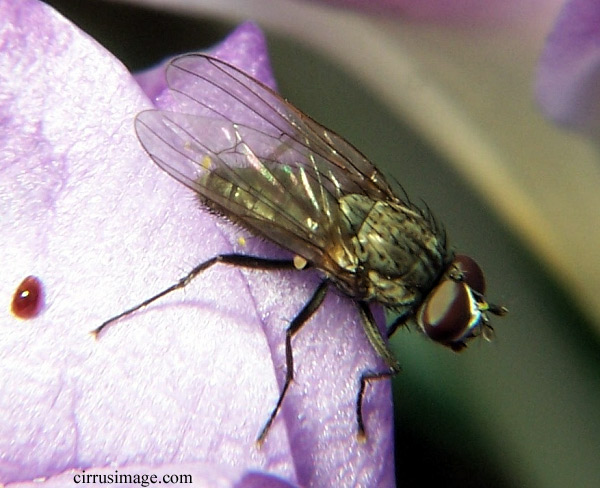
Adult male on crocus flower. These flies are some of the earliest spring insects.
Flies Main | Flies Index
Bee Flies | Robber Flies
Tree Encyclopedia / North American Insects & Spiders
Online since 2002