Tachinid Fly – Trichopoda pennipes
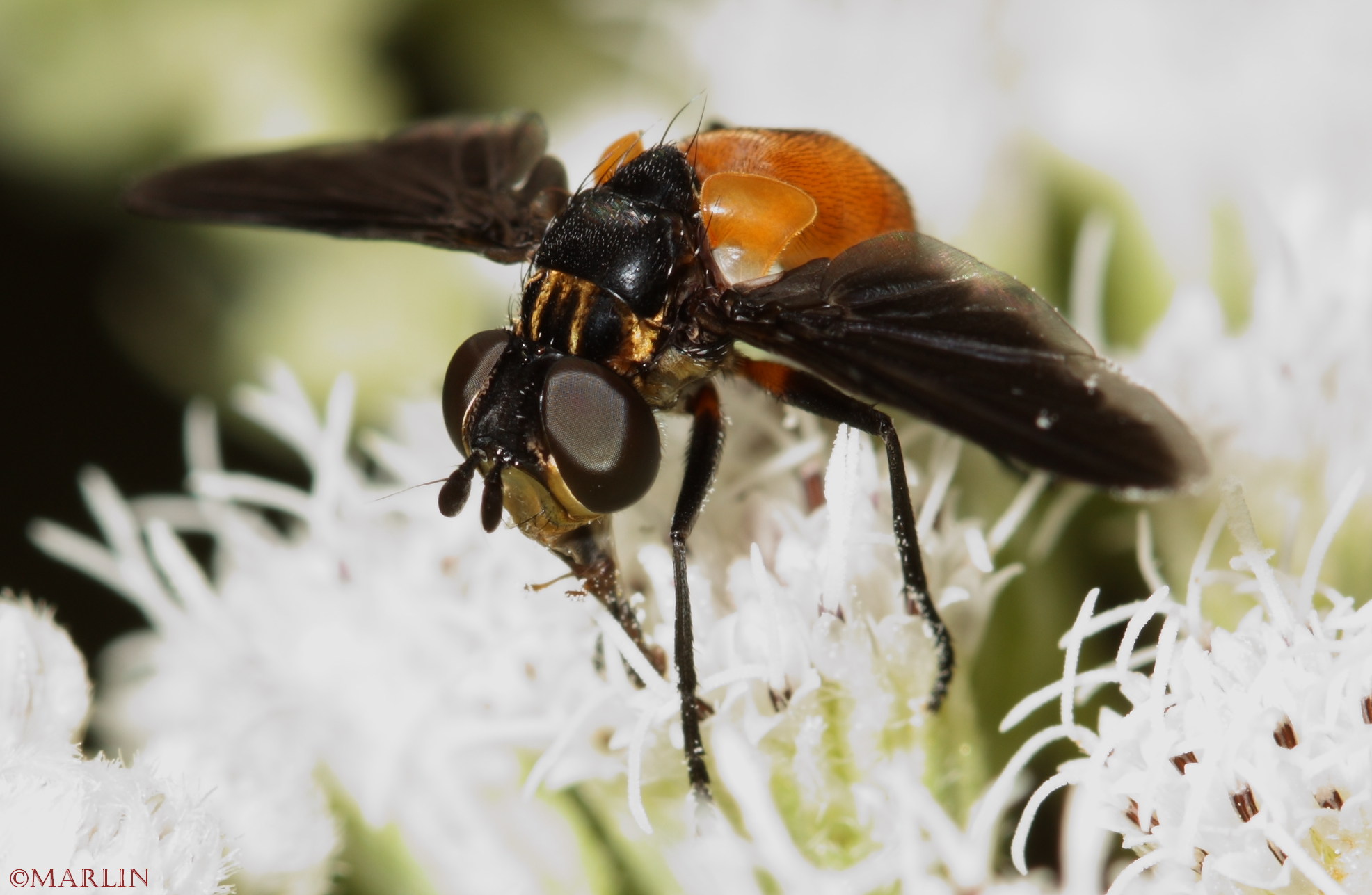
Phasiinids are among the most primitive tachinids; they deposit undeveloped eggs onto their hosts
Trichopoda pennipes is about the size of a housefly, and is primarily a parasite of insects in the families Coreidae (squash bugs and leaf-footed bugs) and the Pentatomidae (stinkbugs). Although several species of Tachinid flies have been imported as biological control agents of agricultural pests, this distinctively colored fly is native throughout much of the United States.
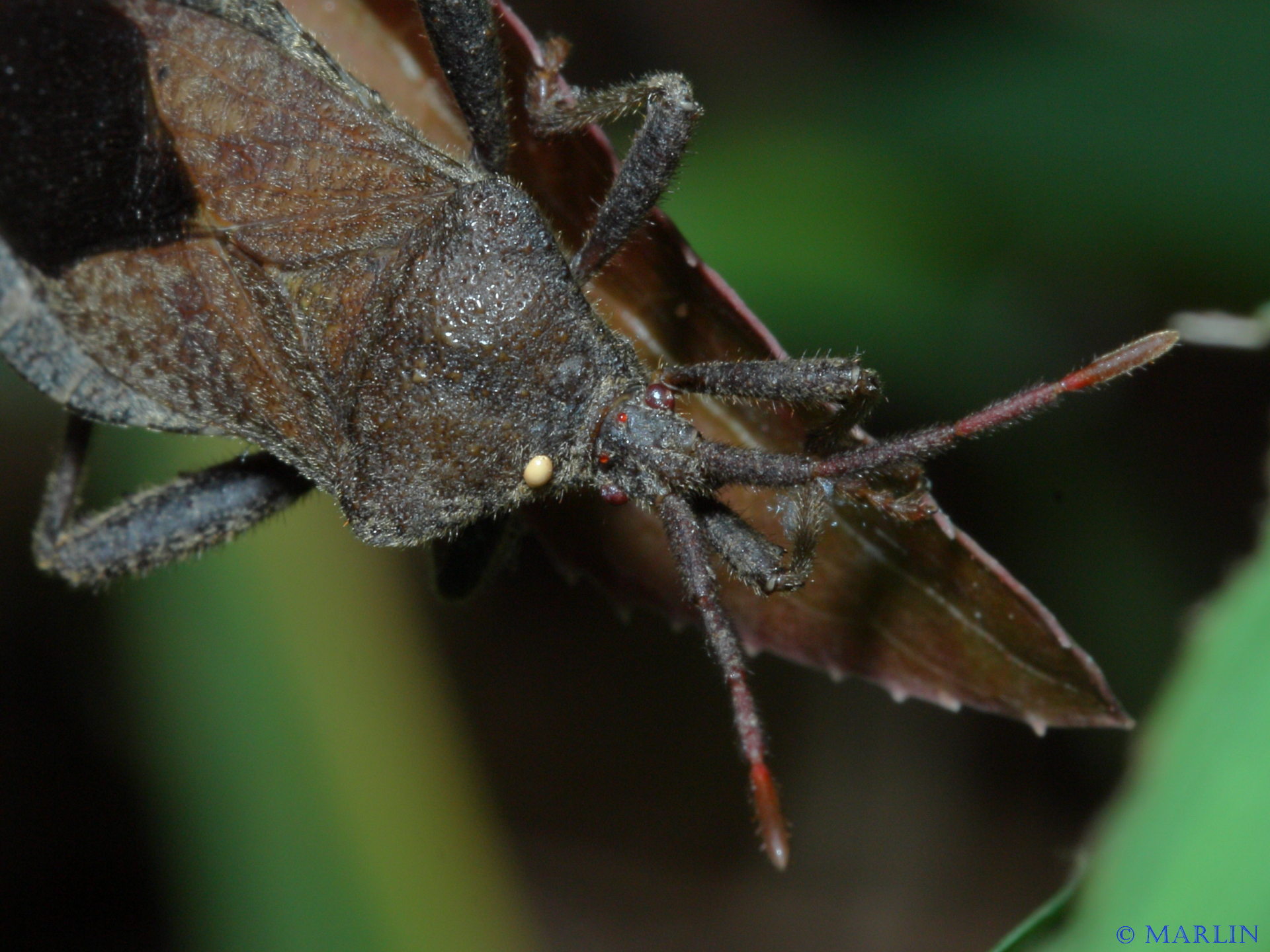 Undeveloped eggs are cemented to a bug’s pronotum
Female flies in the subfamily Phasiinae lack a uterus, or ovisac, in which to store eggs while they develop. They attach an undeveloped eggs directly to the exterior of the host (above). These eggs make take a few days to develop and during this time they are subject to removal by the victim, or may be lost when the bug molts. A few species have developed complex sclerotic mechanisms for inserting the egg partially or fully into the host’s cuticle [2].
The female fly lays oval eggs on large nymphs on adult bugs. The larvae burrow from the egg directly into the bug’s body. Only one larva survives within each bug. A large, cream-colored maggot exits from the body of the bug, drops to the ground, and pupates in a dark reddish-brown puparium. The bug soon dies. A new generation of adult flies emerges to lay eggs about two weeks later. Each female fly may lay several hundred eggs, and there may be three generations each year, depending on location [1].
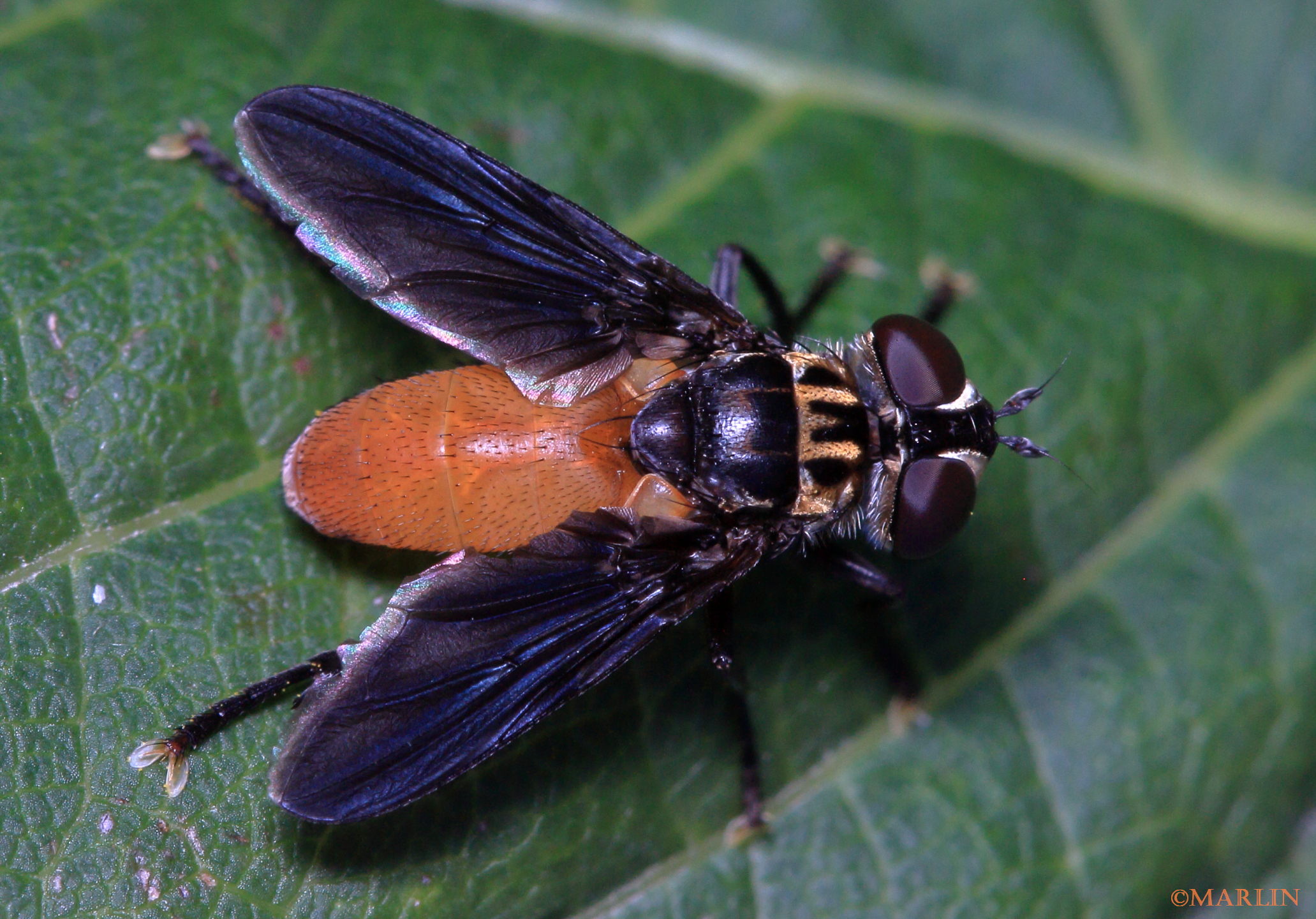
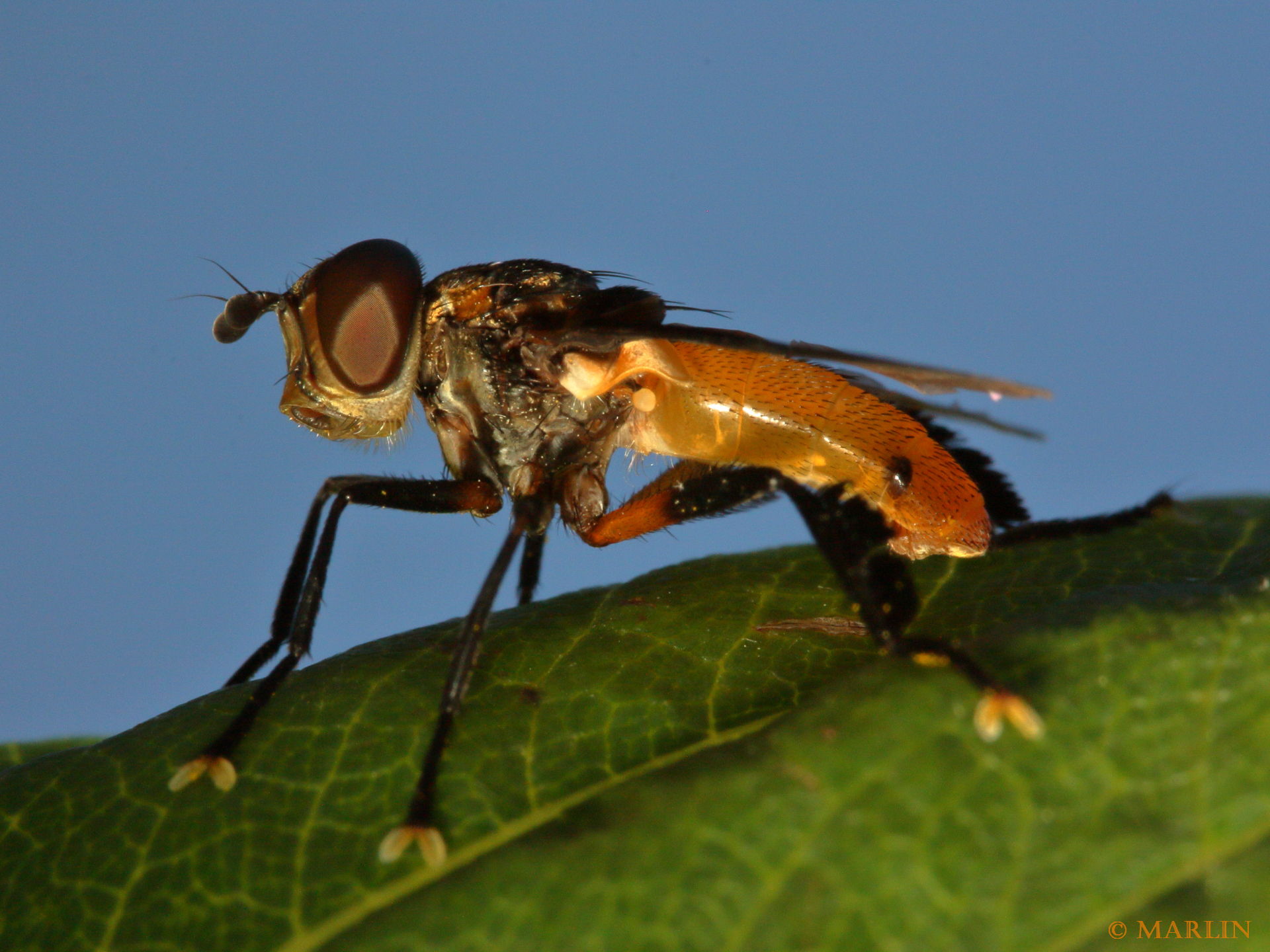 Also called fringe-legged fly
References
- Weeden, C.R., A. M. Shelton, and M. P. Hoffman. Biological Control: A Guide to Natural Enemies in North America
- D.M Wood, Manual of Near-Arctic Diptera Vol. 2, Tachinidae
North American Insects & Spiders
Online since 2002