Japanese Azalea – Rhododendron japonicum
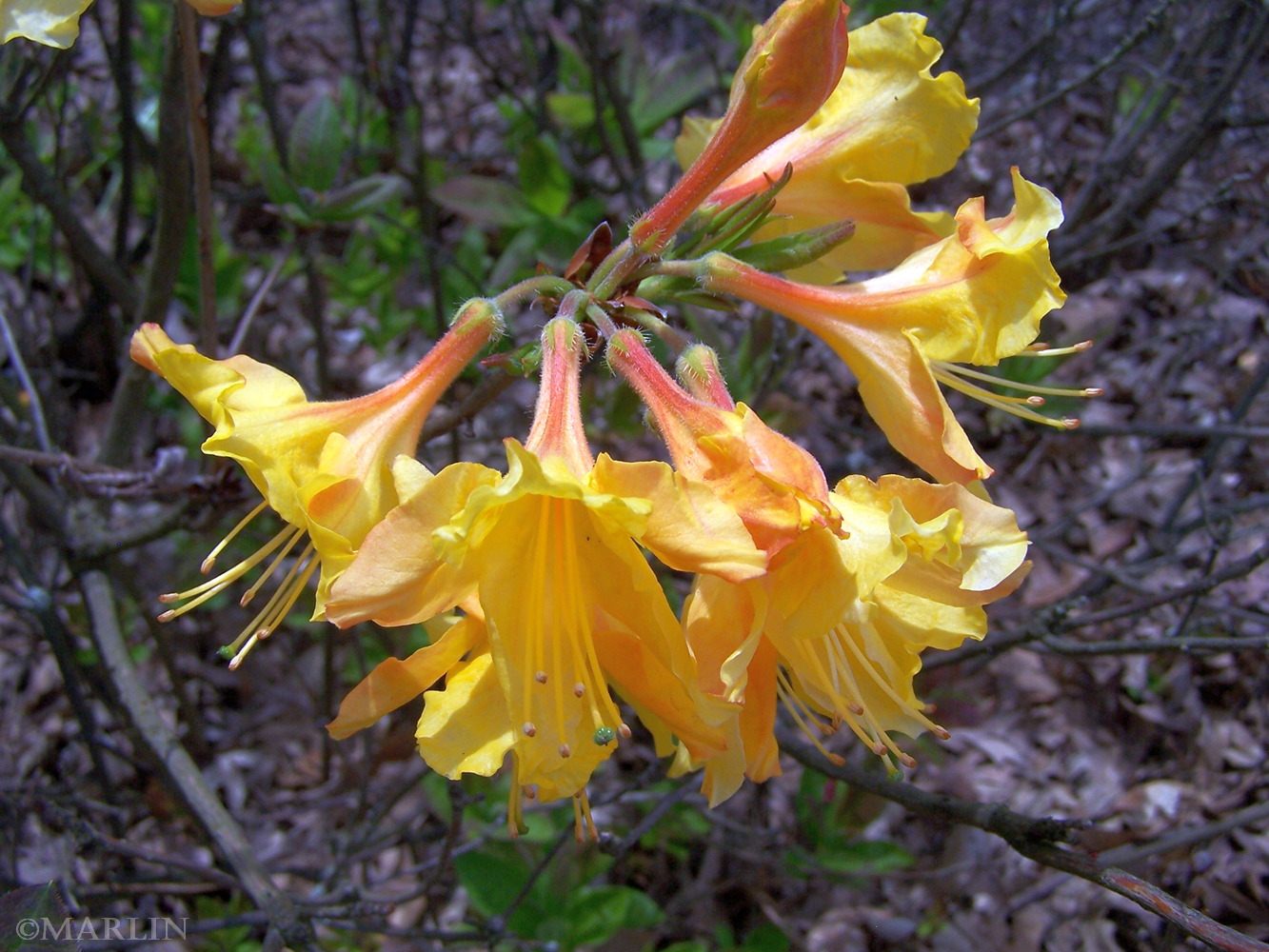 All parts of Rhododendrons are toxic to animals if ingested
A deciduous shrub growing to 2m. Hardy to zone 5. Flowers April to May. The flowers are hermaphrodite (have both male and female organs) and are pollinated by insects. The plant prefers light sandy, well-drained but moist soil. It can grow in semi-shade (light woodland) or full sun.
Rhododendron (from the Greek: rhodos, “rose”, and dendron, “tree”) is a genus of flowering plants in the Heath Family (Ericaceae). It is a large genus with over 1000 species. Most have very colorful, showy flowers. It includes the plants known to gardeners as azaleas.
Rhododendron grow as shrubs or small trees. The smallest species grows to 10-100 cm tall, and the largest, R. giganteum, has been reported at 90 feet. Leaves are spirally arranged; leaf size can range from 1-2 cm to over 50 cm, exceptionally 100 cm in R. sinogrande. They may be either evergreen or deciduous. In some species the underside of the leaves is covered with scales (lepidote) or hairs (indumentum. Some of the best known species are noted for their many clusters of large flowers.
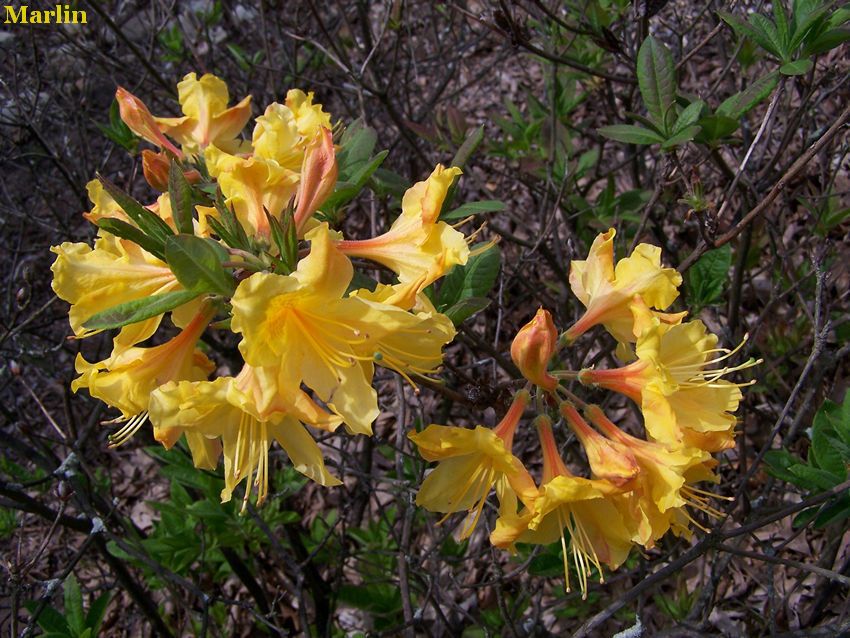
Both species and hybrid rhododendrons (including azaleas) are used extensively as ornamental plants in landscaping in many parts of the world, and many species and cultivars are grown commercially. Most large commercial growers in the United States are located on the west coast.
Rhododendrons are valued in landscaping for their structure, size, flowers, and the fact that many of them are evergreen. Azaleas are frequently used around foundations and occasionally as hedges, and many larger-leafed rhododendrons lend themselves well to more informal plantings and woodland gardens, or as specimen plants. In some areas, larger rhododendrons can be pruned to encourage more tree-like form, with some such as R. arboreum and R. falconeri eventually growing to 10-15 m or more tall.
References:
- NATIONAL AUDUBON SOCIETY, National Audubon Society Field Guide to Rhododendron
- ASPCA, Animal poison control Toxic plant list
- David Streeter and Richard Lewington, The Natural History of the Rhododendron: An Intricate Visual Exploration
Trees Index | Pine Family | Beech, Oak | Nut Trees | Birch Family | Magnolias | Rose Family
Tree Encyclopedia / North American Insects & Spiders is dedicated to providing family-friendly educational
resources for our friends around the world through large images and macro photographs of flora and fauna.
Online since 2002