Ox-eye Daisy – Chrysanthemum leucanthemum
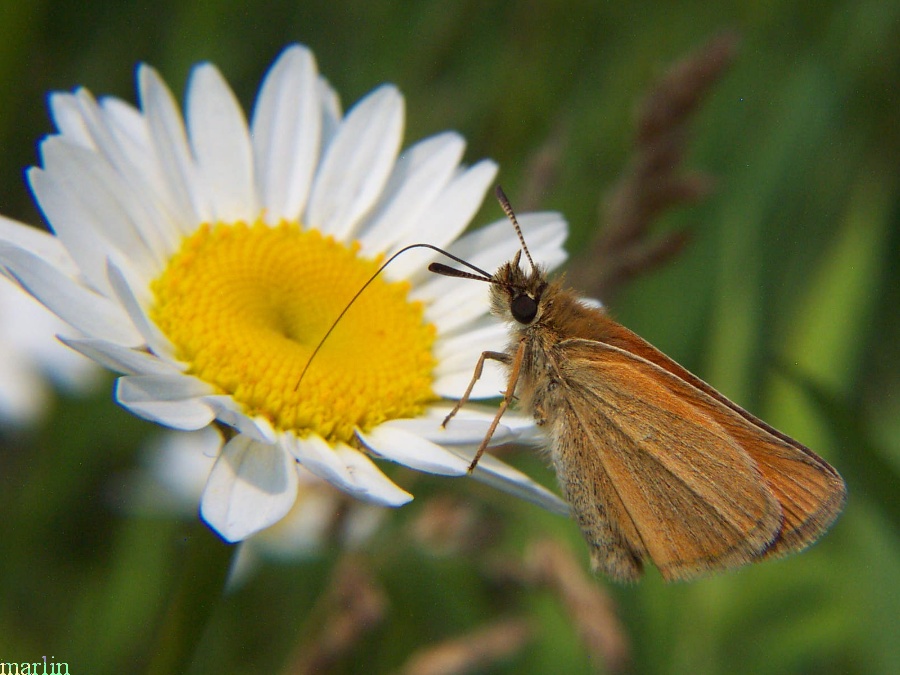 Least Skipper takes nectar from ox-eye daisy
Ox-eye daisy is a creeping perennial and is considered a noxious weed.
Description: An herbaceous perennial in the aster family (Asteraceae) with numerous stems from 1 to 3 feet tall. Stems are slender, erect and may emerge from the root crown or singly from an upturned rhizome. Stalked basal leaves are spoon-shaped, broadly toothed, and 2 to 5 inches long and 2 inches wide. The stem leaves are alternate, smooth, glossy and dark green. The leaf stalks are short and clasp the stem.
Solitary flower heads composed of 15-30 white ray florets that surround a compact yellow disc with a depressed center. Flowers occur singly at the ends of stems and bloom from June to August. The fruit is a flat seed 0.08 in long, 10-ribbed, dark gray at maturity with no pappus. A typical plant produces over 500 seeds that spread by wind or animals and remain viable in the seedbank for 2-3 years. The root system is comprised of shallow, un-branched roots and rhizomes. Plants reproduce by roots and seeds.
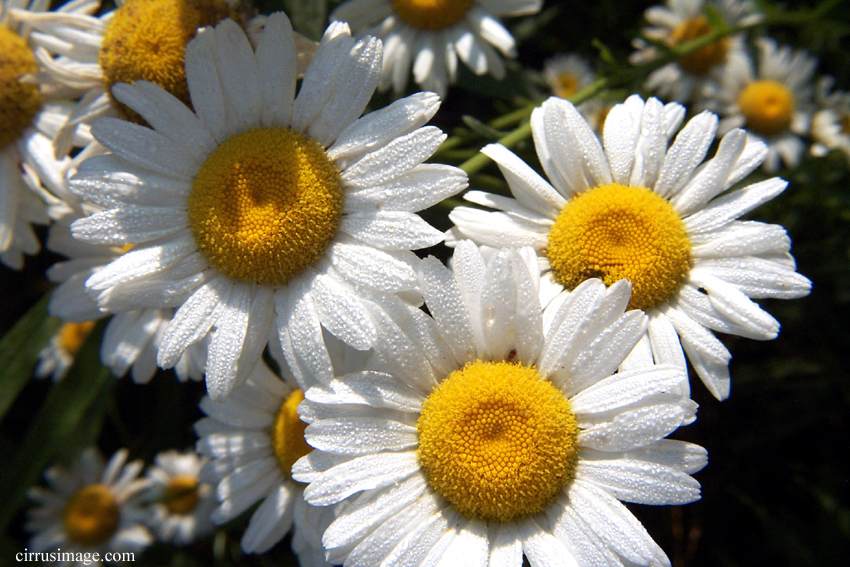
Habitat: It has escaped cultivation and is now common in native grasslands, pastures, fields, disturbed areas, waste areas, open woods, meadows, and roadsides. It is adapted to coarse and medium textured soil, pH 5.2 – 7.
Distribution: This species is reported from states shaded on Plants Database map. It is considered invasive in AK, AZ, CA, CO, CT, KY, MD, MI, MO, MT, NJ, NY, OR, TN, WA, WI, and WY.
Ecological Impacts: Oxeye daisy has the potential to form dense colonies, decrease overall vascular plant diversity, and modify existing communities. It can quickly replace up to 50% of the grass species in pastures. Infestations create an increase in the potential for soil erosion. Oxeye daisy is a host for several viral diseases affecting crops, e.g. the yellow dwarf virus of potatoes.
References:
Czarapeta, Elizabeth J., Invasive Plants of the Upper Midwest: An Illustrated Guide to their Identification and Control, 2005. p. 103
Flowers | Index | Garden Slugs | Tree Encyclopedia | Rhododendrons | Rose Family