Nova Zembla Rhododendron
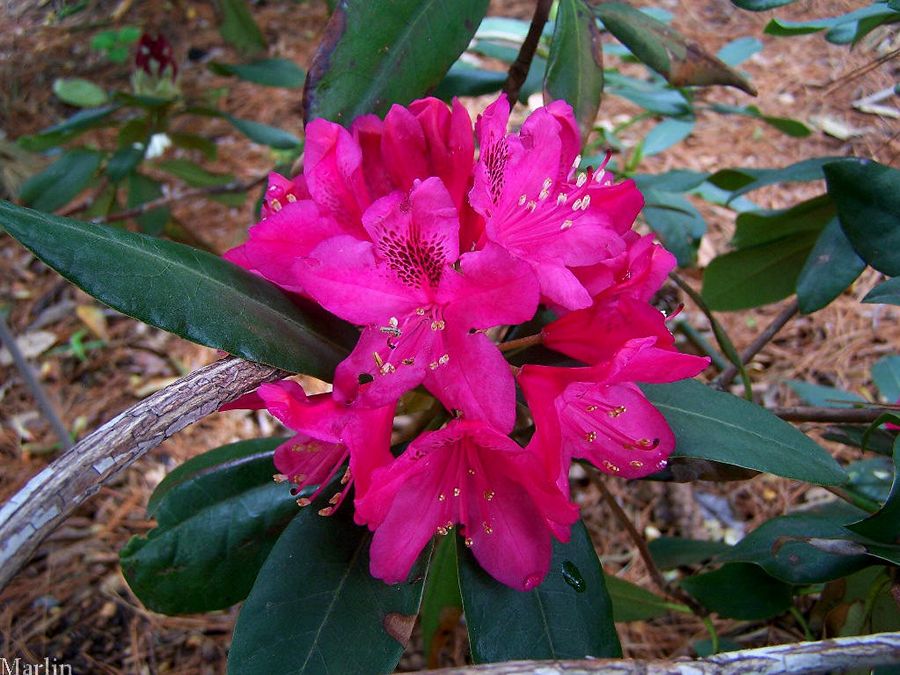
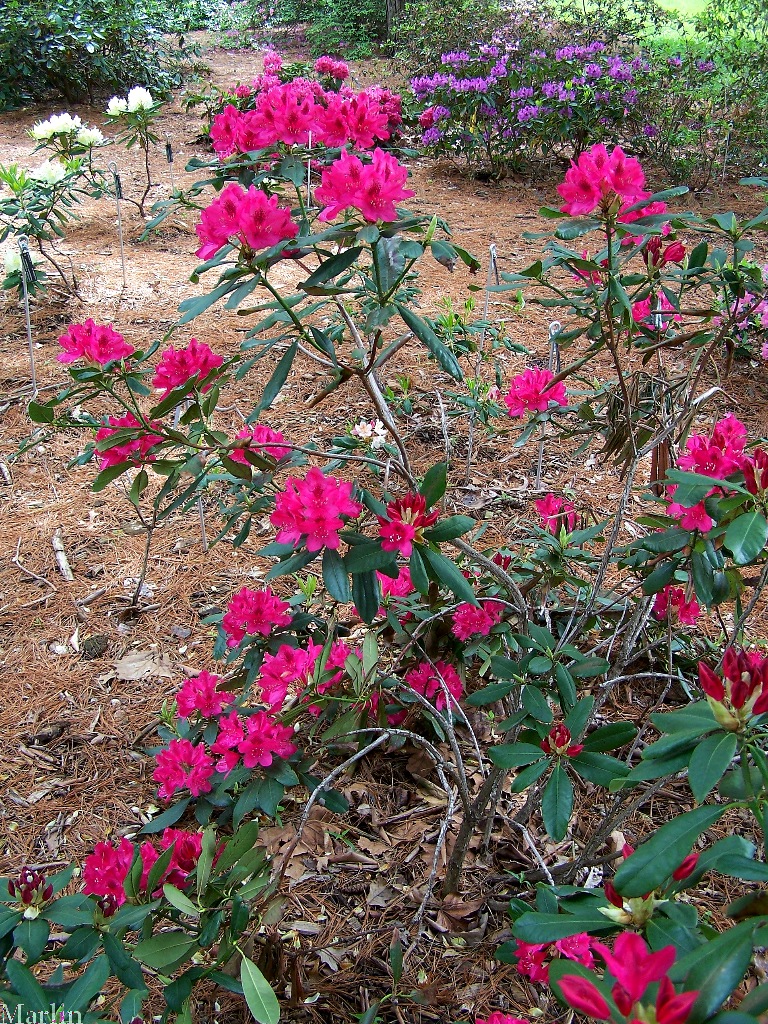
Hardiness: USDA 5 – 8 / Partial Shade / Moist Soil / can grow to 4 feet tall
Nova Zembla rhododendron is so easily grown it has become a standard choice for planting in less than ideal garden conditions. However, a careful balance of full sun and dappled shade (about 50-50) appears to be critical to a good proportion of leaves to blooms. Deadheading may encourage another period of blooming in late summer or early fall.
Nova Zembla means “new land” in Russian, after the island of that name off the northern coast of Russia. Nova Zembla rhododendron develops a stout trunk with thick stems. The bark becomes attractive with scale with age. The blooms are large, sometimes up to 5 inches wide. Flowers late April through May. (These blooms photographed May 26th, near Chicago).
Rhododendron (from the Greek: rhodos, “rose”, and dendron, “tree”) is a genus of flowering plants in the Heath Family (Ericaceae). It is a large genus with over 1000 species. Most have very colorful, showy flowers. It includes the plants known to gardeners as azaleas.
Rhododendron grow as shrubs or small trees. The smallest species grows to 10-100 cm tall, and the largest, R. giganteum, has been reported at 90 feet. Leaves are spirally arranged; leaf size can range from 1-2 cm to over 50 cm, exceptionally 100 cm in R. sinogrande. They may be either evergreen or deciduous. In some species the underside of the leaves is covered with scales (lepidote) or hairs (indumentum. Some of the best known species are noted for their many clusters of large flowers.
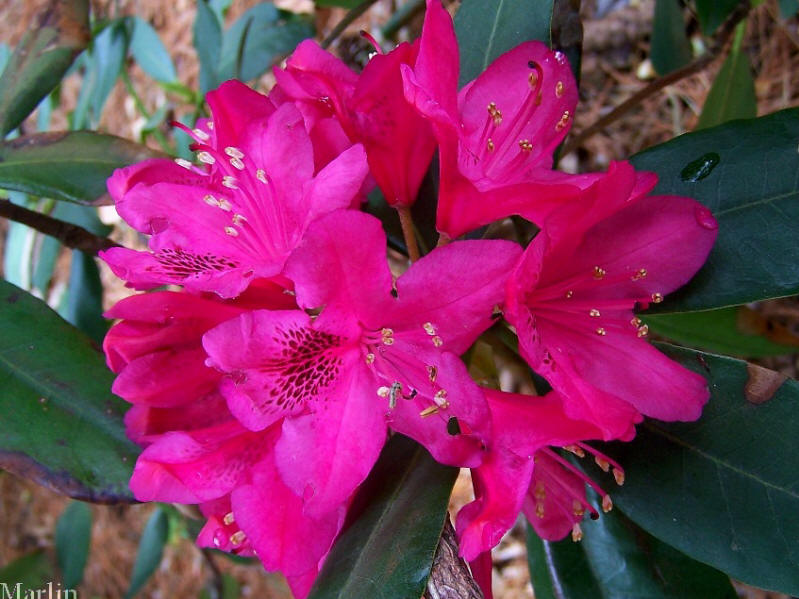
‘Nova Zembla’ flowers are deep red, with dark purple freckles. Hardy to -25 degrees F.
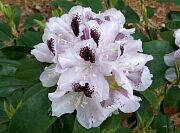 Calsap Rhododendron |
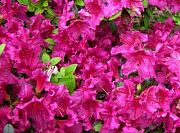 Girard’s Fuchsia Azalea |
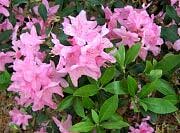 Weston’s Mayflower |
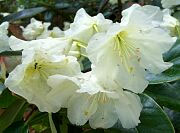 Hong Kong Rhododendron |
Tree Encyclopedia | Pinaceae Index | Fruit Trees | Maple
Trees Index | Pine Family | Beech, Oak | Nut Trees | Birch Family | Magnolias
Tree Encyclopedia / North American Insects & Spiders is dedicated to providing family-friendly educational
resources for our friends around the world through large images and macro photographs of flora and fauna.
Online since 2002