
Horse Fly – Hybomitra species
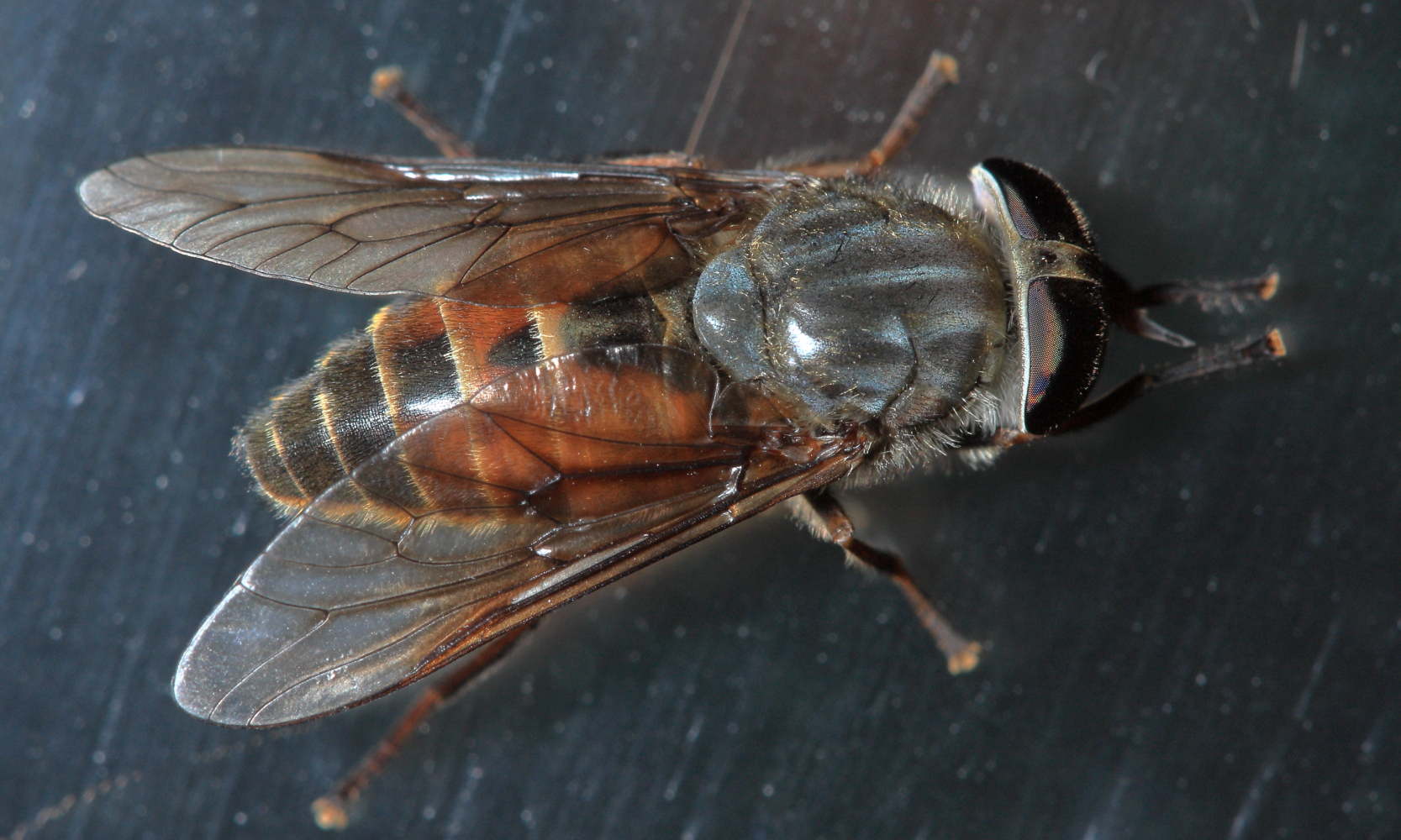
Family Tabanidae – Horse and Deer Flies
Live adult female fly photographed at Bartlett, Illinois. Size: 22mm
Horse flies (subfamily Tabaninae) are among the world’s largest flies. The females can inflict a painful bite when in search of a blood meal for reproductive purposes. Males rarely bite, instead feeding on nectar and pollen.
Horse flies and deer flies bother me most often when I am walking; they are attracted to dark moving objects, and they will continually buzz about my head and land on my hair. I have been bitten by deer flies, but never a horse fly. Deer fly bites are terrible – and you can swat the heck out of them and they will just fly away as if nothing happened!
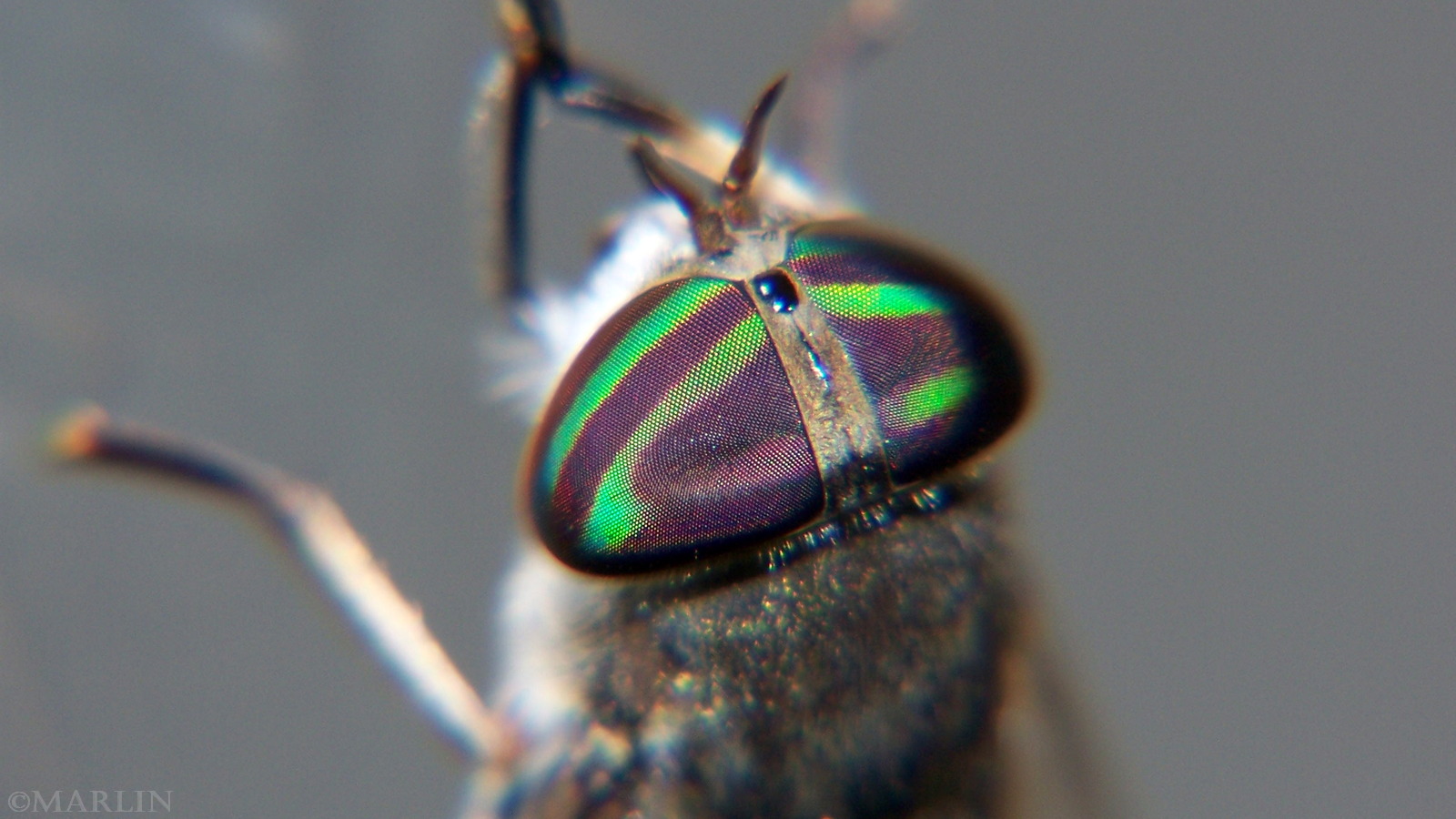
Characteristics of the Tabanidae:
- Stout flies with large squamae (scales above the halteres, also called calypters)
- Feet with 3 pads (as opposed to 2)
- 3rd antennal segment elongated, clearly made up of several fused parts
- 3rd antennal segment with a prominent tooth at base in some groups
- Wing veins R4 and R5 fork to form a large ‘Y’ across the wing tip. [1]
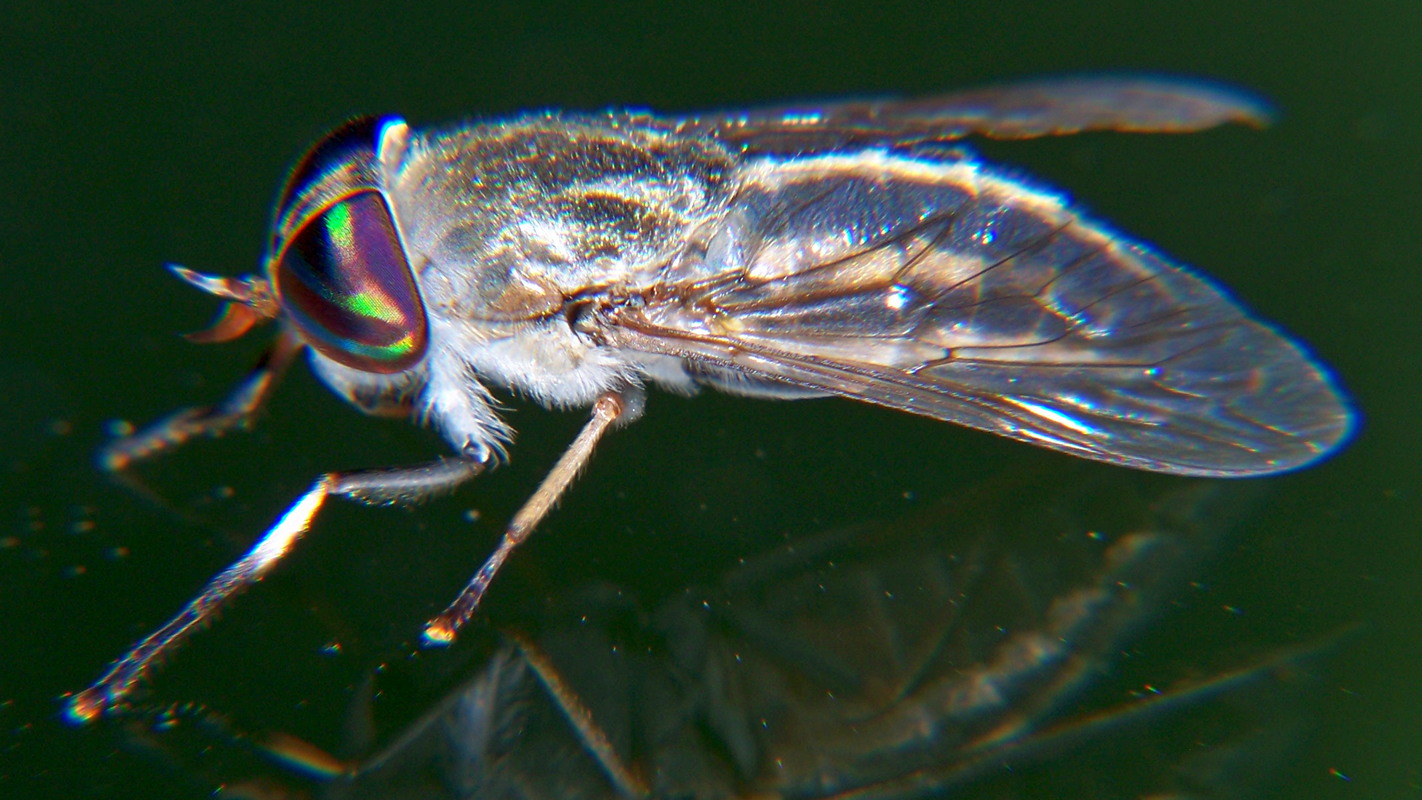
Not the best picture, but I just love those wild eyes. When one of these flies poses for me (as opposed to biting), I comply.
You might also like: Horse Fly Stonemyia tranquilla
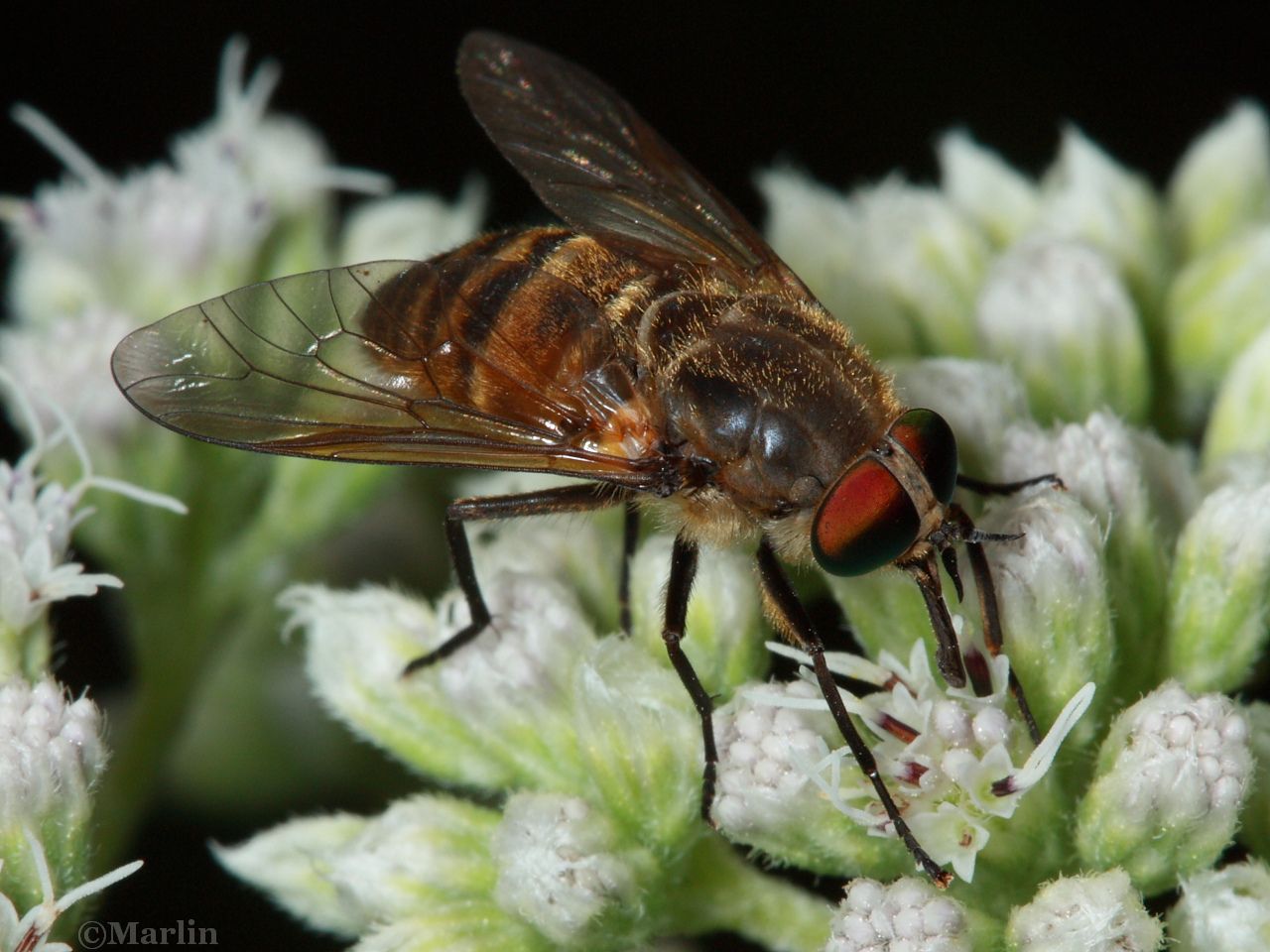
Horse Fly, Stonemyia tranquilla
References
- Bugguide. net, “Family Tabanidae – Horse and Deer Flies“
Order Diptera. Flies are prevalent in virtually all habitats, with over 16,000 species in North America. Flies can be distinguished from all other insects in that they only have one pair of normal wings. The other pair has evolved into small ball-like structures called halteres. Most flies have compound eyes and mouthparts adapted for piercing, lapping or sucking fluids.
Insects & Spiders | Flies Index | Crane Flies | Flower Flies | Bee Flies | Robber Flies