
Robber Fly – Cerotainia albipilosa
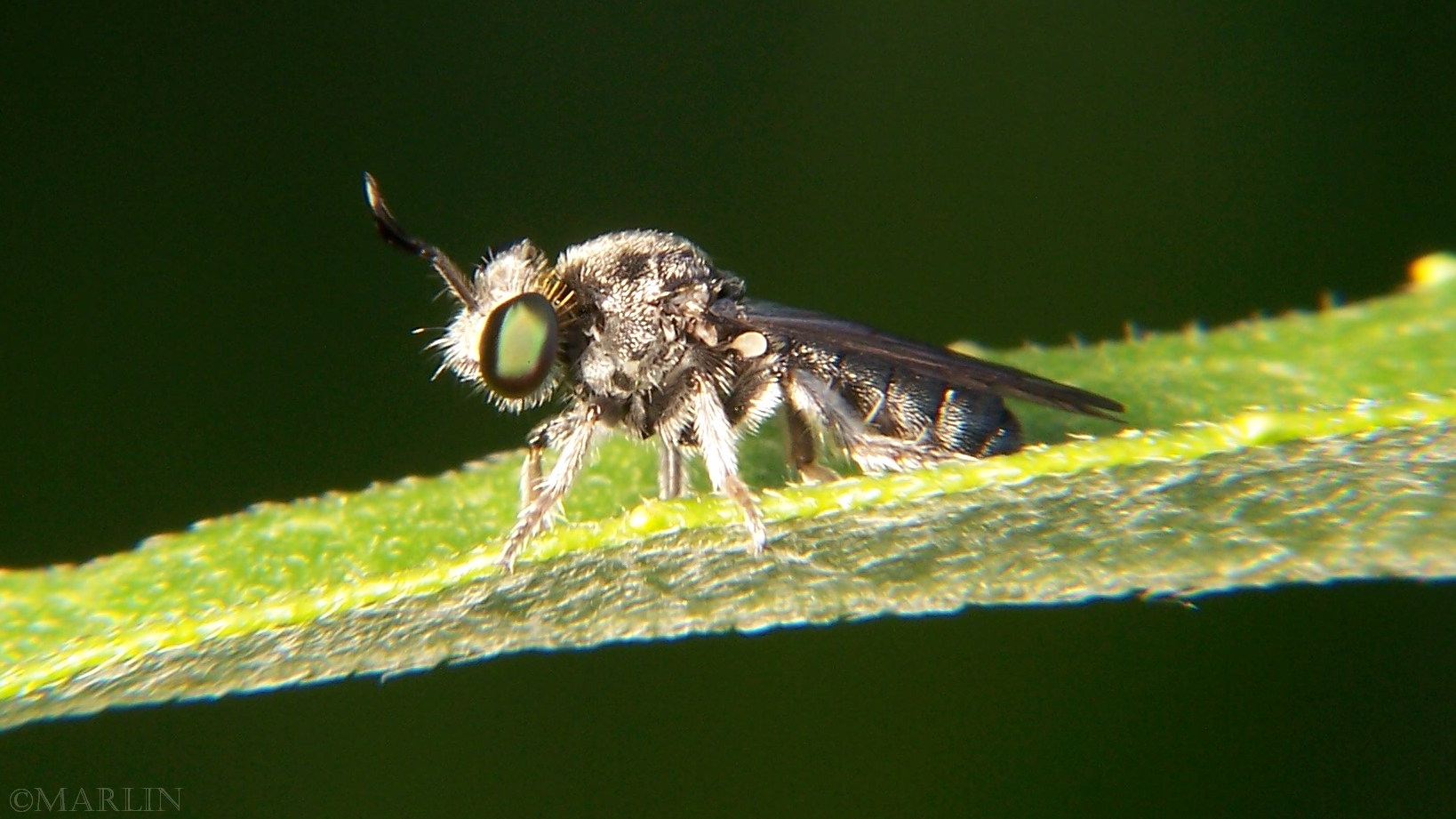 Family Asilidae – Robber Flies
Live adult robber fly photographed at West Chicago Prairie, Illinois. Size = 5mm
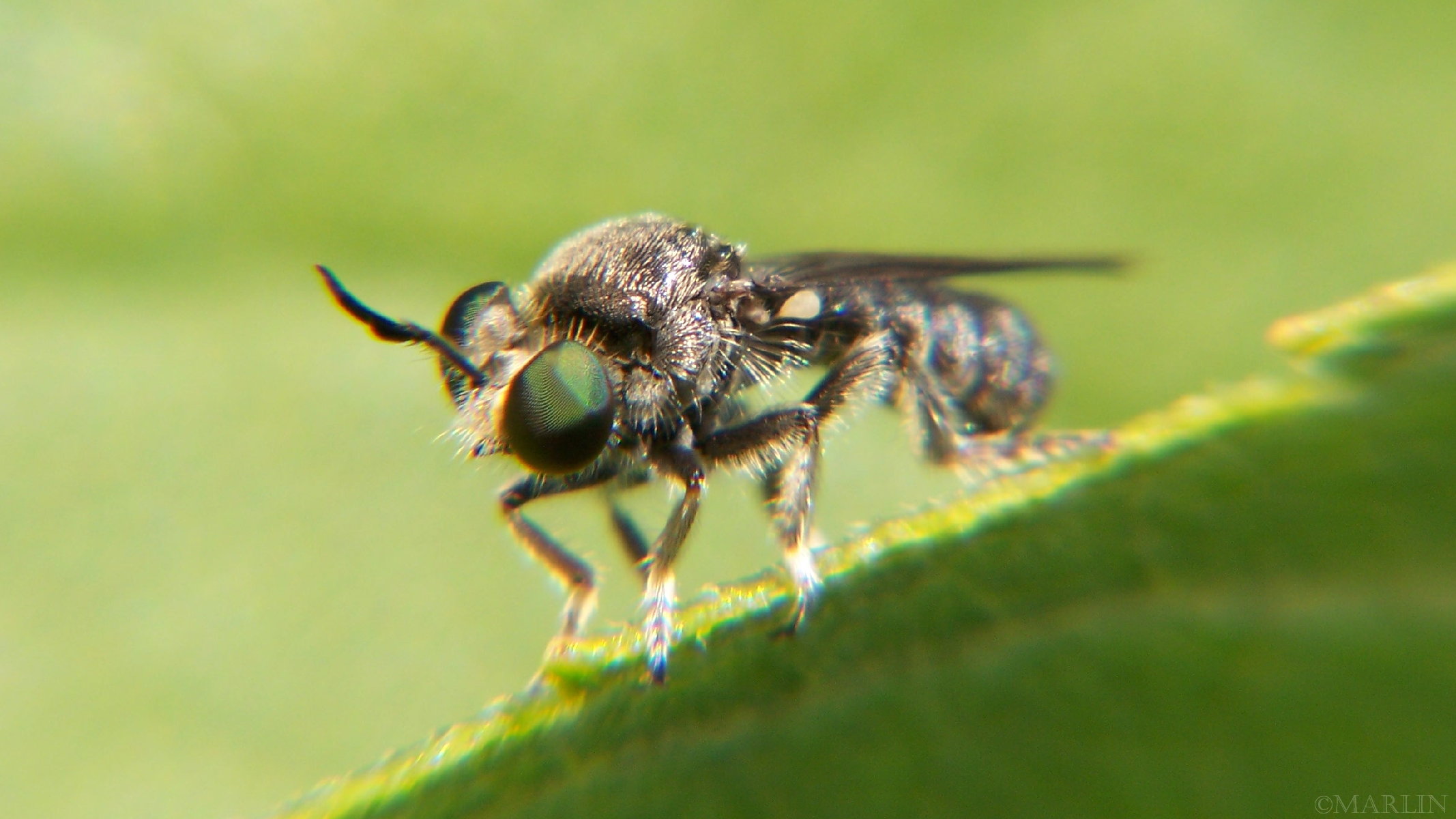
These are very small as robber flies go: 5mm (about 3/16″). Adult robber flies attack other flies, beetles, butterflies and moths, various bees, dragon and damselflies, ichneumon wasps, grasshoppers, and some spiders.
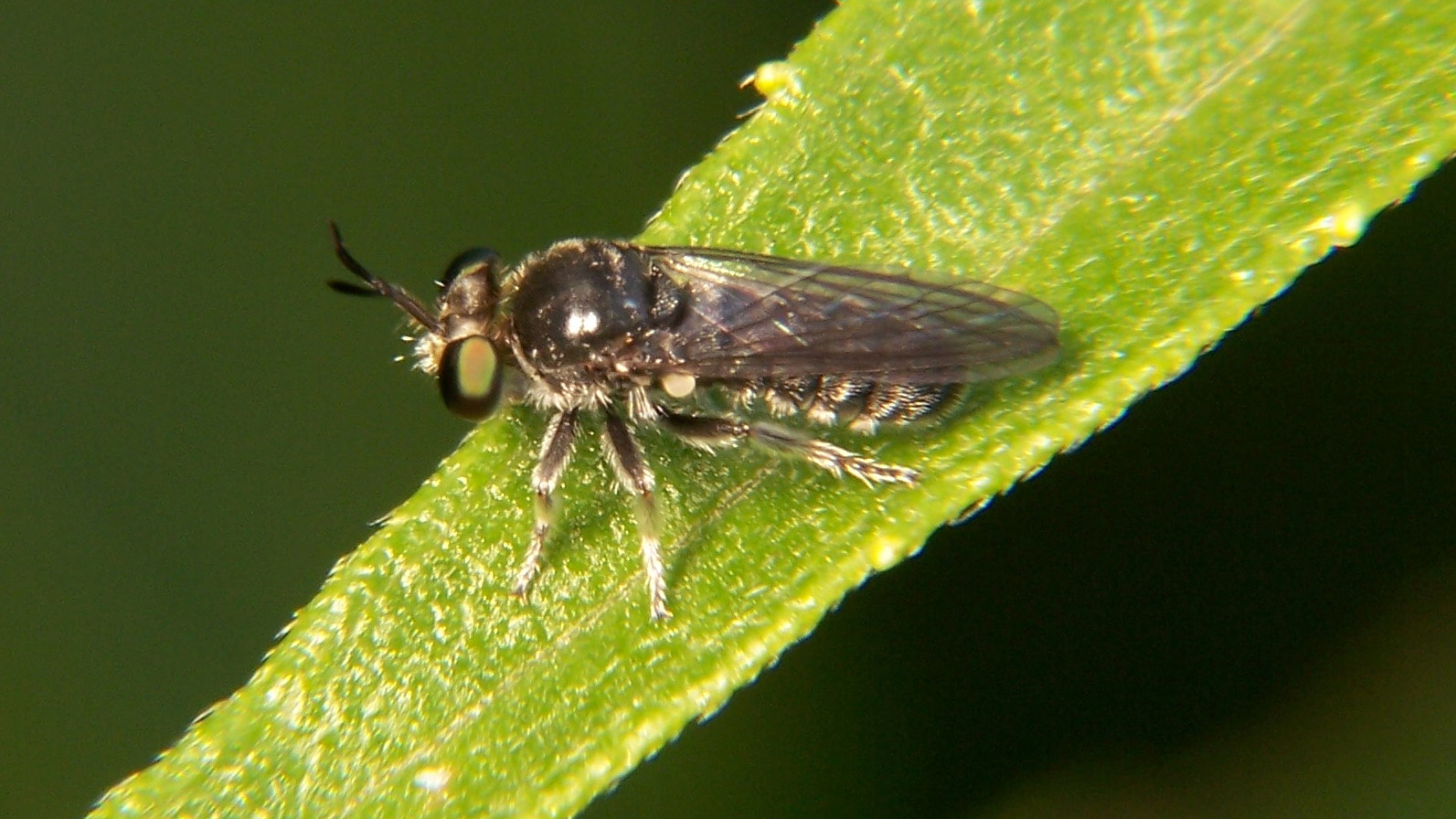 ASILIDAE comprise one of the largest and most abundant families of present day insects. Distributed through all parts of the world, over 400 genera [now 530] and subgenera have been proposed and about 4,761 species are known [now 7,003].
Because of their predatory habit of feeding on other insects and their voracious appetites, they contribute to the maintenance of the natural balance among insect populations. To some extent, parasitic wasps and flies are taken by them, but much of their prey consists of plant-feeding insects.
Certain species are known to seriously deplete the populations of apiaries. The adults are, with few exceptions, active flies, of considerable size and readily attract attention. — From Asilidae website of Fritz Geller-Grimm
Reference: Bugguide.net Cerotainia albipilosa
Flies Main | Flies Index | Bee Flies | Robber Flies
Tree Encyclopedia / North American Insects & Spiders
Online since 2002