
Robber Fly – Dioctria hyalipennis
 Family Asilidae – Robber Flies
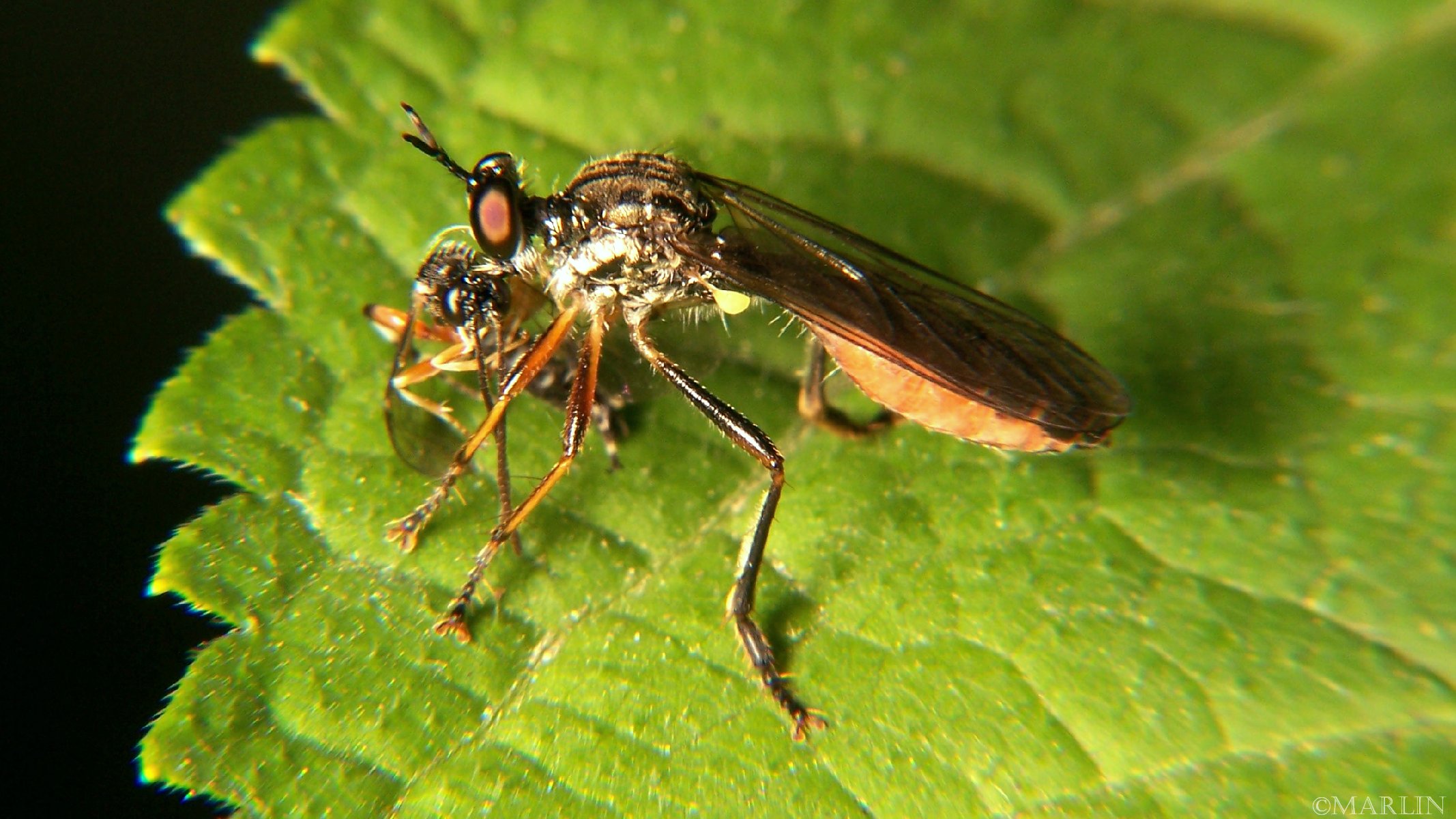
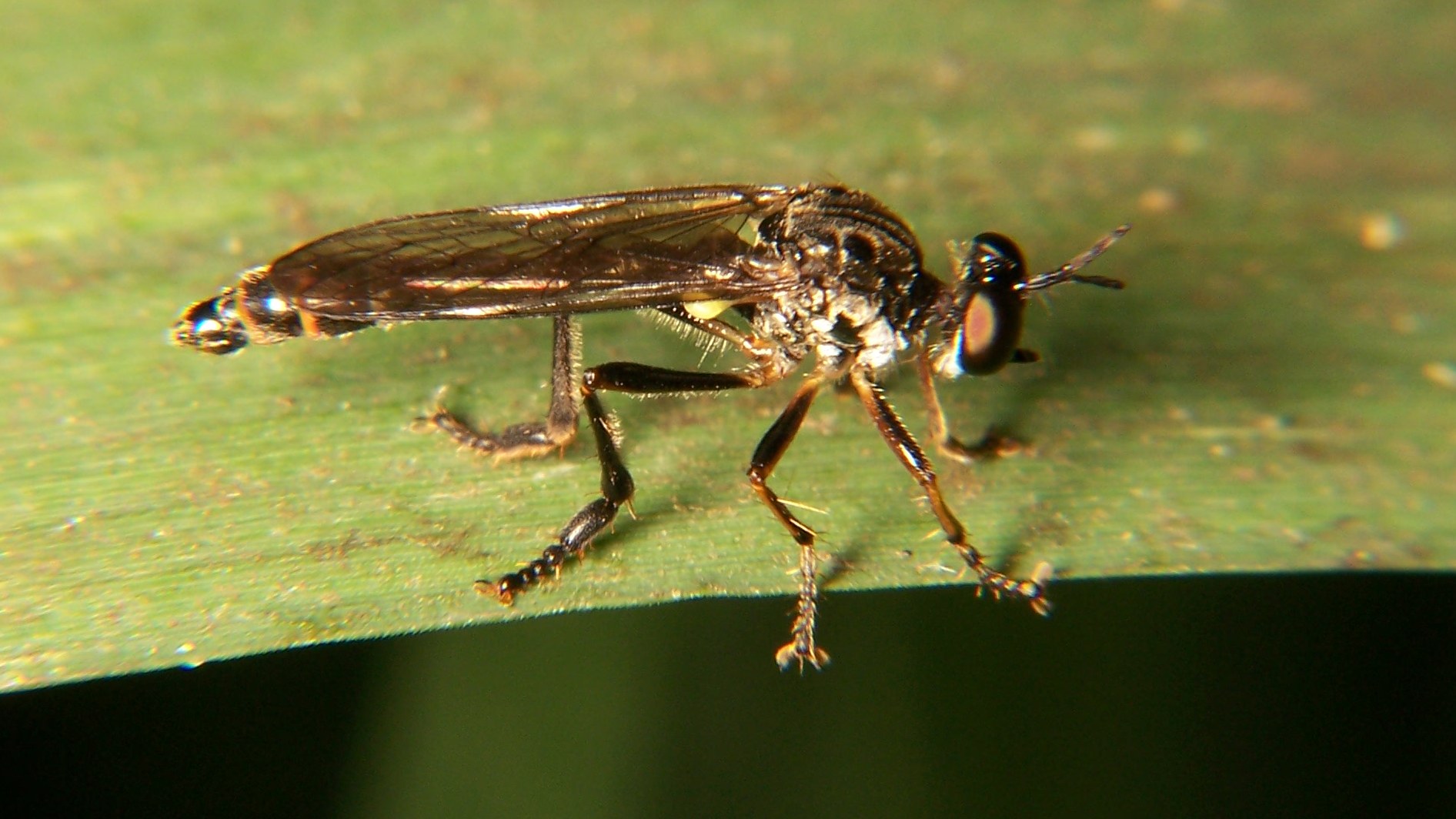
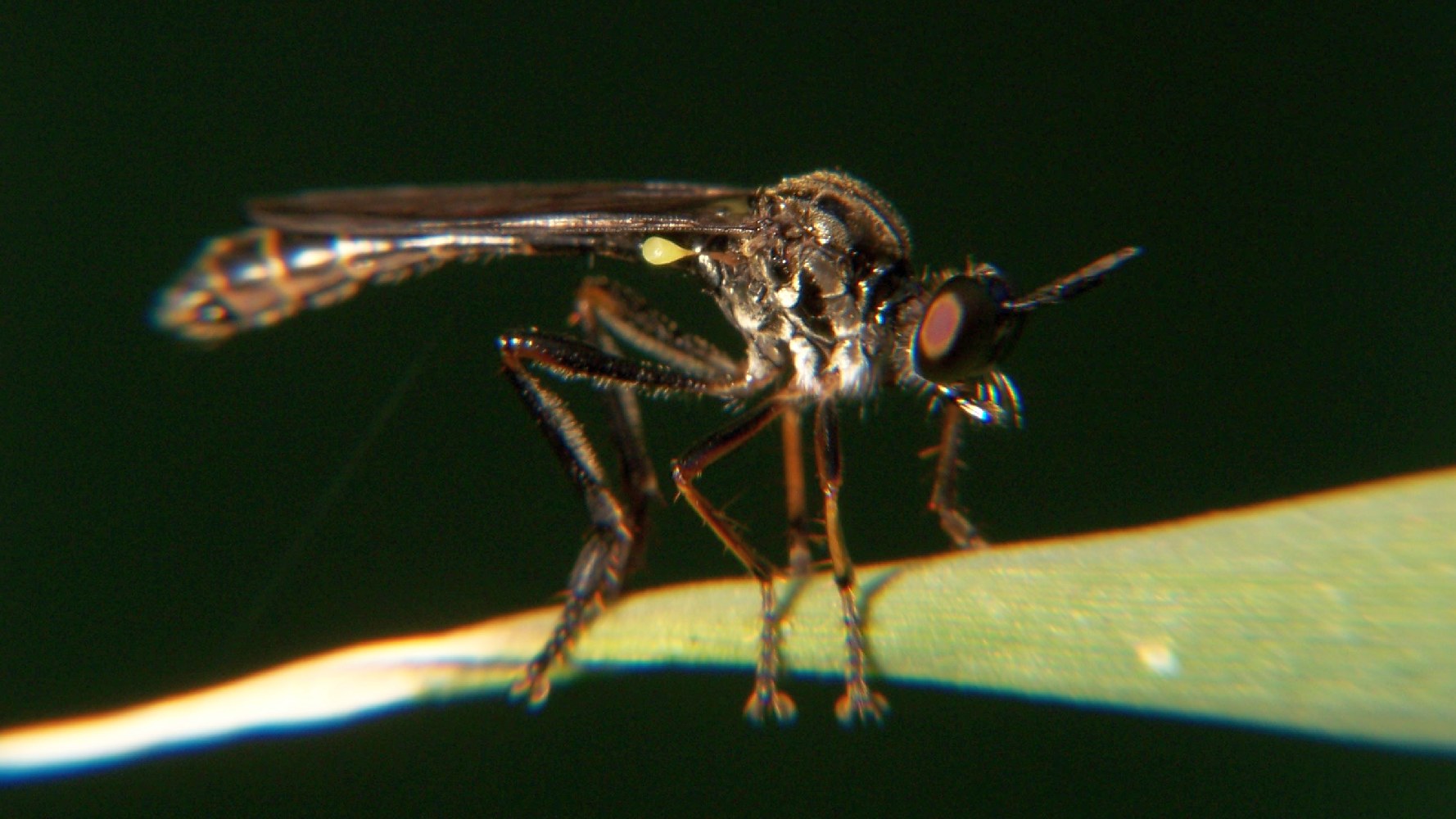
Live adult robber flies photographed in the wild at Winfield, Illinois, USA. Size: 10mm
This is a common European species first found in this country at Boston, Massachusetts, in 1916 by C. W. Johnson. These are rather medium as robber flies go: 10mm. The orange-abdomened female above has managed to capture an ichneumon wasp.
 Much has been made of the speed and agility of these flies. Many books and sites cite them as fast and agile flyers, taking insects on the wing. Others attribute to them “still-hunting”, that is, perching and attacking in mid-air; my National Audubon Society Field Guide to Insects asserts they “pounce on resting insects from above.” Yes they do.
 The big robbers (Promachus) lumber and buzz in flight – it is very easy to follow them, and I’ve often seen them pounce on honeybees busy at flowers. I’ve seen some smaller species (Tolmerus, Laphria canis) perch and attack – many times missing even slow-flying moths.
So much for agility. Then there are the fast, agile ones – good luck seeing them do anything but disappear.
Reference: Bugguide.net Dioctria hyalipennis
Flies Main | Flies Index | Bee Flies | Robber Flies
Tree Encyclopedia / North American Insects & Spiders
Online since 2002