
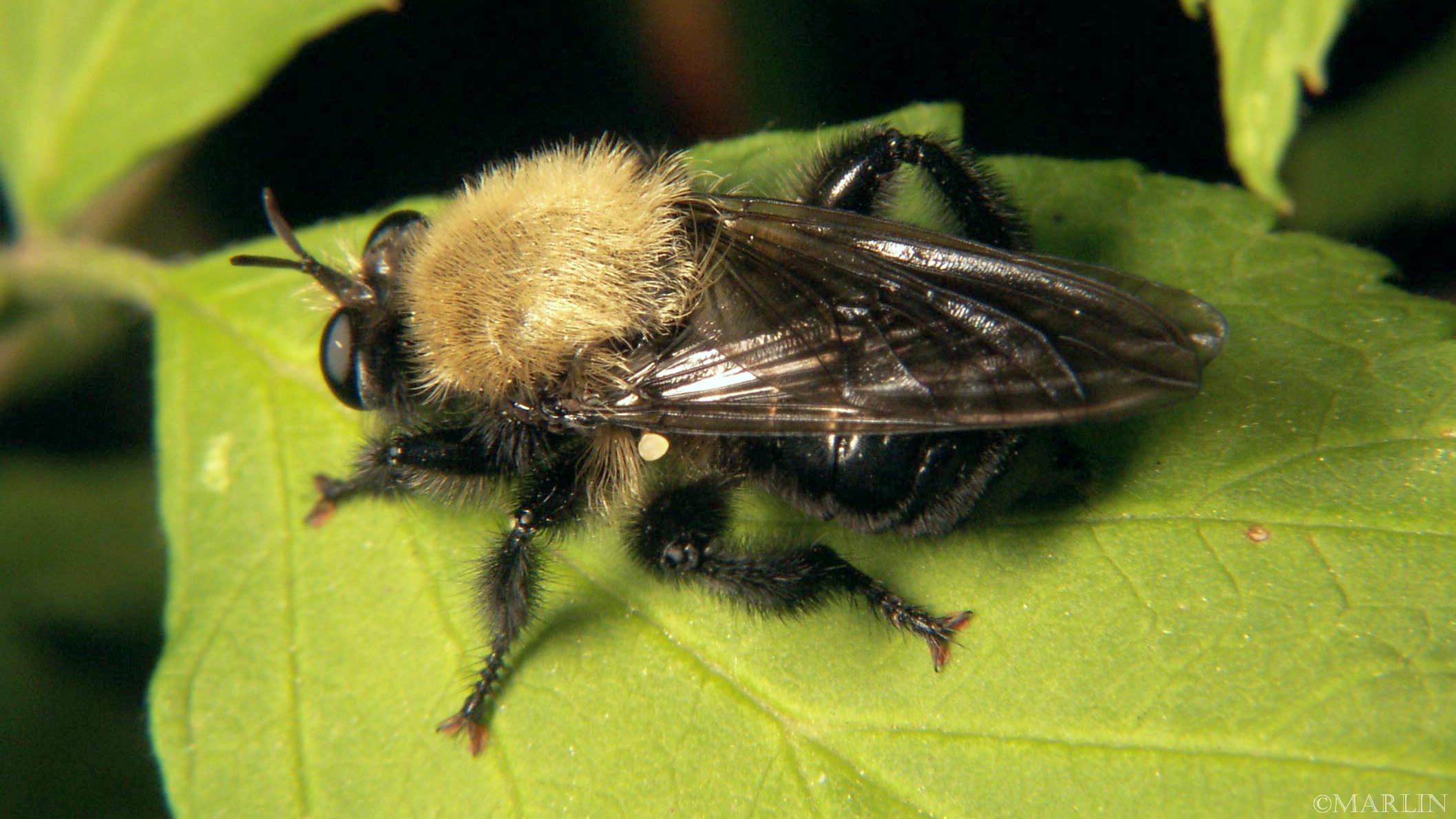
Robber Fly – Laphria flavicollis
Family Asilidae – Robber Flies
Live robber flies photographed at northern Illinois. This female measures 18mm.
The Asilidae genus Laphria contains some very convincing bumblebee mimics. As true flies, these robbers only have one set of flying wings.
The second set present in all other insects, has evolved in the flies into small ball-like organs called halteres (visible as the whitish ball just under the base of the wing). Their function has not been fully explained, but it is thought they provide kinesthetic (balance and body postion) information during flight.
Reference: Bugguide.net Robber Fly – Laphria flavicollis
Flies Main | Flies Index | Bee Flies | Robber Flies
Tree Encyclopedia / North American Insects & Spiders
Online since 2002