
Robber Fly – Laphria grossa
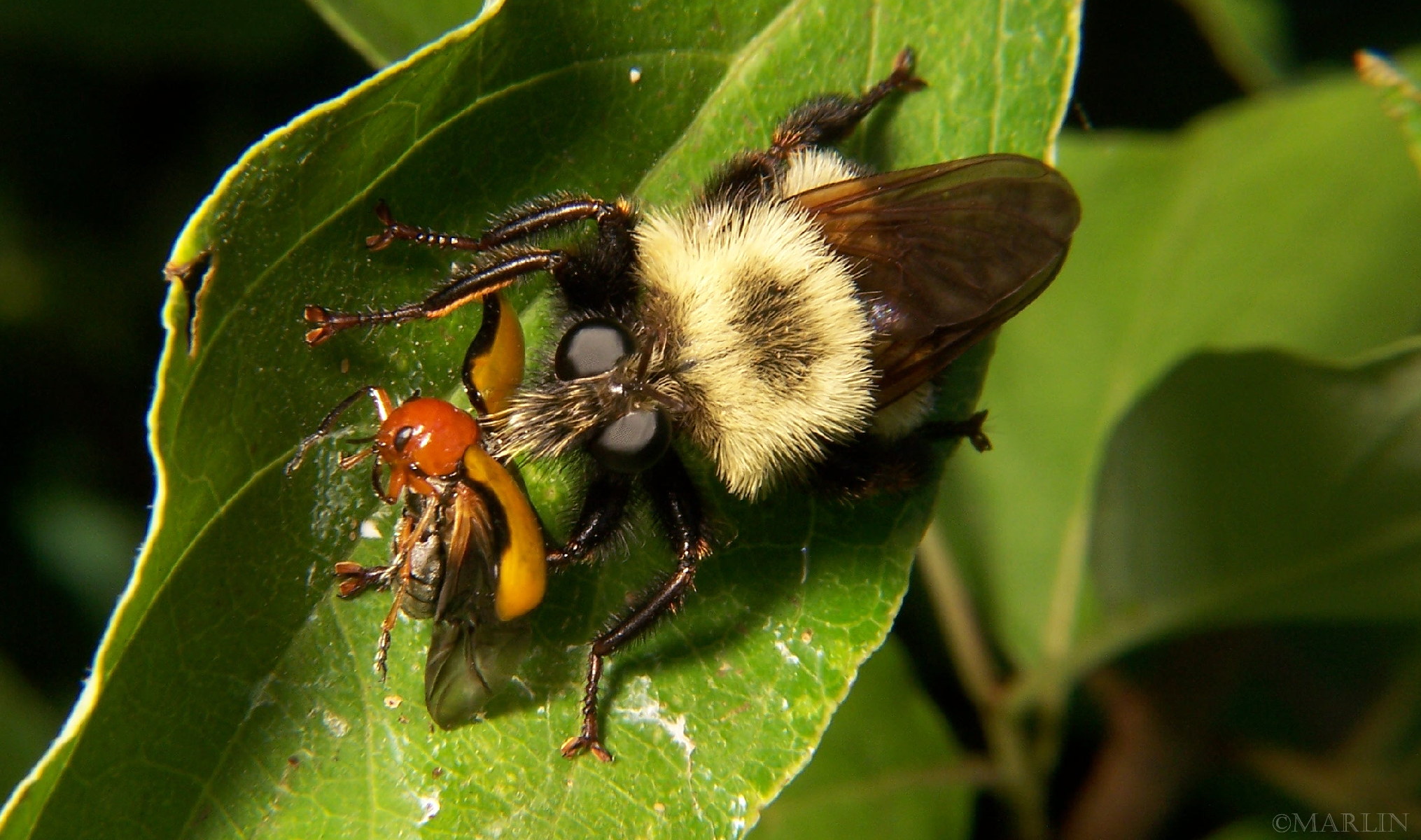 Family Asilidae – Robber Flies
Live adult fly photographed at DuPage County Illinois. Size: 30mm. Leaf beetle prey size: 10mm
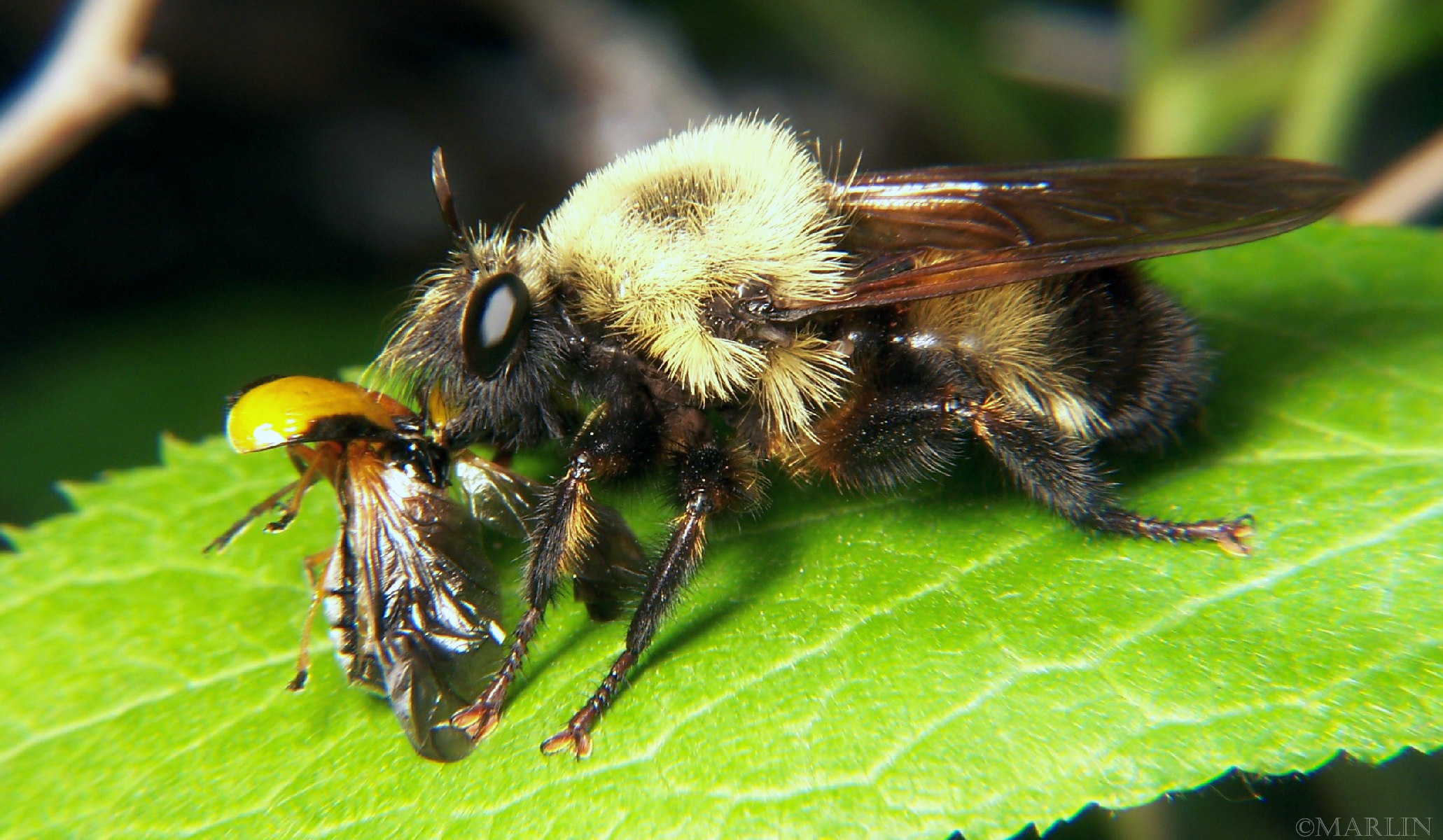
This lucky gal has caught a clay-colored leaf beetle, and is busy sucking down its liquified insides through its sabre-like proboscis. When she flew by me carrying this large beetle, she was making one very loud, low-pitched buzz.
It’s a marvellous sound, and these large robbers fly slow enough they are easily followed. Sometimes they’ll even sit still and pose, if you approach slowly and carefully you can get within a few inches. And that’s a thrill for me. I lose all track of time while stalking a big fly like this!
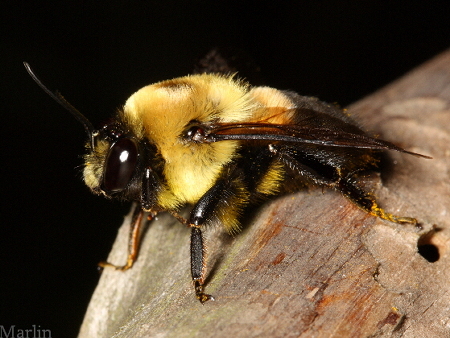 Male Bumble Bee |
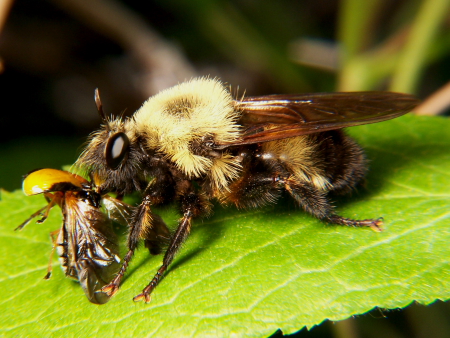 Female Laphria grossa |
Some robber flies are convincing bumble bee mimics. This evolutionary adaptation allows them to reap the benefits of aposematic (warning) coloration without the high metabolic cost of constructing and maintaining a venom-delivery system.
Flies Main | Flies Index | Bee Flies | Robber Flies
Tree Encyclopedia / North American Insects & Spiders
Online since 2002