
Meadow Spittlebug – Philaenus spumarius
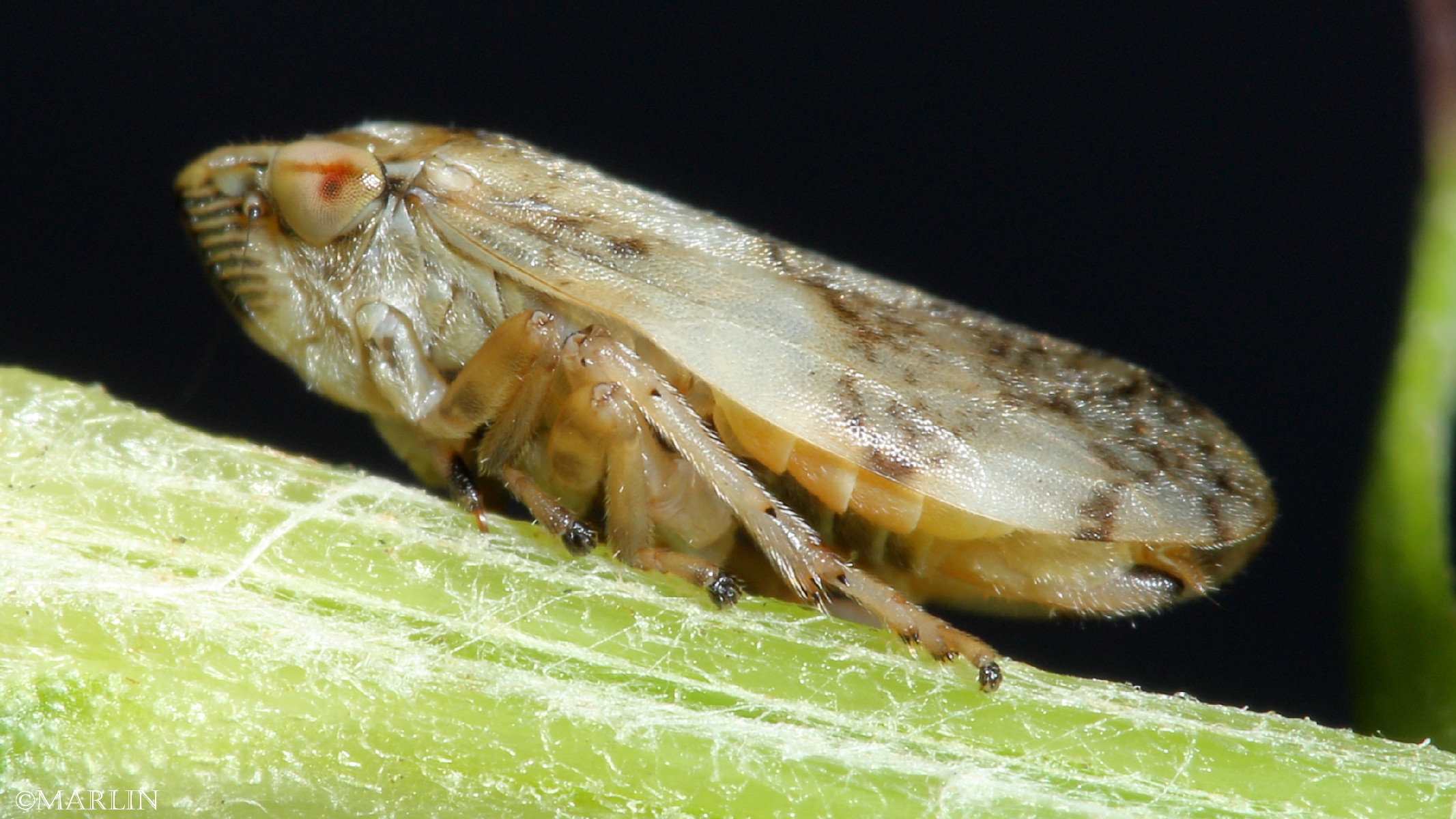
Order: Hemiptera / Suborder: Auchenorrhyncha / Family Cercopidae – Spittlebugs
Ancient fossils show this family’s mating habits unchanged in 165 million years.
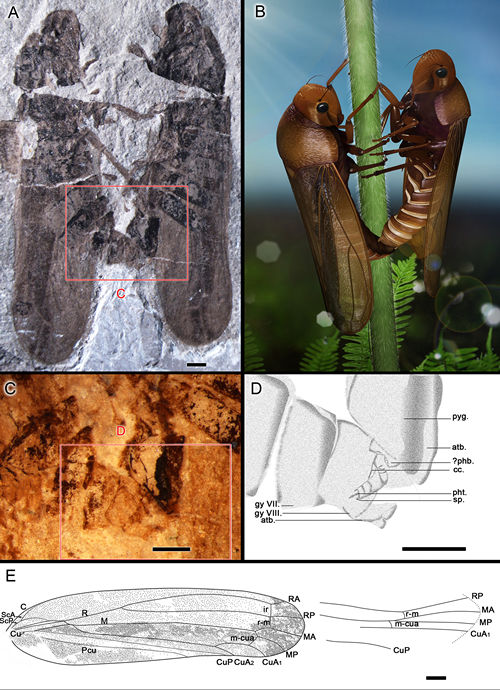 Figure 1. Anthoscytina perpetua Li, Shih et Ren, sp. nov. D, holotype. male, on the right and allotype. female, on the left. A. photograph of habitus. B, 3-D ecological reconstruction. C. photograph of male and female genitalia in copulation, under alcohol. D. interpretative drawing of C. E. paratype. Scale bars = 1 mm. Image: PLoS [5] |
Spittlebugs get their name from the blobs of frothy “spit” concocted by their nymphs and deposited on plants where they feed. The nymphs hide inside the froth, which provides cover, temperature regulation, and protection against desiccation. Like many bugs, spittlebugs feed on plant sap. [2]
The nymphs feed head-downward on the plant, and excess fluid taken in is mixed with substances that increase its viscosity. The fluid is forced out of the bug’s anus under pressure, creating air bubbles which pile up onto the insect’s back. Unlike most other bugs, spittlebug nymphs suck fluid from the xylem, which is the main water-carrying structure of the plant. Since the nutrients are more dilute in fluid pulled from the xylem, spittlebugs are frequently found on nitrogen-fixing legumes that have a high concentration of amino acids in their sap. In addition to legumes, spittlebugs are found on many grasses, roses, Chrysanthemums, daisies and goldenrod. The meadow spittlebug also feeds on a wide range of plants including alfalfa, clover, strawberries and many other garden plants. [3] A recent discovery of a fossilized pair of copulating froghoppers from the Middle Jurassic in northeastern China shows the insect’s genitals and mating position to be unchanged over the last 165 million years. This discovery of the earliest record of copulating insects sheds light on the evolution of mating behavior in this group. Mating behaviors for extant insects have been studied and documented, for example, for froghoppers, scorpionflies and planthoppers. However, fossil records of unequivocal insect mating are fairly sparse. Up until now, the oldest example of copulation in fossil insects was a pair of midges (Diptera) discovered in Early Cretaceous amber from Lebanon. The specimens were examined by a LEICA MZ12.5 dissecting microscope and illustrated with the aid of a drawing tube attachment. Fossil photographs were taken by Nikon Digital Camera DXM1200C [5]. Read the study at PLoS One |
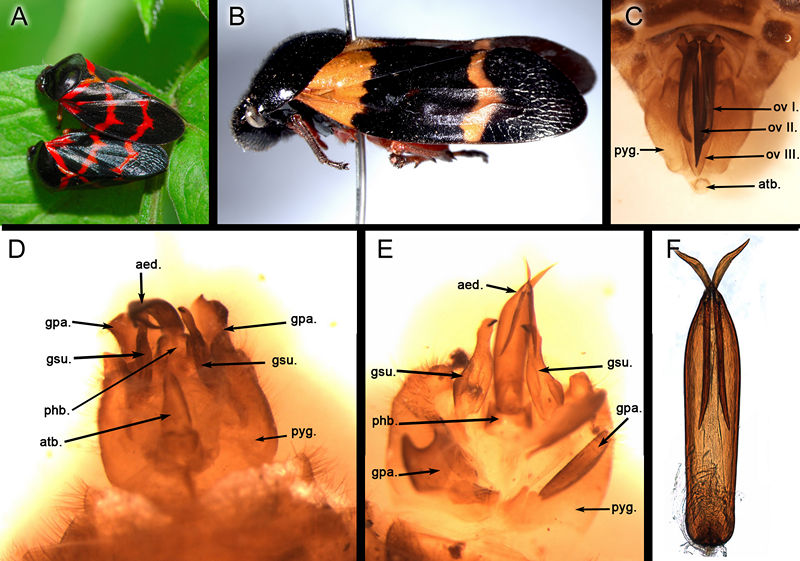
A. froghoppers in copulation, photo credit: Jason Shih. B-F. Cosmoscarta heros (Fabricius). B. lateral habitus. C. ovipositor ventral view. D. male genitalia, dorsal view. E. male genitalia, ventral view. F. aedeagus, dorsal view. pyg., pygofer; ov., valvula of ovipositor; atb., anal tube; aed., aedeagus; gsu., gonstylus; gpa., genital plates; phb., phallobase [5].
|
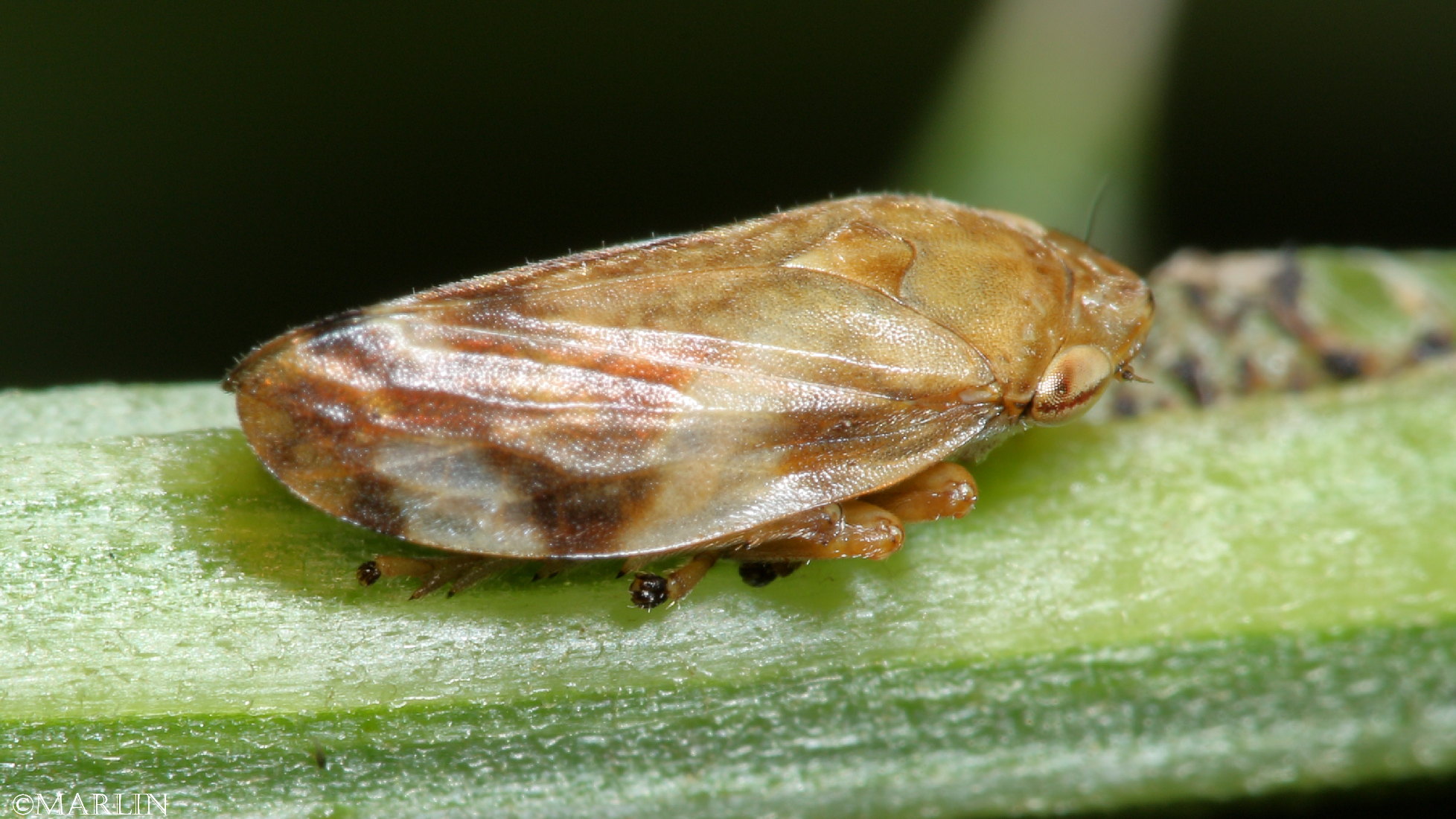
Spittlebugs stunt plant growth by sucking the sap. They may cause losses in alfalfa and clover yields varying from slight to 25 percent or more. An average of 1 nymph per stem can decrease the yield of dry hay by 300 or more pounds per acre. [2]
References
- Bugguide.net, Philaenus spumarius (Meadow Spittlebug)
- University of Illinois Integrated Pest Management, Meadow Spittlebug Philaenus spumarius
- National Science Foundation, Center for Integrated Pest Management, Meadow Spittlebug
- Dr. Jo-Ann Bentz, United States National Arboretum, Floral and Nursery Plants Research Unit, Management of Insect Pests of Ornamental Trees
- Shu Li, Chungkun Shih, Chen Wang, Hong Pang, Dong Ren, Forever Love: The Hitherto Earliest Record of Copulating Insects from the Middle Jurassic of China. PLoS One
Bugs | Leaf Beetles | Lady | Suborder Auchenorrhyncha – Cicadas & Planthoppers
Tree Encyclopedia / North American Insects & Spiders is dedicated to providing family-friendly educational
resources for our friends around the world through large images and macro photographs of flora and fauna.
Online since 2002