
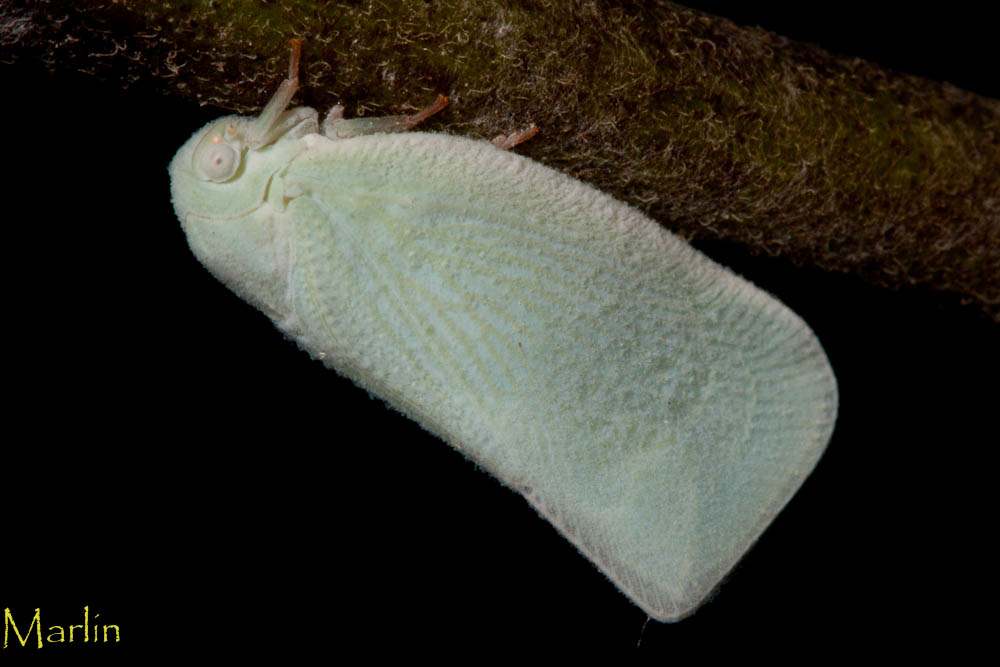
Flatid Planthopper – Anormenis chloris
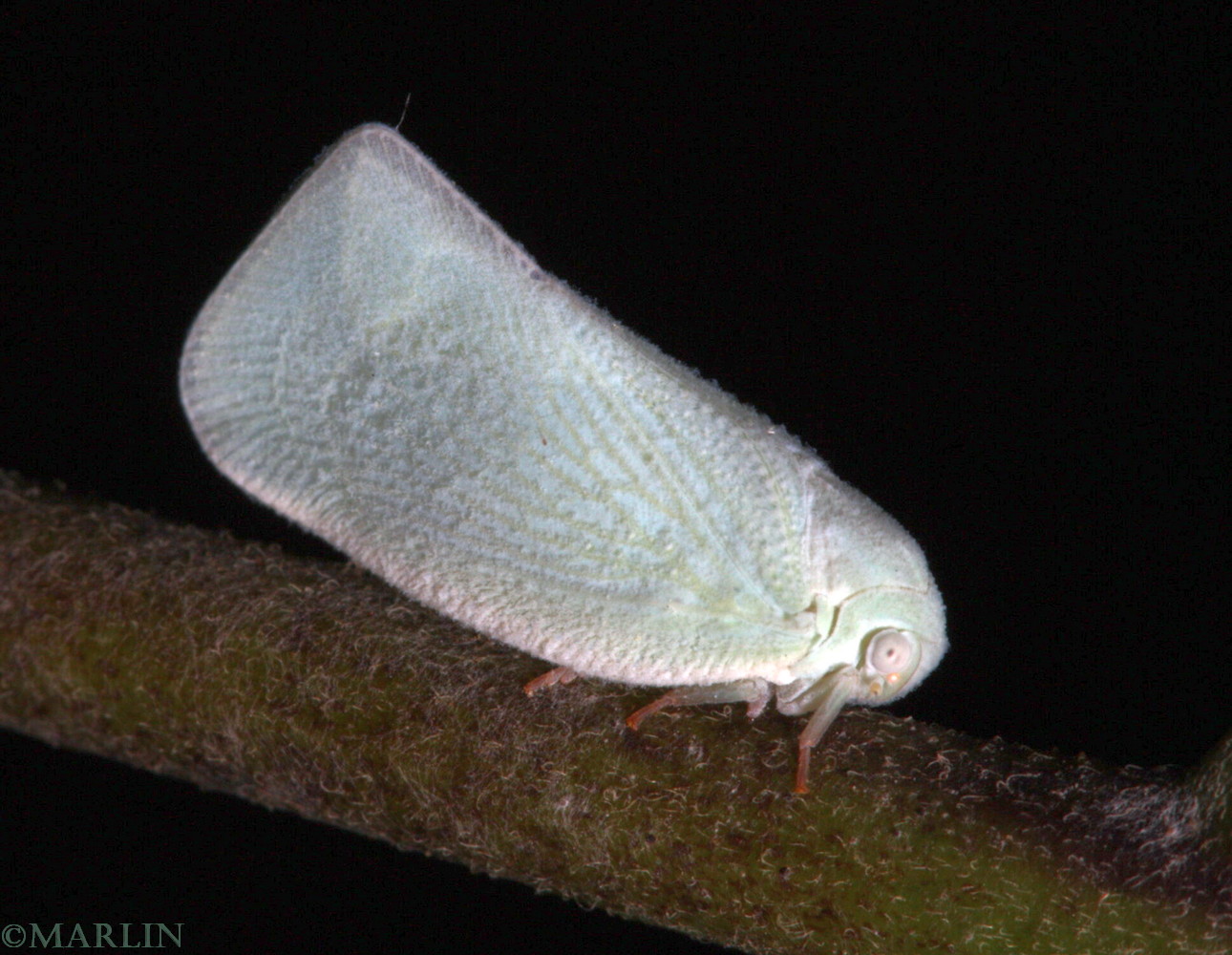
Order Hemiptera / Suborder Auchenorrhyncha / Family Flatidae
Live adult & nymph planthoppers photographed at DuPage and Ogle Counties, Illinois
Insects in the infraorder Fulgoromorpha are commonly called planthoppers. Distributed worldwide, all members of this group are plant-feeders, though few are considered pests. The infraorder contains only a single superfamily, Fulgoroidea.
Fulgoroids are most reliably distinguished from the other members of the classical “Homoptera” by two features; the bifurcate anal vein in the forewing, and the thickened, three-segmented antennae, with a generally round or egg-shaped second segment (pedicel) that bears a fine filamentous arista.
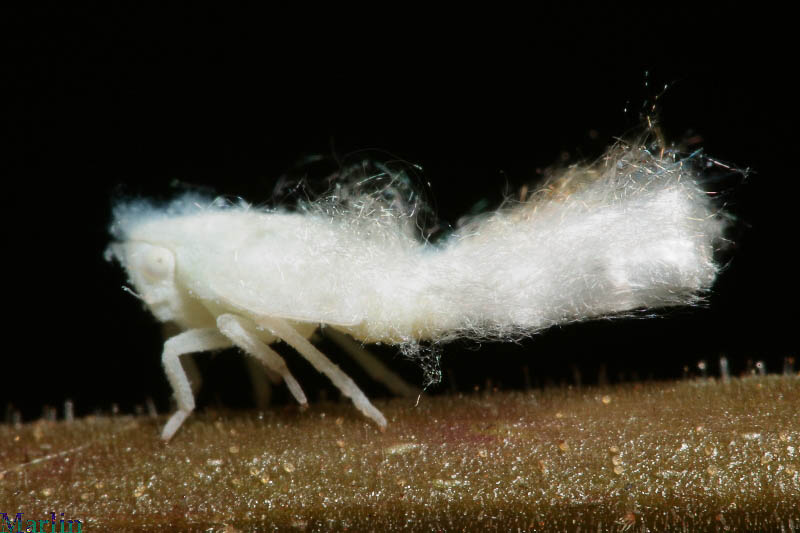 Planthopper nymph exudes waxy filamentous secretions
Nymphs of many flatids secrete a filamentous wax from the time they hatch. The filaments are extruded from glandular tissue at the tip of the abdomen, and provide protection from predators and prevent desiccation. Nymphs of the planthopper Ormenaria rufifascia create effective barriers to ants and larva of Coccinellid beetles by wiping their wax onto the plants they inhabit; predators which come in contact with the wax are contaminated topically, and consequently compelled to engage in extensive preening to rid themselves of the substance. Meanwhile, adults and nymphs escape by leaping away. [2]
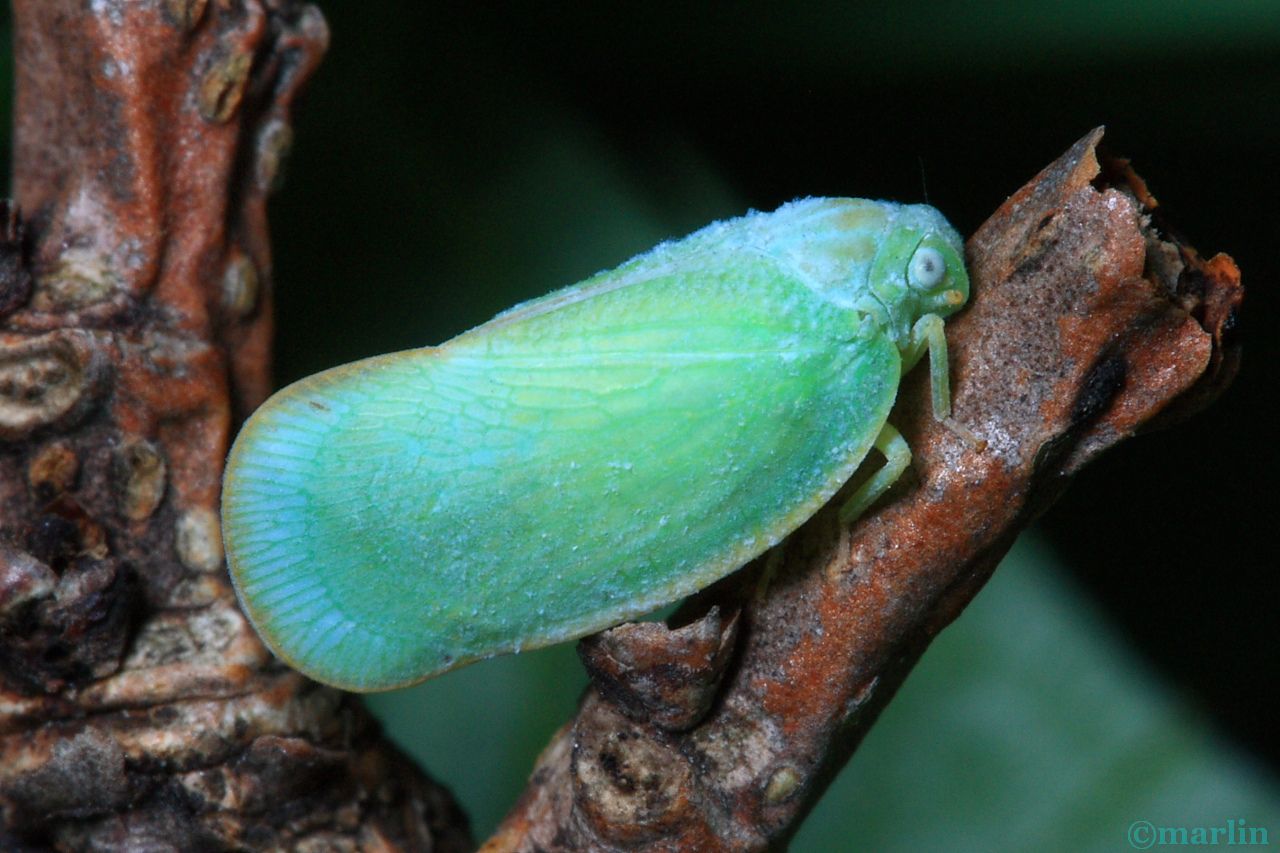 Flatid Planthopper – Ormenoides venusta
When hopping, Flatid planthoppers make use of spines on their hind legs to provide purchase necessary for takeoff. The spines on the tibiae are one characteristic of the Flatidae. Planthoppers expend considerable energy in the leaps. Even a medium sized nymph (<5mm) can jump a distance of 30 centimeters or more. The waxy coating also protects the insects from being caught in spider webs or puddles; they don’t stick to spider webs and they float quite well and can swim to safety. [2]
References
- Wikipedia, the free encyclopedia
- Thomas Eisner, Maria Eisner, and Melody Siegler, Secret Weapons: Defenses of Insects, Spiders, Scorpions, and Other Many-Legged Creatures (Belknap Press, 2005).
- Bugguide.net, Anormenis chloris
Order Hemiptera: True Bugs number almost 5,000 species in North America, and 40,000 worldwide. They have mouthparts formed into a beak, adapted for sucking plant juices or the liquefied insides of their animal prey.
Suborder Auchenorrhyncha – Cicadas & Planthoppers
Suborder Sternorrhyncha – Aphids, scales, mealybugs, jumping plant lice.
Bugs Main | Bugs Index | Assassin Bugs | Plant Bugs | Ambush Bugs
. |
|
|
|
|
|
|
|
|
|
