
Periodic Cicada – Magicicada species
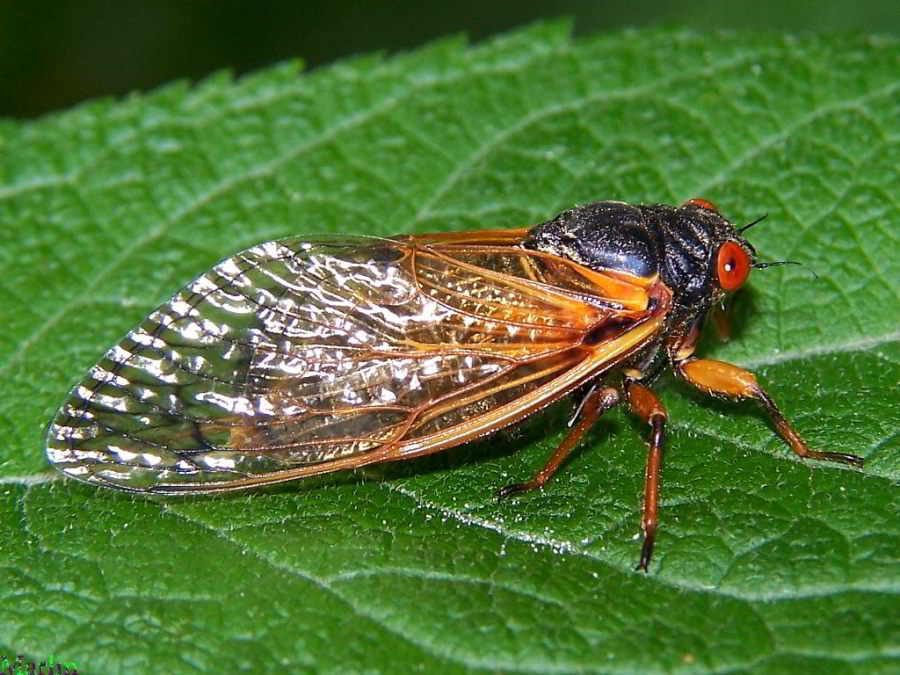 Live adult 17-year periodic cicadas and exuvia, Magicicada sp. brood XIII, 2007, photographed in the wild at Lisle, Illinois.
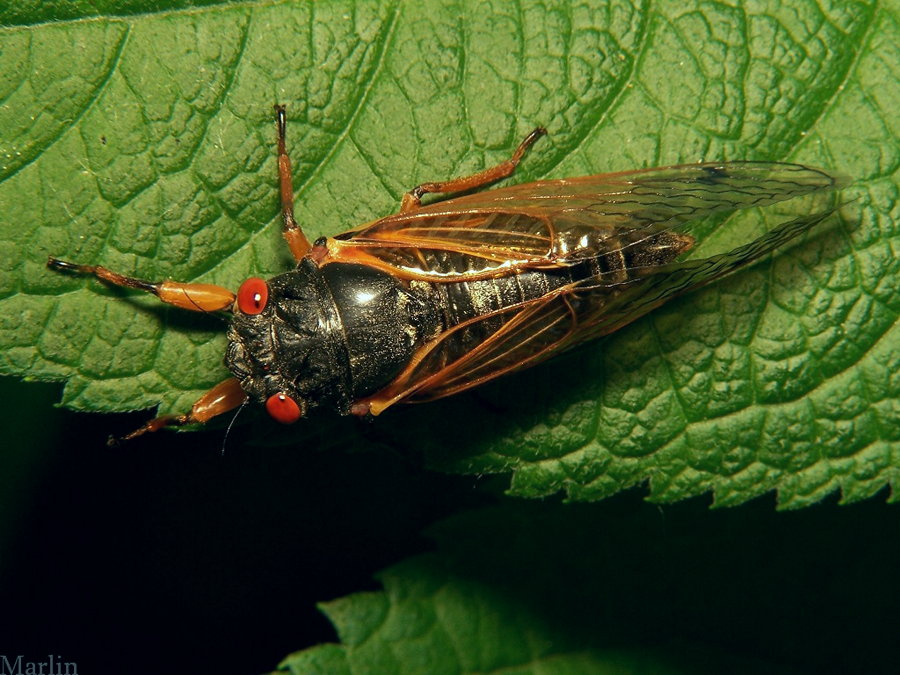
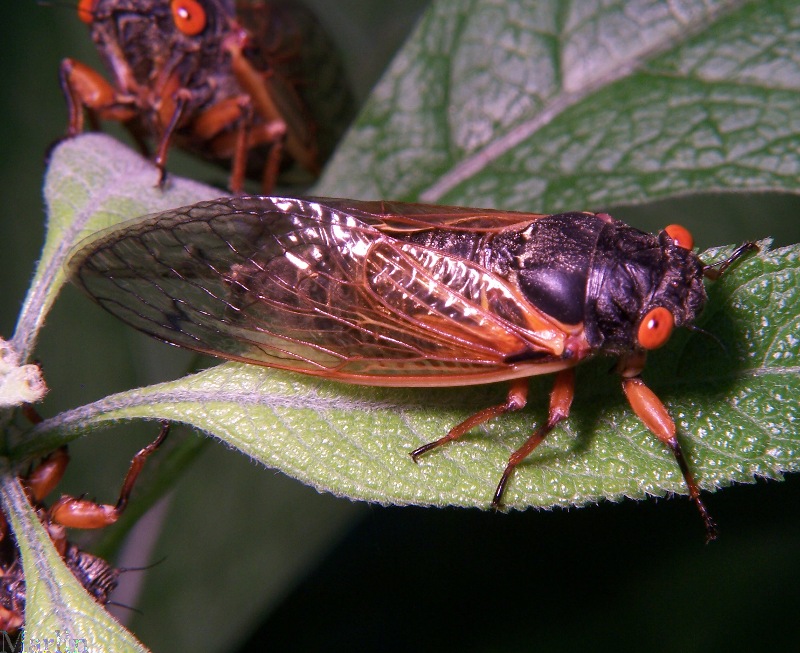
A small number of cicada species have synchronized their life cycles so that they emerge from the ground in their billions only once in every 13 or 17 years. These are known as periodical cicadas but are also commonly called 17-year cicadas, 13-year cicadas, or locusts. They are not locusts, however. The dog-day cicada is dark with green markings. The periodical cicada has protruding red eyes and orange legs; adults have clear wings with orange veins [1].
It is not known how periodical cicadas synchronize their life cycles or how they manage to count out the years. But by emerging at such long intervals in such vast numbers, as many as 1.5 million insects per acre, according to one estimate, they have evolved an effective strategy to overwhelm predators by sheer volume. The mass emergence of periodic cicadas provides an unlimited feast for birds, snakes, and mammals. Even humans have been known to eat the harmless insects (Cicadas are not poisonous and do not bite or sting).
Once the predators have eaten to capacity, there are still millions of cicadas left over to produce the next generation. Predator populations cannot build up in response to such a massive food supply, because the cicadas appear above the ground only once in every 13 or 17 years.
Periodic cicadas are found in eastern North America and belong to the genus Magicicada. There are seven species, four with 13-year life cycles, and three with 17-year cycles. The three 17-year species are generally northern in distribution, while the 13-year species are generally southern and midwestern. Periodic cicadas generally emerge in May and June, apparently when the soil temperature reaches 64° Fahrenheit (18° Celsius). This means that emergences in southern and low-lying areas occur earlier in the summer than in the cooler northern locations.
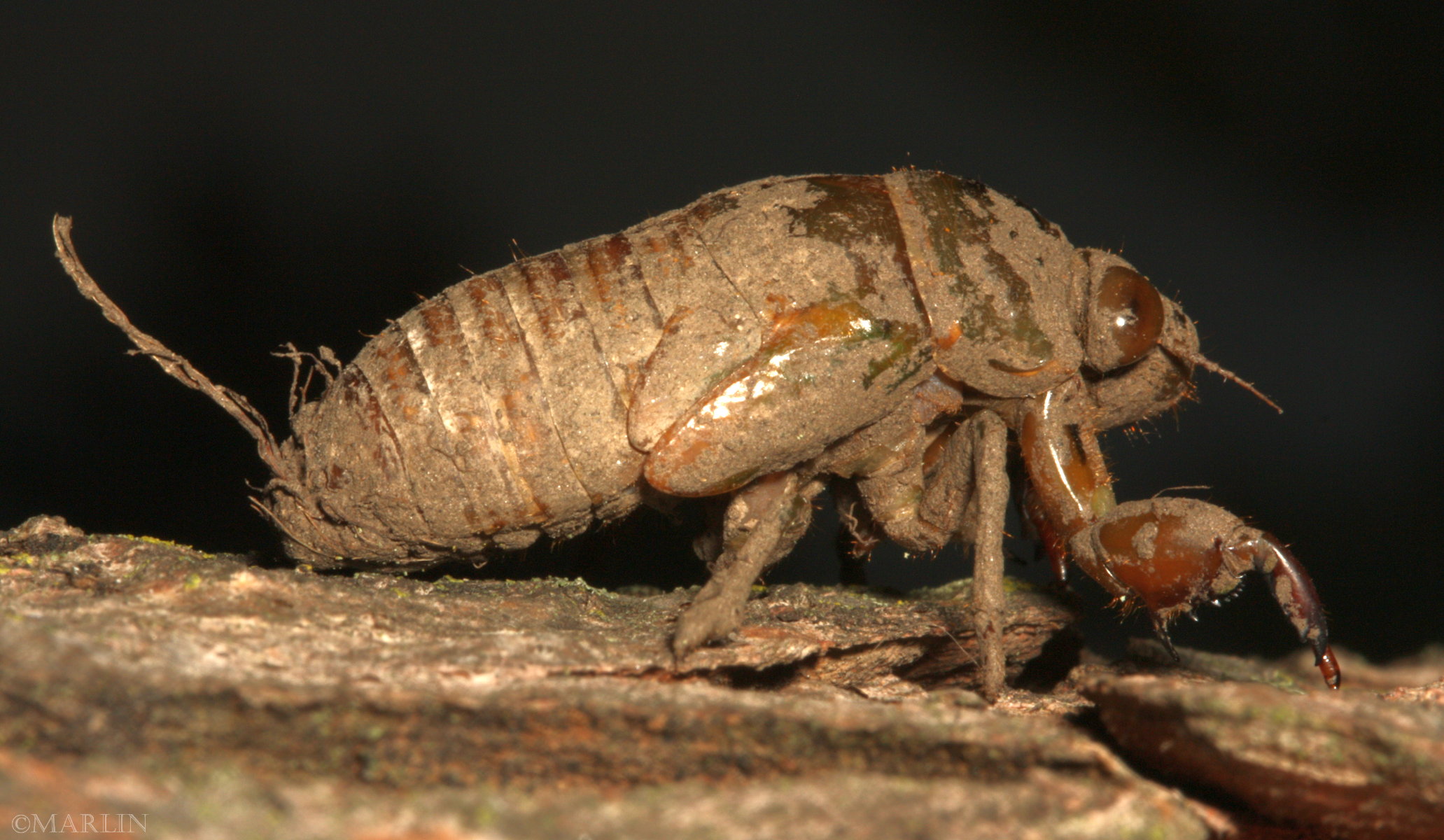
Newly emerged from underground, this cicada nymph is slathered in dried mud.
Magicicada cicadas synchronize their life cycles only in local areas. There are 12 broods, or year classes, among the 17-year cicadas and three broods of 13-year cicadas so that in almost any given year it is possible to find adult periodic cicadas somewhere in the U.S. [3].
References
1. Ralph Harbach, Mosquito Taxonomic Inventory, “cibarium”
2. Thomas Eisner, Maria Eisner, and Melody Siegler, Secret Weapons: Defenses of Insects, Spiders, Scorpions, and Other Many-Legged Creatures
3. Gary A. Dunn, Insects of the Great Lakes Region (University of Michigan Press/Regional, 1996).
Bugs | Leaf Beetles | Lady | Suborder Auchenorrhyncha – Cicadas & Planthoppers
Tree Encyclopedia / North American Insects & Spiders is dedicated to providing family-friendly educational
resources for our friends around the world through large images and macro photographs of flora and fauna.
Online since 2002