Aculeata – Bees, Ants, and Stinging Wasps
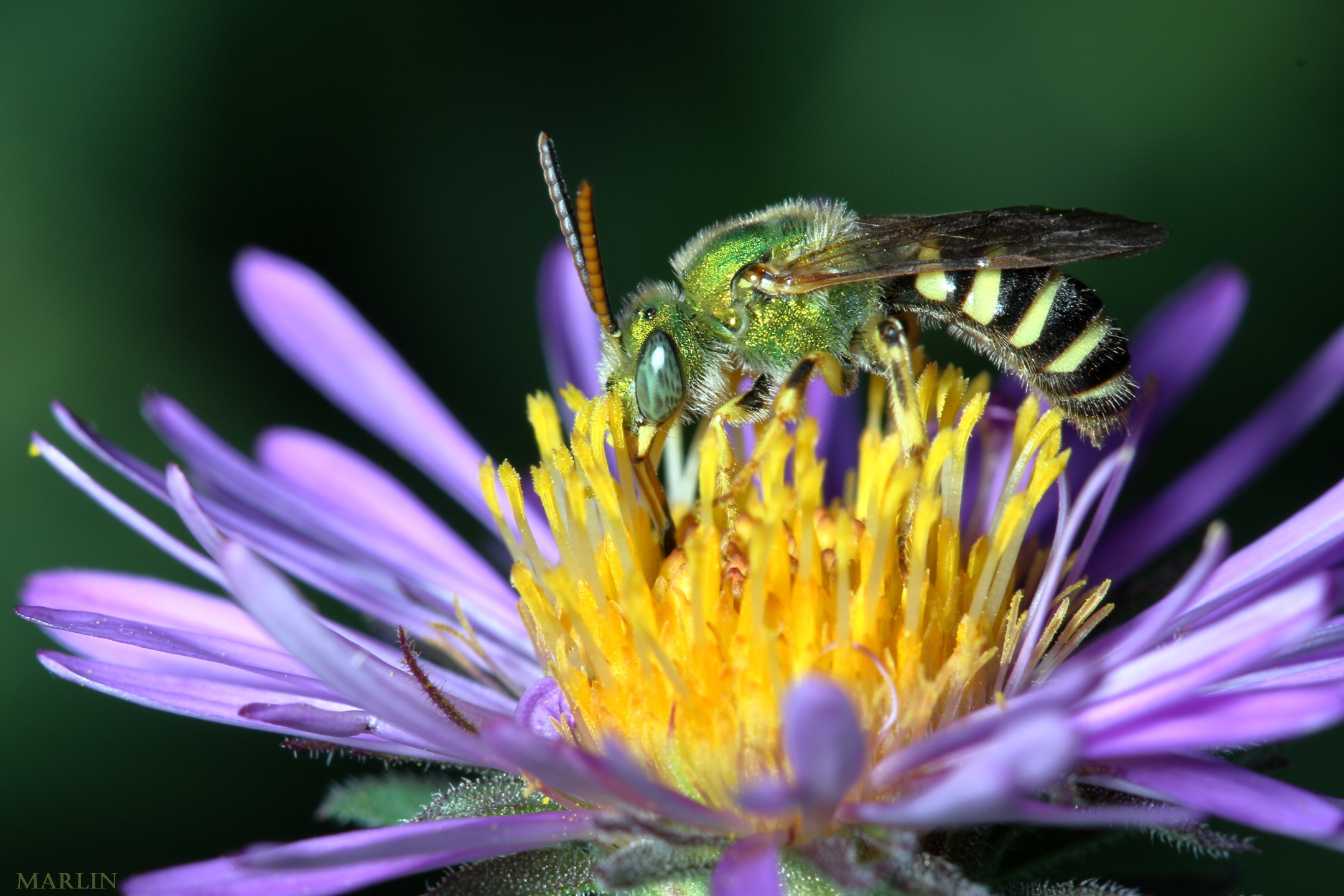
Halictidae: Agapostemon splendens
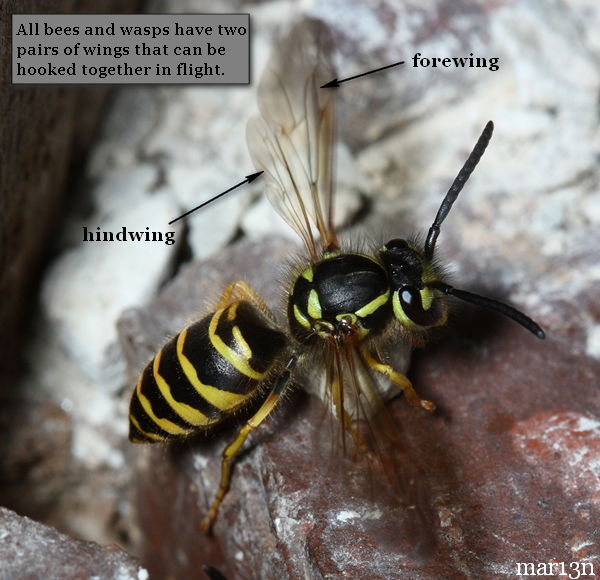
Ovipositors are well-developed and modified into a stinger in the Aculeate Hymenoptera. Because the stinger is evolved from the ovipositor (egg-laying organ) possessed only by females, male wasps can’t sting (some display large fake stingers). All social bees and wasps use their stinger to defend the colony. The sting consists of a venom reservoir and three “needles”: two lancets (sometimes barbed) and a stylet, linked together to form a hollow tube through which venom can be pumped. The stylet makes the initial penetration, and then the two lancets, which slide on “rails” alongside the stylet come forward to deepen the wound.
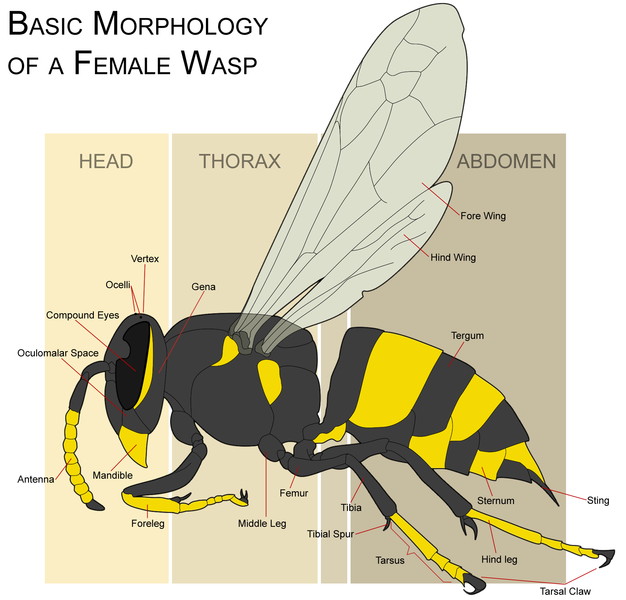
Female wasp anatomy [3]
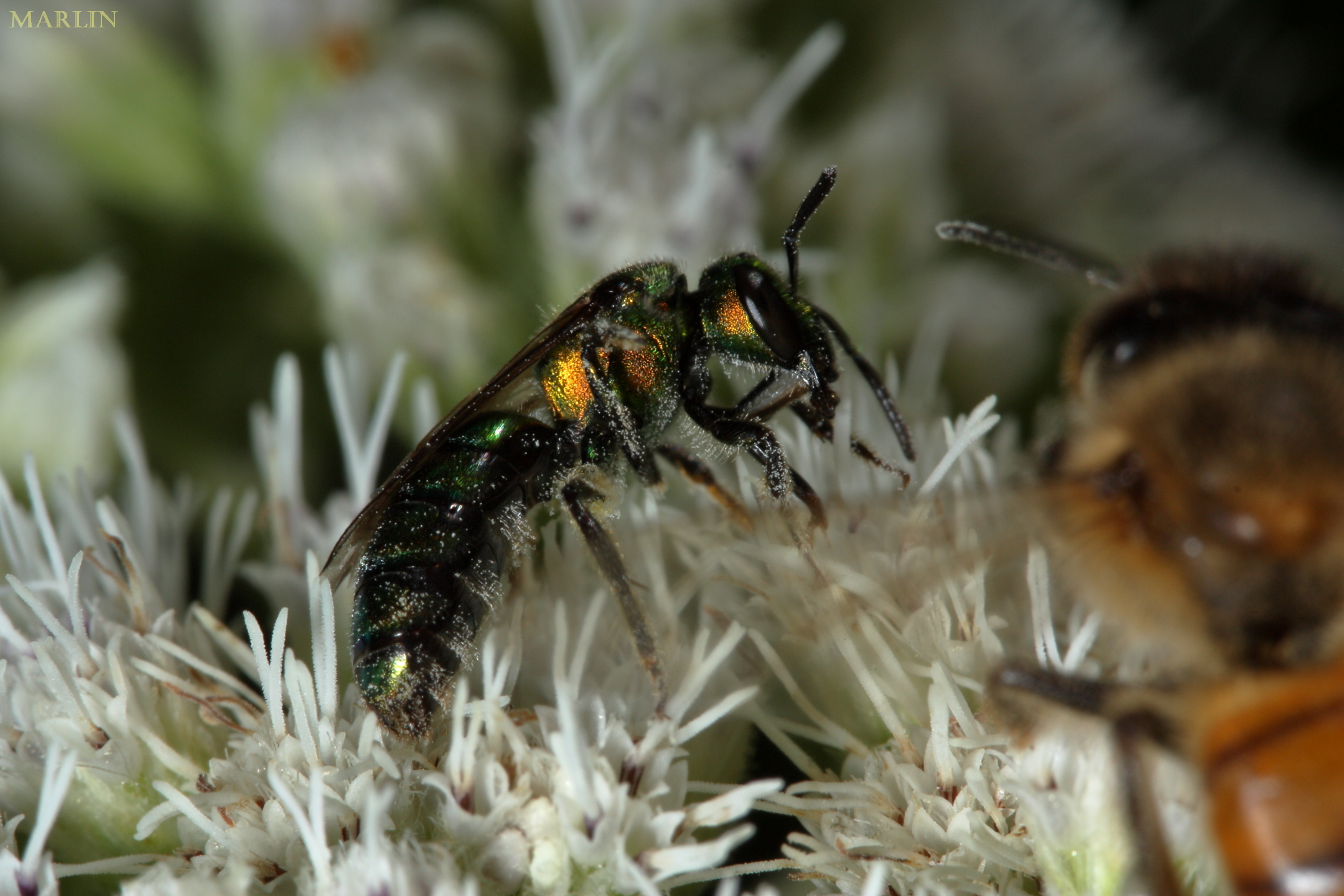
Halictid bee Augochlora pura (with honeybee pal)
Wasps and bumblebees can withdraw the stinger and reuse it, but bees have barbs on their sting; they cannot be withdrawn and the bee sacrifices herself for the colony: when she withdraws, the venom sacs are pulled from her abdomen. The venom apparatus continues to function, however, pumping venom into the wound long after the fatally wounded bee has departed. [1]
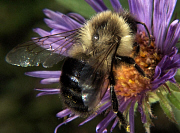 Bumblebees |
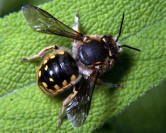 Wool Carder Bee Male |
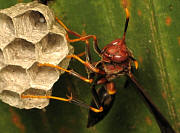 Paper Wasp |
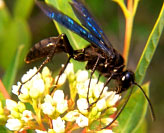 Great Black Wasp |
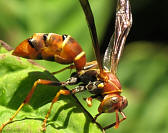 Strepsiptera Parasites |
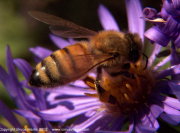 Honey bee |
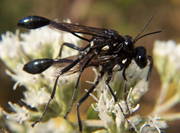 Ammophila sp. |
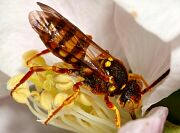 Cuckoo Bee |
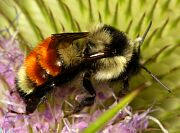 Tricolored Bumble Bee |
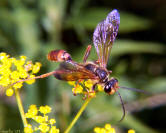 Sphecid Wasp |
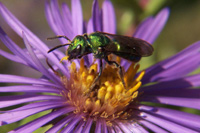 Sweat Bee |
 Downy Yellowjacket |
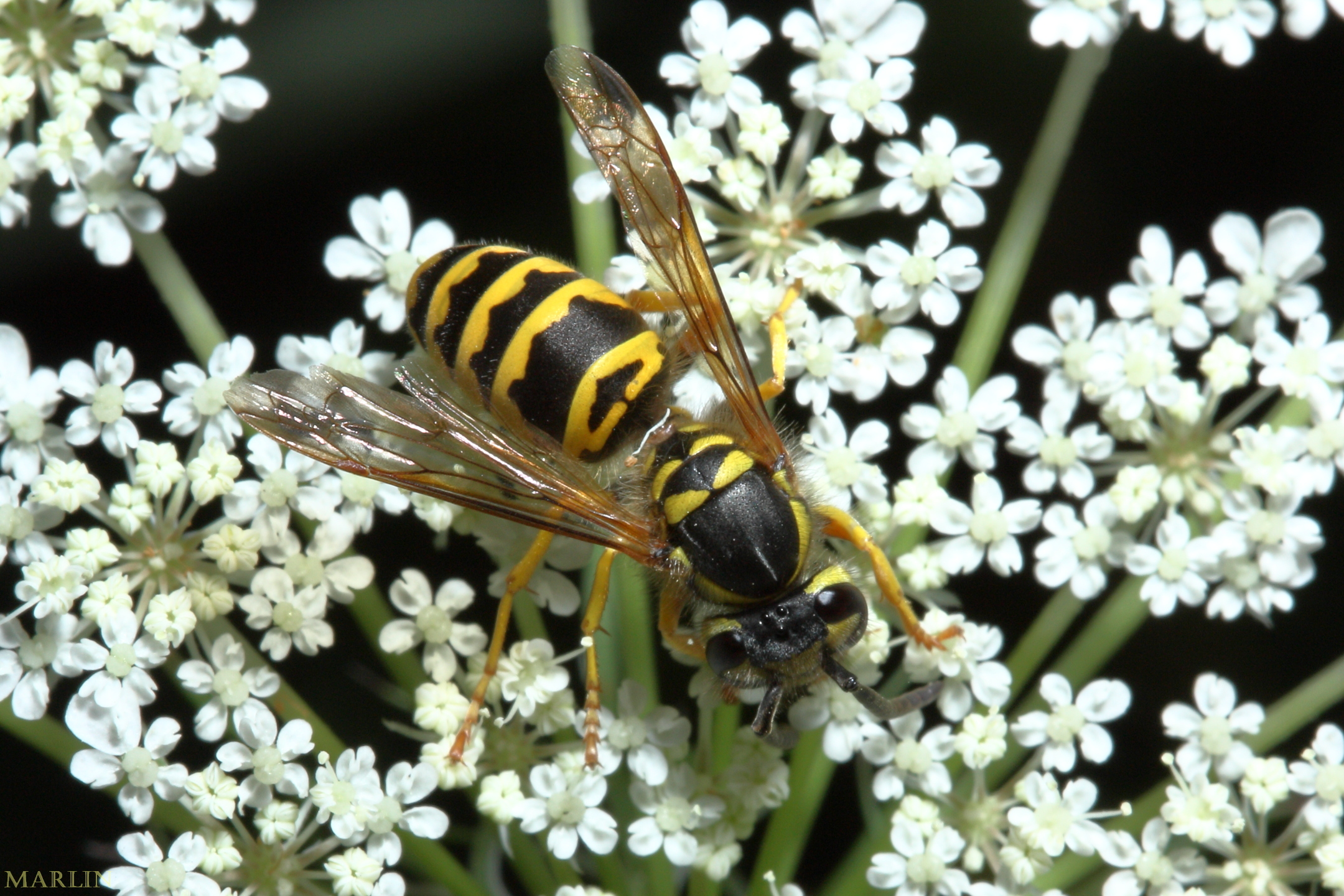
 Paper Wasp Polistes dominula |
 Polistes fuscatus |
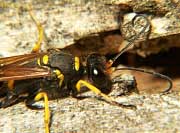 Mud Dauber Wasp |
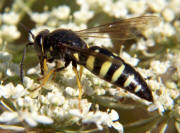 Digger Wasp |
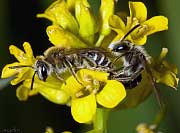 Family Andrenidae |
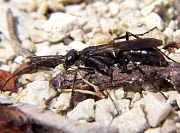 Spider Wasp |
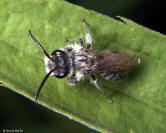 Andrenid Bee |
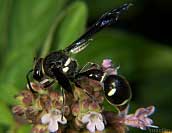 Potter Wasp |
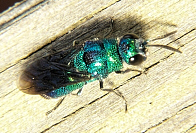 Cuckoo Wasp |
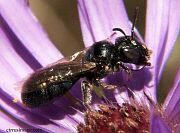 Small Carpenter Bee |
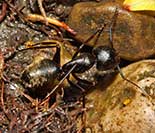 Carpenter Ants |
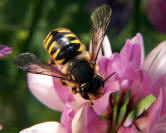 Wool Carder Bee Female |
References
- Ingraham, John L., “March of the Microbes: Sighting the Unseen” Belknap Press, 2010
- University of California Statewide Integrated Pest Management Program, Aphids
- wasp_morphology.png under GNU Free Documentation License

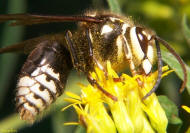 Bald-faced Hornet |
Family Halictidae |
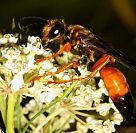 Great Golden Digger Wasp |
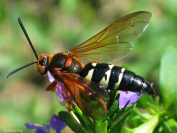 Cicada Killer Wasp |
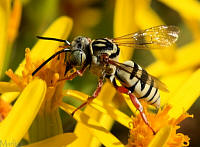 Cuckoo Bee |
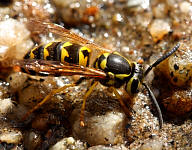 Western Yellowjacket |
||
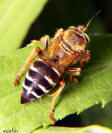 Sand-loving Wasp |
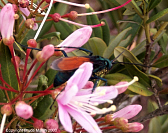 Tarantula Hawk Wasp |
Insects & Spiders | Bees & Wasps Index
Tree Encyclopedia / North American Insects & Spiders
Online since 2002