
Downy Yellowjacket – Vespula flavopilosa
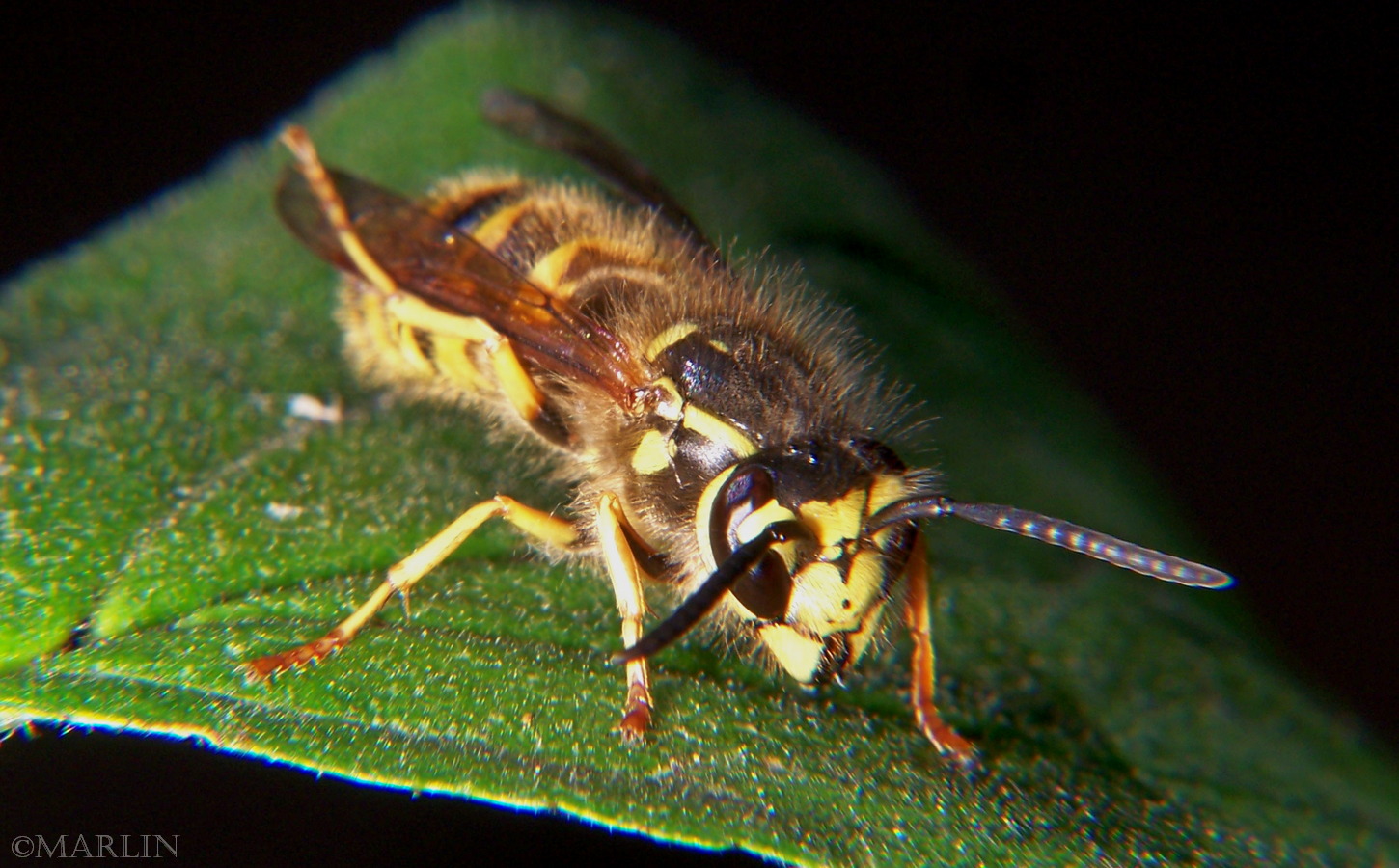
Live adult wasps photographed at DuPage County, Illinois. Size: 15mm
Yellowjacket wasps can become a nuisance as they build up in large populations and scavenge for food at picnics or other outdoor venues where food or sugary beverages are served. Many are attracted in large numbers to garbage cans, others fly in and out of nests built around homes, buildings and areas where people live. Although yellowjackets are considered quite beneficial to agriculture since they feed abundantly on harmful flies and caterpillars, it is their audacity and stinging ability that causes irrational fear.
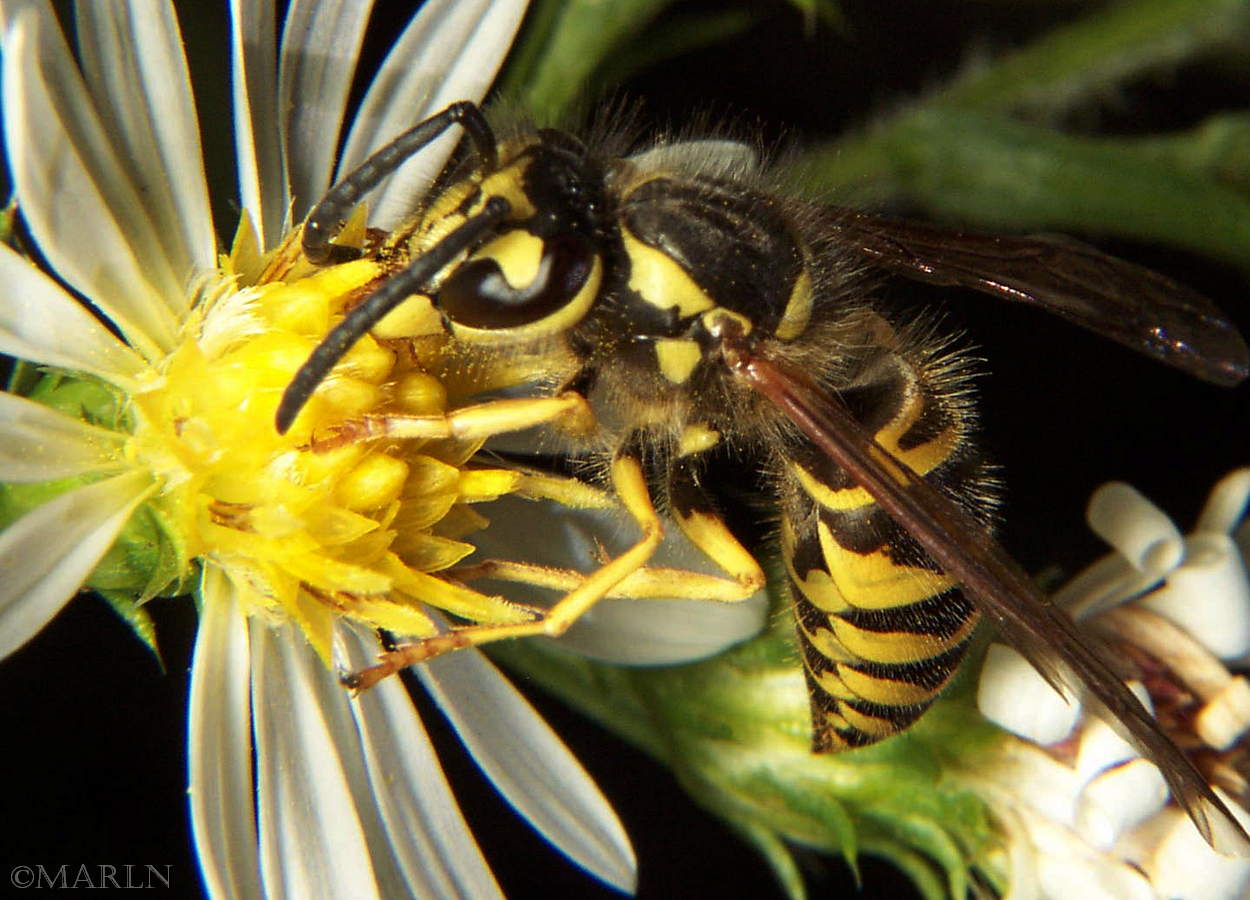
Wasp venom contains a chemical “alarm pheromone,” released into the air, signaling guard wasps to come and sting whomever and whatever gets in their way. Unfortunately, many serious accidents have resulted when one runs away from attacking wasps and into the path of automobiles. When a bee or wasp gets into a moving car, remain calm. They almost never sting when in enclosed spaces as a car or house. Instead, they fly against windows. Slowly and safely pull over off the road, open the windows and allow the escape. Be careful not to cut weeds or run the lawnmower over a ground nest nor disturb a nest in a tree or eaves of the home. Any noise and disturbance will sometimes infuriate and provoke painful stinging. Restrain children from throwing rocks or spraying water on nests. Again, common sense is your best ally; these insects will not attack you or become aggressive unless you are threatening them.
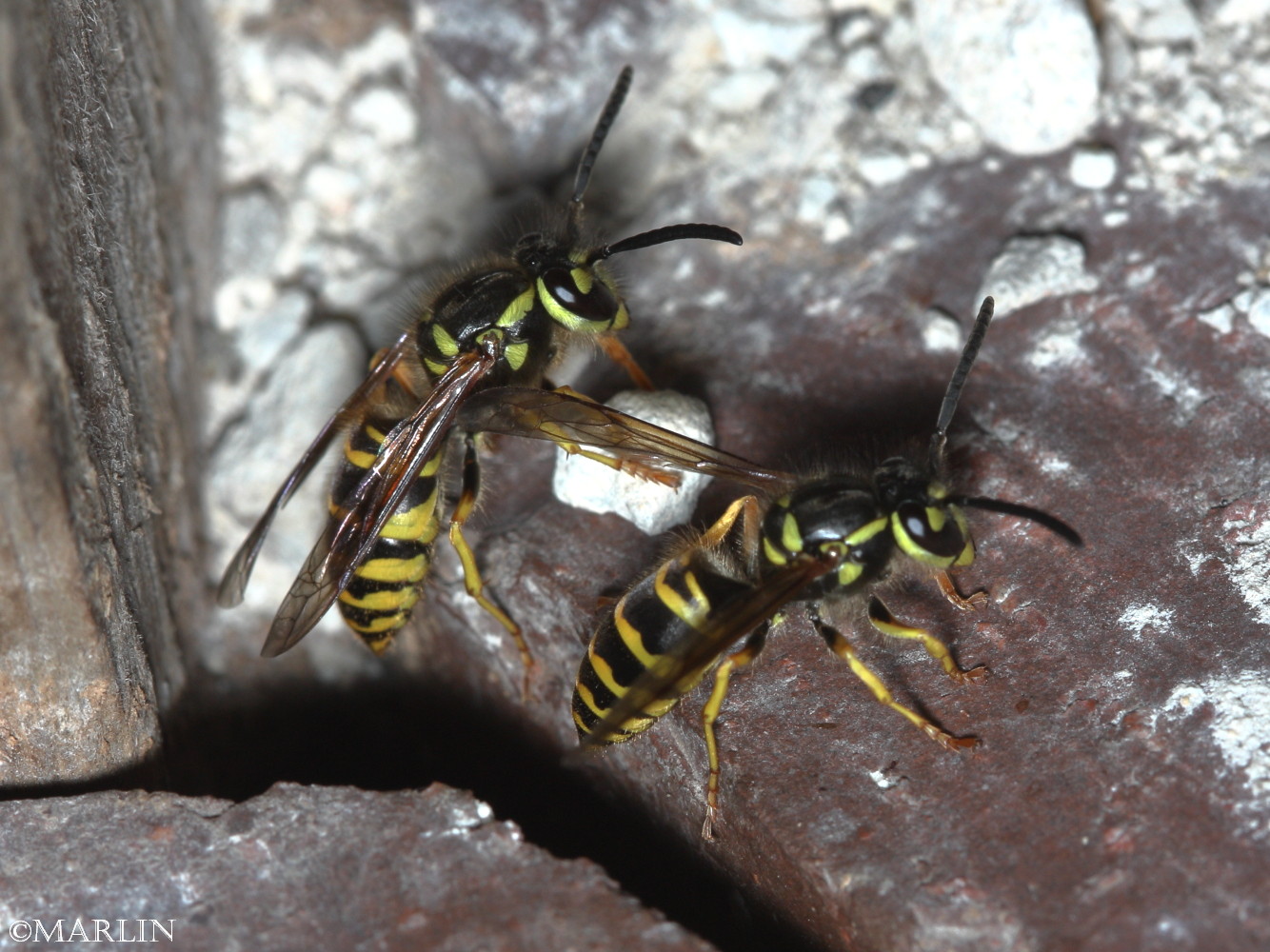
Eastern yellowjackets leaving their underground nest
Yellowjackets are social wasps living in colonies containing workers, queens and males. Colonies are annual with only inseminated queens overwintering. Fertilized queens occur in protected places as hollow logs, in stumps, under bark, in leaf litter, in soil cavities and human-made structures. Queens emerge during the warm days of late April or early May, select a nest site and build a small paper nest in which eggs are laid. After eggs hatch from the 30 to 50 brood cells, the queen feeds the young larvae for about 18 to 20 days. Larvae pupate, emerging later as small, infertile females called workers. By mid-June, the first adult workers emerge and assume the tasks of nest expansion, foraging for food, care of the queen and larvae, and colony defense.
From this time until her death in the autumn, the queen remains inside the nest laying eggs. The colony then expands rapidly reaching a maximum size of 4,000 to 5,000 workers and a nest of 10,000 to 15,000 cells in August and late September. At peak size, reproductive cells are built with new males and queens produced. Adult reproductives remain in the nest fed by the workers. New queens build up fat reserves to overwinter. Adult reproductives leave the parent colony to mate. After mating, males quickly die while fertilized queens seek protected places to overwinter. Parent colony workers dwindle, usually leaving the nest and die, as does the foundress queen. Abandoned nests rapidly decompose and disintegrate during the winter. Nests inside structures will persist as long as they are dry. Nests are not used again. In the spring, the cycle is repeated. (Weather in the spring is the most important factor in colony establishment.) Although adults feed primarily on items rich in sugars and carbohydrates (fruits, flower nectar and tree sap), the larvae feed on proteins (insects, meats, fish, etc.). Adult workers chew and condition the meat fed to the larvae. Larvae in return secrete a sugar material relished by the adults. (This exchange of material is known as trophallaxis.) In late autumn, foraging workers (nuisance scavengers) change their food preference from meats to ripe, decaying fruits since larvae in the nest fail to meet requirements as a source of sugar.
Hymenoptera (Latin for membrane wing) is a vast assemblage of insects second only to Coleoptera (beetles) in the number of described species. Hymenoptera number some 115,000 species – of which 18,000 live in North America. Hymenopterans inhabit a wide variety of habitats, and show an incredible diversity in size, behavior, structure and color. Insects & Spiders | Bees & Wasps Index | Bees & Wasps