|

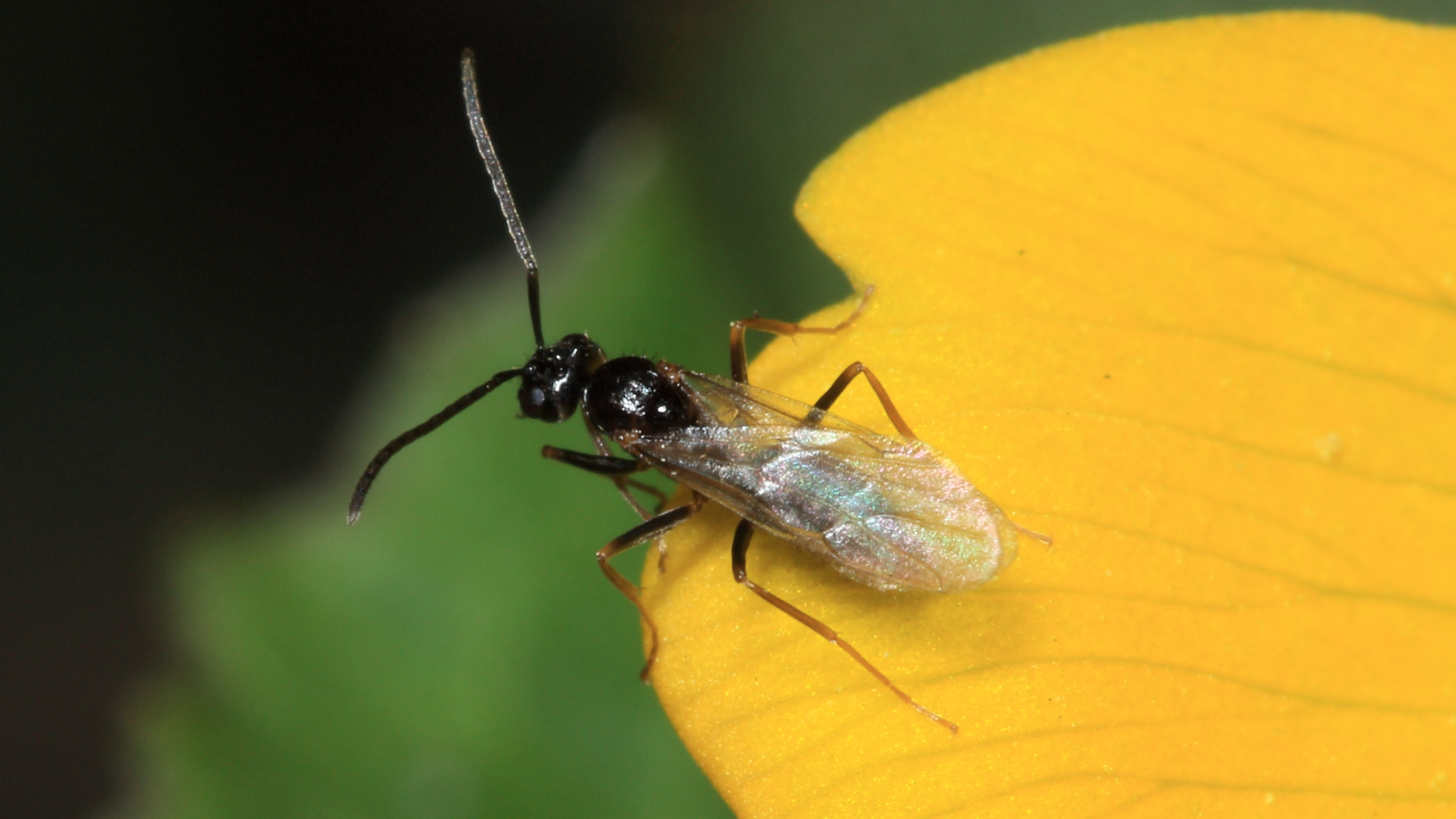
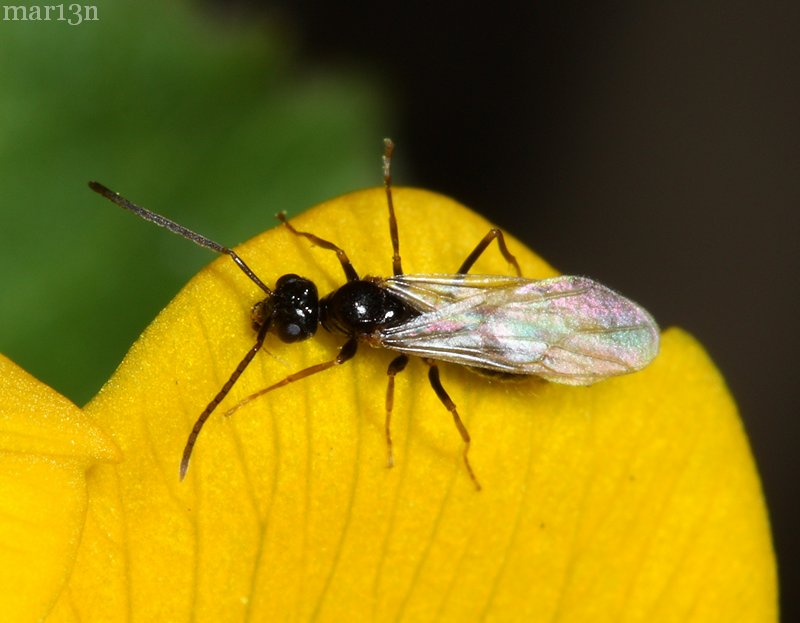
| False Honey Ants - Prenolepis imparis Order Hymenoptera -- abelha, ants, bees, formiga, vespa, wasps / Suborder Apocrita -- abeilles, ants, bees, fourmis, guêpes véritables, narrow-waisted hymenopterans, true wasps / Infraorder Aculeata / Superfamily Vespoidea -- vespoid wasps / Family Formicidae -- ants, fourmis Subfamily Formicinae / Tribe Lasiini / Genus Prenolepis Mayr, 1861 / Species Prenolepis imparis (Say, 1836) |
 |  |  False Honey Ant Queen and DroneThis queen ant is still attached to the drone after their nuptial flight. The male ant has fulfilled his purpose (fertilizing the queen) and is no longer of any use to the colony-to-be. He will die and drop off, and the new queen will search for a likely hole in the ground to begin laying her eggs. Live adult queen and drone ants photographed at Winfield, Illinois, USA, on April 14, 2003. |  | Ants in the genus Prenolepis are commonly known as "false honey" ants. They range over much of North America, into southern Canada. This is the only species in this genus. The false honey ants are very well adapted to foraging in the cold, and are seen in conditions where other ant species are absent; they forage even at freezing temperatures. Males and females both overwinter in underground nest; they are first ants to make nuptial flights in the spring: this queen and drone were photographed on April 14th, very early in the year for such activity. These ants become less active as the weather warms, and appear to have very little foraging during the hot days of summer. They mobilize again with the return of cooler temperatures in the autumn. I'm thinking this behavior may be an adaptation to ice age conditions. If this is true, these ants will probably disappear from the earth very soon, thanks in part to the idiotic ideas and policies of the Bush administration. Ants are distinguished from other insects by the combination of elbowed antennae, a strongly constricted second abdominal segment forming a distinct node-like petiole, a wingless worker caste, and the presence of a metapleural gland. They can sense with organs located on the antennae, which can detect pheromones and hydrocarbons on the outer layer of the body. The latter is highly important for the recognition of nestmates from non-nestmates. Also, they communicate with sound in the form of vibrations moving through the ground.
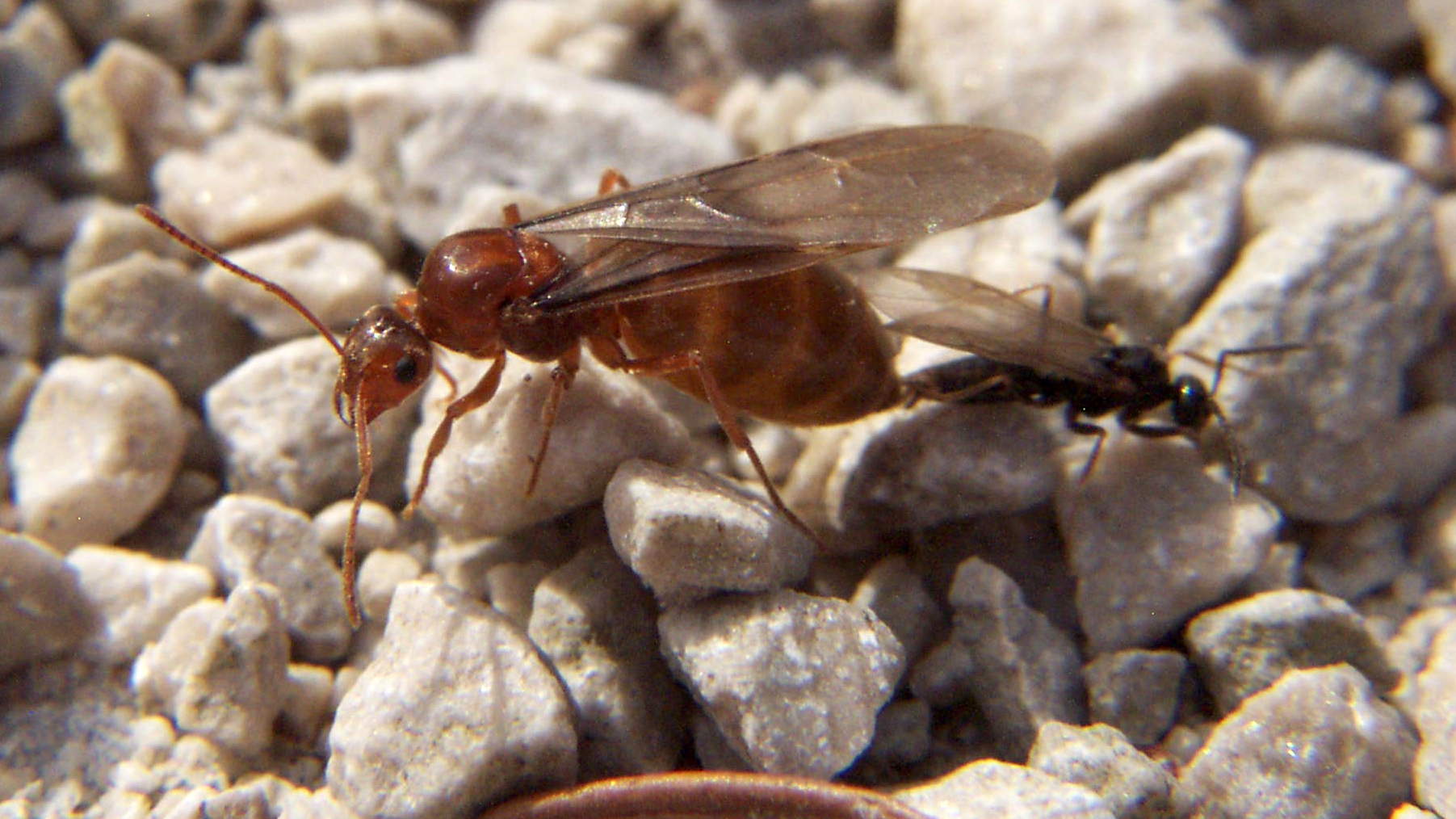
They live in colonies with well-defined castes that typically comprise a worker caste of sterile females and a reproductive caste of winged males and females. Most queens and male ants (drones) have wings, which they eat after nuptial flight; however wingless queens (ergatoids) and males can occur. |

Red Ants, March 22, near Chicago. Unidentified
Antbase -- The complete catalogue of all ants of the world linked to all available full text systematics publications (>4,000), links, pictures, etc. AntWeb -- Images of more than 4,000 specimens including all ant genera, specific coverages for California (complete), Florida and Madagascar. Myrmecos.net -- An extensive image gallery of ants in the wild. Ants of Arizona -- Many photographs of ants. h2g2 article on Ants Ant Visions -- Latest on ant research, along with an image gallery of ants.
|
|