
 |
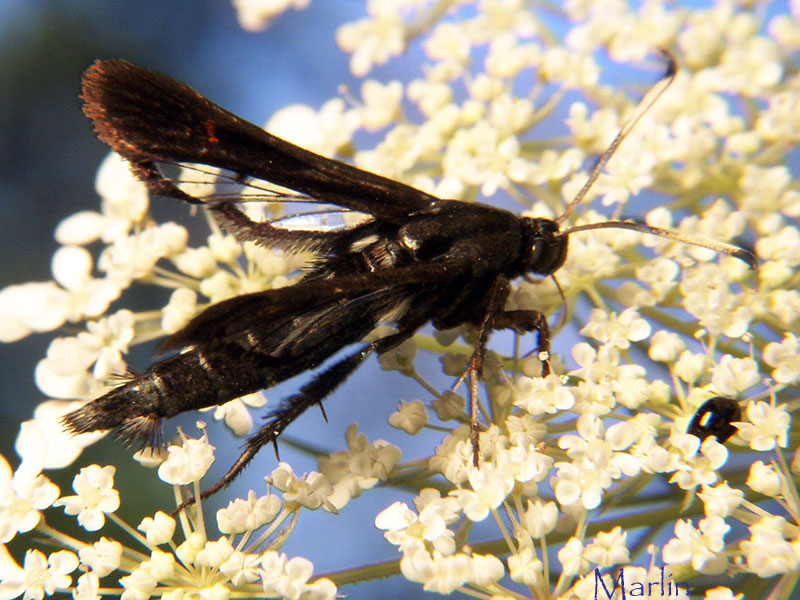
Virginia Creeper Clearwing Moth – Albuna fraxini Family Sesiidae (Clearwing Moths) Insects & Spiders | Moths Index | Moths | Butterflies Main | Butterflies Index | Skippers Live adult moths photographed in the wild at DuPage County, Illinois, USA |
 |
|
The larvae of clearwing moths are major wood-boring pests of woody plants. Hosts include alder, ash, birch, fir, oak, pine, willows and poplars, sycamore, and stone fruit trees (Rosaceae) such as apricot, cherry, peach, and plum. Larvae that closely resemble those of clearwing moths include the American plum borer (Euzophera semifuneralis, family Pyralidae), a serious boring pest of hosts that include fruit and nut trees, mountain ash, olive, and sycamore. Other common wood-borers include bark beetles (family Scolytidae), longhorned borers (Cerambycidae), and roundheaded borers (Buprestidae).
The larvae of the Sesiidae are typically wood-borers, or burrow in plant roots. Many species are serious pests of fruit-tree or timber cultivation, or crop plants (e.g. Melittia spp. on squash) (Edwards et al., 1999). The Sesiidae share their common name with moths in the Hemaris genus of the family Sphingidae; the hummingbird clearwing and snowberry clearwings are members of Hemaris. They are generally much larger and furrier than the Sesiidae and are much more able mimics, of bumblebees and hummingbirds. [2] Clearwing moth adults have long, narrow front wings and shorter, wider hind wings. The hind wings, and in some species the front wings, are mostly clear. These moths fly during the day or at twilight, and their yellow and black coloring resembles that of paper wasps or yellowjackets. Adults display wasp-like behavior by intermittently running while rapidly fluttering their wings. They differ in color depending on species and sex. 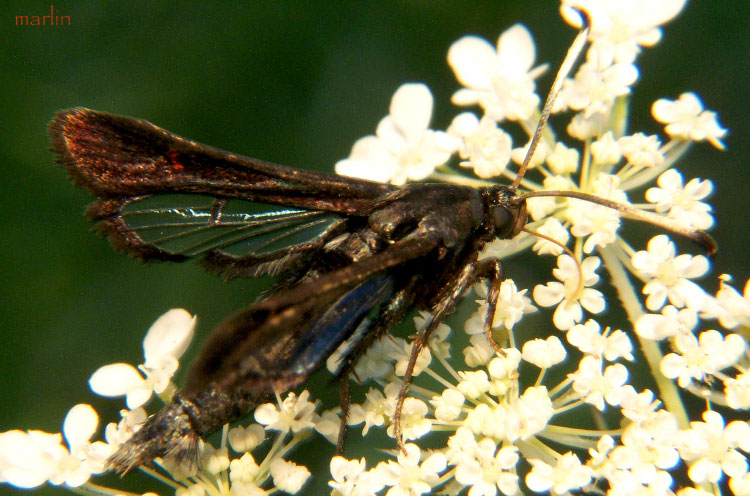 |
|
Clearwing moth larval feeding can cause tree bark to become gnarled or rough. Borer feeding can damage the plant’s food- and water-conducting tissues. With some clearwing species such as those that attack sycamore and pine, feeding is tolerated by trees and apparently causes no serious harm. Feeding by other species can weaken or kill branches. Branches weakened by larval tunneling may break and fall, especially during windy weather. Sometimes entire trees may die. Other types of wood-boring insects produce similar damage. Mature woody plants usually tolerate and can recover from the attack of a few clearwing moth larvae. However, the presence of this pest often indicates that plants have been injured, stressed, or neglected. Providing trees with appropriate cultural care is the primary damage prevention strategy. Sometimes larvae can be killed by puncturing or crushing them. Heavy infestations of clearwing moths may warrant treatment with beneficial nematodes to kill larvae, broad-spectrum insecticides to kill adults, or both. Traps containing clearwing moth sex attractant (pheromone) are used primarily for monitoring. However, continual dispersion of clearwing moth pheromone throughout the mating season to reduce the ability of the adult moth to mate (a process called "mating disruption") has been found effective in reducing peachtree borer populations and injury in orchards in the eastern United States. Mating disruption is relatively expensive and labor intensive, and apparently has not been investigated in landscapes. [1] References: |
|
|
Order Lepidoptera: Moths. Unlike the butterflies, moths are usually nocturnal. Many moths and their caterpillars are major agricultural pests in large parts of the world. Moths in the family Tineidae are commonly regarded as pests because their larvae eat fabrics, clothes and blankets made from natural fibers such as wool or silk. Moths in the genus Farinalis feed on stored grain, flour, corn meal and other milled grain products. Butterflies Main | Moths | Moths Index | Butterflies Index |
