
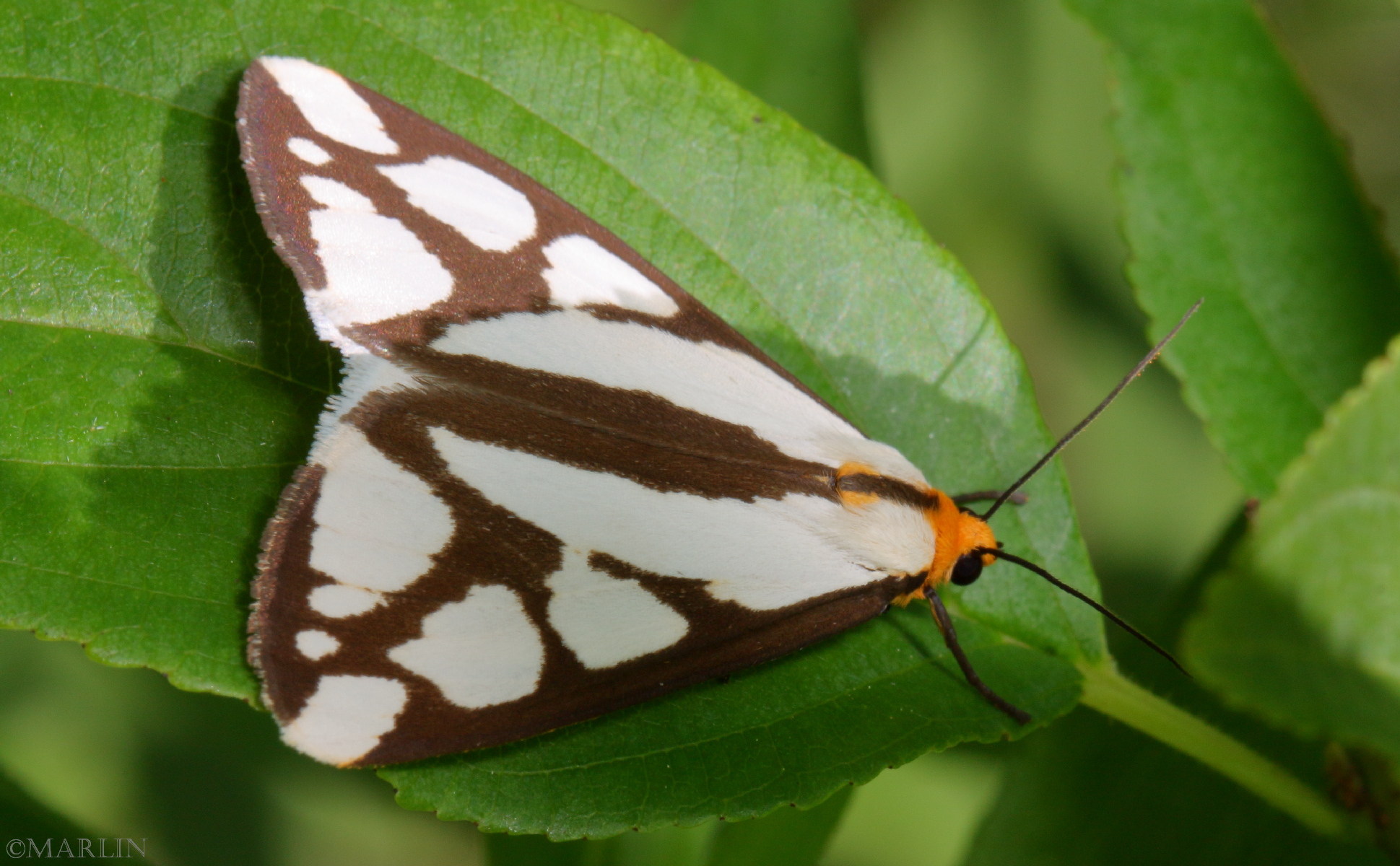
Reversed Haploa Moth – Haploa reversa
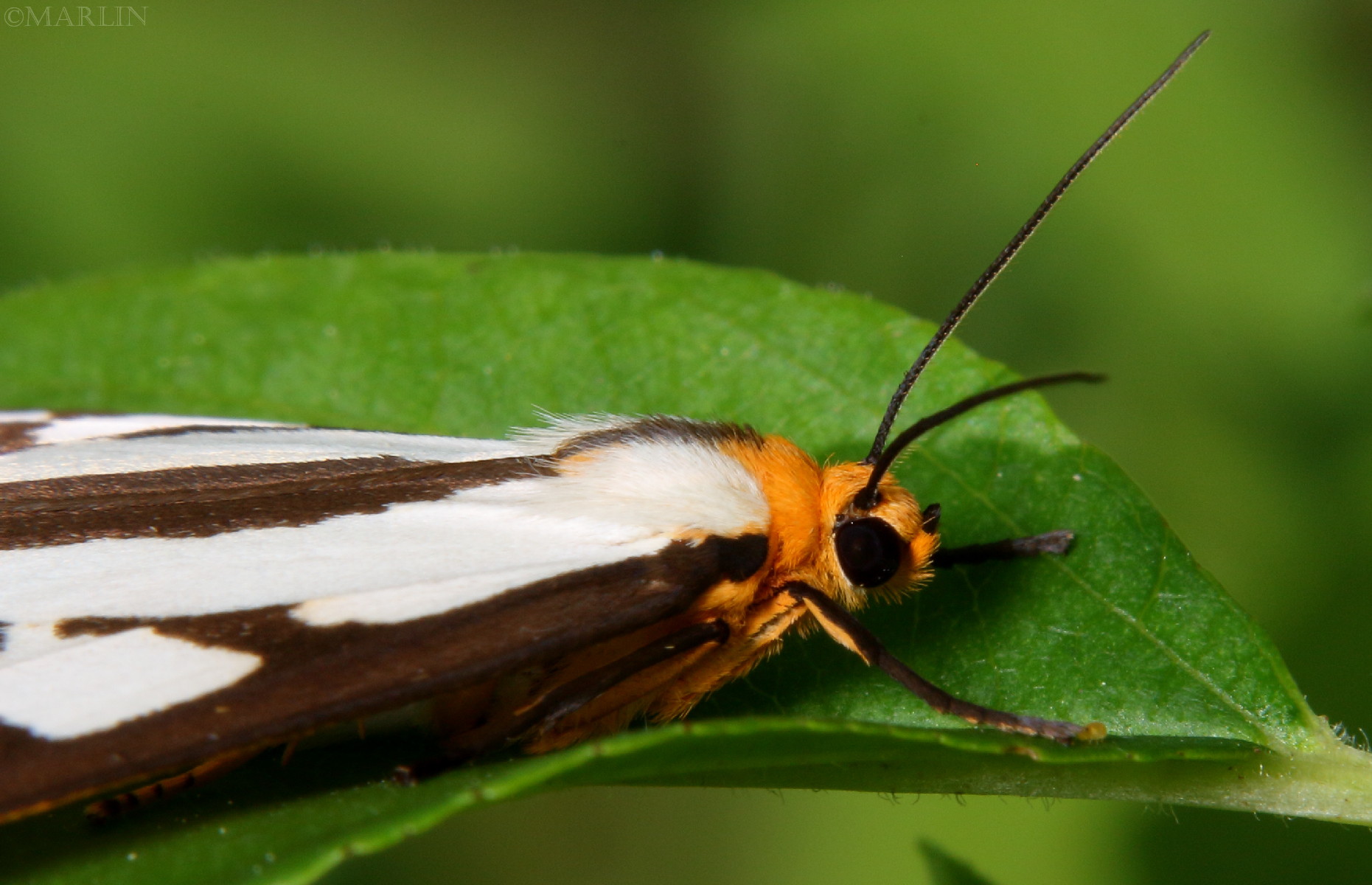
Hodges #8109
Family Erebidae / Subfamily Arctiinae – Tiger, Footman and Lichen Moths
Live adult moths and larvae photographed at northern Illinois, USA
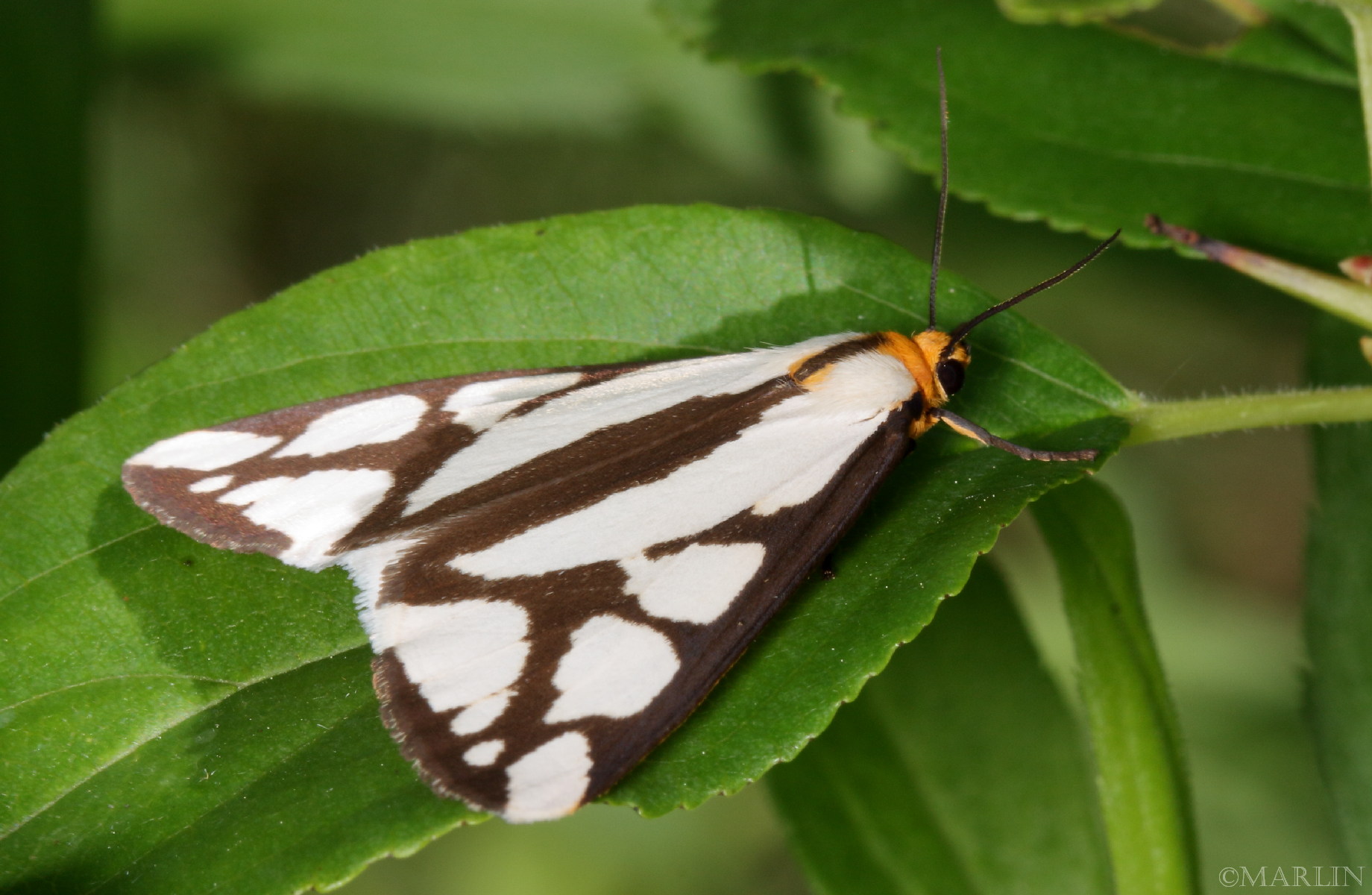
This species of moths is ubiquitous at the Winfield Mounds Forest Preserve at Winfield, Illinois, during some years. They are clumsy fliers, their principle tactic being flying a short distance and hiding in the grass or low foliage (there are perhaps thousands of species that employ this tactic).
Their camouflage does not appear effective in a foliage-green environment. They are hyper-alert and difficult to approach, perhaps as a result of their high visibility.
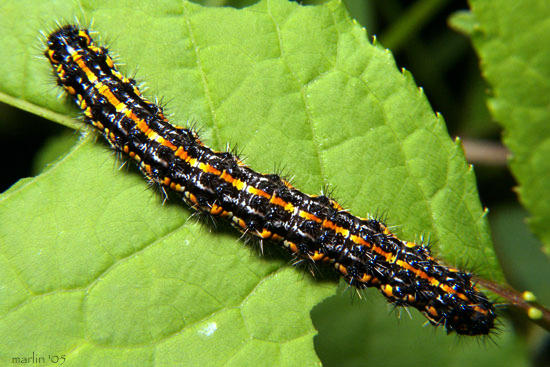 This larva is probably Haploa confusa
Erebidae is a large and diverse family of moths including the groups commonly known as tiger moths, footmen moths, lichen moths and wasp moths. Many species have ‘hairy’ caterpillars which are popularly known as woolly bears.
 The most distinctive feature of the family is a tymbal organ on the metathorax (Scoble 1995). This organ has membranes which are vibrated to produce ultrasonic sounds. They also have thoracic tympanal organs for hearing, a trait which has a fairly broad distribution in the Lepidoptera, but the location and structure is distinctive to the family.
Moths Index | Moths
Butterflies Main | Butterflies Index
Tree Encyclopedia / North American Insects & Spiders
Online since 2002