
Plume Moths – Family Pterophoridae
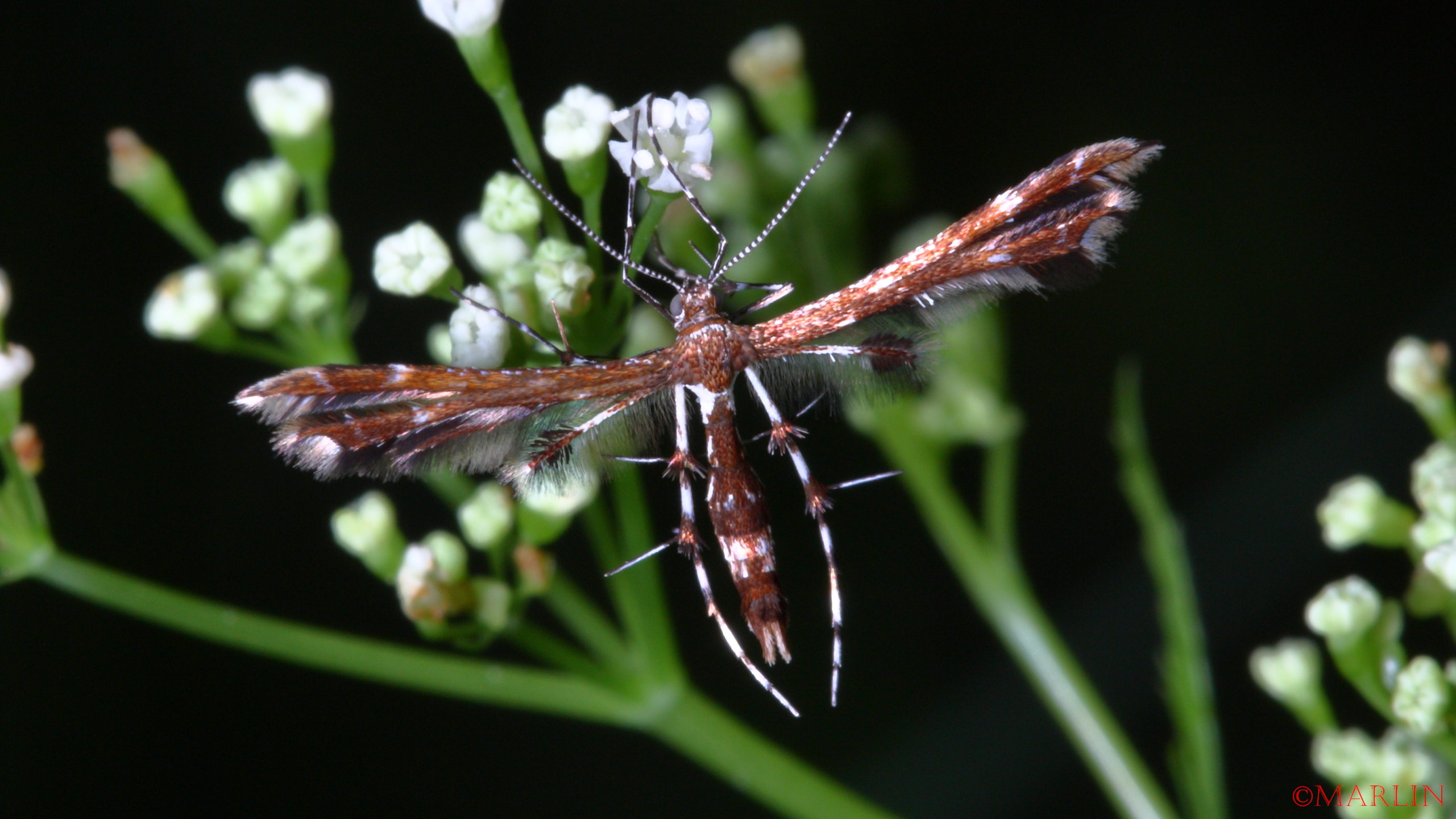
Himmelmann’s plume moth
Live adult plume moths photographed at West Chicago Prairie and Winfield Mounds Forest Preserve, DuPage County Illinois.
Size: Body sans antennae: 8mm / Wingspan: 19mm. This little moth stunned me when I got this shot home and onto the big screen. I never know what things this small really look like in the field. The thorn camouflage is amazing.
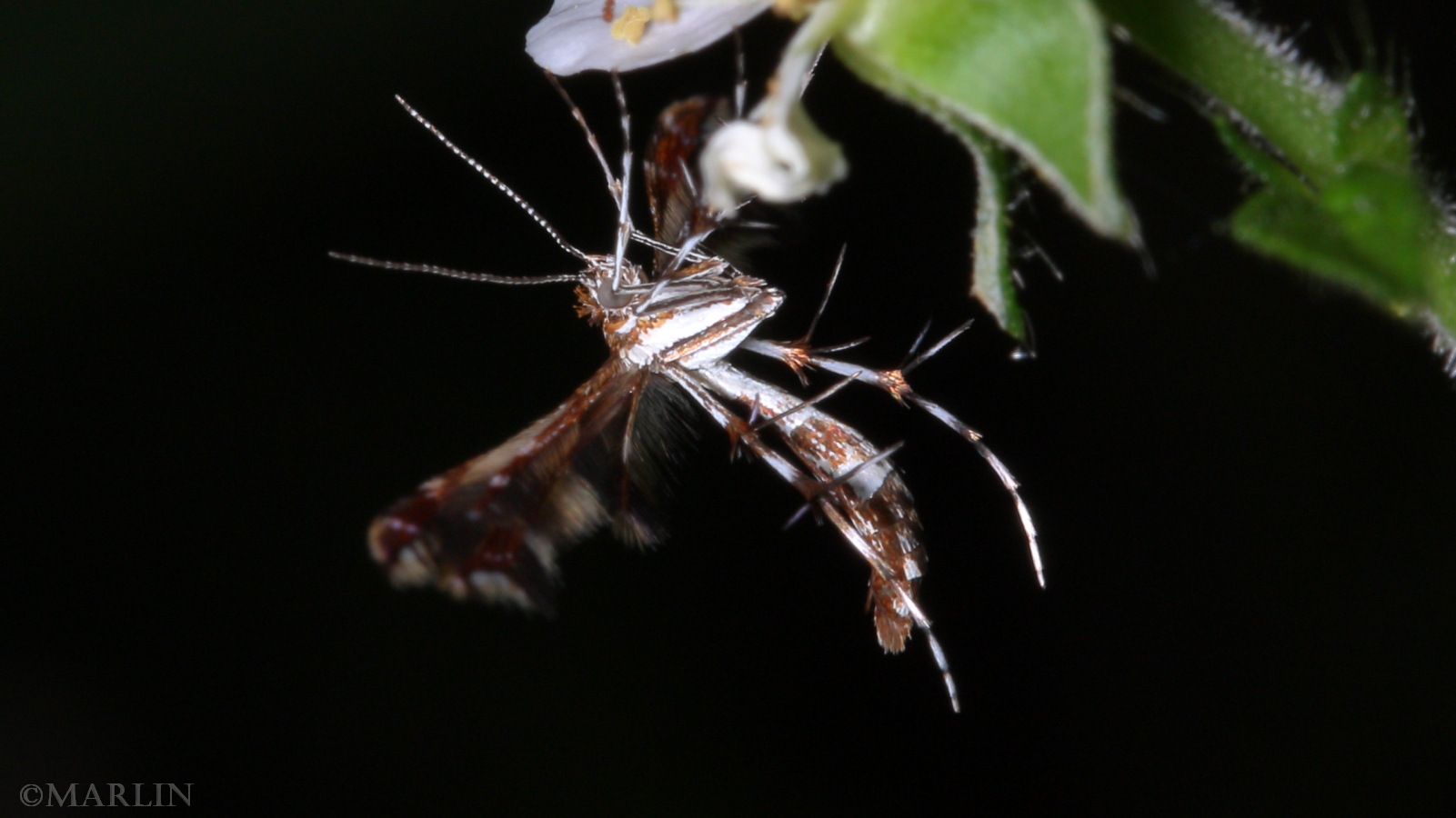
I now find these moths abundant in the pine forest of Ogle County in Northern Illinois, along paths and waterways. They remind me of very large mosquitoes in the way they fly – with a slow, bouncing habit.
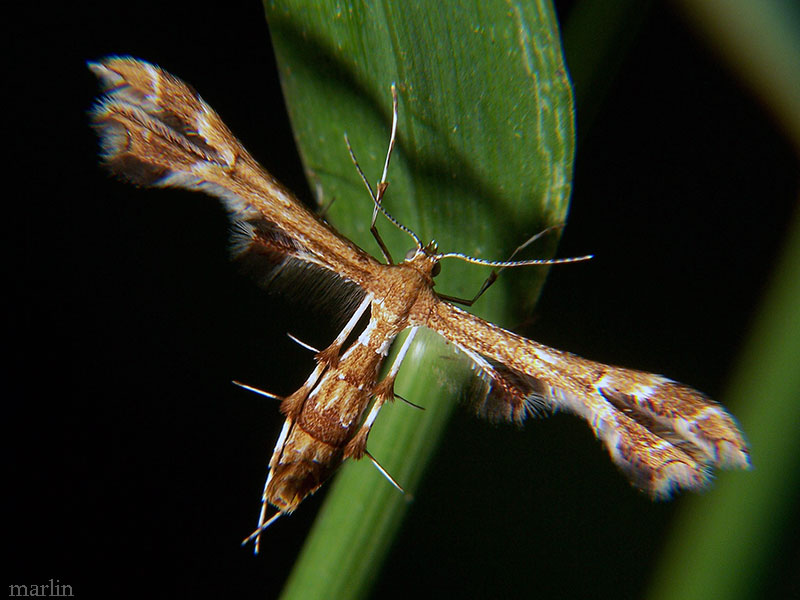
Plume moths are easily recognized by their characteristic “T”-shaped resting posture and the lobed or divided wings of most species. While the family Pterophoridae is easily identified, species determinations are more challenging, often requiring dissection and preparation of genitalia slides. The usual resting posture is with the wings extended laterally and narrowly rolled up. Often they resemble a piece of dried grass, and may pass unnoticed by potential predators even when resting in exposed situations in daylight. Some species have larvae which are stem- or root-borers while others are leaf-browsers.
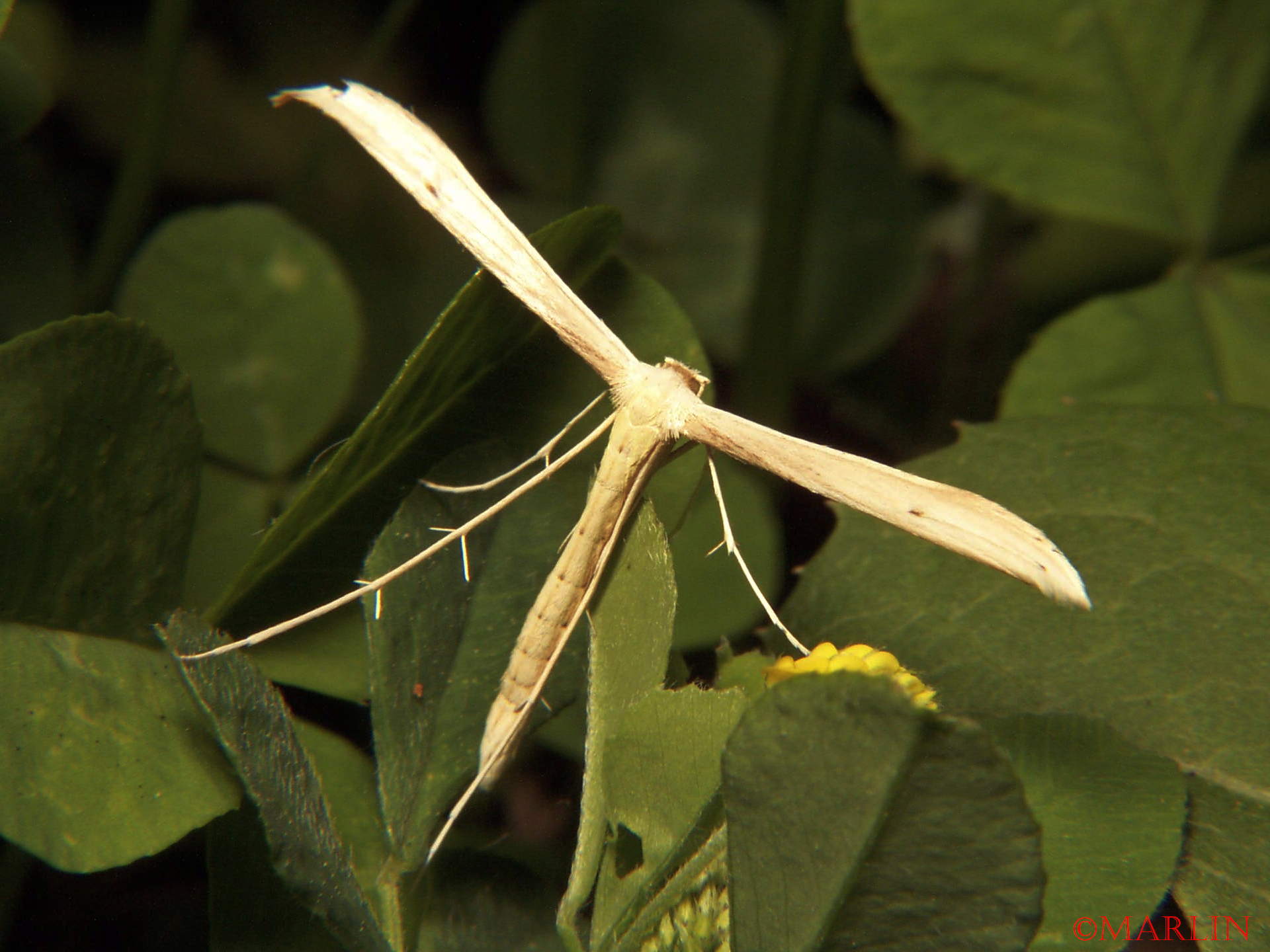
Common Plume Moth – Emmelina monodactyla
There are currently 154 described species known from North America north of Mexico.
Moths Index | Moths
Butterflies Main | Butterflies Index
Tree Encyclopedia / North American Insects & Spiders
Online since 2002