Moths of North America
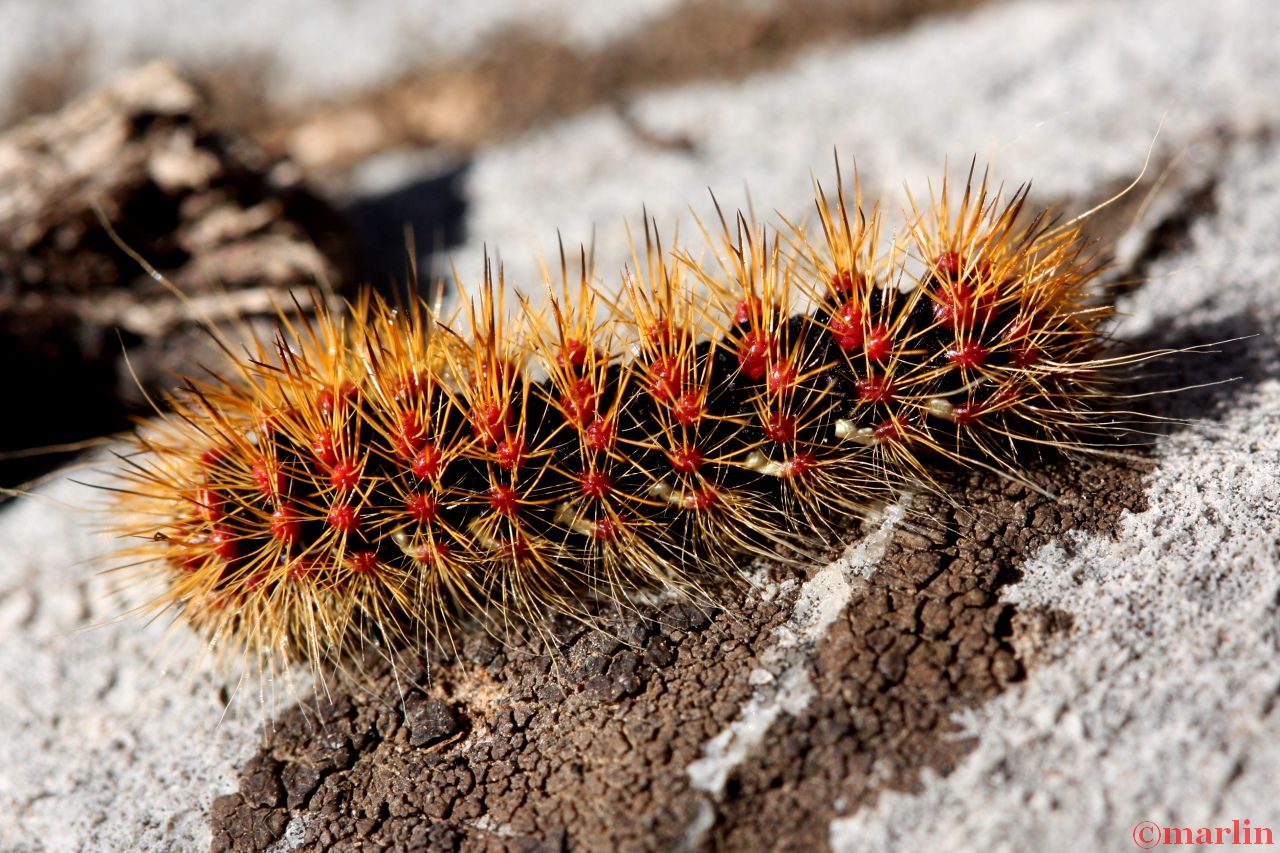
Tiger Moth Caterpillar
This page is a very rudimentary and heinously incomplete account of the moth’s vast taxonomic tree. It is intended as a colloquial account of common moths and caterpillars I have encountered and managed to photograph throughout the United States. I believe a picture is worth a thousand words, and hope you will offset the shallow depth of my content with the size and quality of my images. For a encyclopedic account of moths, please visit our friends at BugGuide.net or The Moth Photographer’s Group.
Most moths are nocturnal and I have little to show of those families and species.
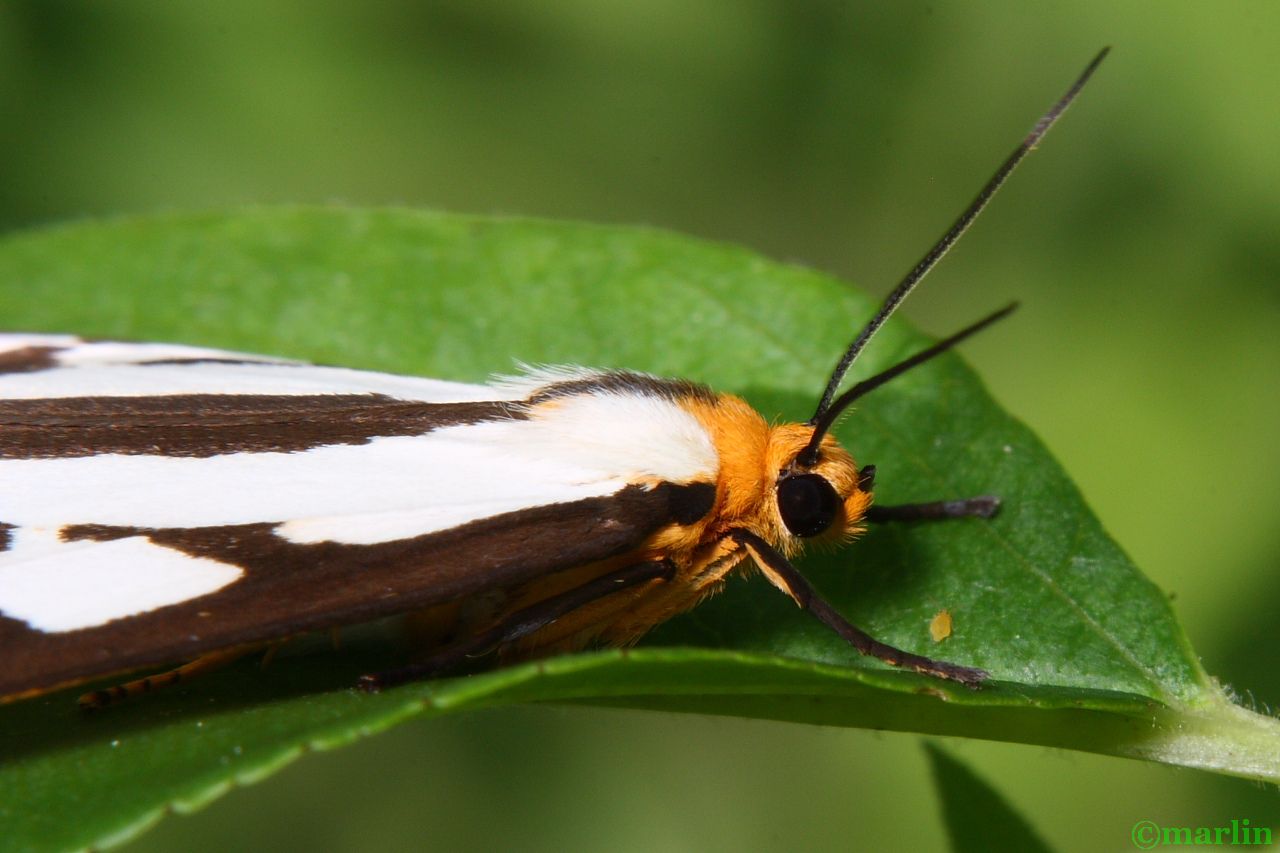
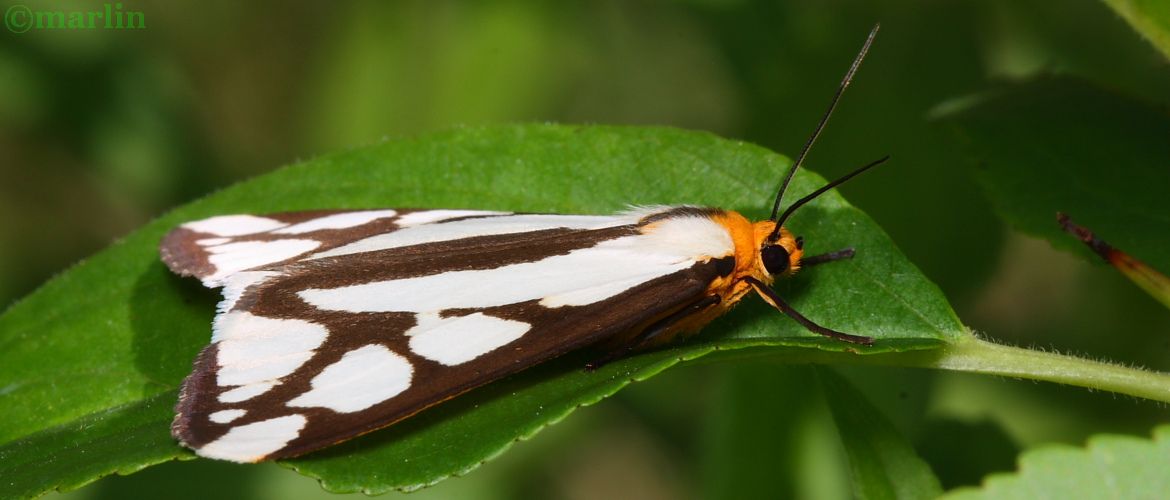
Reversed Haploa Moth – Haploa reversa Hodges #8109
Moths and their larvae are major agricultural pests worldwide. Both moth and butterfly larvae are called caterpillars. The moth pupal case is called a cocoon (vs. chrysalis in butterflies). There are approximately 13,000 described species in about 70 families in North America and about 165,000 species worldwide. Adults have feathery, thickened, or threadlike antennae (not knobbed or hooked, as in butterflies and skippers), and most species are active at night. At rest, many species hold their wings out horizontally, or roof-like over or hugged around the abdomen.
Some moths are farmed. The most notable of these is the silkworm, the larva of the domesticated moth Bombyx mori. It is farmed for the silk with which it builds its cocoon. The silk industry produces over 130 million kilograms of raw silk, worth about 250 million U.S. dollars, each year. Not all silk is produced by Bombyx mori. There are several species of Saturniidae that are also farmed for their silk, such as the Ailanthus moth (Samia cynthia group of species), the Chinese Oak Silkmoth (Antheraea pernyi), the Assam Silkmoth (Antheraea assamensis) and the Japanese Silk Moth (Antheraea yamamai).
Superfamily NoctuoideaSubfamily Arctiinae – Tiger and Lichen Moths
Formerly family Arctiidae, this is a large and diverse family of moths with around 11,000 species worldwide. Included are the groups commonly known as tiger moths, which usually have bright colors, footmen (which are usually much drabber), lichen moths and wasp moths.
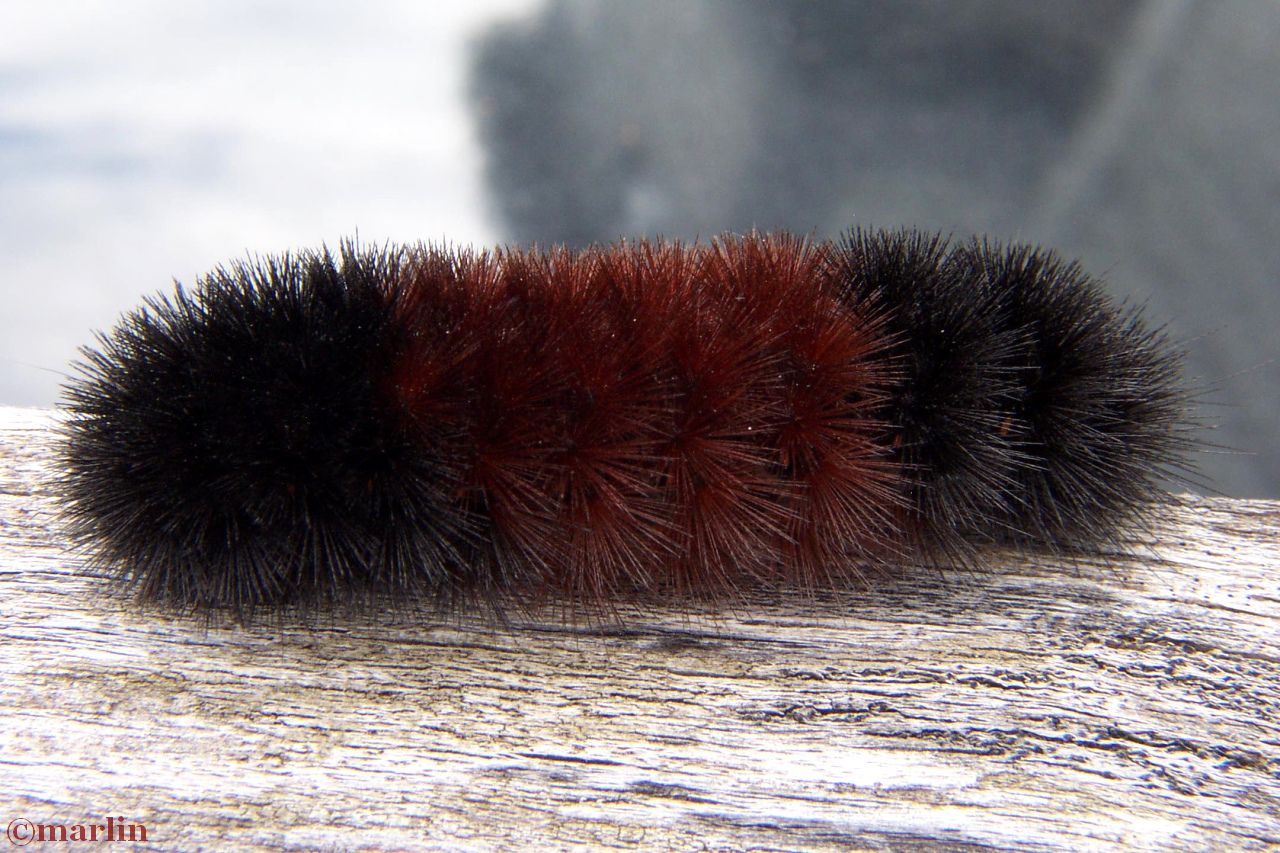
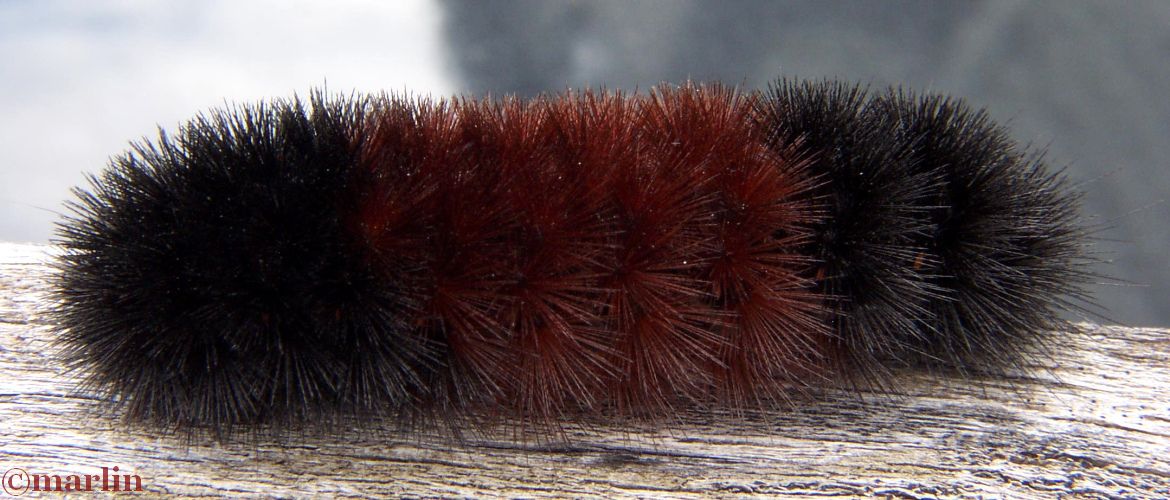
Many tiger moth species have ‘hairy’ caterpillars which are popularly known as woolly bears. If disturbed, woolly bear caterpillars will roll into a tight spiral. Common folklore has it that the forthcoming severity of a winter can be predicted by the amount of black on the Isabella tiger moth’s caterpillar, the most familiar woolly bear in North America; however the relative width of the black band varies among instars, not according to weather (Wagner 2005). Isabella tiger moths (Pyrrharctia isabella) overwinter in the caterpillar stage. They can survive freezing at subzero temperatures by producing a cryo-protectant chemical.
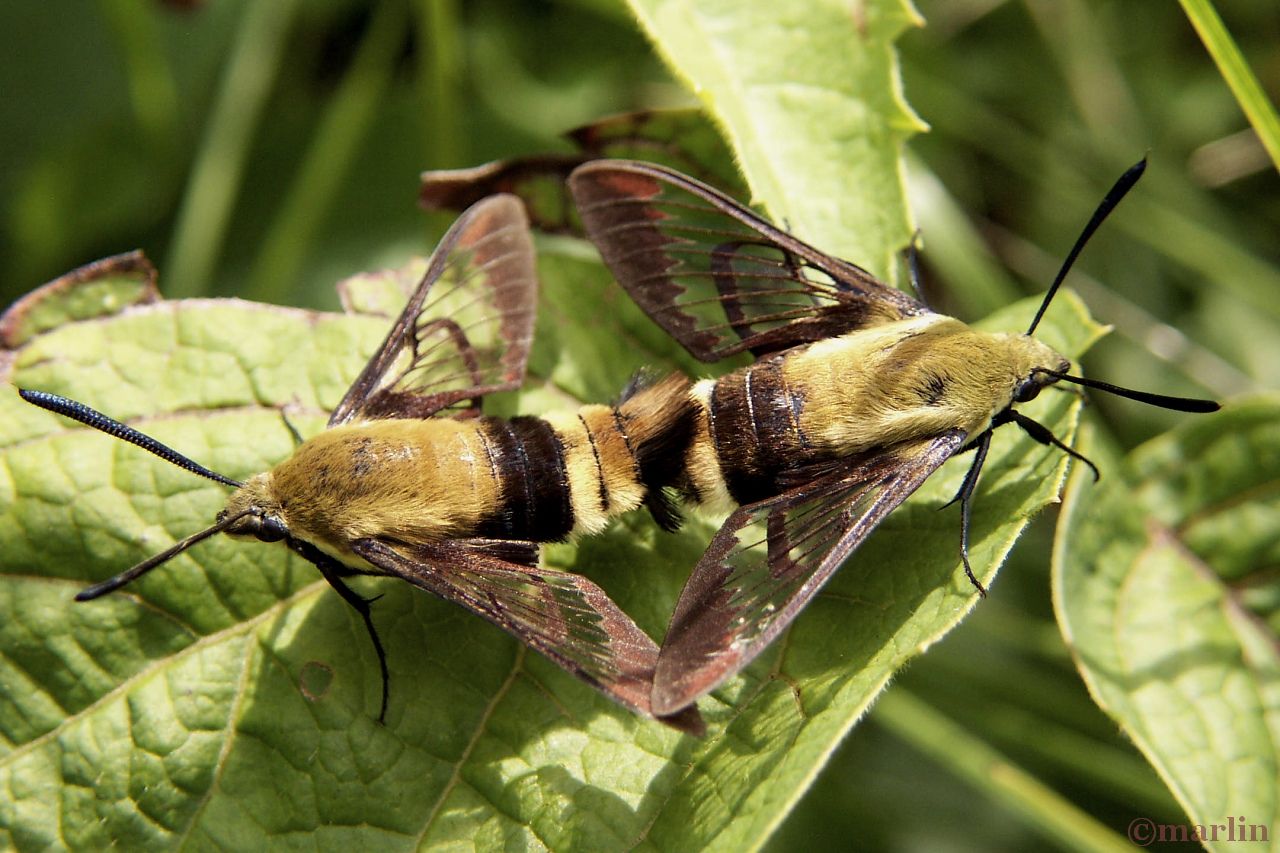
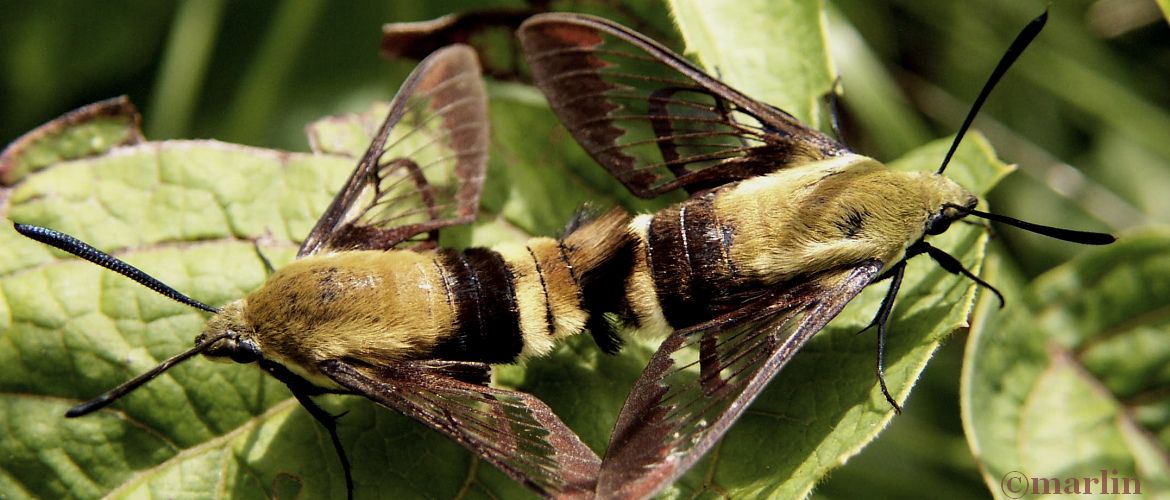
Snowberry Clearwing Moth – Hemaris diffinis – Hodges#7855
Superfamily Bombycoidea
Family Sphingidae – sphinx moths, aka hawk moths, hornworms. Sphingidae from the type genus Sphinx (Linnaeus), for the Egyptian Sphinx. Common name “Hornworm” due to the stiff pointy dorsal extension near the end of the abdomen of most larvae. There are 124 described species found in America north of Mexico.
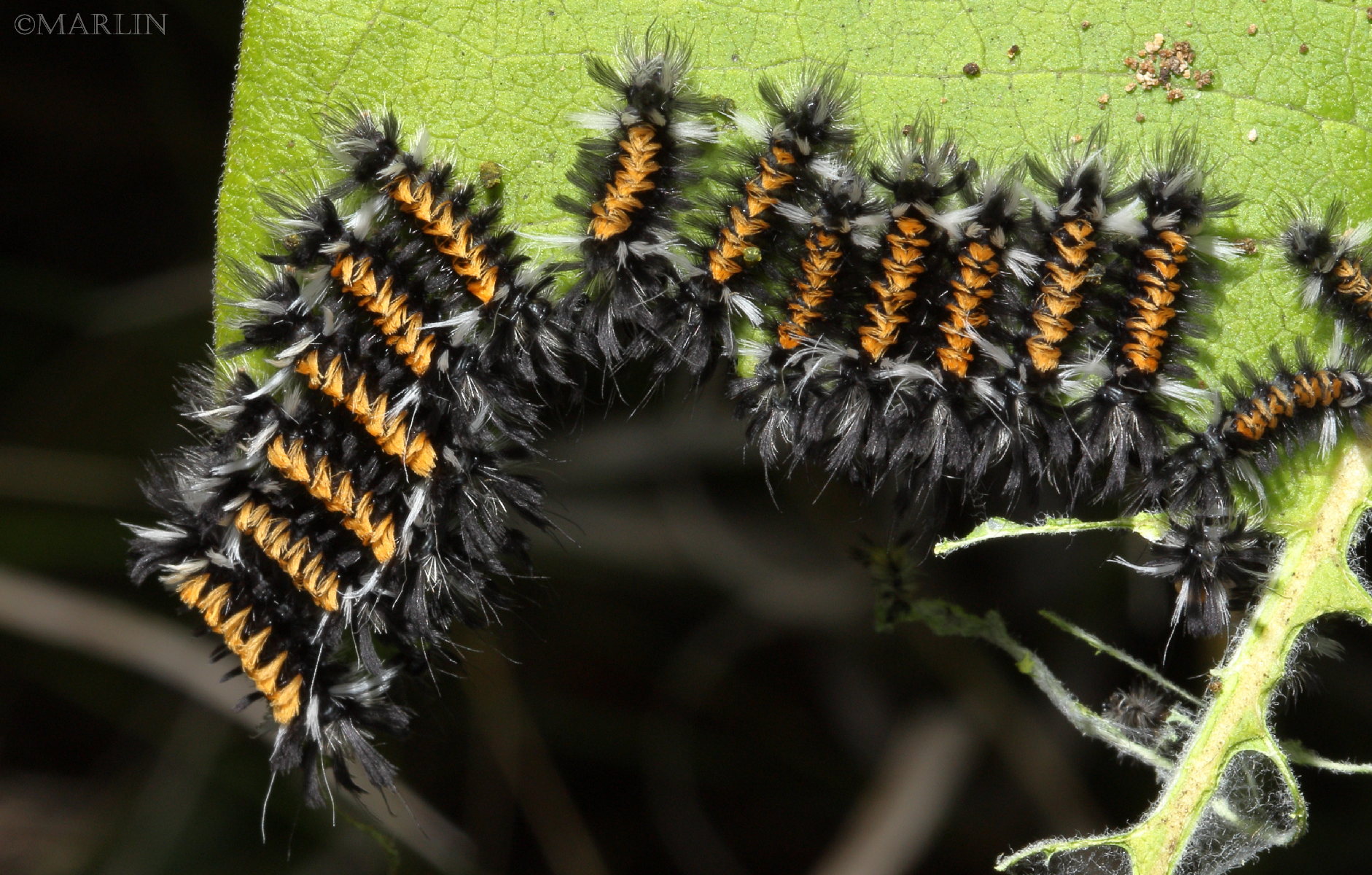
Superfamily Noctuoidea, Family Erebidae
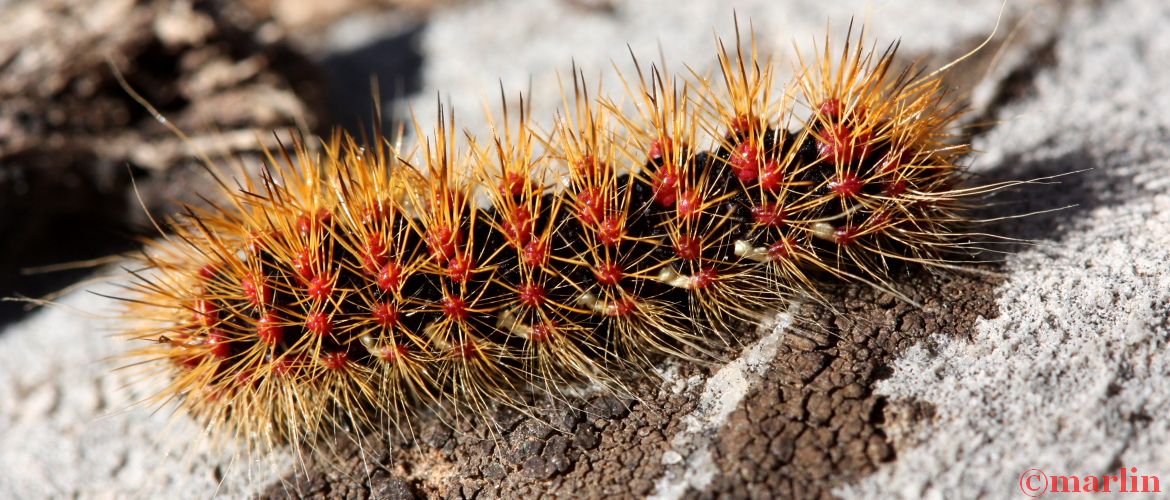
Like most species in this family, the milkweed tussock moth‘s larvae obtain a chemical defense from their host plants, in this case, cardiac glycosides from milkweed or dogbane. These are retained into the adult stage and deter predators. Only very high cardiac glycoside concentrations deterred bats, however (Hristov and Conner 2005). Inedibility is also advertised with clicks from the tymbal organs.
Sporting tufts of black, white and orange (sometimes yellow) setae, larvae skeletonize whole leaves gregariously, leaving a lacy remnant. The head capsule is black. The later instars wander much more, and may appear alone or in small clusters. Mature caterpillars are found from June onwards (Wagner 2005). Grows to a length of 35 mm.
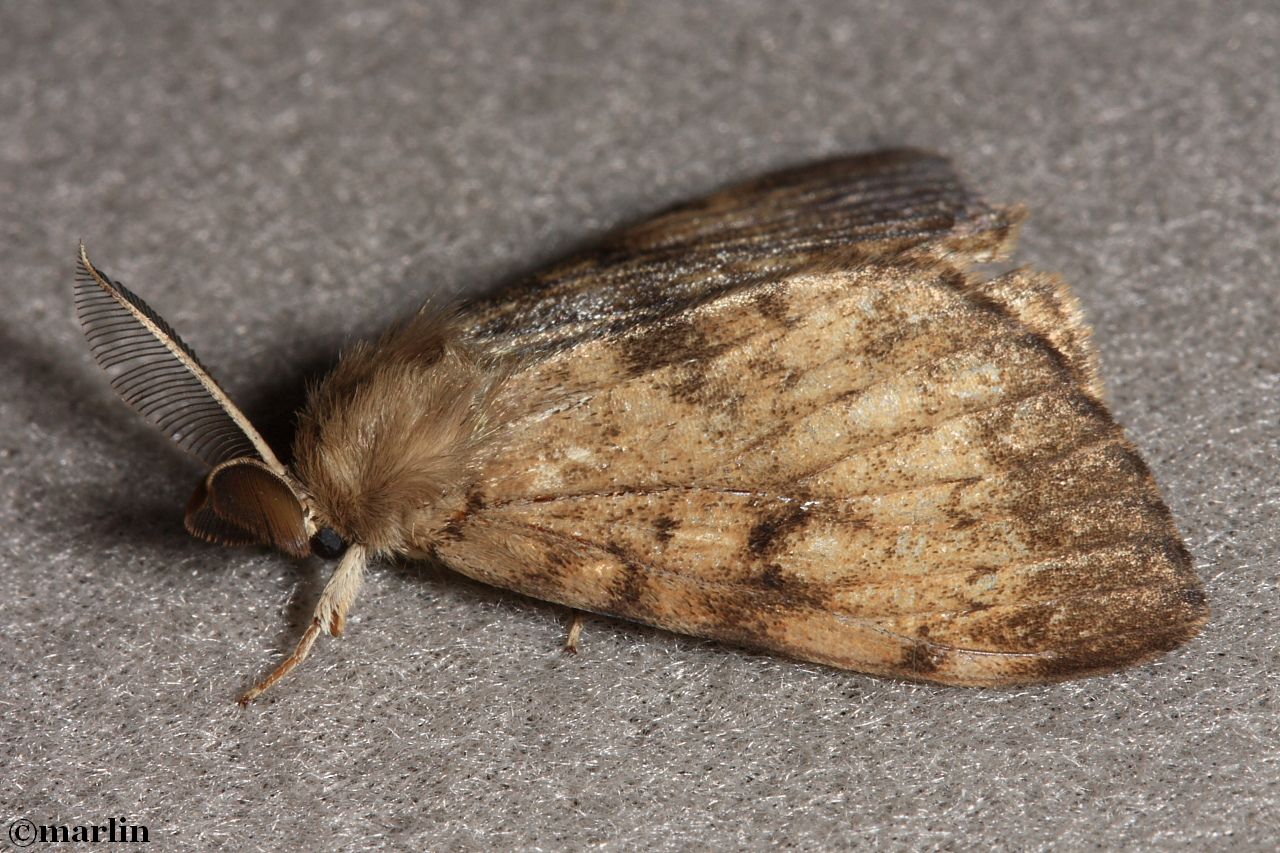
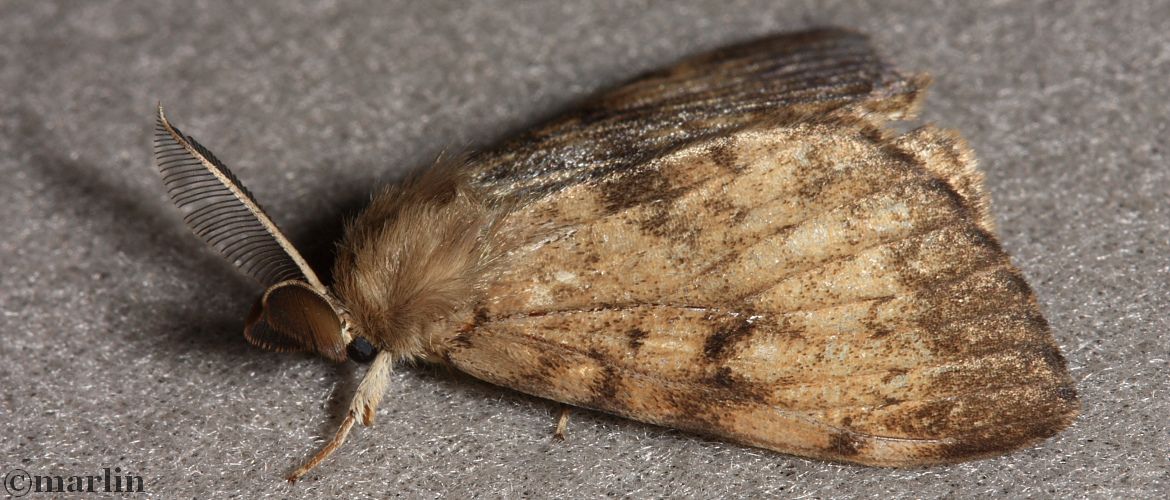
Spongy Moth – Lymantria dispar
The spongy moth is one of North America’s most devastating forest pests. The species originally evolved in Europe and Asia and has existed there for thousands of years. In either 1868 or 1869, the gypsy moth was accidentally introduced near Boston, MA by E. Leopold Trouvelot. About 10 years after this introduction, the first outbreaks began in Trouvelot’s neighborhood and in 1890 the State and Federal Government began their attempts to eradicate the spongy moth.
These attempts ultimately failed and since that time, the range of spongy moth has continued to spread. Every year, isolated populations are discovered beyond the contiguous range of the gypsy moth but these populations are eradicated or they disappear without intervention. It is inevitable that gypsy moth will continue to expand its range in the future.
The spongy moth is known to feed on the foliage of hundreds of species of plants in North America but its most common hosts are oaks and aspen. Spongy moth hosts are located through most of the coterminous US but the highest concentrations of host trees are in the southern Appalachian Mtns., the Ozark Mtns., and in the northern Lake States.
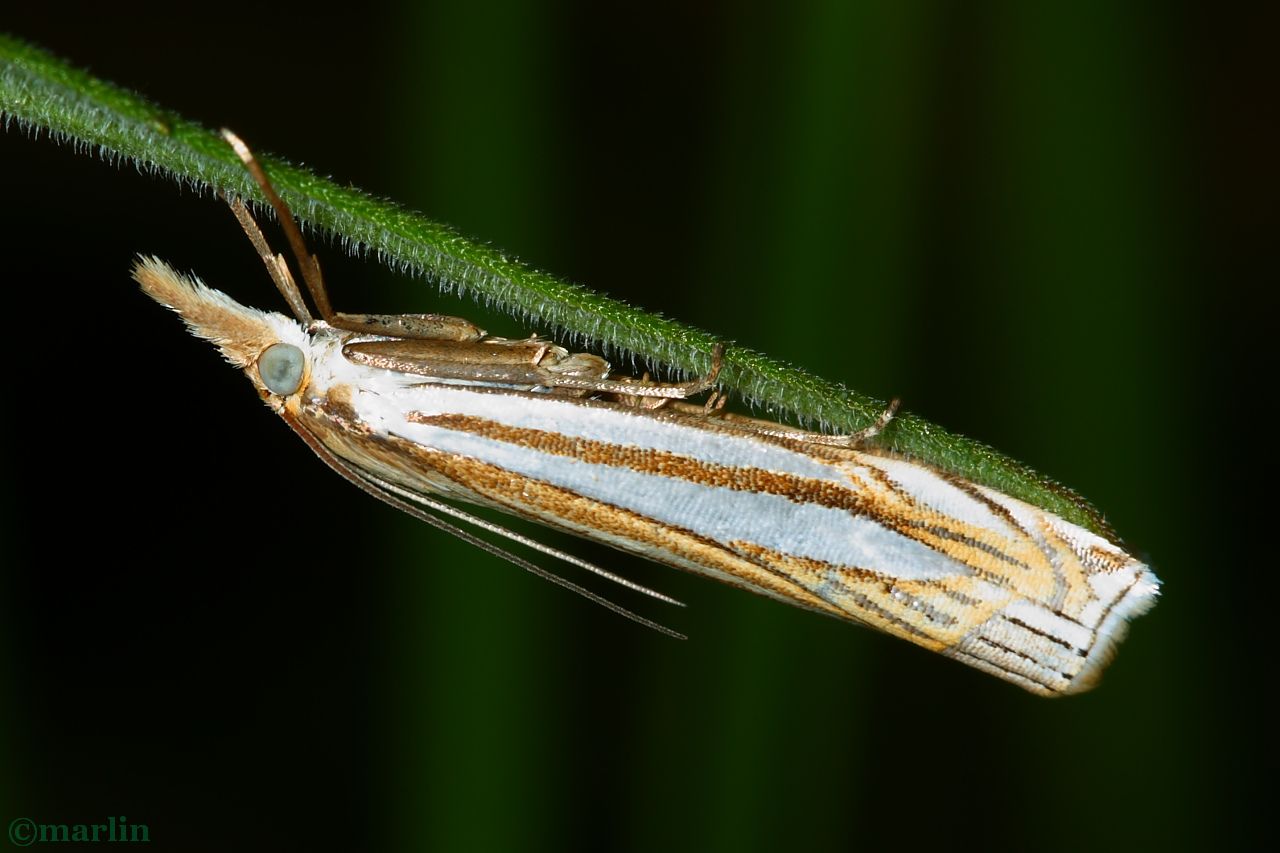
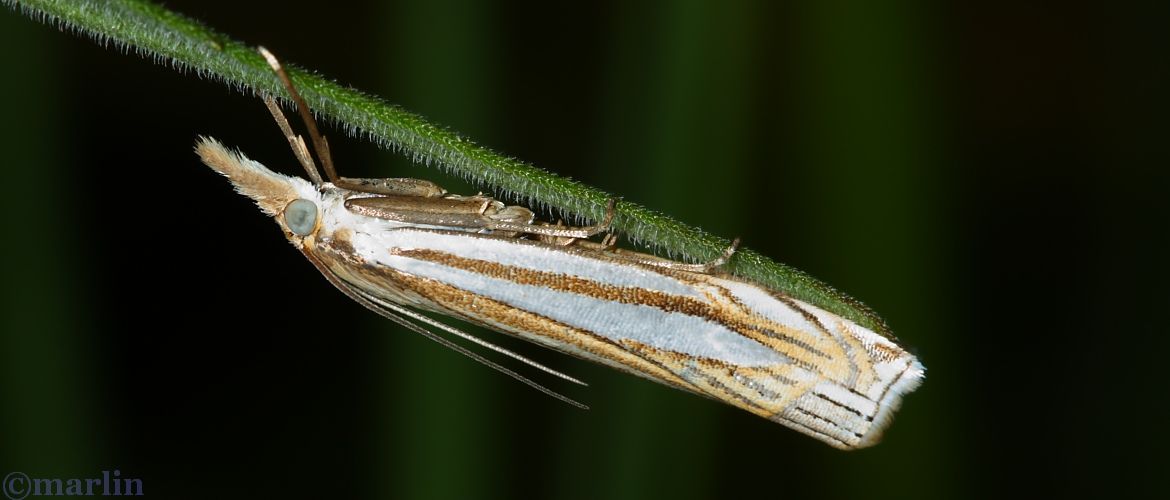
Eastern Grass-Veneer Moth – Crambus laqueatellus
Superfamily Pyraloidea
Family Crambidae – Crambid Snout Moths contains about 850 species in 9 subfamilies in North America, and about 11,630 described species in 15 subfamilies in the world; includes many important agricultural pest species whose larvae are stem borers, root feeders, leaf tiers, and leaf miners. Commonly called Crambid or Snout moths.
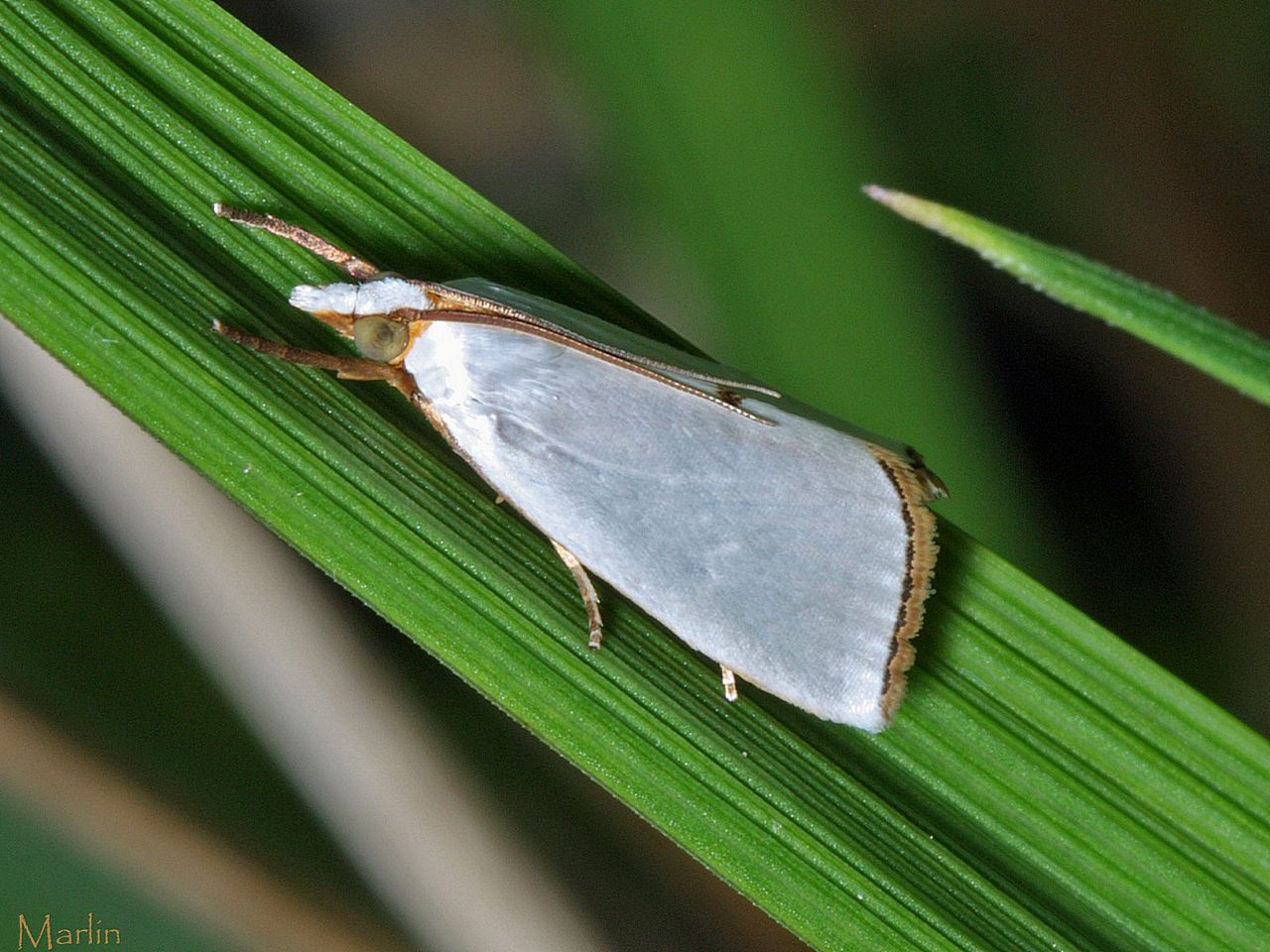
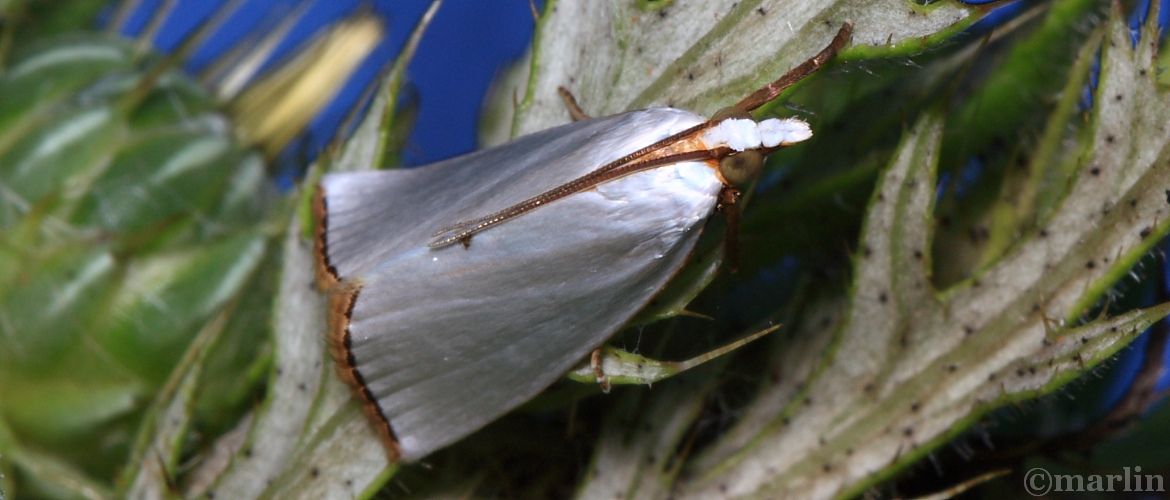
Snowy Urola Moth – Urola nivalis
Superfamily Pyraloidea
Family Pyralidae (Pyralid Moths) are agricultural pests; some are leaf tiers or leaf rollers; the majority are borers in stems, seeds, buds, or flowers. Some are wood borers in the cambium layer, others feed on combs in bee hives or on dried plant materials [4].
Butterfly Index | Moths Index | Skipper Butterflies
Tree Encyclopedia / North American Insects & Spiders is dedicated to providing family-friendly educational
resources for our friends around the world through large images and macro photographs of flora and fauna.
Online since 2002