Order Othoptera – Crickets, Grasshoppers & Katydids
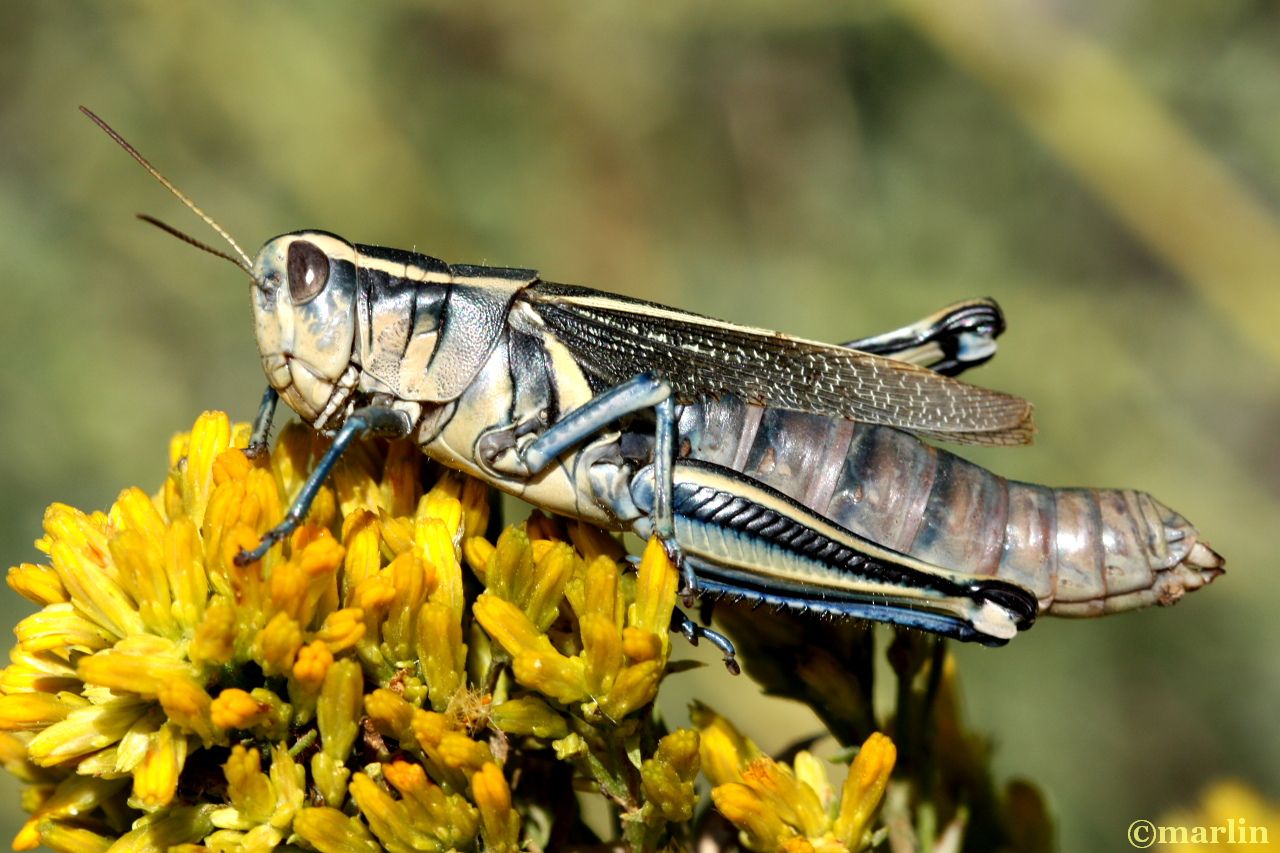
Two-Striped Grasshopper – Melanoplus bivittatus
Melanoplus bivittatus, commonly called the two-striped grasshopper, is one of the most common hoppers in North America. This decidedly blue specimen is an egg-laden female found at 6500 foot elevation in the Rocky Mountains near Dotsero, Colorado. Melanoplus grasshoppers are herbivorous, feeding on grasses and leafy plants.
We used to love catching these things when I was a kid. Except for the “tobacco juice” they spit on your hands. What the hell is that stuff? I have been known to sacrifice these creatures to the Goddess Argiope, of the land of black-and-yellow garden spiders. It is a grisly spectable indeed, but one I nevertheless thoroughly enjoy. Much as I hate to see anything suffer, my flexible ethical system seems able to rationalize this.
Grasshoppers have antennae that are almost always shorter than the body (sometimes filamentous), and short ovipositors. Those species that make easily heard noises usually do so by rubbing the hind femurs against the forewings or abdomen (stridulation), or by snapping the wings in flight. Tympana, if present, are on the sides of the first abdominal segment. The hind femora are typically long and strong, fitted for leaping. Generally they are winged, with the membranous hind wings used for flight, while the front wings (tegmina) are used as covers for the flying wings, much as beetles use their hardened elytra. Females are almost always larger than males. Males have a single unpaired plate at the end of the abdomen. Females have two pairs of valves ( triangles) at the end of the abdomen used to dig in sand and other substrates when egg laying.
There are more than 20,000 species in the order Orthoptera. These diverse insects are found worldwide, although their numbers are concentrated in the tropics. They vary in size from less than 5mm to monster-big grasshoppers over 4 inches long, with 10-inch wingspans. Orthopterans are some of the most common insects in many landscapes, and the order includes some of the most destructive agricultural pests in the locusts and katydids. Most eat plants, but some species are omnivorous. Orthoptera Index
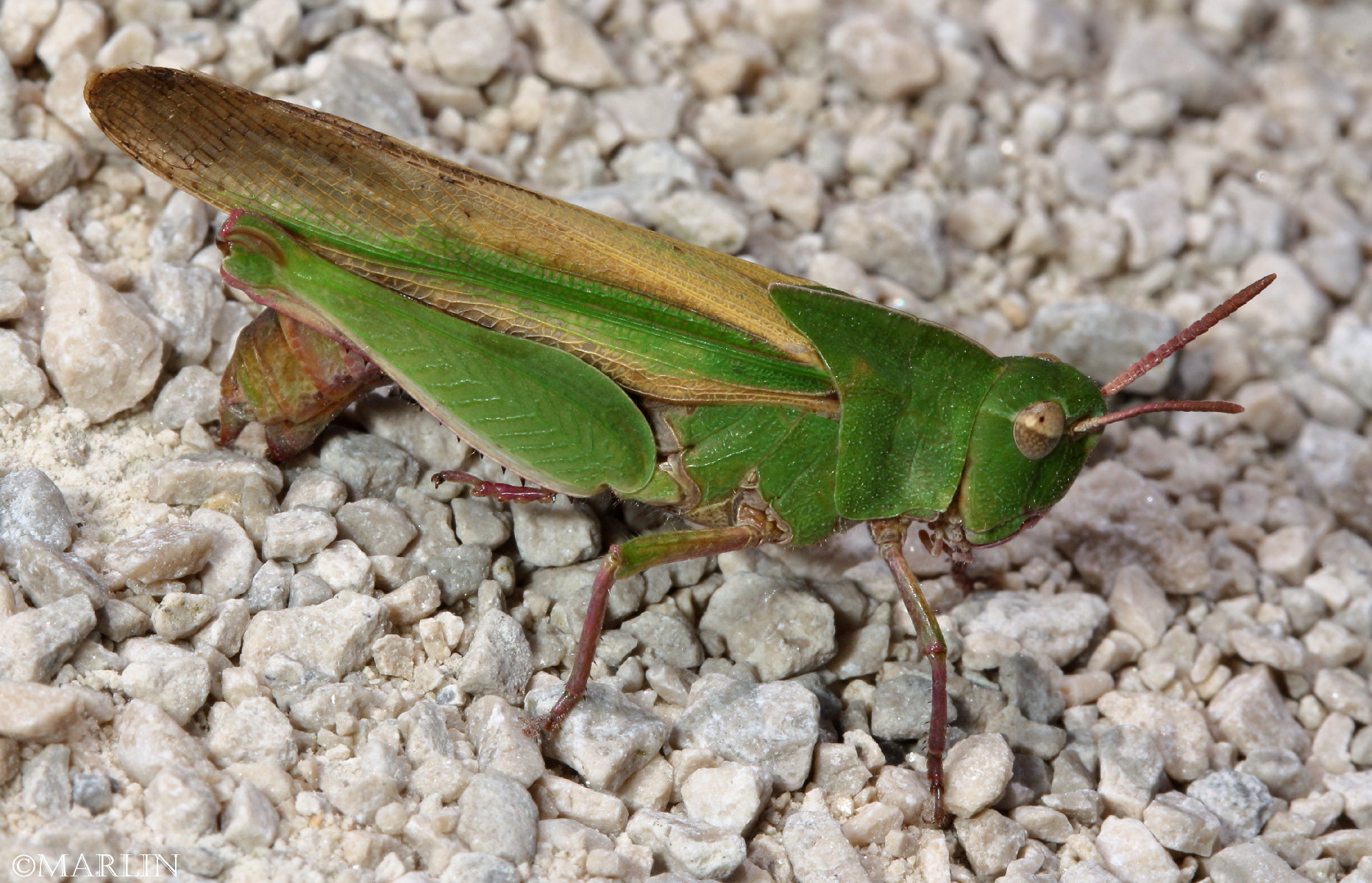
Northern Green striped Grasshopper egg-laying
Females typically lay clutches of eggs either in the ground or on vegetation. The lovely green goddess above was doing her thing right in the middle of a forest preserve path made of limestone scalings. Grasshoppers, crickets and katydids are all well-known for their jumping ability as well as the singing performed by the males (females are generally silent.) Grasshoppers are almost all active in the daytime, but crickets are nocturnal. Katydids are thought to be nocturnal, but I see an awful lot of them out and about when the sun is shining. There are few places on earth where the calls of these intriguing insects are not heard nearly constantly during the warm months.
The first fossil records of the order appear in the upper Carboniferous, or Pennsylvanian era, 310 – 290 million years ago.
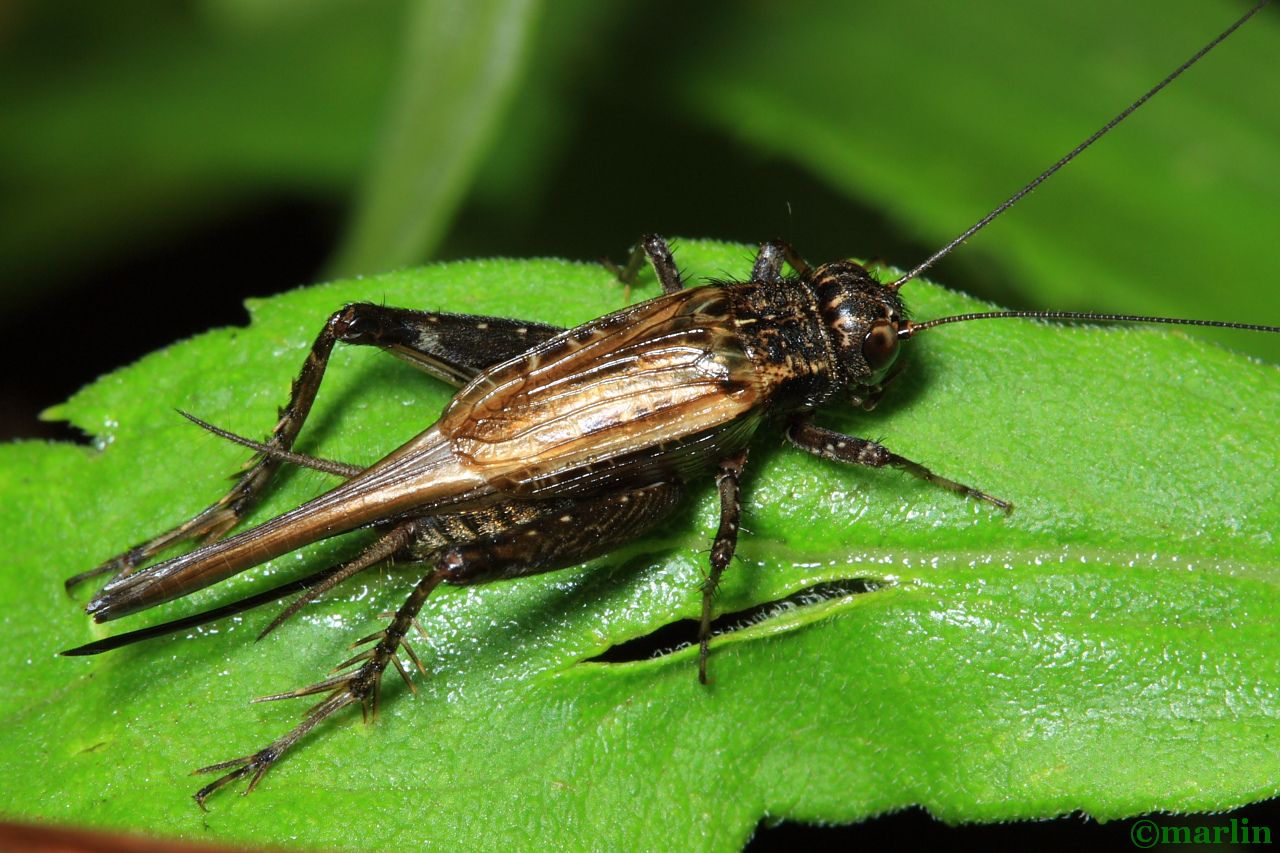
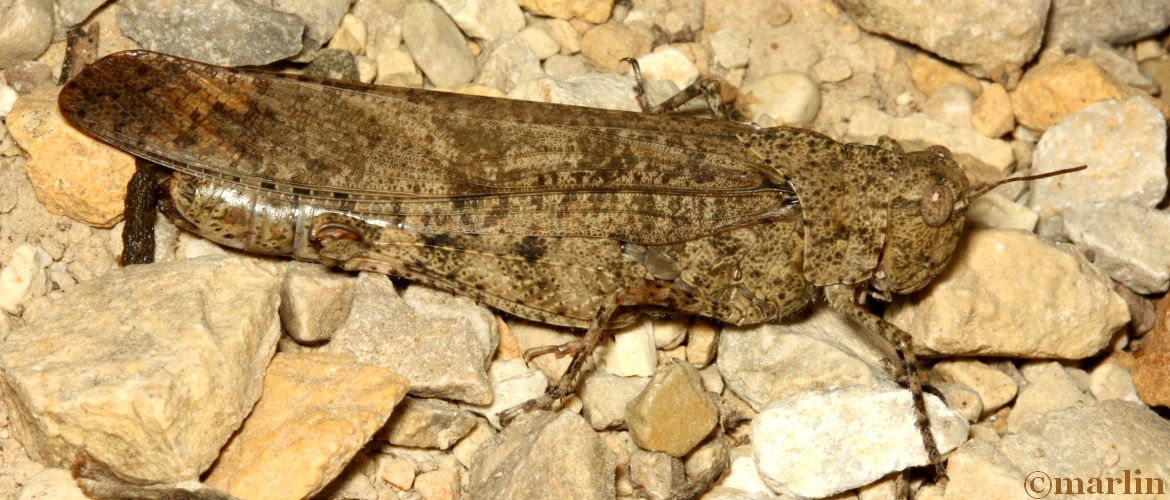
Striped Ground Cricket – Allonemobius fasciatus
This female’s sword-like ovipositor is inconspicuous under the superbly camouflaged body. You can hardly see these creatures in the leaf litter.
True crickets (Family Gryllidae) are harmless, nocturnal insects famous for their chirping, technically known as stridulation. The sound has become a literal indication of “nothing happening,” in popular culture.
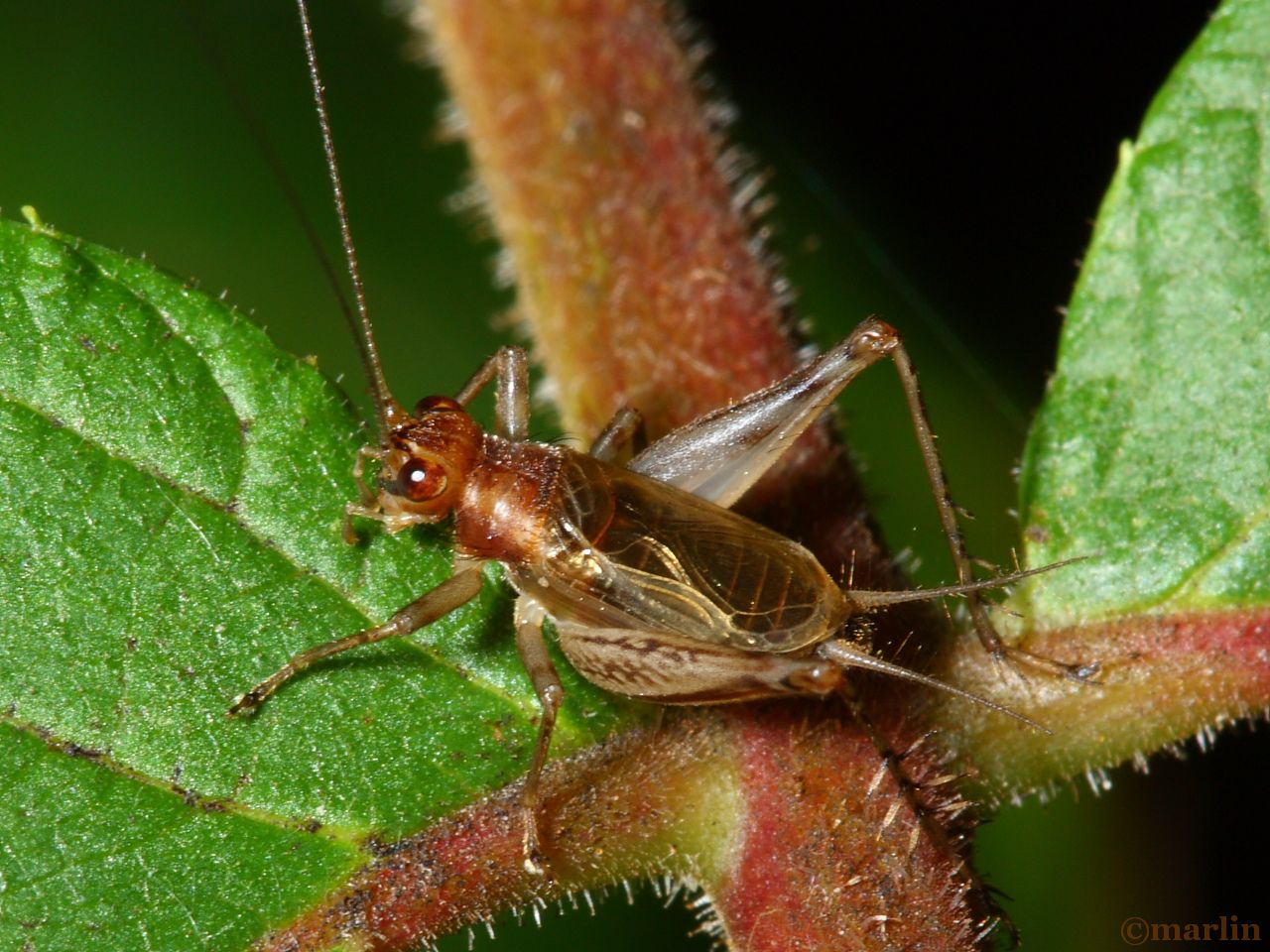
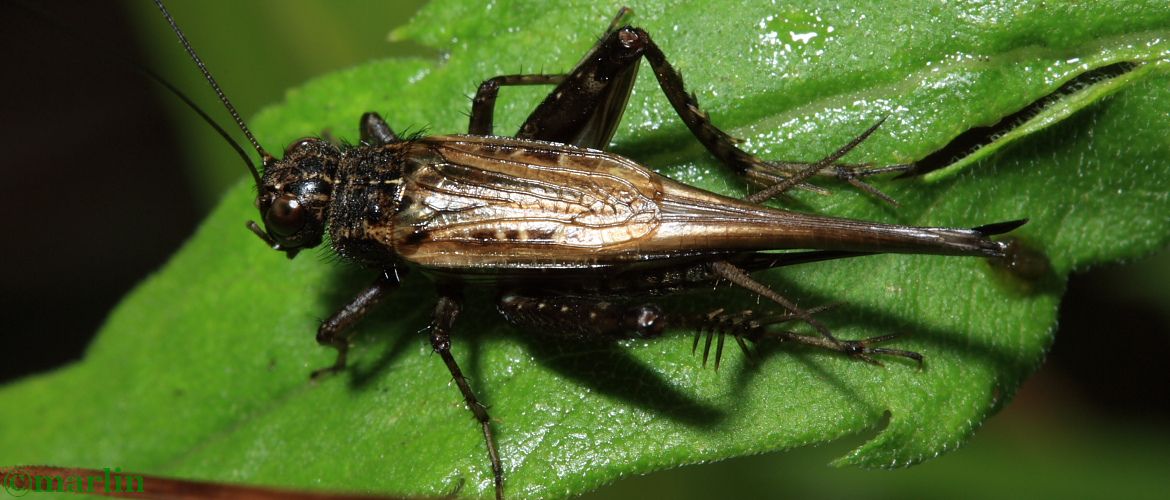
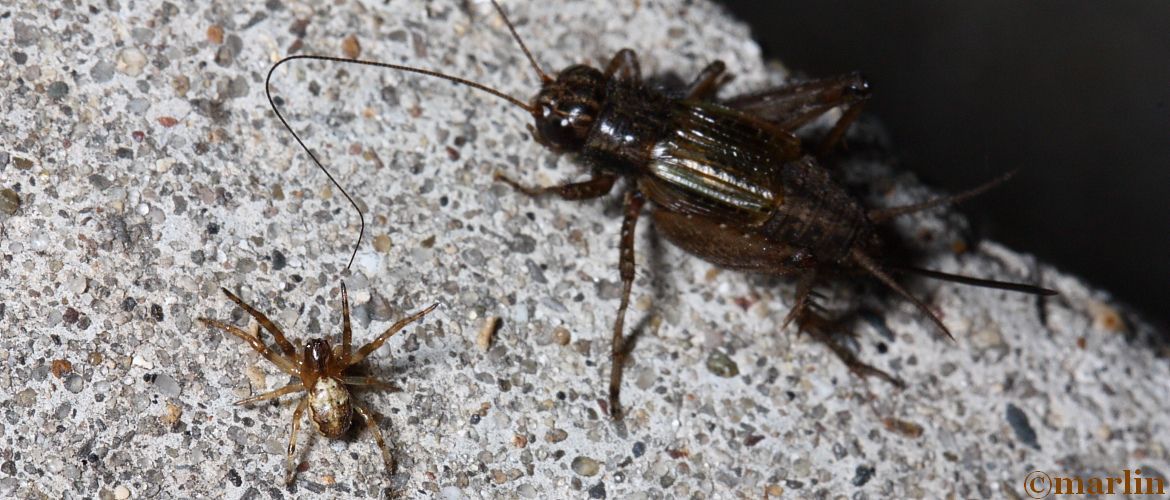
Say’s Trig Cricket – Anaxipha exigua
Say’s Trig male‘s antennae are 3x his body length. I chased this shy creature about in the underbrush at Allegheny Nat’l Forest in Pennsylvania. I love the little rocket-ship tail fins, called cerci, on this beauty (cercus noun, plural cerci) – typically paired appendages at the tip of the abdomen, usually having sensory functions. Cerci are often enlarged in males, and used in copulation. In some groups, such as earwigs, they are enlarged and used for defense. [1]
Only male crickets chirp, usually to attract females or repel other males. In a nutshell: the sound is produced when the cricket rubs the serrated edges of his wings together. A more specific description: “On the margin of the wingcover, a thickened point is observed from which several strong veins diverge, forming angles. The largest and strongest of these veins, which runs towards the base of the left wing cover, is regularly notched like a file. The wing covers being closed, this oblique bar lies upon the corresponding part of the right wing cover, and when a tremulous motion is given the wing covers the bar on the left rubs against the bar on the right, producing the familiar sound.”
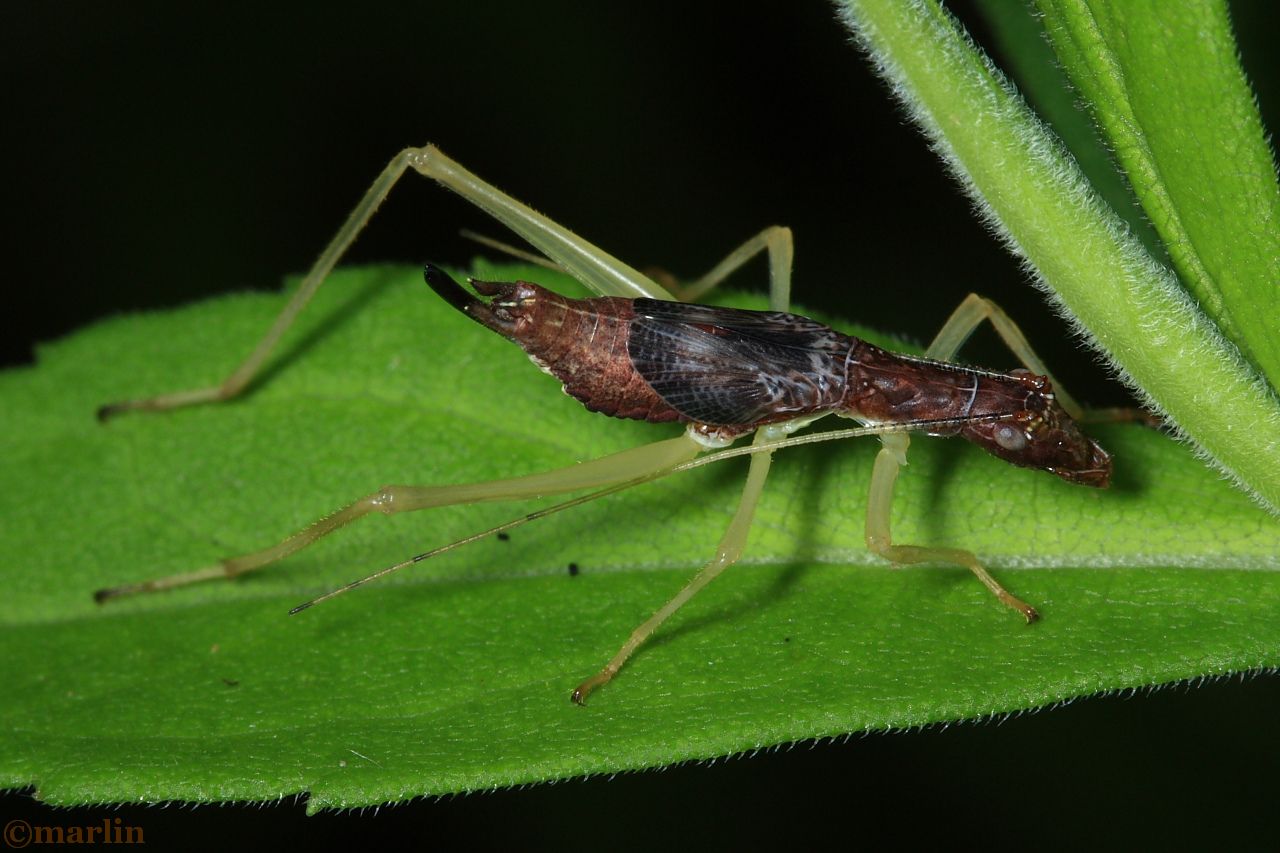
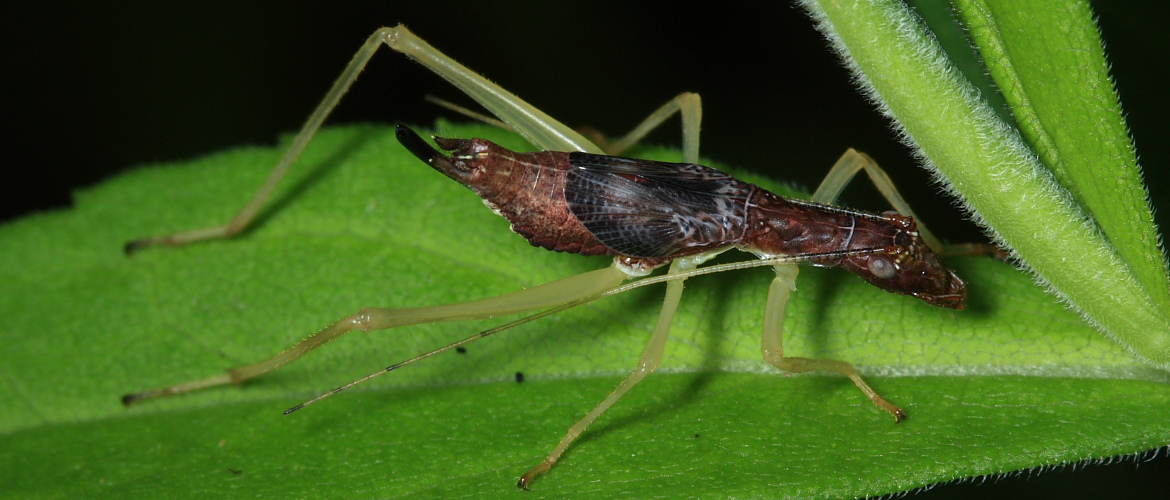
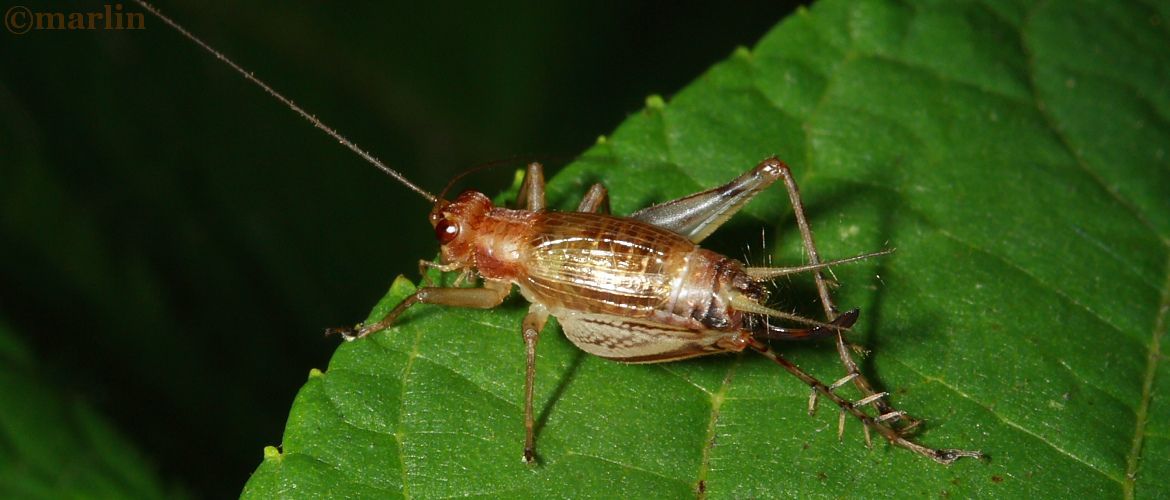
Two-Spotted Tree Cricket – Neoxabea bipunctata
This is a very shy, immature tree cricket. This coy cutie has, at her business end, nascent ovipositor and cerci.
Like many processes in cold-blooded animals, the cricket’s rate of chirping is dependant on the ambient air temperature, and it is possible to calculate approximate air temperature in degrees Fahrenheit by counting the chirps per 14 seconds and adding 40.
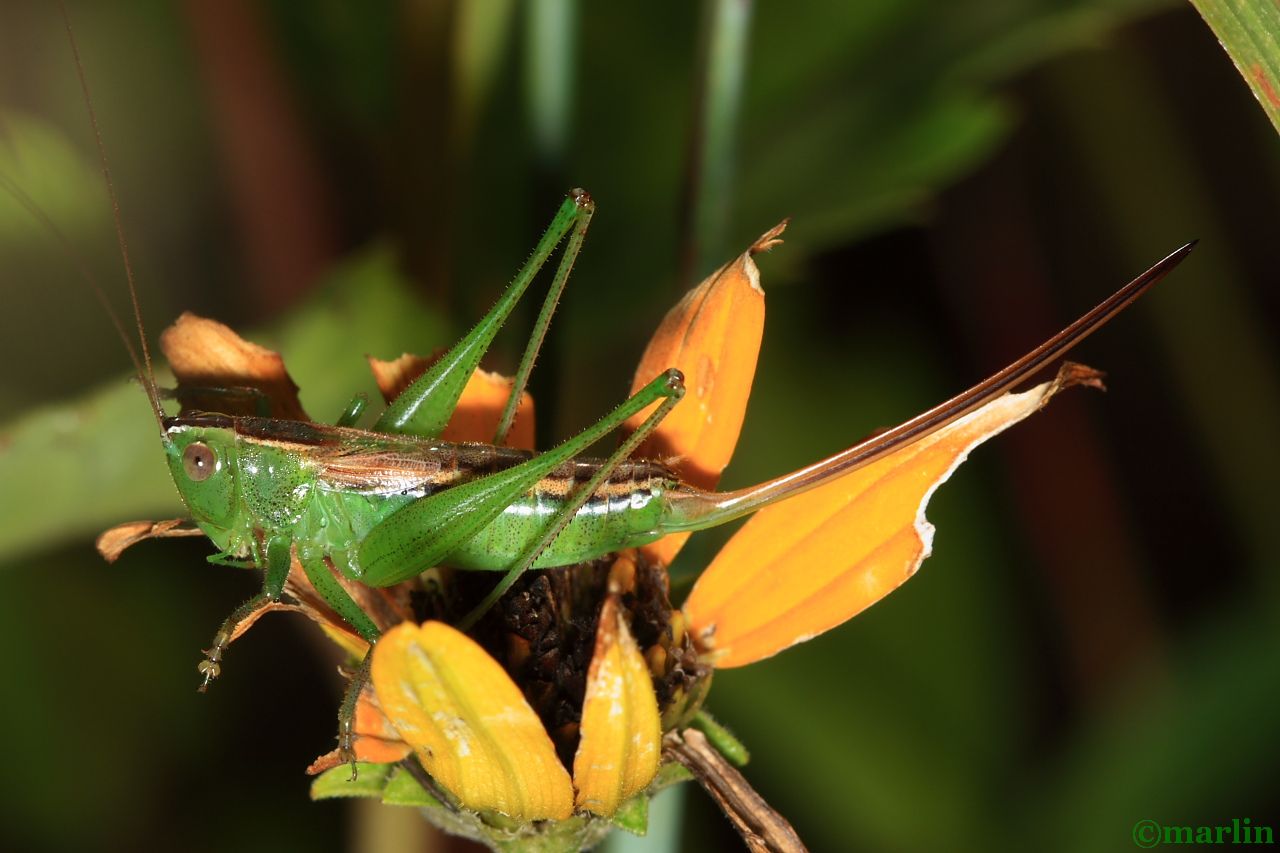
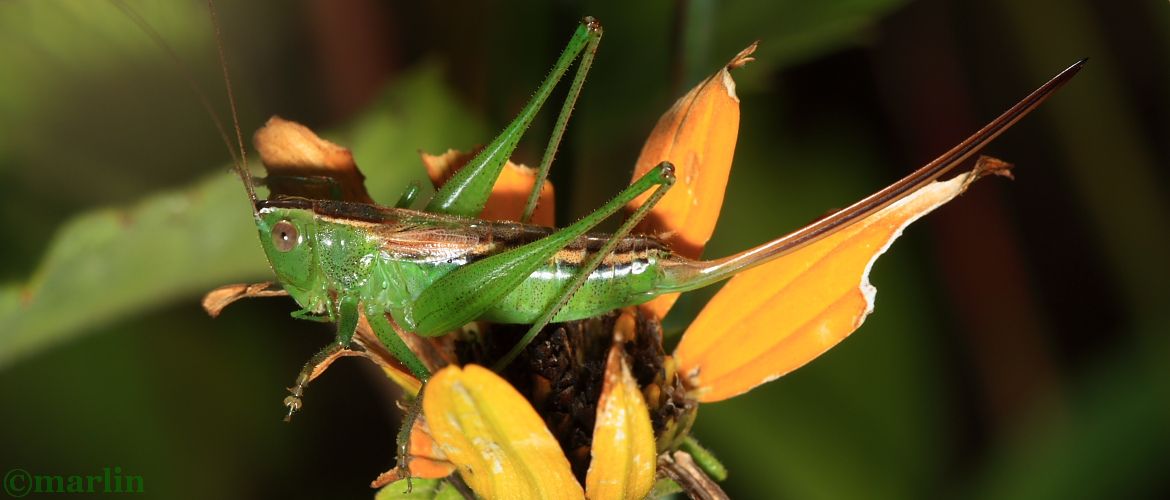
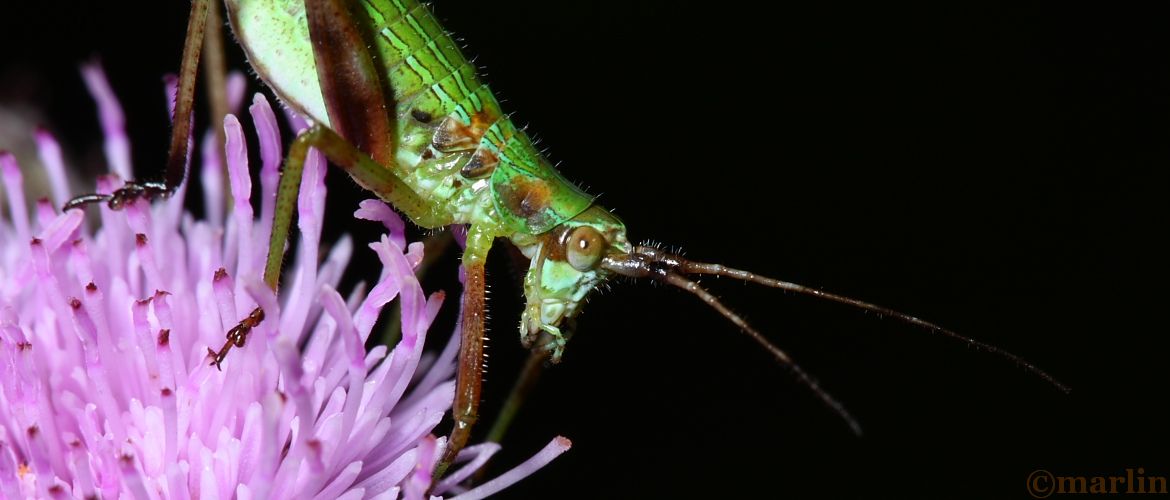
Straight-lanced Meadow Katydid – Conocephalus strictus
Katydids are large green insects with long antennae and large wings, eminently capable of flight. Most katydids are well-camouflaged in foliage and become virtually invisible amidst greenery the identical color. Family Tettigoniidae contains about 6000 species in 1070 genera.
This from Tree of Life: “Katydids are found on all continents except Antarctica and in an assortment of habitats from tropical forests (Heller 1995) and peat bogs (Vickery and Kevan 1985) to montane alpine zones ‘far above the last outposts of trees’. Within these habitats, virtually all tettigoniids are associated with vegetation, particularly during inactive periods when the insects retreat into (or onto) leaves. Katydids are omnivorous, feeding on vegetation, seeds, carrion and occasional prey.” Orthoptera Index
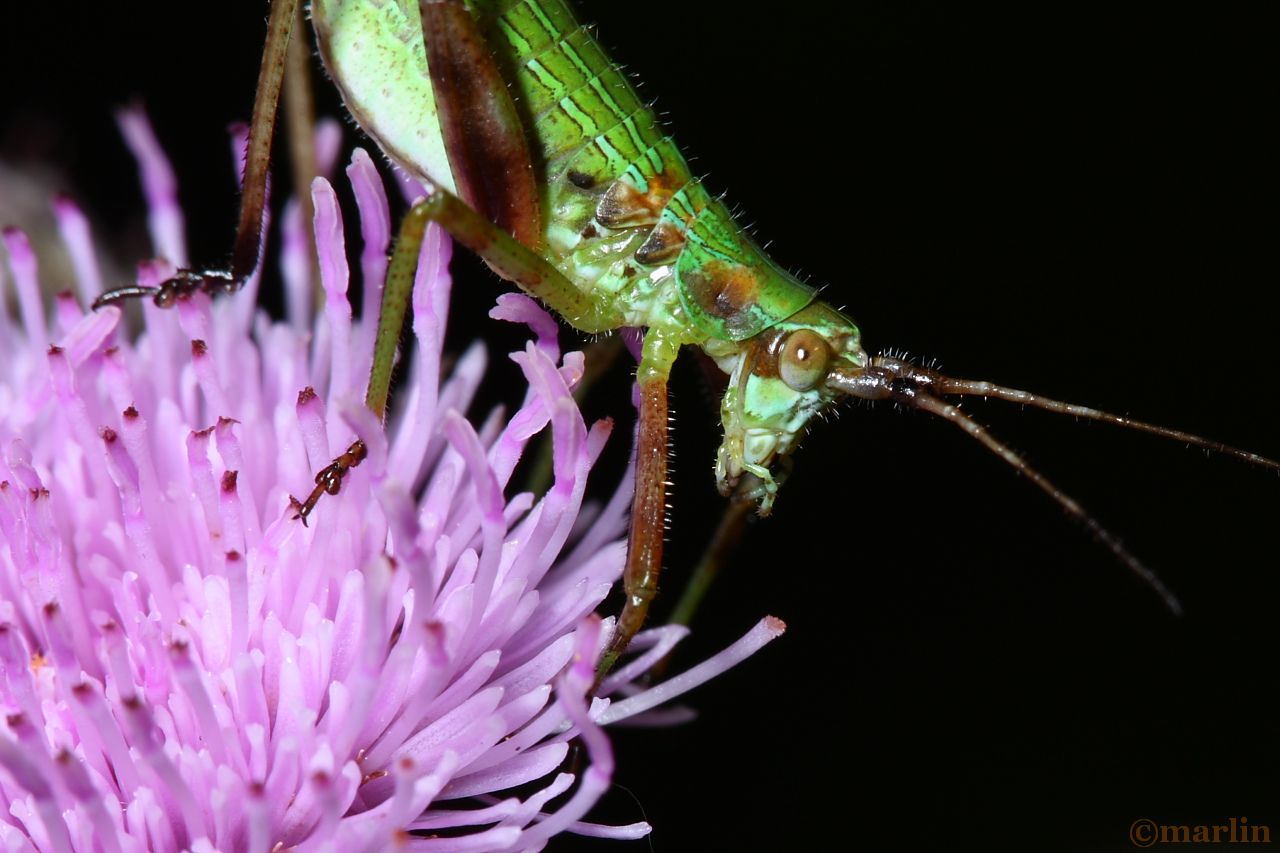
Bush Katydid nymph – Scudderia sp.
Called bush-crickets by the Brits, these charming creatures are capable of stridulation (the males, that is) and the background noise in such locations consists largely of their songs along with their close relatives, the crickets. As you can see, the camouflage is superb, matching exactly the color of the surrounding greenery, and their wing veins closely resemble patterns in the leafy foliage they mimic.
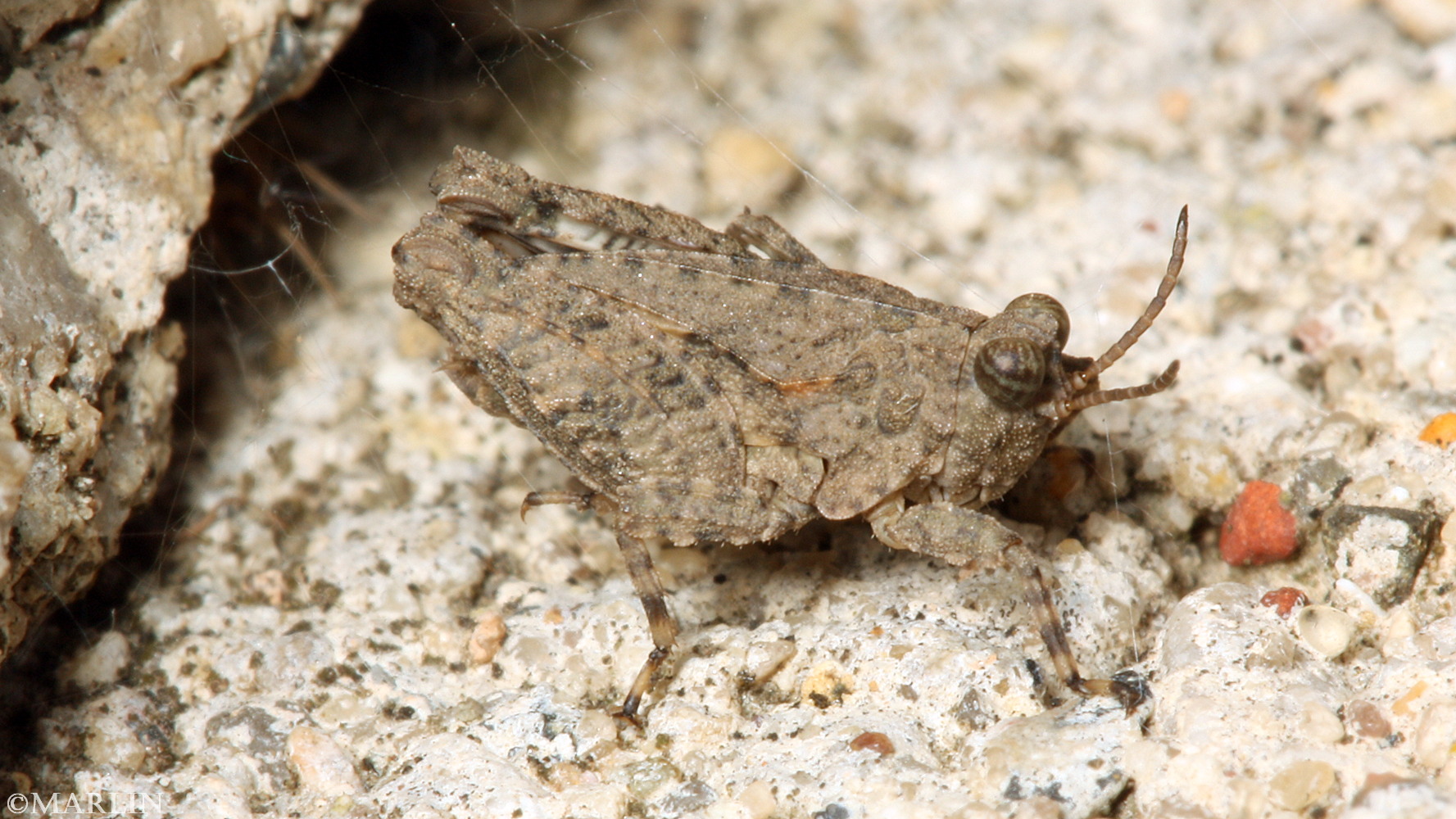
Family: Tetrigidae – Pygmy Grasshoppers
Identification: similar in form to Acrididae, usually associated with wet areas. Less than 20 mm length, often smaller. Pronotum is highly elongated, tapered, and usually covers abdomen tegmina. Forewings are small, padlike, sometimes absent, may be exposed or covered by pronotum. Front and middle tarsi with 2 segments, hind tarsi with 3 segments.
A single species can have short-winged and long-winged forms, or lack wings altogether–these forms may appear quite different. Auditory and stridulatory organs absent. Coloration and pattern, even within a single species, are variable. Often strongly sexually dimorphic, both in size (females usually larger) and in coloration. Some specimens appear green due to an external growth of algae. [1]
This specimen was photographed in early spring, about 3 feet from a pond in Warrenville, Illinois. It was not particulary wary, as I was able to position it a bit with a leaf before it finally, energetically sprang away. Ambient temperature was only about 50 degrees. Orthoptera Index
Insects & Spiders | Flies Index | Orthoptera index | Dung Flies | Bee Flies | Robber Flies
Tree Encyclopedia / North American Insects & Spiders is dedicated to providing family-friendly educational
resources for our friends around the world through large images and macro photographs of flora and fauna.
Online since 2002