
Hooded Grouse Locust – Paratettix cucullatus
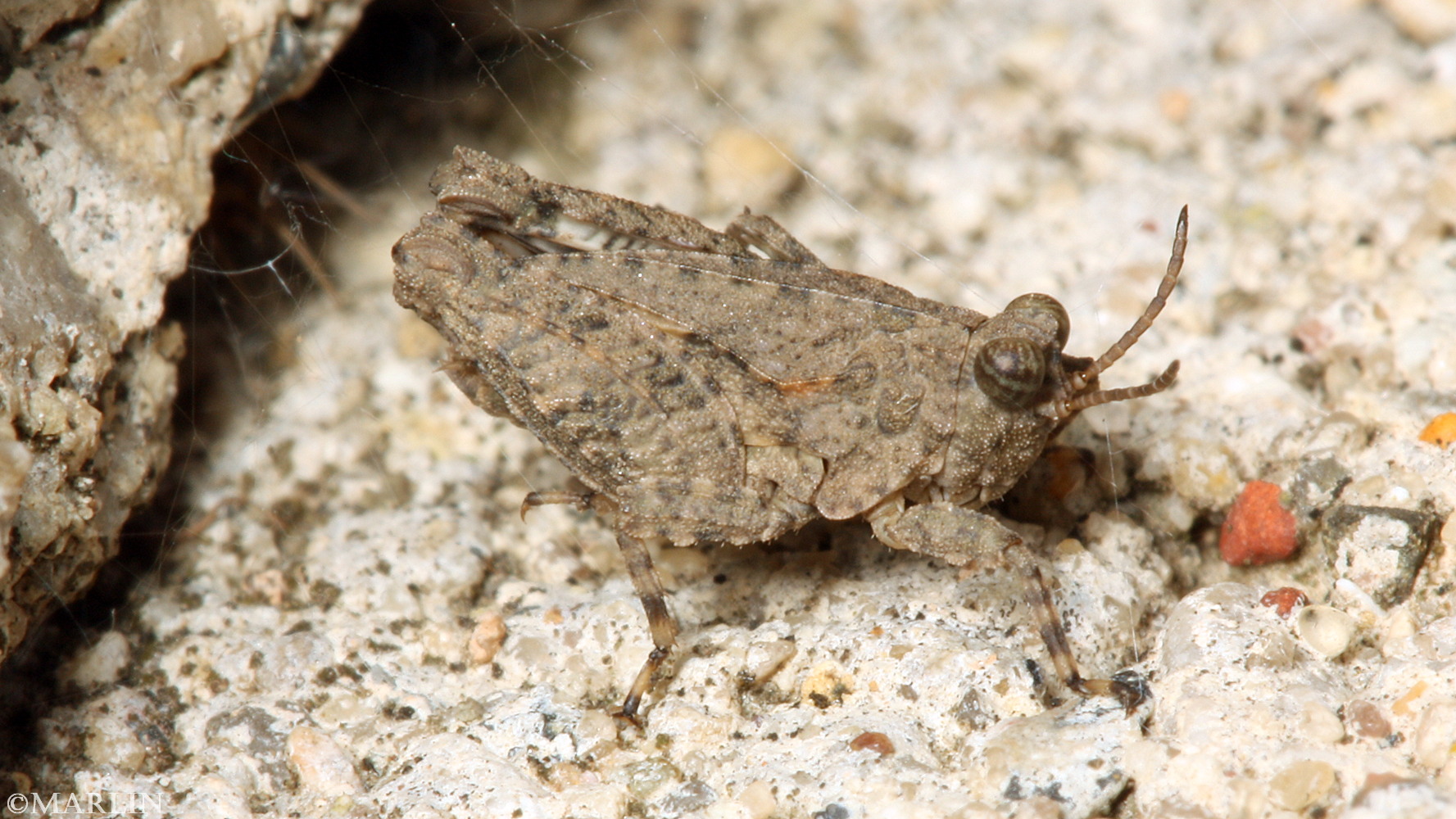
Look out! There is something in that cave!
Family: Tetrigidae – Pygmy Grasshoppers. Late-stage nymph photographed near Chicago. Size: 6mm
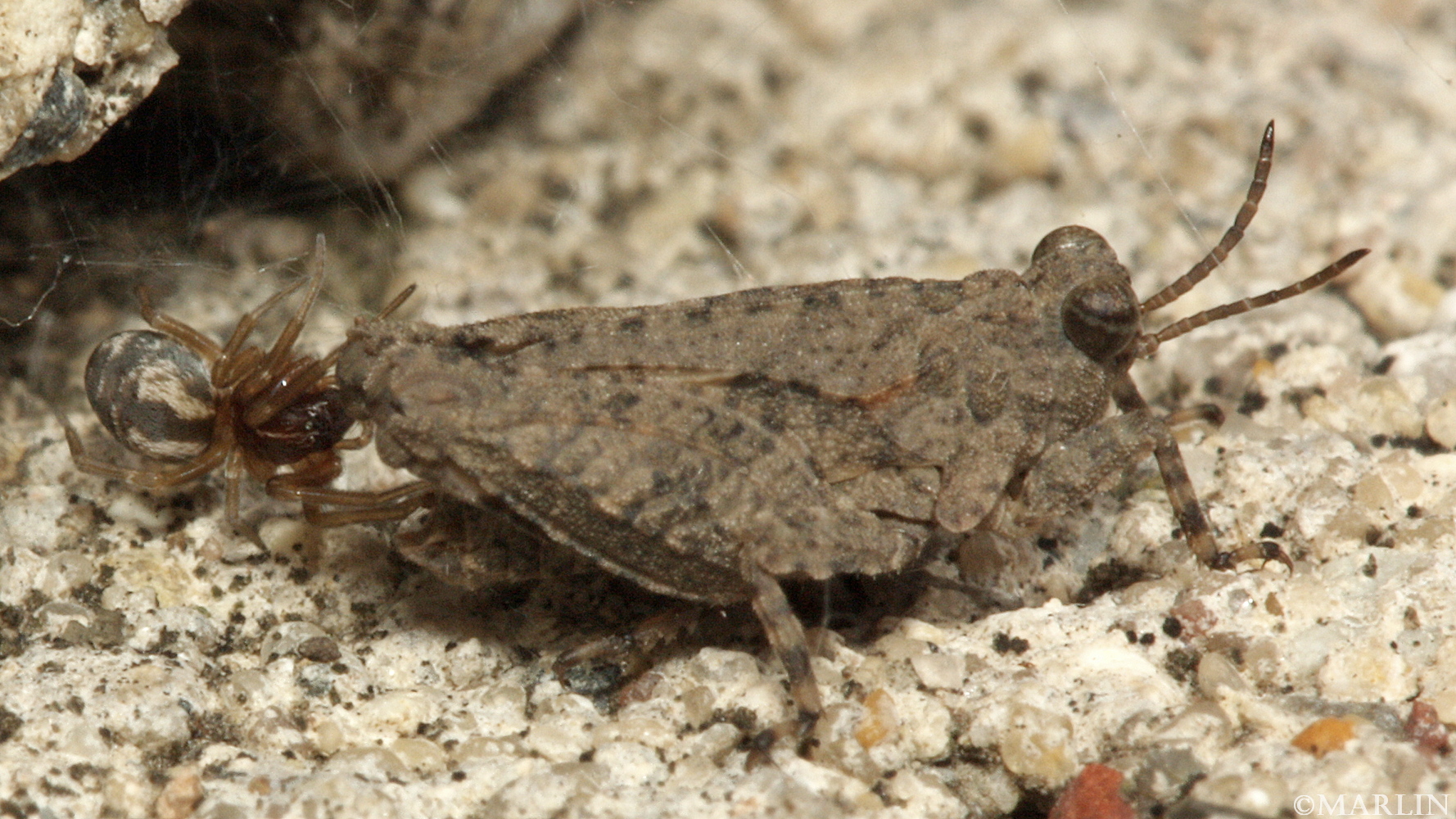
This feisty spider attacked this beast from the rear – she came out of her hiding place in the rocks on the shore of a small lake. The locust pretty much ignored her – he just moved a few feet away and she retreated. Maybe he was just interfering with her hunting and wanted to drive him away? I’ve seen tiny spiders drive crickets away by attacking their long, whip-like antennae.
Identification: similar in form to Acrididae, usually associated with wet areas. Less than 20 mm length, often smaller. Pronotum is highly elongated, tapered, and usually covers abdomen tegmina. Forewings are small, padlike, sometimes absent, may be exposed or covered by pronotum. Front and middle tarsi with 2 segments, hind tarsi with 3 segments.
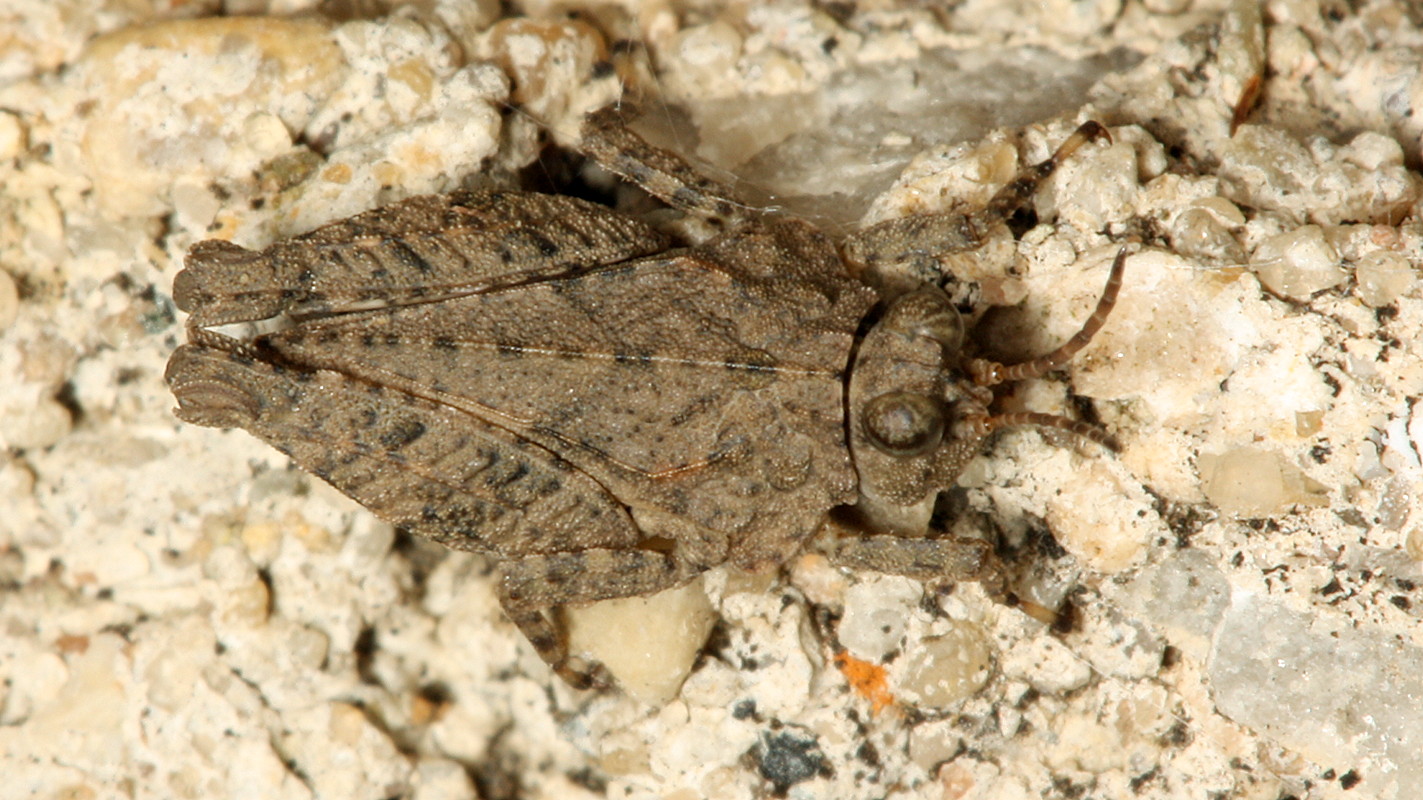
There aren’t too many cracks in this armor. Legs fit perfectly alongside the thorax.
A single species can have short-winged and long-winged forms, or lack wings altogether–these forms may appear quite different. Auditory and stridulatory organs absent. Coloration and pattern, even within a single species, are variable. Often strongly sexually dimorphic, both in size (females usually larger) and in coloration. Some specimens appear green due to an external growth of algae. [1]
This specimen was photographed in early spring, about 3 feet from a pond in Warrenville, Illinois. It was not particulary wary, as I was able to position it a bit with a leaf before it finally, energetically sprang away. Ambient temperature was only about 50 degrees.
The pygmy grasshoppers, Orthoptera family Tetrigidae, can be recognized by their long pronotum, which extends far back over the abdomen, ending in a point. These grasshoppers are all less than 20mm long. Most are brown, and a few species have long functional flying wings. Females are larger than males. Adults and nymphs feed on algae and other organic material in wet soil.
References
- Bugguide.net, Family Tetrigidae – Pygmy Grasshoppers
- Bugguide.net, Pygmy Grasshopper Nymph – Paratettix cucullatus
- Bugguide.net, Pygmy Grasshopper – Tetrix arenosa