
Black-sided Meadow Katydid – Conocephalus nigropleurum
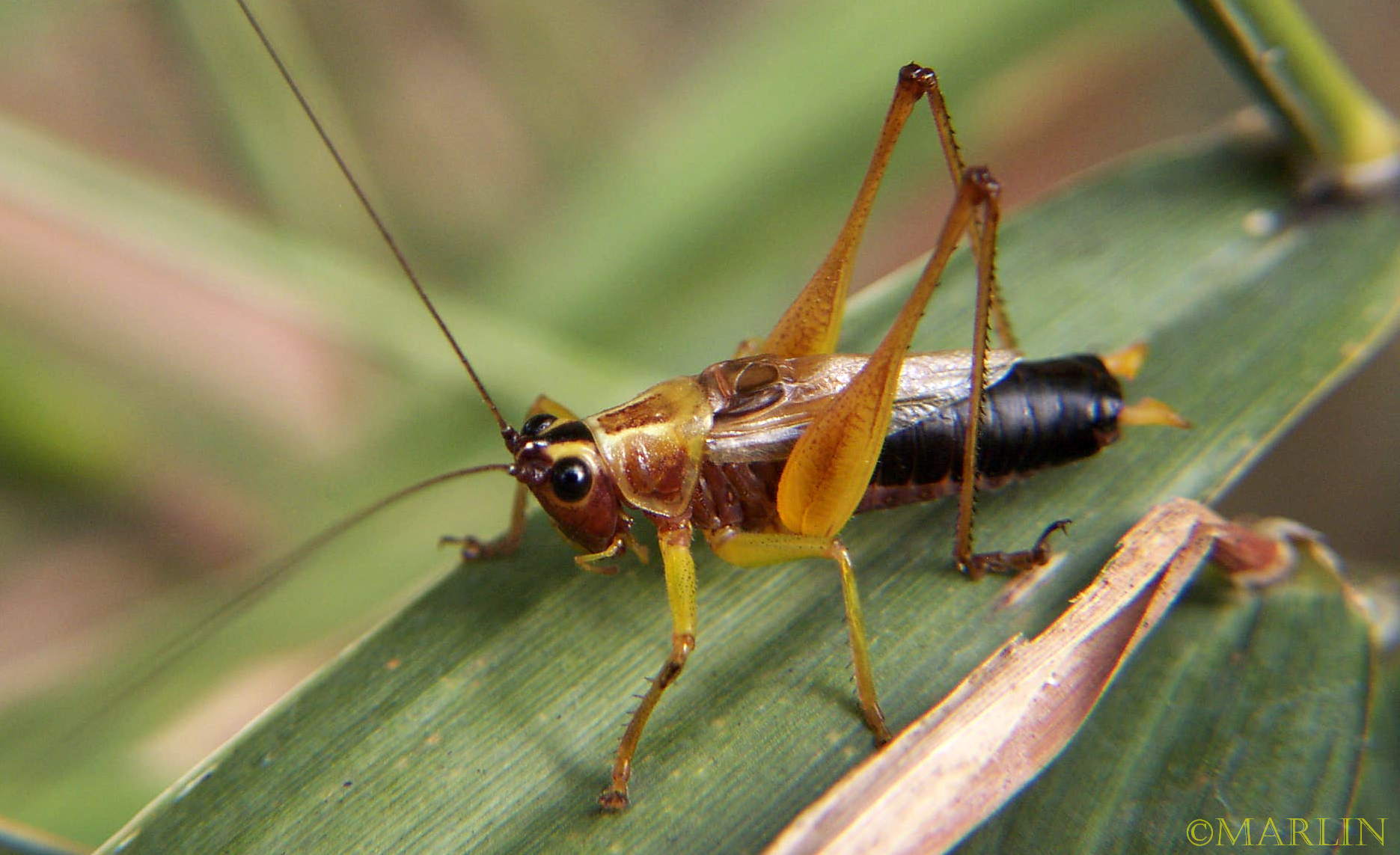
Katydids are large, usually green insects with long antennae and large wings, eminently capable of flight. Most katydids are well-camouflaged in foliage and become virtually invisible amidst greenery the identical color. Family Tettigoniidae contains about 6000 species in 1070 genera.
This from Tree of Life: “Katydids are found on all continents except Antarctica and in an assortment of habitats from tropical forests and peat bogs to montane alpine zones ‘far above the last outposts of trees’. Within these habitats, virtually all tettigoniids are associated with vegetation, particularly during inactive periods when the insects retreat into (or onto) leaves.
-
Antennae very long, often extending well beyond tip of abdomen
-
All tarsi with 4 segments (formula 4-4-4), compare crickets (3-3-3)
-
Tympana (hearing organs) on front tibiae
-
Ovipositor typically flattened and sword-like
Insects | Spiders | Beetles | Butterflies | Moths | True Bugs | Flies | Bees & Wasps
