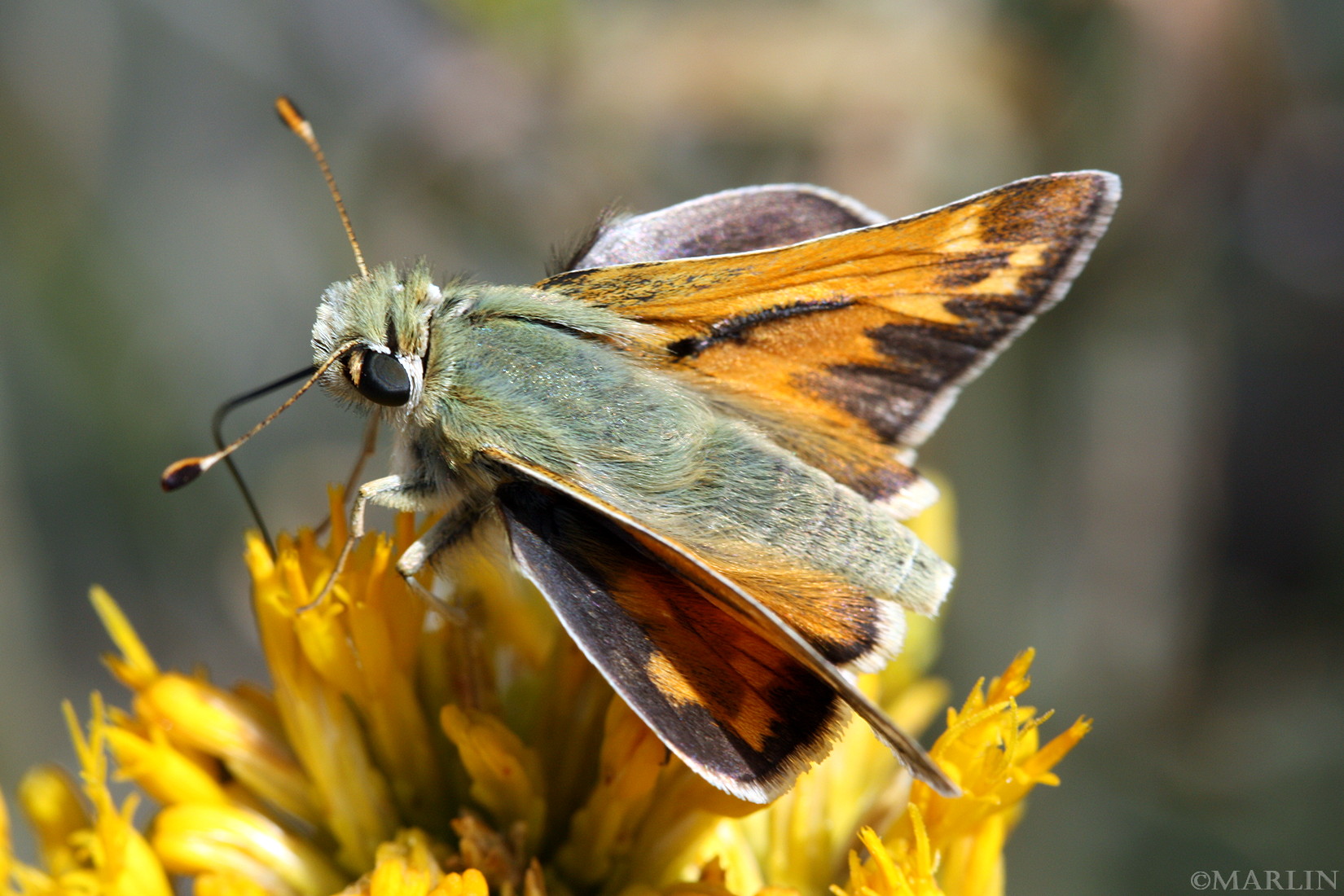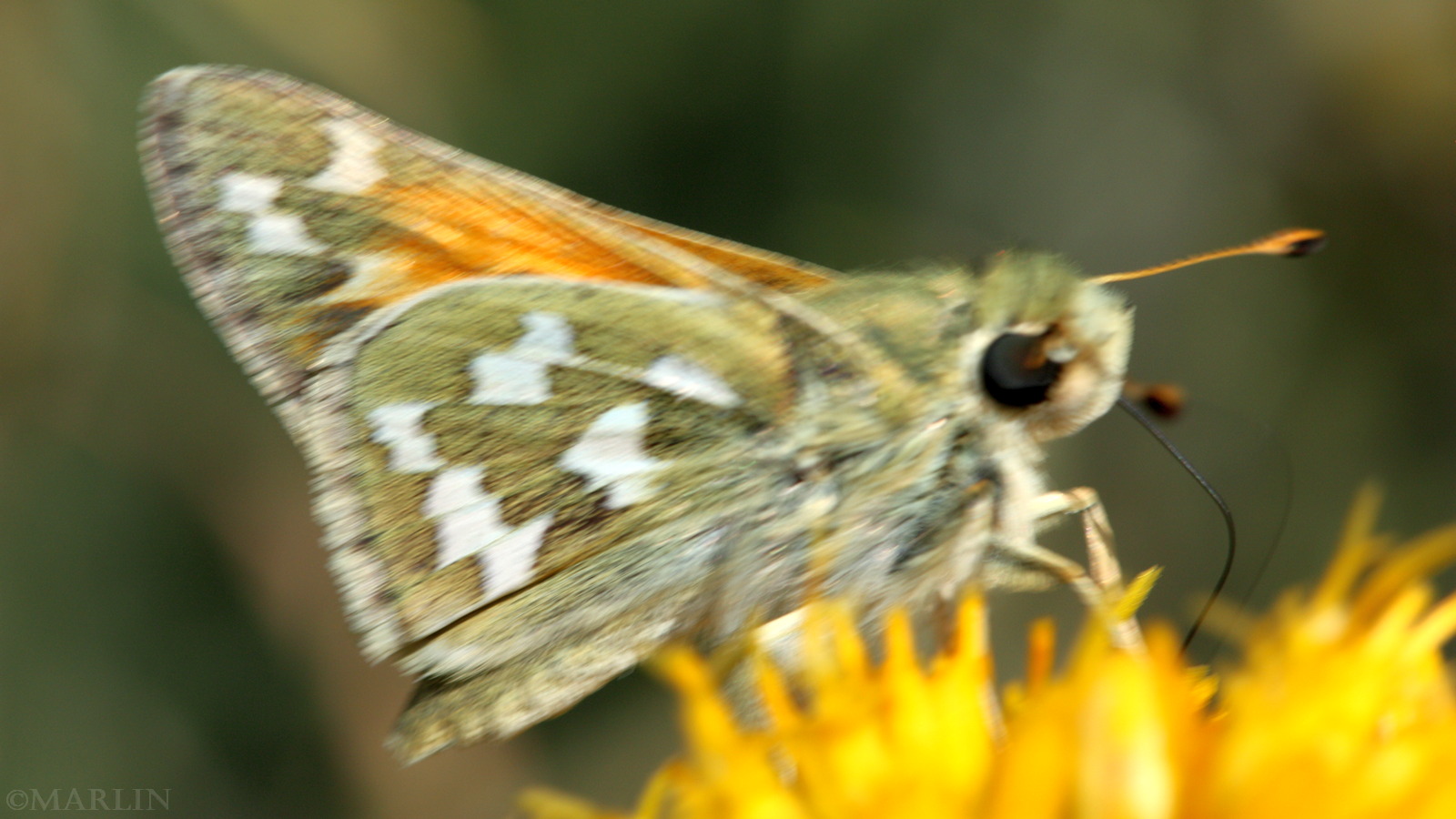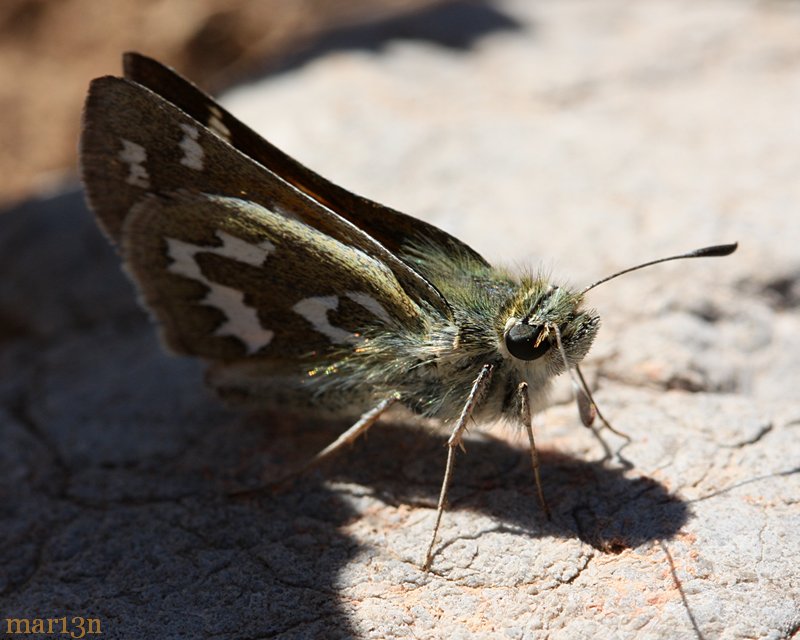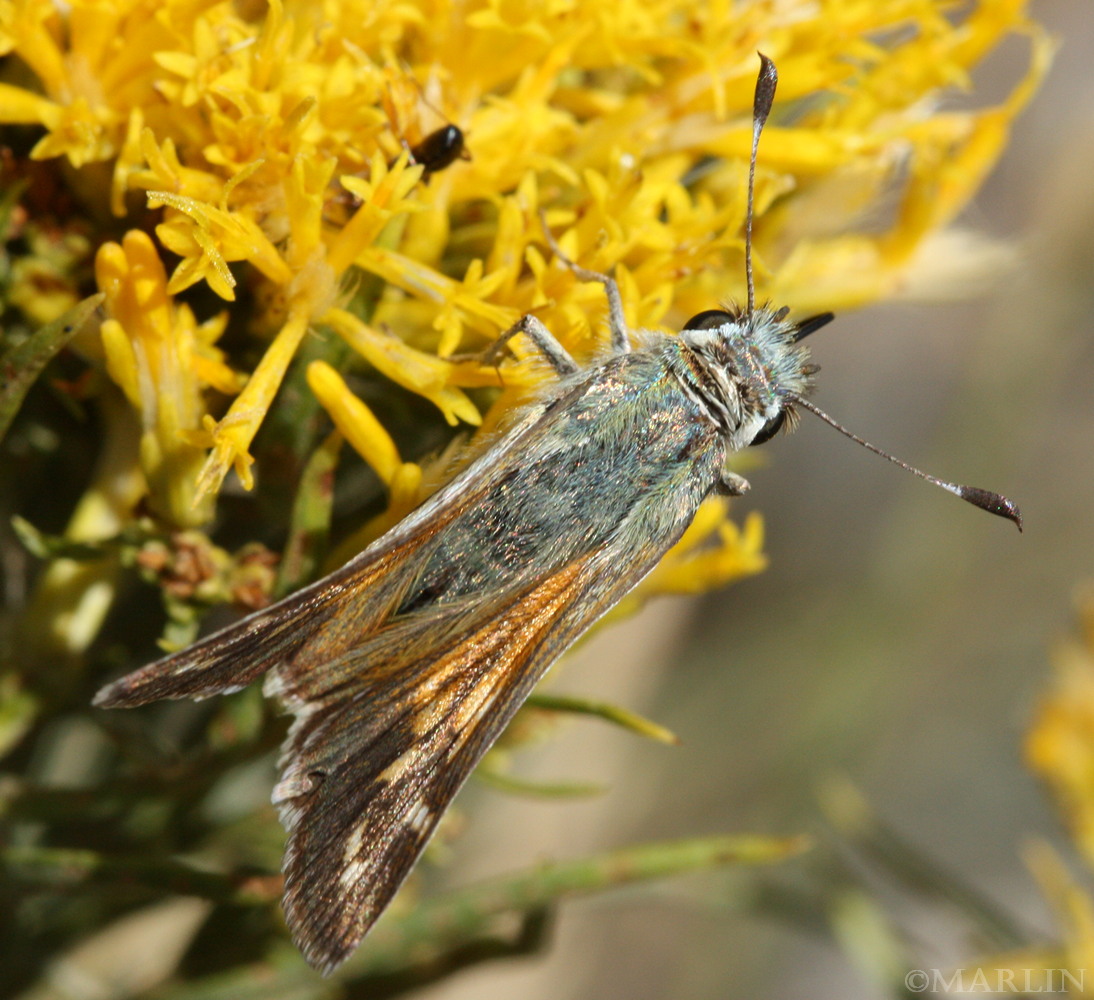
Juba Skipper - Hesperia juba
Lepidoptera (Butterflies and Moths) » Papilionoidea (Butterflies) » Hesperiidae (Skippers) » Hesperiinae (Grass Skippers)
Live adult skippers photographed near Dotsero, Eagle County, Colorado, USA
Size: 15mm
 

Juba Skipper
Juba Skipper

Skipper butterfly eggs are tiny, usually less than .1mm. Most skipper caterpillars are green and tapered, and the neck appears constricted. The caterpillars weave silk and leaves into a daytime shelter for protection. Most pupate in loosely woven cocoons. The chrysalises are often coated with a powder or bloom. Chrysalis and caterpillars may overwinter.

Skipper butterflies can be divided into five subfamilies:

  • Pyrginae, or spread-wing skippers. These butterflies bask with their wings spread open flat, although there are a few that sit with the wings folded over their back. The cloudy wings sit with their wings partly open. Most spreadwings are patterned in gray, black and white. Caterpillars feed on many different types of plants, especially legumes.
  • Grass Skippers, subfamily Hesperiinae constitute the largest grouping, and perhaps the most challenging for those seeking to identify specimens. They are smaller than the spread-wing skippers, and many are patterned with yellow, orange and black. These erratic flyers sit with their forewings and hind wings at different angles - I think the configuration resembles an F-15 Eagle fighter jet. Grass skipper larvae feed mostly on ... guess what? Yep. Grasses.
  • Giant Skippers, subfamily Megathyminae includes the largest skippers. These are rare butterflies, even where there host plants, the Agaves and Yuccas are common. They are very fast and powerful flyers.
  • Skipperlings, subfamily Heteropterinae includes only a handful of small species living in the north and west. They lack the narrow extension (apiculus) of the antenna club. Many skipperlings sit with the wings open flat. They are often lumped into the grass skipper family. Note: Some skippers are called skipperlings but do not actually belong to this subfamily.
  • Firetips, subfamily Pyrrhopyginae. Only one species of this mainly subtropical group inhabits North America: the Atraxes skipper.

Juba Skipper
Juba skippers are abundant in the Rocky Mountains

References

1. Opler, Paul A., Harry Pavulaan, Ray E. Stanford, Michael Pogue, coordinators. 2006. Butterflies and Moths of North America. http://www.butterfliesandmoths.org/
2. Bugguide.net, Hesperia juba


       web       www.cirrusimage.com

[Cirrus Home]
© Red Planet Inc.