Least Skipper Butterfly – Ancyloxypha numitor
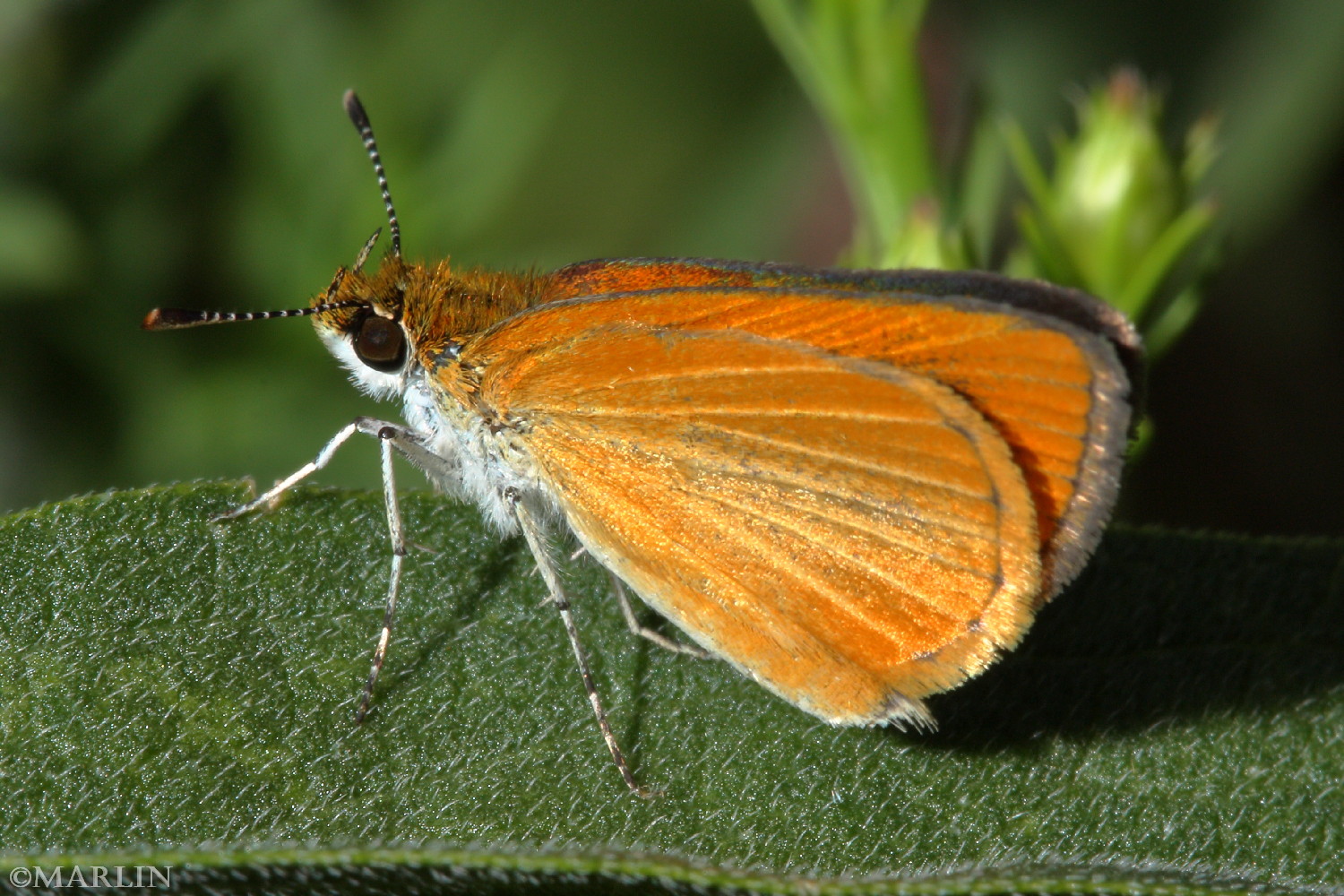
Family: Hesperiidae – Skippers / Subfamily: Hesperiinae – Grass skippers
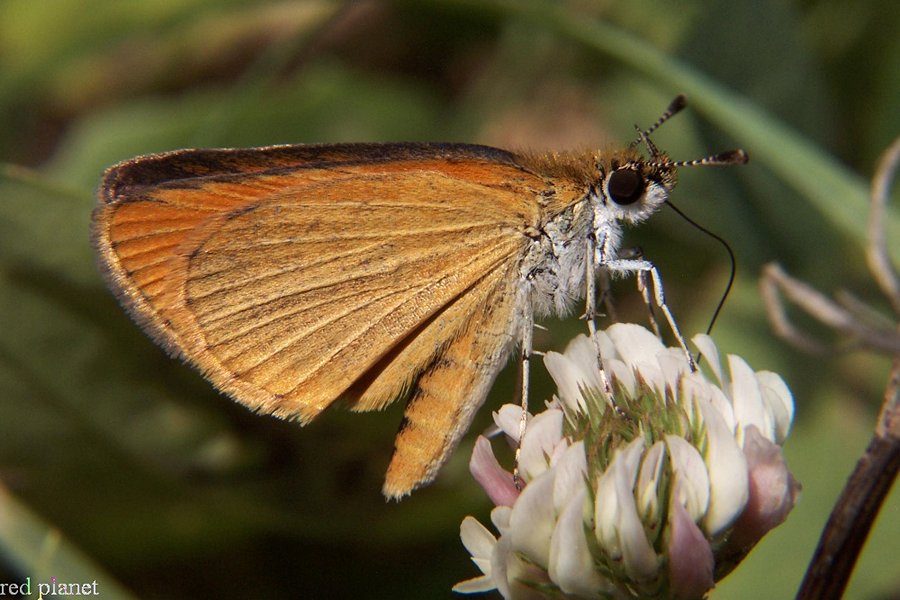
Live adult skipper butterflies photographed at Winfield, Illinois, USA.
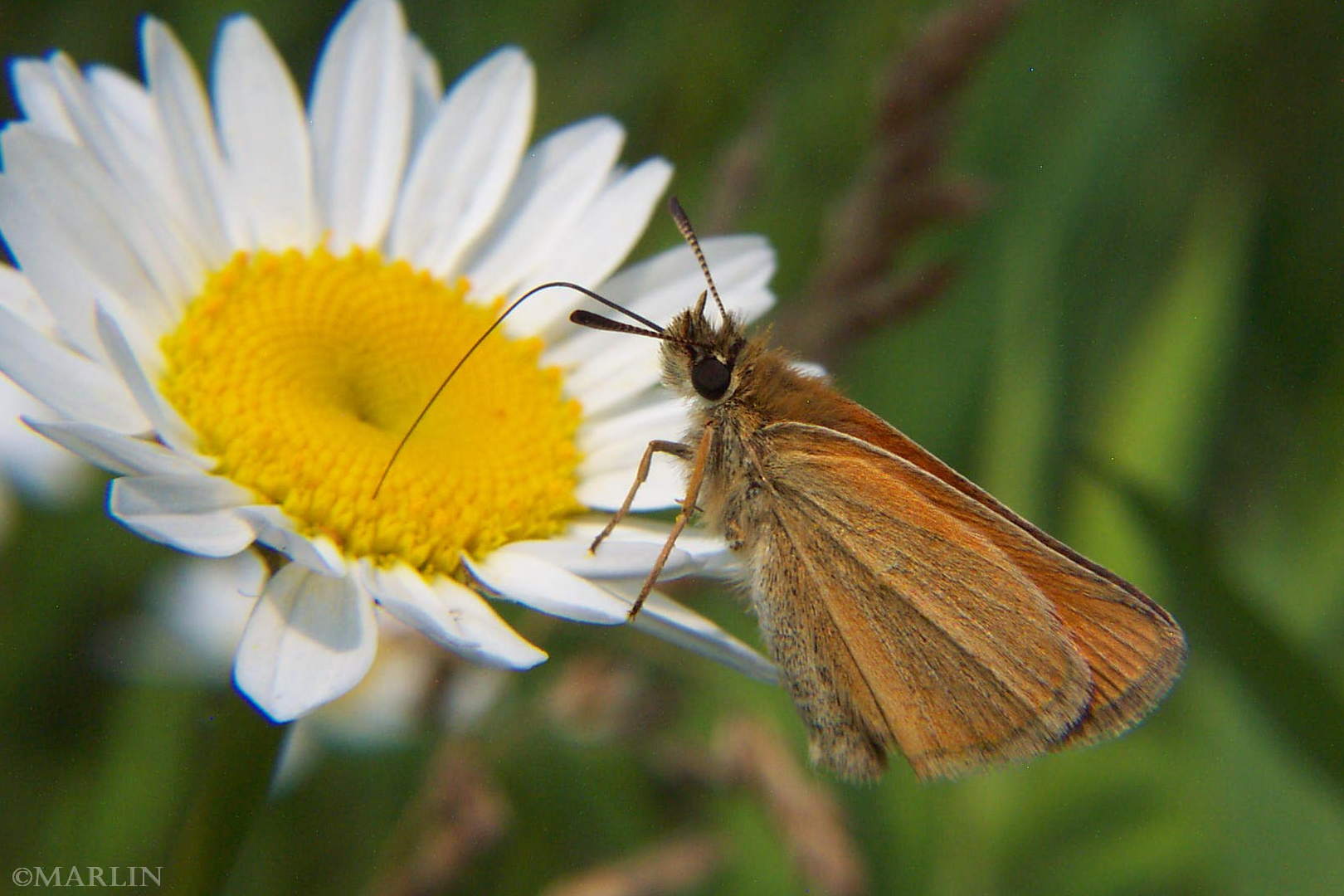 This is the first really good picture I took with a digital camera – a Kodak DC 4800 way back in 2002.
The least skipper is a weak flyer often found flitting about in low grass and foliage throughout the US east of the Rocky Mountains. They can be incredibly abundant in some years. I find them most often near watercourses or damp, low lying areas.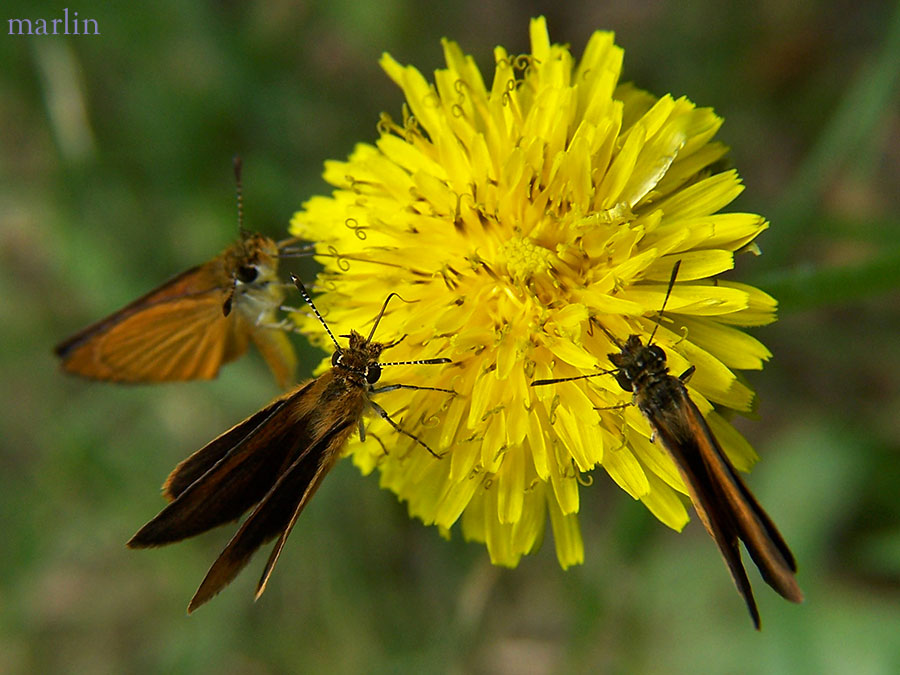 Identification: Antennae are short, banded with black and white alternating. Upper side of forewing is orange with a wide, diffuse black border at the outer margin; hindwing is yellow-orange with a wide black margin. Underside of forewing is black with orange borders at the tip and leading edge; hindwing is yellow-orange.
Life cycle: Males patrol for females with a low, fluttery flight through grassy areas. Females lay eggs singly on grass blades. Caterpillars feed on leaves and rest in nests of rolled or tied leaves. Third- and fourth-stage caterpillars hibernate.
Flight: Three broods from May-October in most of the range, four broods from February-December in the Deep South and Texas. Wing span: 7/8 – 1 1/8 inches (2.2 – 2.9 cm). Caterpillar hosts: Various grasses including marsh millet (Zizaniopsis miliacea), rice cutgrass (Leersia oryzoides), and cultivated rice (Oryza sativa).
Adult food: Flower nectar from low growing plants such as wood sorrel, swamp verbena, pickerelweed, chickory, and white clover. Habitat: Moist or wet open places with tall grasses, marshes, ditches, slow streams, hillsides, or old fields with tall grasses. Range: Nova Scotia west to southern Saskatchewan; south through the eastern states to Florida, the Gulf states, Texas, and SE Arizona. Strays to central Colorado.
Butterfly Index | Moth Pictures | Moths Index | Skipper Butterflies
Tree Encyclopedia / North American Insects & Spiders is dedicated to providing family-friendly educational
resources for our friends around the world through large images and macro photographs of flora and fauna.
Online since 2002