
Jumping Spider – Phidippus princeps
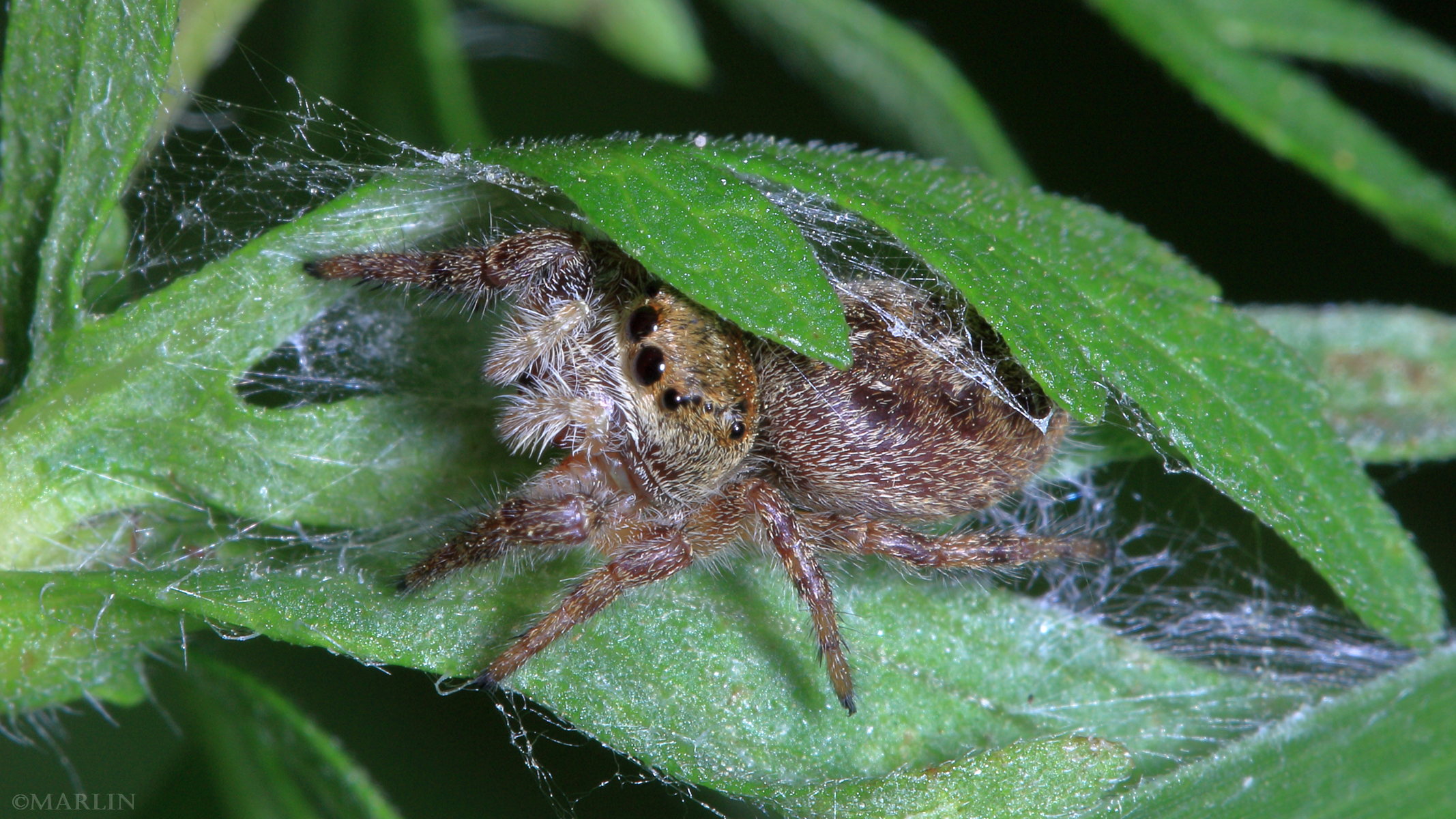
Phidippus princeps females – every one I’ve seen – sit in their curled-over leaflet silken retreats and refuse to come out and play. I may stumble upon them as they are about to lay their eggs, and don’t want to be mucking about with me, or hunting for prey. They sure are cute and photogenic!
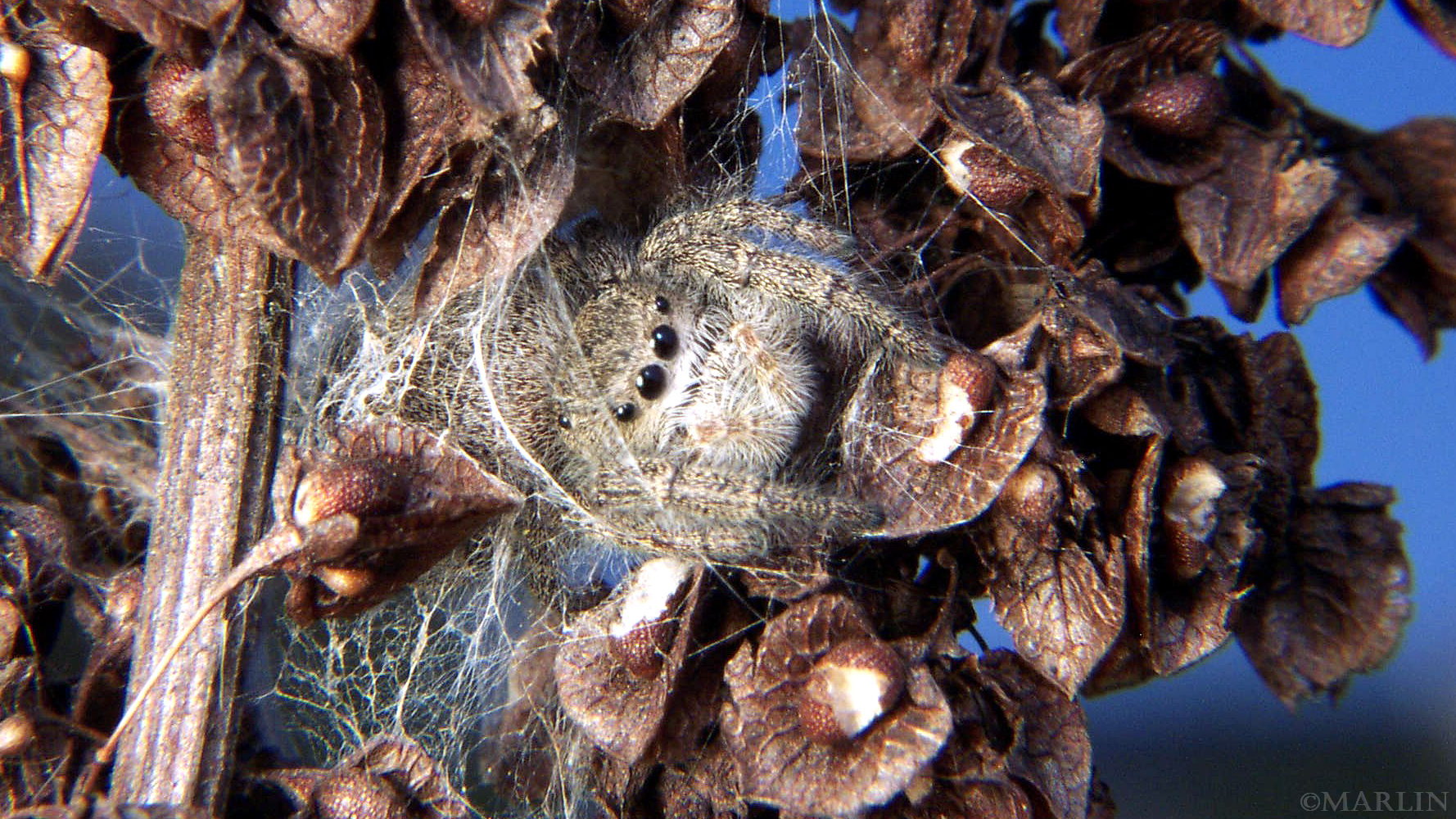
This little gal in her retreat web was the first jumping spider I’d ever attempted to macro photograph. She was quite patient with me.
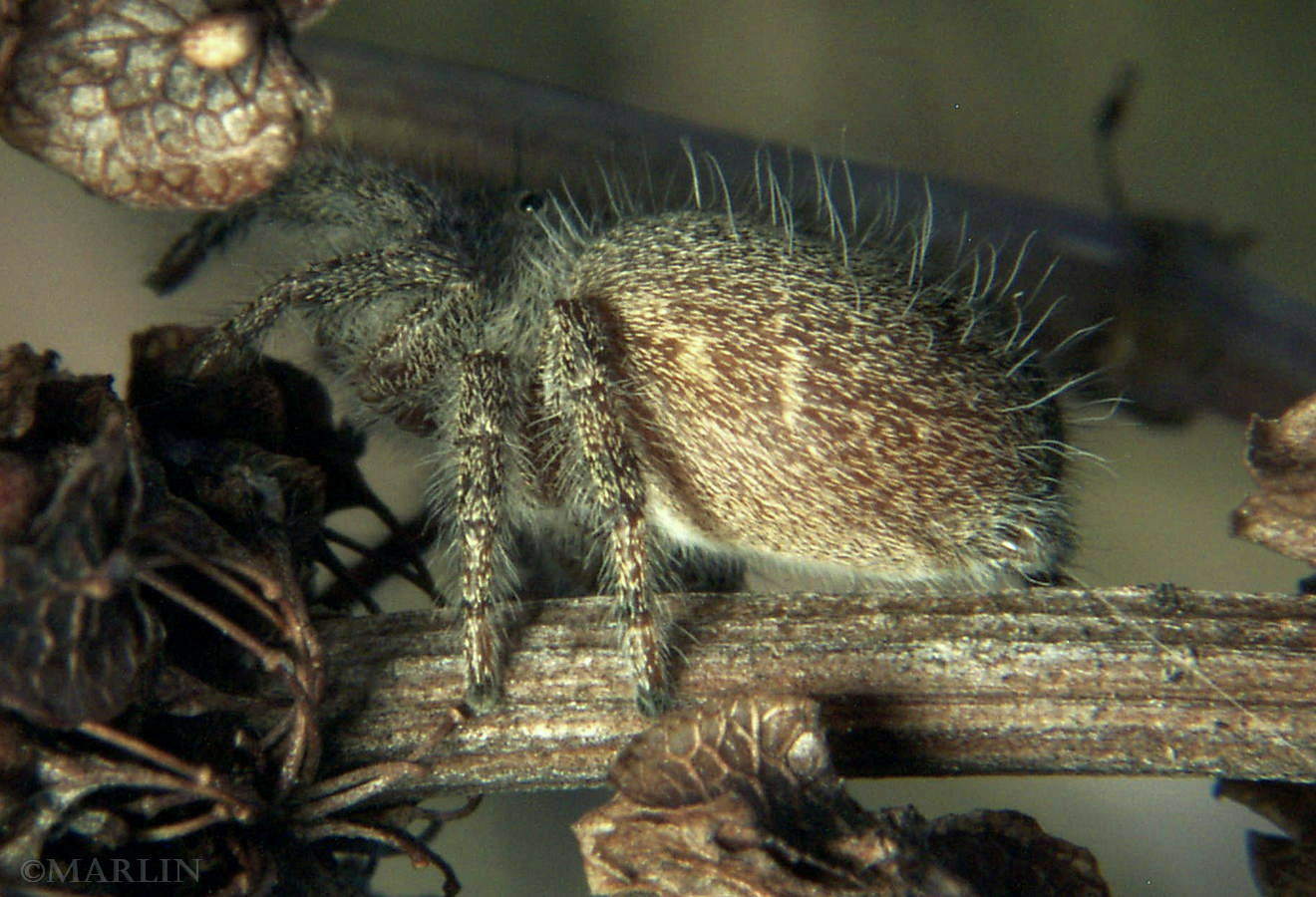 Jumping spiders almost always drag a single-thread “lifeline” behind them. They can easily retrace their steps or hoist themselves back to their previous spot should a jump go awry. I’ve seen them leap off tall objects and catch insects flying by in mid-air, and swing back to the object they leapt from, Tarzan-style!
Jumping spiders have excellent vision, among the highest acuity in invertebrates. The eight eyes are grouped four on the face (the two big anterior median eyes in the middle, and two smaller anterior lateral eyes to the side), and four on top of the carapace. The two large, forward-facing eyes (AME) are tubular behind the lens, with a well-developed musculature, unique to salticids, that supports and moves the retina – the opposite arrangement of our own eyes.
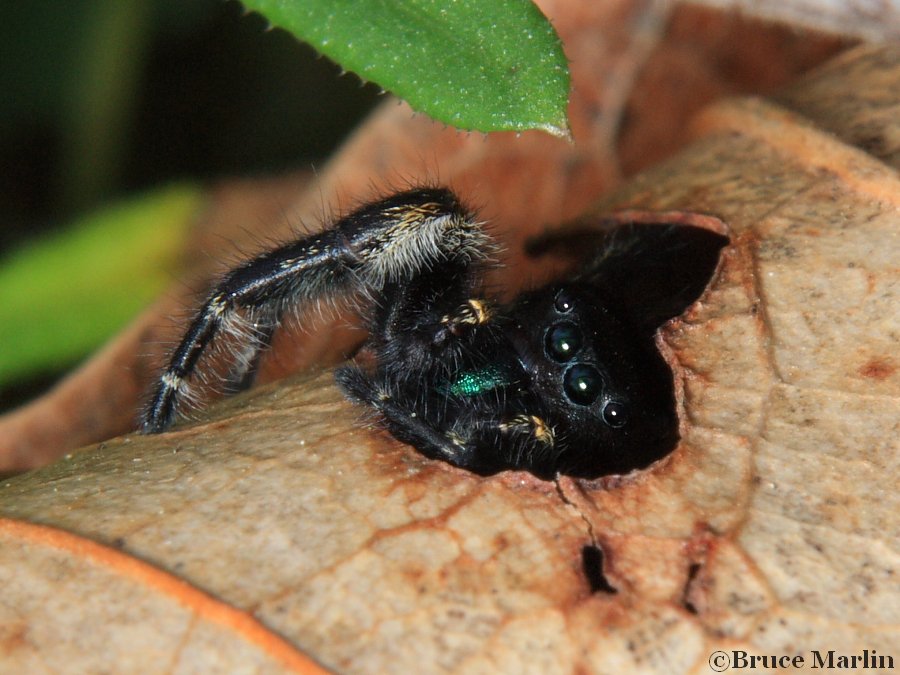 Male specimen plays peek-a-boo while out hunting in the leaf litter at Castle Rock State Park in Illinois
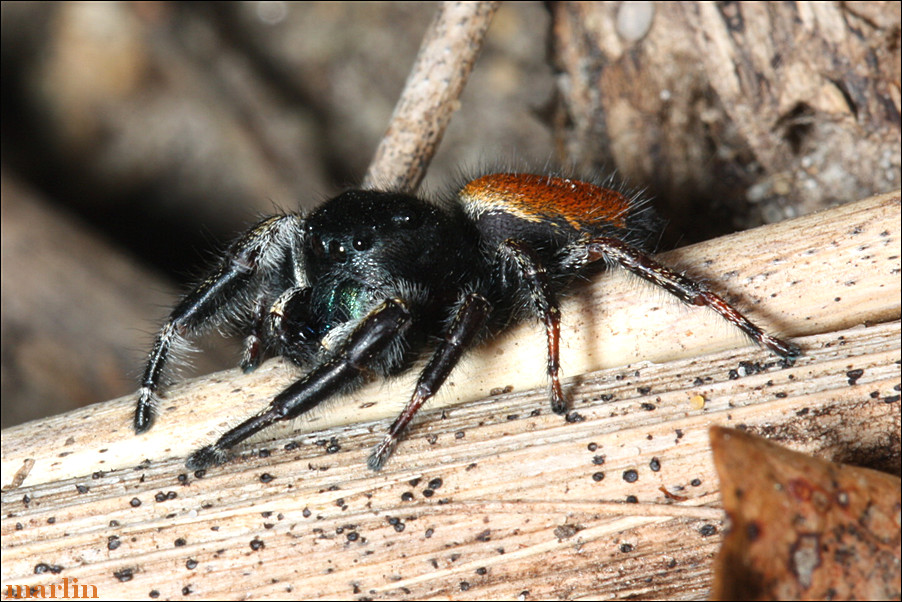 This is a final-moult adult male
Tree Encyclopedia / North American Insects & Spiders
Online since 2002